



Ivan D'Souza slams centre for U-turns, demands new cashew policy

[email protected] (CD Network)
April 4, 2015

Mangaluru, Apr 4: Criticising the NDA government for its anti-farmer policies, Member of Legislative Council Ivan D’Souza said that the Congress party would launch a statewide agitation against the Land Acquisition Bill, 2015 and protest against the regressive bill.

ivan
Addressing media persons at a press conference here on Saturday, he said that prior to the Lok Sabha elections, the BJP had made promises in its manifesto to protect the interests of farmers and bring back black money stashed in Swiss banks. However, the BJP is cheating farmers and land owners by bringing the Land Acquisition Bill through an ordinance for the sole benefit of corporate companies. As per the decision of the KPCC, the district Congress unit will undertake a ‘padayatra’ on April 18 as a mark of protest against the Land Acquisition Ordinance brought by the union government, he said.

He criticised the ruling party at the Centre for failing to fulfill the promise of bringing back the black money away in foreign bank accounts, after being elected to power with a majority. The BJP has not been able to name a single person from the country holding an overseas account with black money till date. In the past ten months, the BJP has not fulfilled any major promises it had made before the elections, thus cheating people, he said, alleging that the BJP was not in favour of exposing corruption in the country as promised earlier.

He also alleged that the ruling government had cheated its citizens to the tune of Rs 14,000 crore by opening zero-balance bank accounts with Jan Dhan Yojana.

Plea for cashew farming policy

Mr D’Souza urged for a cashew cultivation policy to be implemented in the state to provide encouragement to cashew growers. Although cashew is cultivated in 24 districts in Karnataka over 70,000 hectares, a large amount of cashew is still being imported since the quality of the yield is not superior as most of the growers do not employ scientific methods.

There are several private companies keen in partnering with local cashew growers in order to implement scientific methods to enhance the quality of cashew yield, he said, urging the state government to bring a cashew cultivation policy.

When asked about the residents of Jokatte and surrounding villages near Suratkal facing an ordeal due to alleged pollution and contamination by Mangalore Refineries and Petrochemicals Limited, he said that he would look into the matter.

Comments

Add new comment

  • Coastaldigest.com reserves the right to delete or block any comments.
  • Coastaldigset.com is not responsible for its readers’ comments.
  • Comments that are abusive, incendiary or irrelevant are strictly prohibited.
  • Please use a genuine email ID and provide your name to avoid reject.
News Network
December 7,2025

SHRIMP.jpg

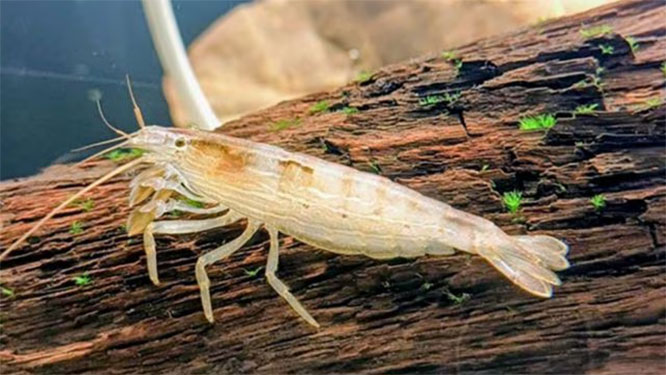
Mangaluru, Dec 7: A rare bamboo shrimp has been rediscovered on mainland India more than 70 years after it was last reported, confirming for the first time the presence of Atyopsis spinipes in the country. The find was made by researchers from the Centre for Climate Change Studies at Sathyabama Institute of Science and Technology, Chennai, during surveys in Karnataka and Odisha.

The team — shrimp expert Dr S Prakash, PhD scholar K Kunjulakshmi, and Mangaluru-based researcher Maclean Antony Santos — combined field surveys, ecological assessments and DNA analysis to identify the elusive species. Their findings, published in Zootaxa, resolve decades of taxonomic confusion stemming from a 1951 report that misidentified the species as Atyopsis moluccensis without strong evidence.

The shrimp has now been confirmed at two locations: the Mulki–Pavanje estuary near Mangaluru and the Kuakhai River in Bhubaneswar. Historical specimens from the Andaman Islands, previously labelled as A. moluccensis, were also found to be misidentified and actually belong to A. spinipes.

The rediscovery began after an aquarium hobbyist in Odisha spotted a shrimp in 2022, prompting systematic surveys across Udupi, Karwar and Mangaluru. Four female specimens were collected in Mulki and one in Odisha, all genetically matching.

Researchers warn the species may exist in very small, vulnerable populations as freshwater habitats face increasing pressure from pollution, sand mining and infrastructure development. All verified specimens have been deposited with the Zoological Survey of India for future reference.

Comments

Add new comment

  • Coastaldigest.com reserves the right to delete or block any comments.
  • Coastaldigset.com is not responsible for its readers’ comments.
  • Comments that are abusive, incendiary or irrelevant are strictly prohibited.
  • Please use a genuine email ID and provide your name to avoid reject.