'Jallikattu' stir spreads across TN, CM to meet PM tomorrow

January 18, 2017

Chennai, Jan 18: Thousands of students today gathered on the sands of Marina here as protests demanding lifting of the ban on bull-taming sport 'jallikattu' snowballed across Tamil Nadu.

Chennai-Jallikattu-Marina-1

Faced with mounting anger on the streets, the top brass of the state government got into a huddle as Chief Minister O Panneerselvam decided to meet Prime Minister Narendra Modi tomorrow seeking an ordinance for conduct of the age-old sport. He will be accompanied by 51 MPs of AIADMK.

He appealed to the students to give up their protests even as IT sector employees and several more actors joined the chorus for allowing 'jallikattu'.

The epicentre of protests appeared to have shifted to the state capital with thousands of students and youths collecting on Marina beach demanding an end to the ban on the age-old sport, saying it symbolised Tamil culture and the ban reflected an anti-Tamil mindset.

Symbolic 'jallikattu' events, where bulls were let loose, were reported from Madurai, Sivaganga and Pattukottai.

Crowds, meanwhile, continued to swell at Alanganallur and Tamukkam grounds in Madurai, the traditional base for the sport.

Protesters at Alanganallur demanded that the Centre issue an ordinance to allow Jallikattu before 6 PM today. Animal rights organisation PeTA, which had moved the Supreme Court against holding of the sport, was the target of attack by protesters who demanded that it should be wound up.

The agitation by students, voluntary groups of pro-Tamil outfits and farmers was well-attended with thousands thronging the venue including here and Madurai.

Tension prevailed at Tamukkam grounds as three students attempted to set themselves ablaze which was foiled by police. Employees working in the Information Technology sector today joined the agitation here by forming human chains and staging protests in the vicinity of their workplaces including the city's IT corridor on Rajiv Gandhi Salai.

Seven activists of a pro-Tamil outfit climbed the historic Pamban railway bridge in Rameswaram and held a dharna. When they were removed by police, they threatened to jump into the sea and commit suicide if they were arrested.

Tension prevailed in Kandipatti village in Sivaganga where 'Manju Virattu' (bull chasing) was organised with 100 bulls. Police baton-charged to disperse the participants. However, the protesters allegedly attacked police with stones damaging a police vehicle and reinforcements were sent to bring the situation under control.

At Pasukaranpatti in Madurai district, organisers released many bulls with prize money attached to their horns on the road leaving it to youths to tame them and take the prize money. Similar events were held near Pattukottai in which 30 bulls participated.In view of the intensifying protests, the Chief Minister held a high-level meeting with top officials including Chief Secretary Girija Vaidyanathan, DGP T K Rajendran and Chennai Police Commissioner S George.

More film personalities, including actors Vishal, comedian Vivek and Sivakarthikeyan today expressed support for 'jallikattu'. Actors' body South Indian Artistes' Association announced a hunger strike on January 20 on the issue.

Talks by State Fisheries Minister D Jayakumar and School Education Minister K Pandiarajan followed by senior police officials failed to dissuade the protestors on Marina beach here who insisted that the Chief Minister visit the site and give an assurance that the sport would be allowed.

Protests were held and rallies taken out in several districts including Chennai, Kanchipuram, Tiruvallur, Madurai, Coimbatore, Tiruchirappalli, Ariyalur, Cuddalore, Villupuram, Virudhunagar, Sivaganga, Theni, Thanjavur, Salem, Erode, Karur, Dharmapuri and Kanyakumari.

Also, 'road rokos' were held in various locations, including Ramanathapuram. In rallies and protests by students and IT employees, slogans like 'We want jallikattu' and 'Ban anti-Tamil PETA' were raised.

In Virudachalam in Cuddalore district where students resorted to 'rail roko', chaotic scenes were witnessed with police removing them from the spot.

Two youths resorted to a flash protest by climbing a mobile phone tower in Namakkal and lawyers took out a rally in Dindigul and led decorated bulls in a procession.

The protests by students were nearly complete with those studying in Annamalai and Azhagappa universities in Chidambaram and Karaikudi respectively joining it.

Farmers Joint Action Council President Deivasigamani told reporters in Thanjavur that the Centre should announce its decision on 'jallikattu' within 48 hours, else they would organise state-wide agitation on January 20.

In Madurai and surrounding regions, more than 20 traders organisations also announced closure of shops on January 20 if the ban on 'jallikattu' was not lifted.

Actor Vishal wrote to Prime Minister Narendra Modi, seeking an ordinance facilitating conduct of jallikattu. Actor Sivakarthikeyan tweeted, "We need jallikattu."

AIADMK organisational secretary C Ponnaiyan blamed the Centre on the matter. "The Centre is inordinately delaying or avoiding issuance of an ordinance (to allow holding of 'jallikattu') which is well within their hands," he told PTI, adding more measures were being taken on the issue to facilitate holding the bull-taming sport.


Comments

Add new comment

  • Coastaldigest.com reserves the right to delete or block any comments.
  • Coastaldigset.com is not responsible for its readers’ comments.
  • Comments that are abusive, incendiary or irrelevant are strictly prohibited.
  • Please use a genuine email ID and provide your name to avoid reject.
News Network
December 6,2025

pilot.jpg

New Delhi: IndiGo, India’s largest airline, faced major operational turbulence this week after failing to prepare for new pilot-fatigue regulations issued by the Directorate General of Civil Aviation (DGCA). The stricter rules—designed to improve flight safety—took effect in phases through 2024, with the latest implementation on November 1. IndiGo has acknowledged that inadequate roster planning led to widespread cancellations and delays.

Below are the key DGCA rules that affected IndiGo’s operations:

1. Longer Mandatory Weekly Rest

Weekly rest for pilots has been increased from 36 hours to 48 hours.

The government says the extended break is essential to curb cumulative fatigue. This rule remains in force despite the current crisis.

2. Cap on Night Landings

Pilots can now perform only two night landings per week—a steep reduction from the earlier limit of six.

Night hours, defined as midnight to early morning, are considered the least alert period for pilots.

Given the disruptions, this rule has been temporarily relaxed for IndiGo until February 10.

3. Reduced Maximum Night Flight Duty

Flight duty that stretches into the night is now capped at 10 hours.

This measure has also been kept on hold for IndiGo until February 10 to stabilize operations.

4. Weekly Rest Cannot Be Replaced With Personal Leave

Airlines can no longer count a pilot’s personal leave as part of the mandatory 48-hour rest.

Pilots say this closes a loophole that previously reduced actual rest time.

Currently, all airlines are exempt from this rule to normalise travel.

5. Mandatory Fatigue Monitoring

Airlines must submit quarterly fatigue reports along with corrective actions to DGCA.

This system aims to create a transparent fatigue-tracking framework across the industry.

The DGCA has stressed that these rules were crafted to strengthen flight safety and align India with global fatigue-management standards. The temporary relaxations are expected to remain until February 2025, giving IndiGo time to stabilise its schedules and restore normal air travel.

Comments

Add new comment

  • Coastaldigest.com reserves the right to delete or block any comments.
  • Coastaldigset.com is not responsible for its readers’ comments.
  • Comments that are abusive, incendiary or irrelevant are strictly prohibited.
  • Please use a genuine email ID and provide your name to avoid reject.
News Network
December 13,2025

New Delhi: School-going children are picking up drug and smoking habits and engaging in consumption of alcohol, with the average age of introduction to such harmful substances found to be around 13 years, suggesting a need for earlier interventions as early as primary school, a multi-city survey by AIIMS-Delhi said.

The findings also showed substance use increased in higher grades, with grade XI/XII students two times more likely to report use of substances when compared with grade VIII students. This emphasised the importance of continued prevention and intervention through middle and high school.

The study led by Dr Anju Dhawan of AIIMS's National Drug Dependence Treatment Centre, published in the National Medical Journal of India this month, looks at adolescent substance use across diverse regions.

The survey included 5,920 students from classes 8, 9, 11 and 12 in urban government, private and rural schools across 10 cities -- Bengaluru, Chandigarh, Delhi, Dibrugarh, Hyderabad, Imphal, Jammu, Lucknow, Mumbai, and Ranchi. The data were collected between May 2018 and June 2019.

The average age of initiation for any substance was 12.9 (2.8) years. It was lowest for inhalants (11.3 years) followed by heroin (12.3 years) and opioid pharmaceuticals (without prescription; 12.5 years).

Overall, 15.1 per cent of participants reported lifetime use, 10.3 per cent reported past year use, and 7.2 per cent reported use in the past month of any substance, the study found.

The most common substances used in the past year, after tobacco (4 per cent) and alcohol (3.8 per cent), were opioids (2.8 per cent), followed by cannabis (2 per cent) and inhalants (1.9 per cent). Use of non-prescribed pharmaceutical opioids was most common among opioid users (90.2 per cent).

On being asked, 'Do you think this substance is easily available for a person of your age' separately for each substance category, nearly half the students (46.3 per cent) endorsed that tobacco products and more than one-third of the students (36.5 per cent) agreed that a person of their age can easily procure alcohol products.

Similarly, for Bhang (21.9 per cent), ganja/charas (16.1 per cent), inhalants (15.2 per cent), sedatives (13.7 per cent), opium and heroin (10 per cent each), the students endorsed that these can be easily procured.

About 95 per cent of the children, irrespective of their grade, agreed with the statement that 'drug use is harmful'.

The rates of substance use (any) among boys were significantly higher than those of girls for substance use (ever), use in the past year and use in the past 30 days. Compared to grade VIII students, grade IX students were more likely, and grade XI/XII students were twice as likely to have used any substance (ever).

The likelihood of past-year use of any substance was also higher for grade IX students and for grade XI/XII students as compared to grade VIII students.

About 40 per cent of students mentioned that they had a family member who used tobacco or alcohol each. The use of cannabis (any product) and opioid (any product) by a family member was reported by 8.2 per cent and 3.9 per cent of students, respectively, while the use of other substances, such as inhalants/sedatives by family was 2-3 per cent, the study found.

A relatively smaller percentage of students reported use of tobacco or alcohol among peers as compared to among family members, while a higher percentage reported inhalants, sedatives, cannabis or opioid use among peers.

Children using substances (past year) compared to non-users reported significantly higher any substance use by their family members and peers.

There were 25.7 per cent students who replied 'yes' to the question 'conflicts/fights often occur in your family'. Most students also replied affirmatively to 'family members are aware of how their time is being spent' and 'damily members are aware of with whom they spend their time'.

Comments

Add new comment

  • Coastaldigest.com reserves the right to delete or block any comments.
  • Coastaldigset.com is not responsible for its readers’ comments.
  • Comments that are abusive, incendiary or irrelevant are strictly prohibited.
  • Please use a genuine email ID and provide your name to avoid reject.
News Network
December 16,2025

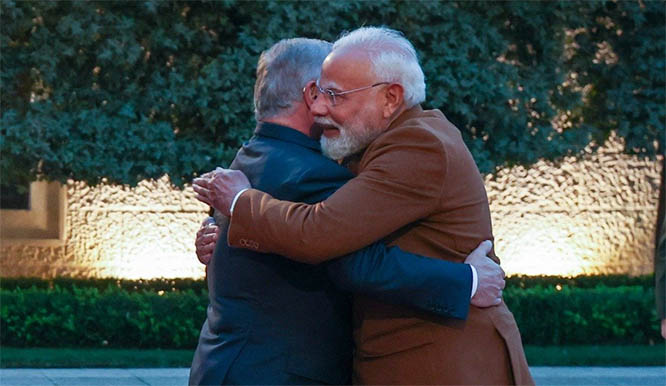
jordan.jpg

Prime Minister Narendra Modi on Monday held talks with Jordan’s King Abdullah II in Amman, during which the two leaders discussed ways to further strengthen bilateral relations, with the Prime Minister outlining an eight-point vision covering key areas of cooperation.

Describing the meeting as “productive”, PM Modi said he shared a roadmap focused on trade and economy, fertilisers and agriculture, information technology, healthcare, infrastructure, critical and strategic minerals, civil nuclear cooperation, and people-to-people ties.

In a post on social media platform X, the Prime Minister praised King Abdullah II’s personal commitment to advancing India–Jordan relations, particularly as both countries mark the 75th anniversary of the establishment of diplomatic ties this year.

“Held productive discussions with His Majesty King Abdullah II in Amman. His personal commitment towards vibrant India-Jordan relations is noteworthy. This year, we are celebrating the 75th anniversary of our bilateral diplomatic relations,” PM Modi said.

The meeting took place at the Al Husseiniya Palace, where the two leaders also exchanged views on regional and global issues of mutual interest. According to the Ministry of External Affairs (MEA), both sides agreed to further deepen cooperation in areas including trade and investment, defence and security, counter-terrorism and de-radicalisation, fertilisers and agriculture, infrastructure, renewable energy, tourism, and heritage.

The MEA said both leaders reaffirmed their united stand against terrorism.

PM Modi arrived in Amman earlier on Monday and was received by Jordanian Prime Minister Jafar Hassan, who accorded him a formal welcome. Following the talks, King Abdullah II hosted a banquet dinner in honour of the Prime Minister, reflecting the warmth of bilateral ties.

Jordan is the first leg of PM Modi’s three-nation tour. From Amman, the Prime Minister will travel to Ethiopia at the invitation of Prime Minister Abiy Ahmed Ali, marking his first official visit to the African nation. The tour will conclude with a visit to Oman.

Comments

Add new comment

  • Coastaldigest.com reserves the right to delete or block any comments.
  • Coastaldigset.com is not responsible for its readers’ comments.
  • Comments that are abusive, incendiary or irrelevant are strictly prohibited.
  • Please use a genuine email ID and provide your name to avoid reject.