Kathua temple rape: Sedatives left victim unable to resist sexual assault

Agencies
July 30, 2018

Jammu/Pathankot, Jul 30: The eight-year-old girl from Kathua, who was gang-raped and killed, was overdosed with a cocktail of sedatives through her captivity, "rendering her incapacitated" to resist sexual assault and murder, states the supplementary charge sheet filed by Jammu and Kashmir's Crime Branch on Monday.

The charge sheet filed in the Pathankot sessions court sums up the investigation of the Jammu and Kashmir Police's Crime Branch team and also gives details of the analyses of calls and bank accounts that led it to the eight accused of the brutal crime in January this year.

The supplementary charge sheet was submitted by a Crime Branch team -- led by Senior Superintendent of Police R K Jalla and special public prosecutors J K Chopra and Santokh Singh Basra, Bhopinder Singh and Harminder Singh -- before Pathankot District and Sessions Judge Tejwinder Singh.

"We have submitted the supplementary charge sheet, giving details of call analyses, bank details and medical reports," special public prosecutor Chopra told PTI.

The charge sheet lists in chilling detail the sedatives, including cannabis, forcefully given to the child from a minority nomadic community, who was abducted on January 10 and allegedly kept in captivity for three days. She was killed on January 14 and her body was found in a forested area near Kathua on January 17, officials said.

During the course of the investigation, "it has been established that the victim was administered sedatives by accused during her captivity", the charge sheet states.

She was given 'mannar' (believed to be local cannabis) as well as Epitril 0.5 mg on an empty stomach, it says.

"She was forcefully administered five tablets of Clonazepam of 0.5 mg each on January 11, 2018, which is higher than the safe therapeutic dose. Subsequently, more tablets were given...The signs and symptoms of an overdose may include drowsiness, confusion, impaired coordination, slow reflexes, slowed or stopped breathing, coma (loss of consciousness) and death," according to the medical expert's report submitted along with the charge sheet.

The peak concentration of Clonazepam is achieved in the blood after "one hour to 1.5 hours" of oral administration and its absorption is complete "irrespective of (whether it is) administered with or without food", states the report.

It says the tablets given to the eight-year-old could have pushed her into a state of shock or coma.

"... the expert opinion coupled with other evidence that has come on record prima-facie establishes that the victim child was continuously administered an overdose of Clonazepam (Epitril) rendering her incapacitated to resist rape and murder," the charge sheet says.

The Crime Branch has arrested Sanji Ram, custodian of a temple where the child was allegedly confined, his son Vishal and his juvenile nephew, two special police officers Deepak Khajuria alias 'Dipu' and Surender Verma and friend Parvesh Kumar alias Mannu. All of them were named in the first charge sheet on April 9.

It also arrested head constable Tilak Raj and sub-inspector Anand Dutta, who allegedly took Rs 4 lakh from Ram and destroyed crucial evidence. Raj and Dutta have since been dismissed from service.

The supplementary charge sheet highlights the efforts of Vishal and his father Ram, alleged to be the mastermind behind the crime, to create an alibi. They were allegedly trying to show that Vishal had never visited Kathua was actually taking an exam on January 15.

It says Kumar was not only in constant touch with Khajuria but also in contact with Raj, who is alleged to have played a pivotal role in striking a deal between the police and Ram for destruction of evidence.

The charge sheet has submitted Kumar's detailed call analysis to show he shared a common location with other accused on crucial dates of the crime and immediately thereafter.

The duration of the calls made and their frequency increased after the rape and murder, leading to "irresistible conclusion of knee deep involvement of accused Surinder Kumar with other accused...", the charge sheet says.

The Crime Branch also conducted an analysis of the two bank accounts of Ram and found he had made huge cash withdrawals.

Witness statements recorded by the Crime Branch confirmed the accused had undertaken no constructional activity and had no social obligation either, the document says.

The Crime Branch alleged in its charge sheet that the withdrawals were made to bribe the police officers for the destruction of evidence.

A copy of the supplementary charge sheet has been handed to the defence counsel.

Earlier this month, the Crime Branch informed the Supreme Court that it would be submitting a supplementary charge sheet in the case.

The apex court bench, comprising Chief Justice of India Dipak Misra and Justices D Y Chandrachud and Indu Malhotra, had on July 9 given it eight weeks to file the document.

The district and sessions court in Pathankot framed charges of rape and murder against the seven accused in the case on June 8, after the Supreme Court transferred the case from Kathua on a plea of victim's family.

Ram, considered the main accused, is alleged to have hatched the conspiracy with the other accused for kidnapping the girl as part of a strategy to remove the minority nomadic community from the area.

The fate of the eighth accused, a juvenile, was yet to be decided after the Crime Branch moved an application in the high court claiming him to be an adult.

Comments

Add new comment

  • Coastaldigest.com reserves the right to delete or block any comments.
  • Coastaldigset.com is not responsible for its readers’ comments.
  • Comments that are abusive, incendiary or irrelevant are strictly prohibited.
  • Please use a genuine email ID and provide your name to avoid reject.
News Network
December 19,2025

Saudi Arabia has abolished fees on expatriate workers employed in licensed industrial establishments, signaling a strong push to empower national factories and enhance the Kingdom’s global industrial competitiveness. The move reflects the leadership’s commitment to building a sustainable and resilient industrial economy under Saudi Vision 2030.

The decision was approved by the Council of Ministers, chaired by Crown Prince and Prime Minister Mohammed bin Salman, following a recommendation from the Council of Economic and Development Affairs (CEDA). It forms part of a broader strategy to support, modernize, and strengthen the industrial sector.

By removing fees on foreign workers, industrial establishments gain greater operational flexibility and relief from financial pressures. This is expected to help factories expand production, improve efficiency, and compete more effectively in international markets, while reinforcing long-term sustainability.

The initiative aligns closely with Saudi Vision 2030, which identifies industry as a key pillar of economic diversification. A competitive and resilient industrial base is viewed as essential for driving innovation, attracting investment, and sustaining long-term economic growth.

Overall, the fee exemption underscores the Kingdom’s commitment to creating a supportive environment for industrial development and ensuring that Saudi factories remain globally competitive and capable of leading the nation’s economic transformation.

Comments

Add new comment

  • Coastaldigest.com reserves the right to delete or block any comments.
  • Coastaldigset.com is not responsible for its readers’ comments.
  • Comments that are abusive, incendiary or irrelevant are strictly prohibited.
  • Please use a genuine email ID and provide your name to avoid reject.
News Network
December 16,2025

bengal.jpg

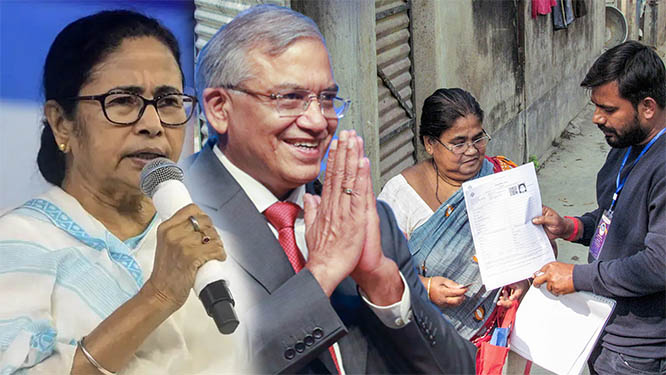
The deletion of over 58 lakh names from West Bengal’s draft electoral rolls following a Special Intensive Revision (SIR) has sparked widespread concern and is likely to deepen political tensions in the poll-bound state.

According to the Election Commission, the revision exercise has identified 24 lakh voters as deceased, 19 lakh as relocated, 12 lakh as missing, and 1.3 lakh as duplicate entries. The draft list, published after the completion of the first phase of SIR, aims to remove errors and duplication from the electoral rolls.

However, the scale of deletions has raised fears that a large number of eligible voters may have been wrongly excluded. The Election Commission has said that individuals whose names are missing can file objections and seek corrections. The final voter list is scheduled to be published in February next year, after which the Assembly election announcement is expected. Notably, the last Special Intensive Revision in Bengal was conducted in 2002.

The development has intensified the political row over the SIR process. Chief Minister Mamata Banerjee and her Trinamool Congress have strongly opposed the exercise, accusing the Centre and the Election Commission of attempting to disenfranchise lakhs of voters ahead of the elections.

Addressing a rally in Krishnanagar earlier this month, Banerjee urged people to protest if their names were removed from the voter list, alleging intimidation during elections and warning of serious consequences if voting rights were taken away.

The BJP, meanwhile, has defended the revision and accused the Trinamool Congress of politicising the issue to protect what it claims is an illegal voter base. Leader of the Opposition Suvendu Adhikari alleged that the ruling party fears losing power due to the removal of deceased, fake, and illegal voters.

The controversy comes amid earlier allegations by the Trinamool Congress that excessive work pressure during the SIR led to the deaths by suicide of some Booth Level Officers (BLOs), for which the party blamed the Election Commission. With the draft list now out, another round of political confrontation appears imminent.

As objections begin to be filed, the focus will be on whether the correction mechanism is accessible, transparent, and timely—critical factors in ensuring that no eligible voter is denied their democratic right ahead of a crucial election.

Comments

Add new comment

  • Coastaldigest.com reserves the right to delete or block any comments.
  • Coastaldigset.com is not responsible for its readers’ comments.
  • Comments that are abusive, incendiary or irrelevant are strictly prohibited.
  • Please use a genuine email ID and provide your name to avoid reject.
News Network
December 21,2025

hadith.jpg

Invoking the teachings of Prophet Muhammad—“pay the worker before his sweat dries”—the Madras High Court has directed a municipal corporation to settle long-pending legal dues owed to a former counsel. The court observed that this principle reflects basic fairness and applies equally to labour and service-related disputes.

Justice G. R. Swaminathan made the observation while hearing a petition filed by advocate P. Thirumalai, who claimed that the Madurai City Municipal Corporation failed to pay him legal fees amounting to ₹13.05 lakh. Earlier, the High Court had asked the corporation to consider his representation. However, a later order rejected a major portion of his claim, prompting the present petition.

The court allowed Thirumalai to approach the District Legal Services Authority (DLSA) and submit a list of cases in which he had appeared. It also directed the corporation to settle the verified fee bills within two months, without interest. The court noted that the petitioner had waited nearly 18 years before challenging the non-payment and that the corporation could not be fully blamed, as the fee bills were not submitted properly.

‘A Matter of Embarrassment’

Justice Swaminathan described it as a “matter of embarrassment” that the State has nearly a dozen Additional Advocate Generals. He observed that appointing too many law officers often leads to unnecessary allocation of work and frequent adjournments, as government counsel claim that senior officers are engaged elsewhere.

He expressed hope that such practices would end at least in the Madurai Bench of the High Court and added that Additional Advocate Generals should “turn a new leaf” from 2026 onwards.

‘Scandalously High Amounts’

While stating that the court cannot examine the exact fees paid to senior counsel or law officers, Justice Swaminathan stressed that good governance requires public funds to be used prudently. He expressed concern over the “scandalously high amounts” paid by government and quasi-government bodies to a few favoured law officers.

In contrast, the court noted that Thirumalai’s total claim was “a pittance” considering the large number of cases he had handled.

Background

Thirumalai served as the standing counsel for the Madurai City Municipal Corporation for more than 14 years, from 1992 to 2006. During this period, he represented the corporation in about 818 cases before the Madurai District Courts.

As the former counsel was unable to hire a clerk to obtain certified copies of judgments in all 818 cases, the court directed the District Legal Services Authority to collect the certified copies within two months. The court further ordered the corporation to bear the cost incurred by the DLSA and deduct that amount from the final settlement payable to the petitioner.

Comments

Add new comment

  • Coastaldigest.com reserves the right to delete or block any comments.
  • Coastaldigset.com is not responsible for its readers’ comments.
  • Comments that are abusive, incendiary or irrelevant are strictly prohibited.
  • Please use a genuine email ID and provide your name to avoid reject.