



Lok Sabha passes four GST Bills; India's biggest tax reform one step closer to July 1 rollout

March 30, 2017

New Delhi, Mar 30: Lok Sabha on Wednesday passed all four GST Bills to make India's new tax regime effective from July 1.

The Central GST Bill, 2017; The Integrated GST Bill, 2017; The GST (Compensation to States) Bill, 2017; and The Union Territory GST Bill, 2017 were passed after negation of a host of amendments moved by the opposition parties.
gst
Jammu and Kashmir will need to pass all four bills in its state assembly, on account of its special powers on taxation under the Constitution.

The Lok Sabha passed the much-awaited Central Goods and Services Tax (CGST) Bill, Integrated GST Bill, Compensation GST Bill and Union Territory GST Bill 2017, after negating all the amendments put forward by the Opposition.

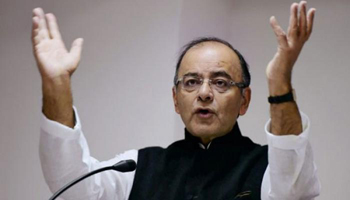
Finance Minister Arun Jaitley tweeted:

Prime Minister Narendra Modi also tweeted on the occassion:

The four GST Bills were passed after an eight-hour marathon debate in the Lower House.

The government is targeting the roll-out date of July 1 for the new indirect tax regime.

Jaitley said that goods may become "slightly cheaper" once all other taxes are removed after implementation of GST.

Replying to the debate on the four bills in the Lok Sabha, he said all other taxes like entry tax in states will be removed once the GST is in place.

"Once all other taxes are removed, the cascading effect is removed, goods will become slightly cheaper," he said.

Noting that both the central and state governments are pooling their sovereignty to have this tax regime, Jaitley noted that India, despite being one political entity, remained different economic entities with states having different taxes.

"Centre and states both pooled sovereignty into one Council. It is India`s first federal decision making authority," he said.

The GST will subsume various indirect levies of the Centre and states like service tax, excise duty, octroi and value added tax (VAT).

The CGST Bill will enable levy and collection of tax on intra-state supply of goods and services or both by the central government.

Actual tax rates would be as per a four-tier rate structure of 5, 12, 18 and 28 per cent as approved by the GST Council.

Clarifying on the tax rate on petroleum products in the regime, Jaitley said that the Council has decided that the petroleum products though they have been included under GST, will remain zero rated as of now.

"The Council decided that we will take up the issue of petroleum products in a year after implementation of GST. Today, constitutionally petroleum products are under GST, but will be zero rated. So once Council decides it can be taxed under GST, we won`t need to amend the Constitution," he said.

Jaitley said that once implemented GST will have a significant impact on the taxation system as the entire system will be restructured.

He said that the nature of economic activity today is changing and the objective of GST is to have "free flow of goods and services pan-India, with one tax and one interface with one assessing officer".

The system will be more efficient, is not easy to breach and has higher compliance, he added Prime Minister Narendra Modi also tweeted on the pasisng of 4 GST Bills

Following the Bill`s passage, Jammu and Kashmir Finance Minister Hasib Drabu told reporters that the state`s own constitution, allowed under special dispensation, requires CGST to be ratified by the state legislature.

"We will go to our assembly and get it passed before the target date of July 1," he said.

"We will start the process (ratification) sometime in May or June and meet the July implementation target," he added.

Jammu and Kashmir is the only state in the country with powers to tax services.

Speaking in the Lok Sabha debate earlier, Congress leader M. Veerappa Moily pointed out that it was the previous Congress-led United Progressive Alliance government which brought in the GST bill.

"This important game-changer enactment was envisioned by the UPA government. It should have been implemented at the time, but some opposition parties then felt that it has to be halted," he added, alluding to the Bharatiya Janata Party, which is in power now.

Indian industry, which has welcomed the GST Bills passage in Parliament, has however, called for a postponement of the targeted implementation date of July 1, to allow it to prepare adequately for the GST rollout.


Comments

Add new comment

  • Coastaldigest.com reserves the right to delete or block any comments.
  • Coastaldigset.com is not responsible for its readers’ comments.
  • Comments that are abusive, incendiary or irrelevant are strictly prohibited.
  • Please use a genuine email ID and provide your name to avoid reject.
News Network
December 20,2025

train.jpg

At least seven elephants were killed and one calf injured after a herd collided with the Sairang-New Delhi Rajdhani Express in Assam's Hojai on Saturday morning, leading to disruption of rail services. 

The Sairang-New Delhi Rajdhani Express struck a herd of elephants, resulting in the derailment of the locomotive and five coaches. No passenger casualties or injuries were reported, officials said.

The New Delhi-bound train met with the accident around 2.17 am, PTI reported. The Sairang-New Delhi Rajdhani Express connects Mizoram's Sairang (near Aizawl) to Anand Vihar Terminal (Delhi). 

Railway has issued helpline numbers at the Guwahati Railway Station:-

•    0361-2731621
•    0361-2731622
•    0361-2731623

The accident site is located about 126 km from Guwahati. Following the incident, accident relief trains and railway officials rushed to the spot to initiate rescue operations.

Train Services Disrupted

Sources said that due to the derailment and elephant body parts scattered on the tracks, train services to Upper Assam and other parts of the Northeast were affected.

Passengers from the affected coaches were temporarily accommodated in vacant berths available in other coaches of the train. Once the train reaches Guwahati, additional coaches will be attached to accommodate all passengers, after which the train will resume its onward journey.

The incident occurred at a location that is not a designated elephant corridor. The loco pilot, upon spotting the herd on the tracks, applied emergency brakes. Despite this, the elephants dashed into the train, leading to the collision and derailment.

Last month, an elephant was killed after being hit by a train in Dhupguri in West Bengal's Jalpaiguri district. The incident took place on November 30. 

The adult elephant was killed on the spot, and a calf was discovered lying injured beside the tracks. 

Over 70 Elephants Killed In Train Collisions Over Last 5 Years

At least 79 elephants have died in train collisions across the country in the last five years, the Environment Ministry had informed Parliament in August.

In a written reply in the Lok Sabha, Minister of State for Environment Kirti Vardhan Singh had said the figure is based on reports from state governments and Union Territory administrations for the period 2020-21 to 2024-25.

He said that the ministry does not maintain consolidated data on the deaths of other wild animals on railway tracks, including in designated elephant corridors.

Singh confirmed that three elephants, including a mother and her calf, were killed on July 18 this year after being hit by a speeding express train on the Kharagpur-Tatanagar section in West Bengal's Paschim Midnapore district. The incident took place near Banstala between Jhargram and Banstala stations.

The minister said several measures have been taken jointly by the Environment Ministry and the Railways to prevent such accidents.

These include imposing speed restrictions in elephant habitats, pilot projects such as seismic sensor-based detection of elephants near tracks and construction of underpasses, ramps and fencing at vulnerable points.

The Wildlife Institute of India, in consultation with the ministry and other stakeholders, has also issued guidelines titled 'Eco-friendly Measures to Mitigate Impacts of Linear Infrastructure' to help agencies design railways and other projects in ways that reduce human-animal conflicts.

Singh added that capacity-building workshops were conducted for railway officials at the Wildlife Institute of India in 2023 and 2024 to raise awareness on elephant conservation and protection.

A detailed report titled 'Suggested Measures to Mitigate Elephant & Other Wildlife Train Collisions on Vulnerable Railway Stretches in India' had also been prepared after surveys across 127 railway stretches covering 3,452 km.

Of these, 77 stretches spanning 1,965 km in 14 states were prioritised for mitigation, with site-specific interventions suggested. 

Comments

Add new comment

  • Coastaldigest.com reserves the right to delete or block any comments.
  • Coastaldigset.com is not responsible for its readers’ comments.
  • Comments that are abusive, incendiary or irrelevant are strictly prohibited.
  • Please use a genuine email ID and provide your name to avoid reject.