



LS okays judicial appointments commission bill

August 14, 2014

New Delhi, Aug 14: The 21-year-old collegium system of appointing and promoting judges will soon be history with the Lok Sabha putting its stamp of approval on creating a six-member National Judicial Appointments Commission.
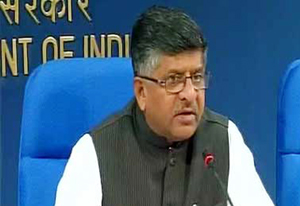
ravishankar

The Modi government scored a significant victory by agreeing to the Congress’ demand to drop a word in a clause of the National Judicial Appointments Commission (NJAC) Bill that required unanimity in the panel if the President returned the Commission’s recommendations for reconsideration.

Along with NJAC Bill, the 99th Constitution Amendment Bill, which seeks to confer Constitutional status on the proposed Commission, was passed by 367 members voting in favour and none against.

Since members have not been allotted division numbers, the voting took place through distribution of slips. Narendra Modi became the first prime minister in 10 years to have participated in voting on a Bill in the Lok Sabha.

Congress leader and former Law Minister M Veerappa Moily had objected to a provision that required the Commission to make a unanimous recommendation in case President seeks reconsideration of some appointment to the higher judiciary.

The Congress was mulling moving amendments to the bill in the Rajya Sabha where it has numerical strength. “The unanimity issue goes and if two members say ‘no’, it will be considered,” Law Minister Ravi Shankar Prasad said, replying to the debate in the Lok Sabha.

That the government was serious in pushing the bill was evident as the Constitution Amendment bill was moved for consideration in the Rajya Sabha on Wednesday evening, raising hopes for its passage on Thursday. The Lok Sabha nod to the Bill comes in the wake of Chief Justice of India R M Lodha’s strong defence of the collegium system of appointment of judges.

The commission will be headed by the Chief Justice of India and will have as its members, two judges of the Supreme Court, the Union law minister and two eminent jurists.

The Law Minister said the proposed law did not impinge upon the independence of the judiciary and will provide for wider consultation on appointment of judges to the Supreme Court and High Courts.

He defended the “veto” power of any two members of the Commission, saying that the provision is part of the present collegium system also. “We have made consultations more meaningful,” Prasad said.

The government rejected demand from regional parties to have state-level judicial commissions contending that even appointments to the High Courts were made by the President and not the Governor.

However, he said the Governor and the Chief Minister would be consulted by the Commission before making state-level appointments.


Comments

Add new comment

  • Coastaldigest.com reserves the right to delete or block any comments.
  • Coastaldigset.com is not responsible for its readers’ comments.
  • Comments that are abusive, incendiary or irrelevant are strictly prohibited.
  • Please use a genuine email ID and provide your name to avoid reject.
News Network
December 16,2025

bengal.jpg

The deletion of over 58 lakh names from West Bengal’s draft electoral rolls following a Special Intensive Revision (SIR) has sparked widespread concern and is likely to deepen political tensions in the poll-bound state.

According to the Election Commission, the revision exercise has identified 24 lakh voters as deceased, 19 lakh as relocated, 12 lakh as missing, and 1.3 lakh as duplicate entries. The draft list, published after the completion of the first phase of SIR, aims to remove errors and duplication from the electoral rolls.

However, the scale of deletions has raised fears that a large number of eligible voters may have been wrongly excluded. The Election Commission has said that individuals whose names are missing can file objections and seek corrections. The final voter list is scheduled to be published in February next year, after which the Assembly election announcement is expected. Notably, the last Special Intensive Revision in Bengal was conducted in 2002.

The development has intensified the political row over the SIR process. Chief Minister Mamata Banerjee and her Trinamool Congress have strongly opposed the exercise, accusing the Centre and the Election Commission of attempting to disenfranchise lakhs of voters ahead of the elections.

Addressing a rally in Krishnanagar earlier this month, Banerjee urged people to protest if their names were removed from the voter list, alleging intimidation during elections and warning of serious consequences if voting rights were taken away.

The BJP, meanwhile, has defended the revision and accused the Trinamool Congress of politicising the issue to protect what it claims is an illegal voter base. Leader of the Opposition Suvendu Adhikari alleged that the ruling party fears losing power due to the removal of deceased, fake, and illegal voters.

The controversy comes amid earlier allegations by the Trinamool Congress that excessive work pressure during the SIR led to the deaths by suicide of some Booth Level Officers (BLOs), for which the party blamed the Election Commission. With the draft list now out, another round of political confrontation appears imminent.

As objections begin to be filed, the focus will be on whether the correction mechanism is accessible, transparent, and timely—critical factors in ensuring that no eligible voter is denied their democratic right ahead of a crucial election.

Comments

Add new comment

  • Coastaldigest.com reserves the right to delete or block any comments.
  • Coastaldigset.com is not responsible for its readers’ comments.
  • Comments that are abusive, incendiary or irrelevant are strictly prohibited.
  • Please use a genuine email ID and provide your name to avoid reject.