Lynchings: An era of voyeurism and social media misuse

Agencies
July 27, 2018

New Delhi, Jul 27: Social media platforms are the medium and vigilantism the message. Delivered by volatile crowds provoked to murderous rage, the all-too frequent lynchings are being played in all their goriness within hours on smartphone screens across India.

Affordable smartphones and the rapid spread of mobile internet have come together in recent months to lay bare the brutality of lynchings in chilling detail – savage mobs kicking and pummelling mercilessly, helpless victims cowering and begging for their lives and then, their bloodied and broken bodies lying limp in the dirt.

As lynching becomes the new buzzword, occupying headline space and dominating drawing room discussions, the montages of violence circulated endlessly highlight the gratuitous nature of the killings, the brittle civility that gives way only too easily to collective violence and the nonchalance of the bystander busy capturing the action rather than saving the victim.

It’s a lethal cocktail of voyeurism, the fear of missing out, or FOMO as it has come to be known, desensitisation and maybe just plain apathy underscored by the need for validation, said experts as the numbers spiral and they attempt to get a grip of why a mob behaves the way it does.

In 2015, when 52-year-old Mohammed Akhlaq was beaten to death in Bisada village in Dadri on the outskirts of Delhi on suspicion that he had stored beef in his home, it sent shockwaves through the country.

Three years later, the cases continue to pile up, with the latest being the lynching of suspected cow smuggler Rakbar Khan in Alwar, Rajasthan, but the outrage has dulled.

Fuelled by rumours that they are cattle smugglers or child abductors, the cases are reported from across the country. At least 25 people are believed to have been lynched this year.

Attempting to explain the hows and whys of mob psyche, Dr Cicilia Chettiar, head of department, Department of Psychology at Mumbai’s Maniben Nanavati Women's College, said the country is a "mix of collectivist and individualistic mini cultures".

In her view, lynchings are not going to be curbed anytime soon as society is power hungry and "uninvolved".

"We are an uninvolved society. We are also a culture which wants to show that I'm bigger than you, I've got something more powerful than you. That powerful or important thing could be a positive thing or a negative.

"As long as it's powerful - that I got this first - perhaps the video of someone dying or in an accident… elicits the feeling of self-assertion," Chettiar told PTI.

Sometimes, she added, people thrashing a person to death have no connect with the incident.

"Often, they are taking out their frustration. I can't do it with my boss or home or the system. We as humans don't like talking badly about ourselves. We tell ourselves a story about our own life. We don't want to introspect as we cannot manage this cognitive overload."

According to experts, easy access to social media platforms has amplified the voyeuristic tendency in people and the need to be the first to carry and disseminate the ‘news’.

Instead of intervening and preventing the situation from getting bad to worse, people either tend to stand around as mute spectators or jump into the crowd to participate in the ongoing vigilantism, they said.

Everybody wants to be a part of everything, said Dr Aditi Kaul, a Puducherry-based psychology professional.

"Somewhere, it highlights our deep need for the sense of validation. We tend to record each and everything. That whatever we do it should reach out to the public. It's a very disoriented form of recognition. They want to leave a footprint behind… Even if we talk in the generic sense, everyone is shouting just one thing, 'Look at me, I’m also here’!" Kaul told PTI.

"The second feeling is, 'I was the one who shared it first'. They also tend to escape the fear of missing out (FOMO). Besides self-validation, they feel the need to be an active part of the society."

She added that people with “no voices” tend to engage more in mob violence as they feel empowered.

"People from higher economic strata, with better exposure and educational opportunities, move in circles where they can be heard... Lower segments tend to raise voices in a crowd."

According to Delhi-based psychologist Pallavi Ram, the bigger the crowd, the stronger the validation.

She added that decisions taken as part of a group tend to be more extreme than those taken as individuals.

"You'd be more cautious when alone. In a group, you'll have the comfort of other members. Also, there will be a division of responsibility and accountability."

So will the mob continue to have its way and bystanders keep looking?

"No one is legally bound to actively intervene when they see a person being attacked. You can only attach moral responsibility to a situation, which is a subjective construct… Putting one’s own life in danger by Intervening is not something the law obliges you to do...,” said Souvik Mukherjee, assistant professor, Amity Law School, Kolkata.

Till the system is effective in dealing with this culture of impunity and people want to help instead of instigate, the violence will continue to spiral. There aren’t too many good Samaritans coming to your aid anytime soon.


Comments

Add new comment

  • Coastaldigest.com reserves the right to delete or block any comments.
  • Coastaldigset.com is not responsible for its readers’ comments.
  • Comments that are abusive, incendiary or irrelevant are strictly prohibited.
  • Please use a genuine email ID and provide your name to avoid reject.
News Network
December 16,2025

bengal.jpg

The deletion of over 58 lakh names from West Bengal’s draft electoral rolls following a Special Intensive Revision (SIR) has sparked widespread concern and is likely to deepen political tensions in the poll-bound state.

According to the Election Commission, the revision exercise has identified 24 lakh voters as deceased, 19 lakh as relocated, 12 lakh as missing, and 1.3 lakh as duplicate entries. The draft list, published after the completion of the first phase of SIR, aims to remove errors and duplication from the electoral rolls.

However, the scale of deletions has raised fears that a large number of eligible voters may have been wrongly excluded. The Election Commission has said that individuals whose names are missing can file objections and seek corrections. The final voter list is scheduled to be published in February next year, after which the Assembly election announcement is expected. Notably, the last Special Intensive Revision in Bengal was conducted in 2002.

The development has intensified the political row over the SIR process. Chief Minister Mamata Banerjee and her Trinamool Congress have strongly opposed the exercise, accusing the Centre and the Election Commission of attempting to disenfranchise lakhs of voters ahead of the elections.

Addressing a rally in Krishnanagar earlier this month, Banerjee urged people to protest if their names were removed from the voter list, alleging intimidation during elections and warning of serious consequences if voting rights were taken away.

The BJP, meanwhile, has defended the revision and accused the Trinamool Congress of politicising the issue to protect what it claims is an illegal voter base. Leader of the Opposition Suvendu Adhikari alleged that the ruling party fears losing power due to the removal of deceased, fake, and illegal voters.

The controversy comes amid earlier allegations by the Trinamool Congress that excessive work pressure during the SIR led to the deaths by suicide of some Booth Level Officers (BLOs), for which the party blamed the Election Commission. With the draft list now out, another round of political confrontation appears imminent.

As objections begin to be filed, the focus will be on whether the correction mechanism is accessible, transparent, and timely—critical factors in ensuring that no eligible voter is denied their democratic right ahead of a crucial election.

Comments

Add new comment

  • Coastaldigest.com reserves the right to delete or block any comments.
  • Coastaldigset.com is not responsible for its readers’ comments.
  • Comments that are abusive, incendiary or irrelevant are strictly prohibited.
  • Please use a genuine email ID and provide your name to avoid reject.
News Network
December 16,2025

IPL.jpg

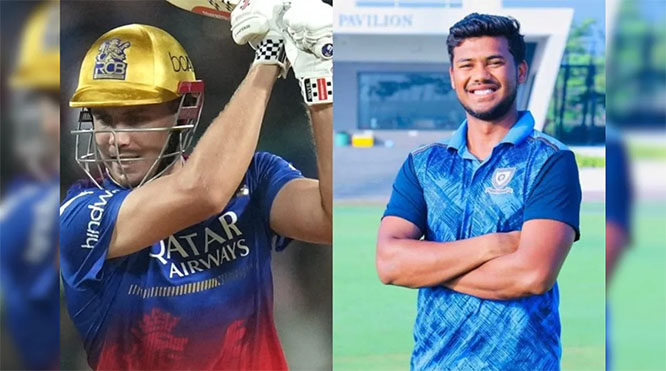
The IPL 2026 auction has seen uncapped Indian stars laugh their way to the bank. While Cameron Green set a world record as he was roped in by Kolkata Knight Riders for Rs 25.20 crore, making him the costliest overseas player ever in any franchise competition across the world, CSK roped in Prashant Veer and Kartik Sharma for a record bid of Rs 14.20 crore each. Sri Lanka's Matheesha Pathirana was picked up for Rs 18 crore by KKR. 

However, top names like Liam Livingstone, Prithvi Shaw, and Sarfaraz Khan have gone unsold. The mini-auction for IPL 2026 is being held in Abu Dhabi, with three-time winners Kolkata Knight Riders coming in with the biggest purse (Rs 64.30 crore). Chennai Super Kings entered the auction with the second-biggest purse (Rs 43.40 crore). The upcoming edition of the Indian Premier League will be held between March 26 and May 31.

Here is the full list of sold and unsold players:

Jake Fraser-McGurk - Base Price Rs 2 crore - Unsold
David Miller - Base Price Rs 2 crore - Delhi Capitals - Rs 2 crore
Prithvi Shaw - Base Price Rs 75 lakh - Unsold
Devon Conway - Base Price Rs 2 crore - Unsold
Cameron Green - Base Price Rs 2 crore - Kolkata Knight Riders - Rs 25.20 crore
Sarfaraz Khan - Base Price Rs 75 lakh - Unsold
Gus Atkinson - Base Price Rs 2 crore - Unsold
Rachin Ravindra - Base Price Rs 2 crore - Unsold
Liam Livingtone - Base Price Rs 2 crore - Unsold
Wiaan Mulder - Base Price Rs 1 crore - Unsold
Wanindu Hasaranga - Base Price Rs 2 crore - LSG - Rs 2 crore
Venkatesh Iyer - Base Price Rs 2 crore - RCB - Rs 7 crore
Deepak Hooda - Base Price Rs 75 lakh - Unsold
KS Bharat - Base Price Rs 75 lakh - Unsold
Quinton De Kock - Base Price Rs 1 crore - Mumbai Indians - Rs 1 crore
Rahmanullah Gurbaz - Base Price Rs 1.50 crore - Unsold
Jonny Bairstow - Base Price Rs 1 crore - Unsold
Jamie Smith - Base Price Rs 2 crore - Unsold
Ben Duckett - Base Price Rs 2 crore - Delhi Capitals - Rs 2 crore
Finn Allen - Base Price Rs 2 crore - KKR - Rs 2 crore
Matt Henry - Base Price Rs 2 crore - Unsold
Akash Deep - Base Price Rs 1 crore - Unsold
Jacob Duffy - Base Price Rs 2 crore - RCB - Rs 2 crore
Shivam Mavi - Base Price Rs 75 lakh - Unsold
Gerald Coetze - Base Price Rs 2 crore - Unsold
Matheesha Pathirana - Base Price Rs 2 crore - KKR - Rs 18 crore
Spencer Johnson - Base Price Rs 1.50 crore - Unsold
Anrich Nortje - Base Price Rs 2.00 crore - LSG Rs 2 crore
Fazalhaq Farooqui - Base Price Rs 1.00 crore - Unsold
Rahul Chahar - Base Price Rs 1.00 crore - Unsold
Ravi Bishnoi - Base Price Rs 2.00 crore - RR - Rs 7.20 crore
Maheesh Theekshana - Base Price Rs 2.00 crore - Unsold
Mujeeb Ur Rahman - Base Price Rs 2.00 crore - Unsold
Akeal Hosein - Base Price Rs 2.00 crore - CSK - Rs 2 crore
Atharva Taide - Base Price Rs 30 lakh - Unsold
Anmolprteet SIngh - Base Price Rs 30 lakh - Unsold
Abhinav Tejrana - Base Price Rs 30 lakh - Unsold
Abhinav Manohar - Base Price Rs 30 lakh - Unsold
Yash Dhull - Base Price Rs 30 lakh - Unsold
Aarya Desai - Base Price Rs 30 lakh - Unsold
Auqib Dar - Base Price Rs 30 lakh - DC - Rs 8.40 crore
Vijay Shankar - Base Price Rs 30 lakh - Unsold
Rajvardhan Hangargekar - Base Price Rs 40 lakh - Unsold
Mahipal Lomror - Base Price Rs 50 lakh - Unsold
Eden Apple Tom - Base Price Rs 30 lakh - Unsold
Prashant Veer - Base Price Rs 30 lakh - CSK Rs 14.20 crore
Shivang Kumar - Base Price Rs 30 lakh - SRH - Rs 30 lakh
Tanush Kotian - Base Price Rs 30 lakh - Unsold
Kamlesh Nagarkoti - Base Price Rs 30 lakh - Unsold
Sanvir Singh - Base Price Rs 30 lakh - Unsold
Rouchit Ahir - Base Price Rs 30 lakh - Unsold
Kartik Sharma - Base Price Rs 30 lakh - CSK Rs 14.20 crore
Mukul Choudhary - Base Price Rs 30 lakh - LSG Rs 2.60 crore
Tejasvi Singh - Base Price Rs 30 lakh - KKR - Rs 3 crore
Vansh Bedi - Base Price Rs 30 lakh - Unsold
Tushar Raheja - Base Price Rs 30 lakh - Unsold
Ashok Sharma - Base Price Rs 30 lakh - GT - Rs 90 lakh
Raj Limbani - Base Price Rs 30 lakh - Unsold
Kartik Tyagi - Base Price Rs 30 lakh - KKR - Rs 30 Lakh
Simarjeet Singh - Base Price Rs 30 lakh - Unsold
Aarya Desai - Base Price Rs 30 lakh - Unsold
Naman Tiwari - Base Price Rs 30 lakh - LSG - Rs 1 crore
Aakash Madhwal - Base Price Rs 30 lakh - Unsold
Sushant Mishra - Base Price Rs 30 lakh - RR - Rs 90 lakh
Wahidullah Zadran - Base Price Rs 30 lakh - Unsold
Shivam Shukla - Base Price Rs 30 lakh - Unsold
Yash Raj Punja - Base Price Rs 30 lakh - RR - Rs 30 Lakh
Prashant Solanki - Base Price Rs 30 lakh - KKR - Rs 30 Lakh
Vignesh Puthur - Base Price Rs 30 lakh - RR - Rs 30 lakh
Karn Sharma - Base Price Rs 50 lakh - Unsold
Kumar Kartikeya Singh - Base Price Rs 30 lakh - Unsold
Sediqullah Atal - Base Price Rs 75 lakh - Unsold
Pathum NIssanka - Base Price Rs 75 lakh - DC - Rs 4 Crore
Rahul Tripathi - Base Price Rs 75 lakh - KKR - Rs 75 lakh
Sean Abbott - Base Price Rs 2 crore - Unsold
Michael Bracewell - Base Price Rs 2 crore - Unsold
Ben Dwarshuis - Base Price Rs 1 crore - Unsold
Jason Holder - Base Price Rs 2 crore - GT Rs 7 crore
Dashun Shanaka - Base Price Rs 75 lakh - Unsold
Daryll Mitchell - Base Price Rs 2 crore - Unsold
Matthew Short - Base Price Rs 1.50 crore - CSK - Rs 1.50 crore
Tom Banton - Base Price Rs 2 crore - Unsold
Jordan Cox - Base Price Rs 75 lakh - Unsold
Josh Inglis - Base Price Rs 2 crore - Unsold
Tim Seifert - Base Price Rs 1.50 crore - KKR - Rs 1.50 Crore
Kyle Jamieson - Base Price Rs 2 crore - Unsold
Adam Milne - Base Price Rs 2 crore - Unsold
Lungi Ngidi - Base Price Rs 2 crore - Unsold
Mustafizur Rahman - Base Price Rs 2 crore - KKR - Rs 9.2 crore
Chetan Sakariya - Base Price Rs 75 lakh - Unsold
Kuldeep Sen - Base Price Rs 75 lakh - Unsold
Waqar Salamkheil - Base Price Rs 1 crore - Unsold
Danish Malewar - Base Price Rs 30 lakh - MI - Rs 30 lakh
Salman Nizar - Base Price Rs 30 lakh - Unsold
Akshat Raghuwanshi - Base Price Rs 30 lakh - LSG - Rs 2.2 crore 
Satvik Deswak - Base Price Rs 30 lakh - RCB - Rs 30 lakh
Aman Khan - Base Price Rs 30 lakh - CSK - Rs 40 lakh
Vicky Ostwal - Base Price Rs 30 lakh - Unsold
Mayank Rawat - Base Price Rs 30 lakh - Unsold
Mangesh Yadav - Base Price Rs 30 lakh - RCB - Rs 5.20 crore
Salil Arora - Base Price Rs 30 lakh - SRH - Rs 1.40 crore
Ravi Singh - Base Price Rs 30 lakh - RR - Rs 95 lakh
KM Asif - Base Price Rs 40 lakh - Unsold
Sakib Hussain - Base Price Rs 30 lakh - SRH - Rs 30 lakh 
Mohammad Izhar - Base Price Rs 30 lakh - MI - Rs 30 lakh 
Onkar Tarmale - Base Price Rs 30 lakh - SRH - Rs 30 Lakh
Murugan Ashwin - Base Price Rs 30 lakh - Unsold
Tejas Baroke - Base Price Rs 30 lakh - Unsold
KC Cariappa - Base Price Rs 30 lakh - Unsold
Mohit Rathee - Base Price Rs 30 lakh - Unsold
Cooper Connolly - Base Price Rs 2 Crore - PBKS - Rs 3 crore
Dan Lawrence - Base Price Rs 2 crore - Unsold
Taskin Ahmed - Base Price Rs 75 lakh - Unsold
Richard Gleeson - Base Price Rs 75 lakh - Unsold
Alzarri Joseph - Base Price Rs 2 crore - Unsold
Riley Meredith - Base Price Rs 1.50 crore - Unsold
Jhye Richardson - Base Price Rs 1.50 crore - Unsold
Dheeraj Kumar - Base Price Rs 30 lakh - Unsold
Tanay Thyagarajan - Base Price Rs 30 lakh - Unsold
Connor E. - Base Price Rs 30 lakh - Unsold
Irfan Umair - Base Price Rs 30 lakh - Unsold
Chintal Gandhi - Base Price Rs 30 lakh - Unsold
Amit Kumar - Base Price Rs 30 lakh - SRH - Rs 30 lakh 
Vishal Nishad - Base Price Rs 30 lakh - Unsold 
Nathan Smith - Base Price Rs 75 lakh - Unsold 
Daniel Lategan - Base Price Rs 30 lakh - Unsold 
Atharva Ankolekar - Base Price Rs 30 lakh - MI - Rs 30 Lakh
Karan Lal - Base Price Rs 30 lakh - Unsold 
Utkarsh Singh - Base Price Rs 30 lakh - Unsold 
Ayush Vartak - Base Price Rs 30 lakh - Unsold
Ayush Hinge - Base Price Rs 30 lakh - SRH - Rs 30 Lakh
Jikku Bright - Base Price Rs 30 lakh - Unsold
Izaz Sawariya - Base Price Rs 30 lakh - Unsold
Krains Fuletra - Base Price Rs 30 lakh - SRH - Rs 30 lakh
Sarthak Ranjan - Base Price Rs 30 lakh - KKR - Rs 30 lakh
Daksh Kamra - Base Price Rs 30 lakh - KKR - Rs 30 lakh
Manishankar Murasingh - Base Price Rs 30 lakh - Unsold

Comments

Add new comment

  • Coastaldigest.com reserves the right to delete or block any comments.
  • Coastaldigset.com is not responsible for its readers’ comments.
  • Comments that are abusive, incendiary or irrelevant are strictly prohibited.
  • Please use a genuine email ID and provide your name to avoid reject.
News Network
December 13,2025

New Delhi: School-going children are picking up drug and smoking habits and engaging in consumption of alcohol, with the average age of introduction to such harmful substances found to be around 13 years, suggesting a need for earlier interventions as early as primary school, a multi-city survey by AIIMS-Delhi said.

The findings also showed substance use increased in higher grades, with grade XI/XII students two times more likely to report use of substances when compared with grade VIII students. This emphasised the importance of continued prevention and intervention through middle and high school.

The study led by Dr Anju Dhawan of AIIMS's National Drug Dependence Treatment Centre, published in the National Medical Journal of India this month, looks at adolescent substance use across diverse regions.

The survey included 5,920 students from classes 8, 9, 11 and 12 in urban government, private and rural schools across 10 cities -- Bengaluru, Chandigarh, Delhi, Dibrugarh, Hyderabad, Imphal, Jammu, Lucknow, Mumbai, and Ranchi. The data were collected between May 2018 and June 2019.

The average age of initiation for any substance was 12.9 (2.8) years. It was lowest for inhalants (11.3 years) followed by heroin (12.3 years) and opioid pharmaceuticals (without prescription; 12.5 years).

Overall, 15.1 per cent of participants reported lifetime use, 10.3 per cent reported past year use, and 7.2 per cent reported use in the past month of any substance, the study found.

The most common substances used in the past year, after tobacco (4 per cent) and alcohol (3.8 per cent), were opioids (2.8 per cent), followed by cannabis (2 per cent) and inhalants (1.9 per cent). Use of non-prescribed pharmaceutical opioids was most common among opioid users (90.2 per cent).

On being asked, 'Do you think this substance is easily available for a person of your age' separately for each substance category, nearly half the students (46.3 per cent) endorsed that tobacco products and more than one-third of the students (36.5 per cent) agreed that a person of their age can easily procure alcohol products.

Similarly, for Bhang (21.9 per cent), ganja/charas (16.1 per cent), inhalants (15.2 per cent), sedatives (13.7 per cent), opium and heroin (10 per cent each), the students endorsed that these can be easily procured.

About 95 per cent of the children, irrespective of their grade, agreed with the statement that 'drug use is harmful'.

The rates of substance use (any) among boys were significantly higher than those of girls for substance use (ever), use in the past year and use in the past 30 days. Compared to grade VIII students, grade IX students were more likely, and grade XI/XII students were twice as likely to have used any substance (ever).

The likelihood of past-year use of any substance was also higher for grade IX students and for grade XI/XII students as compared to grade VIII students.

About 40 per cent of students mentioned that they had a family member who used tobacco or alcohol each. The use of cannabis (any product) and opioid (any product) by a family member was reported by 8.2 per cent and 3.9 per cent of students, respectively, while the use of other substances, such as inhalants/sedatives by family was 2-3 per cent, the study found.

A relatively smaller percentage of students reported use of tobacco or alcohol among peers as compared to among family members, while a higher percentage reported inhalants, sedatives, cannabis or opioid use among peers.

Children using substances (past year) compared to non-users reported significantly higher any substance use by their family members and peers.

There were 25.7 per cent students who replied 'yes' to the question 'conflicts/fights often occur in your family'. Most students also replied affirmatively to 'family members are aware of how their time is being spent' and 'damily members are aware of with whom they spend their time'.

Comments

Add new comment

  • Coastaldigest.com reserves the right to delete or block any comments.
  • Coastaldigset.com is not responsible for its readers’ comments.
  • Comments that are abusive, incendiary or irrelevant are strictly prohibited.
  • Please use a genuine email ID and provide your name to avoid reject.