



Lynchings: An era of voyeurism and social media misuse

Agencies
July 27, 2018

New Delhi, Jul 27: Social media platforms are the medium and vigilantism the message. Delivered by volatile crowds provoked to murderous rage, the all-too frequent lynchings are being played in all their goriness within hours on smartphone screens across India.

Affordable smartphones and the rapid spread of mobile internet have come together in recent months to lay bare the brutality of lynchings in chilling detail – savage mobs kicking and pummelling mercilessly, helpless victims cowering and begging for their lives and then, their bloodied and broken bodies lying limp in the dirt.

As lynching becomes the new buzzword, occupying headline space and dominating drawing room discussions, the montages of violence circulated endlessly highlight the gratuitous nature of the killings, the brittle civility that gives way only too easily to collective violence and the nonchalance of the bystander busy capturing the action rather than saving the victim.

It’s a lethal cocktail of voyeurism, the fear of missing out, or FOMO as it has come to be known, desensitisation and maybe just plain apathy underscored by the need for validation, said experts as the numbers spiral and they attempt to get a grip of why a mob behaves the way it does.

In 2015, when 52-year-old Mohammed Akhlaq was beaten to death in Bisada village in Dadri on the outskirts of Delhi on suspicion that he had stored beef in his home, it sent shockwaves through the country.

Three years later, the cases continue to pile up, with the latest being the lynching of suspected cow smuggler Rakbar Khan in Alwar, Rajasthan, but the outrage has dulled.

Fuelled by rumours that they are cattle smugglers or child abductors, the cases are reported from across the country. At least 25 people are believed to have been lynched this year.

Attempting to explain the hows and whys of mob psyche, Dr Cicilia Chettiar, head of department, Department of Psychology at Mumbai’s Maniben Nanavati Women's College, said the country is a "mix of collectivist and individualistic mini cultures".

In her view, lynchings are not going to be curbed anytime soon as society is power hungry and "uninvolved".

"We are an uninvolved society. We are also a culture which wants to show that I'm bigger than you, I've got something more powerful than you. That powerful or important thing could be a positive thing or a negative.

"As long as it's powerful - that I got this first - perhaps the video of someone dying or in an accident… elicits the feeling of self-assertion," Chettiar told PTI.

Sometimes, she added, people thrashing a person to death have no connect with the incident.

"Often, they are taking out their frustration. I can't do it with my boss or home or the system. We as humans don't like talking badly about ourselves. We tell ourselves a story about our own life. We don't want to introspect as we cannot manage this cognitive overload."

According to experts, easy access to social media platforms has amplified the voyeuristic tendency in people and the need to be the first to carry and disseminate the ‘news’.

Instead of intervening and preventing the situation from getting bad to worse, people either tend to stand around as mute spectators or jump into the crowd to participate in the ongoing vigilantism, they said.

Everybody wants to be a part of everything, said Dr Aditi Kaul, a Puducherry-based psychology professional.

"Somewhere, it highlights our deep need for the sense of validation. We tend to record each and everything. That whatever we do it should reach out to the public. It's a very disoriented form of recognition. They want to leave a footprint behind… Even if we talk in the generic sense, everyone is shouting just one thing, 'Look at me, I’m also here’!" Kaul told PTI.

"The second feeling is, 'I was the one who shared it first'. They also tend to escape the fear of missing out (FOMO). Besides self-validation, they feel the need to be an active part of the society."

She added that people with “no voices” tend to engage more in mob violence as they feel empowered.

"People from higher economic strata, with better exposure and educational opportunities, move in circles where they can be heard... Lower segments tend to raise voices in a crowd."

According to Delhi-based psychologist Pallavi Ram, the bigger the crowd, the stronger the validation.

She added that decisions taken as part of a group tend to be more extreme than those taken as individuals.

"You'd be more cautious when alone. In a group, you'll have the comfort of other members. Also, there will be a division of responsibility and accountability."

So will the mob continue to have its way and bystanders keep looking?

"No one is legally bound to actively intervene when they see a person being attacked. You can only attach moral responsibility to a situation, which is a subjective construct… Putting one’s own life in danger by Intervening is not something the law obliges you to do...,” said Souvik Mukherjee, assistant professor, Amity Law School, Kolkata.

Till the system is effective in dealing with this culture of impunity and people want to help instead of instigate, the violence will continue to spiral. There aren’t too many good Samaritans coming to your aid anytime soon.

Comments

Add new comment

  • Coastaldigest.com reserves the right to delete or block any comments.
  • Coastaldigset.com is not responsible for its readers’ comments.
  • Comments that are abusive, incendiary or irrelevant are strictly prohibited.
  • Please use a genuine email ID and provide your name to avoid reject.
News Network
December 15,2025

Mangaluru, Dec 15: Air India Express has announced that it will resume direct flight services between Mangaluru and Muscat from March 2026, restoring an important international air link for passengers from the coastal region.

Airport authorities said the service will operate twice a week—on Sundays and Tuesdays—from March 1. The initial flights are scheduled on March 3, 8 and 10, followed by March 15 and 17, with the same operating pattern to continue thereafter. The flight duration is approximately three hours and 25 minutes.

The Mangaluru–Muscat route was earlier operated under the 2025 summer schedule, with services beginning on July 14. At that time, Air India Express had operated four flights a week before suspending the service.

Officials said the summer schedule will come into effect from March 29, after which changes in flight timings and departure schedules from Mangaluru are expected. Passengers have been advised to check the latest schedules while planning their travel.

The resumption of direct flights to Muscat is expected to significantly benefit expatriates, business travellers and others, further strengthening Mangaluru’s air connectivity with the Gulf region.

Comments

Add new comment

  • Coastaldigest.com reserves the right to delete or block any comments.
  • Coastaldigset.com is not responsible for its readers’ comments.
  • Comments that are abusive, incendiary or irrelevant are strictly prohibited.
  • Please use a genuine email ID and provide your name to avoid reject.
News Network
December 19,2025

Mangaluru: The Mangaluru CEN police have arrested a 23-year-old man for allegedly posting provocative and misleading content on an Instagram page named “mr_a_titude”, targeting the Bajpe police.

Mangaluru Commissioner of Police Sudheer Kumar Reddy C H identified the arrested as Abhishek M, a resident of Katipalla in Mangaluru.

A case has been registered at the Bajpe Police Station under Sections 353(1)(c), 353(2), 56, and 57 read with Section 189 of the Bharatiya Nyaya Sanhita (BNS) in connection with the post.

According to police, the accused uploaded a photograph of a hotel on the Instagram page and alleged that accused persons in a murder case under the Bajpe police jurisdiction were being given “royal treatment” by the police, including being served beef meals daily from the hotel.

The post further accused the police of supporting criminals, misusing their authority, and betraying public trust. Police said the content was provocative in nature and aimed at inciting public outrage against the police.

Following the post, a case was registered at the Bajpe police station, and further investigation was transferred to the CEN police station.

Police records indicate that the accused has a criminal history, with multiple cases registered against him, including murder, attempt to murder, assault, and robbery at the Surathkal Police Station, and one case at the Kaup Police Station.

The Commissioner said the accused was traced and arrested using technical evidence.

Comments

Add new comment

  • Coastaldigest.com reserves the right to delete or block any comments.
  • Coastaldigset.com is not responsible for its readers’ comments.
  • Comments that are abusive, incendiary or irrelevant are strictly prohibited.
  • Please use a genuine email ID and provide your name to avoid reject.
News Network
December 7,2025

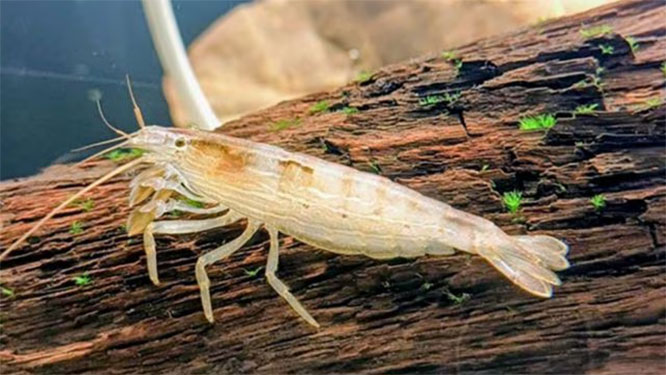
SHRIMP.jpg

Mangaluru, Dec 7: A rare bamboo shrimp has been rediscovered on mainland India more than 70 years after it was last reported, confirming for the first time the presence of Atyopsis spinipes in the country. The find was made by researchers from the Centre for Climate Change Studies at Sathyabama Institute of Science and Technology, Chennai, during surveys in Karnataka and Odisha.

The team — shrimp expert Dr S Prakash, PhD scholar K Kunjulakshmi, and Mangaluru-based researcher Maclean Antony Santos — combined field surveys, ecological assessments and DNA analysis to identify the elusive species. Their findings, published in Zootaxa, resolve decades of taxonomic confusion stemming from a 1951 report that misidentified the species as Atyopsis moluccensis without strong evidence.

The shrimp has now been confirmed at two locations: the Mulki–Pavanje estuary near Mangaluru and the Kuakhai River in Bhubaneswar. Historical specimens from the Andaman Islands, previously labelled as A. moluccensis, were also found to be misidentified and actually belong to A. spinipes.

The rediscovery began after an aquarium hobbyist in Odisha spotted a shrimp in 2022, prompting systematic surveys across Udupi, Karwar and Mangaluru. Four female specimens were collected in Mulki and one in Odisha, all genetically matching.

Researchers warn the species may exist in very small, vulnerable populations as freshwater habitats face increasing pressure from pollution, sand mining and infrastructure development. All verified specimens have been deposited with the Zoological Survey of India for future reference.

Comments

Add new comment

  • Coastaldigest.com reserves the right to delete or block any comments.
  • Coastaldigset.com is not responsible for its readers’ comments.
  • Comments that are abusive, incendiary or irrelevant are strictly prohibited.
  • Please use a genuine email ID and provide your name to avoid reject.