



Mangaluru, Feb 18: Minority fundamentalism needs to be just as strongly opposed as majority fundamentalism in India. All communal forces need to be opposed, said social worker and writer Harsh Mander, director of Equity Studies, New Delhi and former member of the National Advisory Council (NAC).
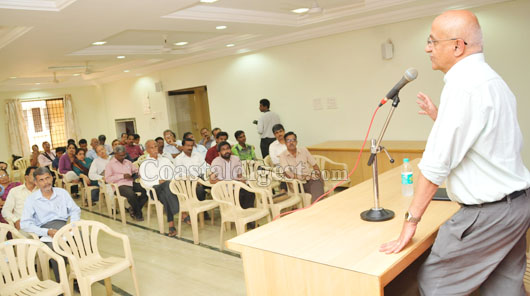
Speaking at an interaction organised by Samadarshi Vedike, Mangaluru here on Wednesday, he said that the big threat to the Indian society and the secular mindset was primarily the resurgence of majority fundamentalism. More than a battle of religions, it is a battle between secular and communal forces and all communal forces need to be opposed, he said, in response to a query during the interaction.
Mr Mander said that the people of India needed to reflect on the pillars of liberty, equality and fraternity imbibed in the Constitution, all of which were deeply threatened in the present scenario. “The recent Lok Sabha elections, where a political party that openly defies the principles of our Constitution was voted as majority, drove back home how deeply these principles are threatened,” he said, adding that Indians should also reflect on how to deal with inequality and diversity of the people living in the country.
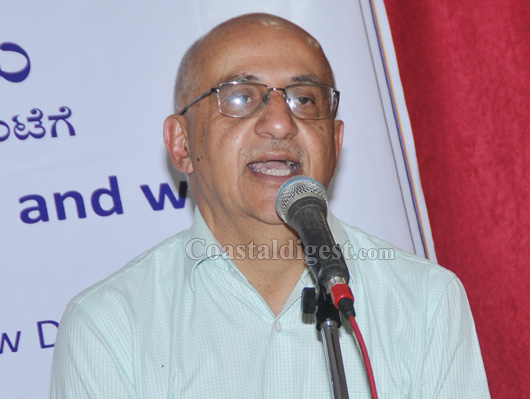
“The world has become a highly unequal place to live in and this inequality has grown rapidly over the years. In India, we justify our inequality with our deeply-embedded beliefs and religious system. The idea of secularism in India is to defend our right to practice our faith and be different from others, which is deeply threatened. However, the Indian idea of secularism is not only tolerance towards other religions, but accepting and celebrating our diversity,” he said.
“Many think that secularism is a denial of practicing our faith. The entire idea of Hindutva is that it is trying to homogenise the concept of religion and our religious beliefs. But this is a very un-Indian ethos because the idea of a secular India is that we are fully equal citizens,” he said, adding that India had a long way to go in battling the barriers of inequality such as caste and gender.
Shedding light on the events that led to the large-scale communal riots that took place in Muzaffarnagar in Uttar Pradesh, Mr Mander said that the fabricated story of eve-teasing by politicians grew like wildfire and created much hatred, rendering lakhs of people homeless. Due to the riots, the affected Muslims fled from their homes and took refuge in Muslim-dominated areas and villages. Incidents such as these are destroying the idea that India stands for, he said.
“Majority of Indians are secular by instinct. If we are opposed to the politics of hate, we also need to construct the politics of love, equality, tolerance and compassion towards others. We have to build a more just and caring society which is the biggest challenge we face today,” he said.

Comments
Add new comment