



Maruti Eeco used in Pulwama terror attack, owner on the run: NIA

Agencies
February 26, 2019

New Delhi, Feb 26: A Maruti Eeco minivan was used in the Pulwama terror attack and it was bought by a Jaish-e-Mohammed operative just 10 days before the February 14 strike that claimed the lives of 40 CRPF personnel, the National Investigation Agency (NIA) said Monday.
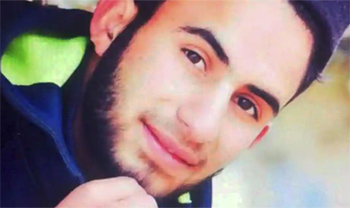
The JeM operative, identified as Sajjad Bhat, a resident of Bijbehara in south Kashmir, has since been on the run and is believed to have become an active militant now, an NIA spokesman said.

The spokesman termed this as a "significant breakthrough" in the investigation into the terror attack.

Piecing together remnants of the vehicle recovered from the scene of the blast, the NIA investigators, with the support of forensic and automobile experts, have been able to identify the vehicle as a Maruti Eeco having chassis number MA3ERLF1SOO183735 and engine number G12BN164140, the spokesman said.

The vehicle was sold to Mohammed Jaleel Ahmed Haqani, a resident of Heaven Colony in Anantnag in 2011, and subsequently it changed hands seven times and finally reached Sajjad Bhat, a student of Siraj-ul-Uloom, Shopian.

The vehicle was purchased by Sajjad Bhat on February 4, the spokesman said.

Raids were conducted by a team of NIA and police at his house on Saturday but Sajjad was not present.

He has reportedly joined Jaish-e-Mohammed and his photograph also appeared on social media where he is seen holding weapons.

The NIA, a central agency established by the government to combat terror, took over the probe into the Pulwama attack from the Jammu and Kashmir Police on February 20 and re-registered the case.

NIA Director General Y C Modi, accompanied by senior officers of the agency, has visited the site of the attack, 33 km from Srinagar, where he was briefed by the police and the Central Reserve Police Force (CRPF).

The state police had registered a case at the Awantipora police station on February 14 after a suicide bomber rammed his explosive-laden vehicle into a CRPF bus, which was part of a 78-vehicle convoy carrying over 2,500 personnel from Jammu to Srinagar.

The NIA has already gathered crucial material from the blast site in Lethpora in Pulwama district of south Kashmir and has been involved in the questioning of around a dozen people detained by the police following the blast, officials said.

The NIA is probing planning and execution of the terror attack, the second such strike in three decades of militancy in the state. In 2000, a 17-year-old Kashmiri boy had blown himself outside the Srinagar-based army cantonment, killing two Army men.


Comments

Ansar balli
 - 
Tuesday, 26 Feb 2019

One man killed 47 army,.. this is very very insult to our country, in abroad people are laughing on our capability.
and some hindutva activists who put big big poster of lion and say they are lion but in reallity thet are the cowards, they dont have courage to go to border and face the real terror but they attack innocent indian muslim who is weak..
Jai Hind


Add new comment

  • Coastaldigest.com reserves the right to delete or block any comments.
  • Coastaldigset.com is not responsible for its readers’ comments.
  • Comments that are abusive, incendiary or irrelevant are strictly prohibited.
  • Please use a genuine email ID and provide your name to avoid reject.
News Network
December 13,2025

New Delhi: School-going children are picking up drug and smoking habits and engaging in consumption of alcohol, with the average age of introduction to such harmful substances found to be around 13 years, suggesting a need for earlier interventions as early as primary school, a multi-city survey by AIIMS-Delhi said.

The findings also showed substance use increased in higher grades, with grade XI/XII students two times more likely to report use of substances when compared with grade VIII students. This emphasised the importance of continued prevention and intervention through middle and high school.

The study led by Dr Anju Dhawan of AIIMS's National Drug Dependence Treatment Centre, published in the National Medical Journal of India this month, looks at adolescent substance use across diverse regions.

The survey included 5,920 students from classes 8, 9, 11 and 12 in urban government, private and rural schools across 10 cities -- Bengaluru, Chandigarh, Delhi, Dibrugarh, Hyderabad, Imphal, Jammu, Lucknow, Mumbai, and Ranchi. The data were collected between May 2018 and June 2019.

The average age of initiation for any substance was 12.9 (2.8) years. It was lowest for inhalants (11.3 years) followed by heroin (12.3 years) and opioid pharmaceuticals (without prescription; 12.5 years).

Overall, 15.1 per cent of participants reported lifetime use, 10.3 per cent reported past year use, and 7.2 per cent reported use in the past month of any substance, the study found.

The most common substances used in the past year, after tobacco (4 per cent) and alcohol (3.8 per cent), were opioids (2.8 per cent), followed by cannabis (2 per cent) and inhalants (1.9 per cent). Use of non-prescribed pharmaceutical opioids was most common among opioid users (90.2 per cent).

On being asked, 'Do you think this substance is easily available for a person of your age' separately for each substance category, nearly half the students (46.3 per cent) endorsed that tobacco products and more than one-third of the students (36.5 per cent) agreed that a person of their age can easily procure alcohol products.

Similarly, for Bhang (21.9 per cent), ganja/charas (16.1 per cent), inhalants (15.2 per cent), sedatives (13.7 per cent), opium and heroin (10 per cent each), the students endorsed that these can be easily procured.

About 95 per cent of the children, irrespective of their grade, agreed with the statement that 'drug use is harmful'.

The rates of substance use (any) among boys were significantly higher than those of girls for substance use (ever), use in the past year and use in the past 30 days. Compared to grade VIII students, grade IX students were more likely, and grade XI/XII students were twice as likely to have used any substance (ever).

The likelihood of past-year use of any substance was also higher for grade IX students and for grade XI/XII students as compared to grade VIII students.

About 40 per cent of students mentioned that they had a family member who used tobacco or alcohol each. The use of cannabis (any product) and opioid (any product) by a family member was reported by 8.2 per cent and 3.9 per cent of students, respectively, while the use of other substances, such as inhalants/sedatives by family was 2-3 per cent, the study found.

A relatively smaller percentage of students reported use of tobacco or alcohol among peers as compared to among family members, while a higher percentage reported inhalants, sedatives, cannabis or opioid use among peers.

Children using substances (past year) compared to non-users reported significantly higher any substance use by their family members and peers.

There were 25.7 per cent students who replied 'yes' to the question 'conflicts/fights often occur in your family'. Most students also replied affirmatively to 'family members are aware of how their time is being spent' and 'damily members are aware of with whom they spend their time'.

Comments

Add new comment

  • Coastaldigest.com reserves the right to delete or block any comments.
  • Coastaldigset.com is not responsible for its readers’ comments.
  • Comments that are abusive, incendiary or irrelevant are strictly prohibited.
  • Please use a genuine email ID and provide your name to avoid reject.
News Network
December 6,2025

pilot.jpg

New Delhi: IndiGo, India’s largest airline, faced major operational turbulence this week after failing to prepare for new pilot-fatigue regulations issued by the Directorate General of Civil Aviation (DGCA). The stricter rules—designed to improve flight safety—took effect in phases through 2024, with the latest implementation on November 1. IndiGo has acknowledged that inadequate roster planning led to widespread cancellations and delays.

Below are the key DGCA rules that affected IndiGo’s operations:

1. Longer Mandatory Weekly Rest

Weekly rest for pilots has been increased from 36 hours to 48 hours.

The government says the extended break is essential to curb cumulative fatigue. This rule remains in force despite the current crisis.

2. Cap on Night Landings

Pilots can now perform only two night landings per week—a steep reduction from the earlier limit of six.

Night hours, defined as midnight to early morning, are considered the least alert period for pilots.

Given the disruptions, this rule has been temporarily relaxed for IndiGo until February 10.

3. Reduced Maximum Night Flight Duty

Flight duty that stretches into the night is now capped at 10 hours.

This measure has also been kept on hold for IndiGo until February 10 to stabilize operations.

4. Weekly Rest Cannot Be Replaced With Personal Leave

Airlines can no longer count a pilot’s personal leave as part of the mandatory 48-hour rest.

Pilots say this closes a loophole that previously reduced actual rest time.

Currently, all airlines are exempt from this rule to normalise travel.

5. Mandatory Fatigue Monitoring

Airlines must submit quarterly fatigue reports along with corrective actions to DGCA.

This system aims to create a transparent fatigue-tracking framework across the industry.

The DGCA has stressed that these rules were crafted to strengthen flight safety and align India with global fatigue-management standards. The temporary relaxations are expected to remain until February 2025, giving IndiGo time to stabilise its schedules and restore normal air travel.

Comments

Add new comment

  • Coastaldigest.com reserves the right to delete or block any comments.
  • Coastaldigset.com is not responsible for its readers’ comments.
  • Comments that are abusive, incendiary or irrelevant are strictly prohibited.
  • Please use a genuine email ID and provide your name to avoid reject.
News Network
December 20,2025

Mangaluru, Dec 20: The Mangaluru City Police have issued a detailed traffic advisory ahead of the inaugural ceremony of Karavali Utsava, which will be held at the Karavali Utsava Ground on Saturday.

The festival will be inaugurated at 6:00 pm by Dakshina Kannada District Minister Dinesh Gundu Rao. Cultural and public programmes will be held at the venue every evening and will continue until January 2.

According to City Police Commissioner Sudheer Kumar Reddy, parking of vehicles is strictly prohibited on both sides of the road from Lalbagh to Karavali Utsava Ground. Visitors are requested to park their vehicles only at designated parking areas.

To help the public, traffic signboards and parking guidance flex boards have been installed along the routes leading to the venue. The police have urged commuters and visitors to follow these instructions to ensure smooth traffic movement.

Designated Parking Locations

•    Urwa Market Ground – Cars
•    Gandhinagar Government School (near Press Club) – Two-wheelers and cars
•    Ladyhill Church parking area – Two-wheelers and cars
•    Canara School Ground, Mannagudda – Two-wheelers and cars
•    Thimmappa Hotel premises – Two-wheelers and cars
•    Scout and Guide Bhavana premises (behind Karavali Utsava Grounds) – Two-wheelers
•    Urwa Market Road – Two-wheelers
•    Hat Hill Road – Two-wheelers

The police have appealed to the public to cooperate by following traffic rules and parking guidelines to avoid inconvenience during the festival.

Comments

Add new comment

  • Coastaldigest.com reserves the right to delete or block any comments.
  • Coastaldigset.com is not responsible for its readers’ comments.
  • Comments that are abusive, incendiary or irrelevant are strictly prohibited.
  • Please use a genuine email ID and provide your name to avoid reject.