Celebration of ‘progress and unity’ marks Saudi Arabia’s 93rd National Day

Agencies
September 23, 2023

saudi.jpg

Riyadh, Sept 23: This day marks the 93rd National Day of Saudi Arabia, a day of pride and celebration for both its citizens and residents. Under the visionary leadership that prioritizes the well-being and prosperity of the people, this joyous occasion reflects upon the nation's remarkable journey toward a promising future.

As we commemorate this historic day, the Saudi Press Agency (SPA) takes us on a reflective journey through the life of a true statesman, King Abdulaziz bin Abdulrahman Al-Faisal Al Saud. On September 23, 1932, he achieved the monumental task of unifying the disparate tribes and scattered regions of the Arabian Peninsula, establishing the Kingdom of Saudi Arabia. This Islamic state, with Riyadh as its capital, adopted the Holy Qur'an and the Prophet's Sunnah as its constitution.

King Abdulaziz's remarkable journey began in Riyadh in 1293 Hijri. At the tender age of seven, he began learning to read and write, and at ten, his father, Imam Abdulrahman Al-Faisal, gathered scholars and tutors to instill in him the fundamentals of Islam and equestrian skills. His upbringing was greatly influenced by his courageous father and wise mother, Princess Sarah Al-Sudairi. King Abdulaziz shared a close bond with his siblings, including his sister, Princess Noura.

Throughout his life, King Abdulaziz encountered numerous challenges that shaped his character and instilled in him qualities of patience, strength, and statesmanship. One of the most trying moments was his forced departure from Riyadh in 1308 Hijri when he and his family settled in various locations, including the Yabrin oasis, Bahrain, and Kuwait. Despite these hardships, his determination to reclaim Riyadh, a city with deep historical significance for his family, remained unwavering.

In his twenties, King Abdulaziz embarked on a journey back to Riyadh, leading an army. His arrival in Al-Shaqib district marked the beginning of a pivotal chapter. Following a brief but intense battle, he restored order, ushering in a period of political stability that laid the foundation for Riyadh's growth and prosperity.

In 1320 Hijri, the people and notables of Riyadh pledged allegiance to him as Emir of Najd and Imam of its people. This victory brought much-needed stability after years of turmoil, setting the stage for Riyadh's transformation.

King Abdulaziz's tireless efforts to unite the nation, restore security, and combat the chaos of the Arabian Peninsula culminated in him becoming the revered leader of a newly constructed nation, securing a respected place for it on the world stage.

On September 23, 1932, King Abdulaziz issued a royal decree, renaming the state from the Kingdom of Hejaz and Najd and its annexes as the Kingdom of Saudi Arabia.

With the nation-building process well underway, King Abdulaziz turned his attention to expanding the Two Holy Mosques to serve pilgrims and establishing schools, hospitals, villages, and irrigation systems to support agriculture. These ambitious endeavors required substantial funding.

In the fall of 1933, oil exploration efforts began, initially yielding no results. However, persistence paid off when oil was discovered 5,000 feet underground in the "Ain Jet" area in 1939. This discovery marked a turning point, opening the doors to major state projects.

King Abdulaziz's interest extended beyond domestic affairs; he maintained diplomatic relations with countries worldwide, prioritizing the Kingdom's independence while fostering relations irrespective of religious, cultural, or civilizational differences. His approach garnered admiration from world leaders and media alike.

In Muharram 1373 Hijri, King Abdulaziz fell seriously ill in Taif, and he passed away on November 9, 1953. He was laid to rest in Al-Oud Cemetery, Riyadh.

As he built his nation, King Abdulaziz's commitment to education was unwavering. He avidly read Arabic books on various sciences, printing and distributing them freely. He sought the counsel of his citizens, guided by Islamic principles, fostering cooperation between the ruler and the governed.

King Abdulaziz's righteous approach, continued by his sons, laid the groundwork for the Kingdom's remarkable development, characterized by collaboration between the leadership and the people.

In a historic gathering on Muharram 25, 1355 Hijri, King Abdulaziz emphasized his desire for close ties with the people, stating, "My door is always open to anyone who wants to talk."

Under his leadership, Saudi Arabia forged strong relationships with Arab and Muslim nations and engaged the international community with transparency and pragmatism.

King Abdulaziz's legacy was the culmination of a rich history. The First Saudi State, founded by Imam Mohammed bin Saud in 1139 Hijri, laid the foundation for the nation's development. The Second Saudi State, initiated by Turki bin Abdullah bin Mohammed bin Saud, continued this legacy for approximately 68 years.

However, the true turning point came on the fifth day of Shawwal, 1319 Hijri, when King Abdulaziz reclaimed Riyadh with valor, establishing a state grounded in the principles of the Holy Qur'an and Prophet Mohammad's Sunnah.

Subsequent leaders, including King Saud, King Faisal, King Khalid, King Fahd, and King Abdullah, each contributed to the nation's progress and development, with a focus on education, healthcare, industry, and economic growth.

Today, under the wise leadership of Custodian of the Two Holy Mosques King Salman, Saudi Arabia continues its journey of growth, development, and global influence. The Kingdom boasts a strong economy that ranks among the world's top 20.

As we celebrate Saudi Arabia's National Day, we reflect on the nation's remarkable accomplishments, secure in the knowledge that its legacy of progress and unity will continue to thrive under the leadership of King Salman. Saudi Arabia stands as a testament to what can be achieved with vision, determination, and the unwavering commitment to the welfare of its people.

Comments

Add new comment

  • Coastaldigest.com reserves the right to delete or block any comments.
  • Coastaldigset.com is not responsible for its readers’ comments.
  • Comments that are abusive, incendiary or irrelevant are strictly prohibited.
  • Please use a genuine email ID and provide your name to avoid reject.
News Network
November 21,2025

israel.jpg

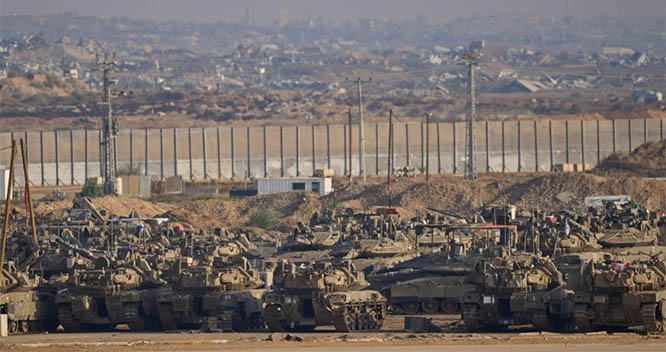
Local authorities say the Israeli military has expanded the so-called “yellow line” truce demarcation in Gaza City and repositioned its forces deeper into the territory in violation of a ceasefire agreement that came into force on October 10, besieging dozens of Palestinian families.

Gaza’s Government Media Office announced in a statement on Thursday that Israeli forces widened the boundary by shifting the markers, and advanced roughly 300 meters (984 feet) into the neighborhoods of Ash-Shaaf, An-Nazzaz and Baghdad Street.

The move pushed further into civilian areas, trapping families who were unable to flee as tanks rolled forward, it added.

“The fate of many of these families remains unknown amidst the shelling that targeted the area,” the office said, adding that the expansion of the yellow line shows a “blatant disregard” for the ceasefire deal.

On Friday, sources said the Israeli military carried out continued air and artillery strikes inside the so-called “yellow line” east of Khan Younis in the southern Gaza Strip.

According to the reports, Israeli warplanes and tanks targeted areas within the zone. One Palestinian was reported killed and several others wounded in the strikes, the sources said.

The fresh aggression came only a day after 25 Palestinians were killed in Israeli airstrikes on Gaza City and Khan Younis on Wednesday.

The media office reported that Israel has consistently violated the truce deal since its implementation last month, with near-daily attacks by air, artillery and direct shootings.

The office said over 400 violations have been documented. These breaches have resulted in the deaths of more than 300 Palestinians and left hundreds injured.

The Government Media Office in Gaza urged the guarantors of the ceasefire — the US, Egypt, Qatar and Turkey — to take swift action to halt the ongoing violations and facilitate the delivery of food, shelter materials, medical aid, and infrastructure equipment.

The so-called “yellow line,” set out in the agreement between Israel and Hamas resistance movement, refers to a non-physical partition where the Israeli military repositioned itself when the truce deal took effect.

It has allowed Israel, which routinely fires at Palestinians who approach the line, to retain control over more than half of the Gaza Strip.

International bodies, including the UN Independent International Commission of Inquiry, the International Association of Genocide Scholars, Amnesty International, Human Rights Watch, B’Tselem, and other rights groups, have concluded that the Israeli war on Gaza amounts to genocide.

In the attacks in Gaza since October 2023, Israel has killed at least 69,546 people and injured 170,833 others, leveling large swaths of the territory and displacing almost all of the population. 

Comments

Add new comment

  • Coastaldigest.com reserves the right to delete or block any comments.
  • Coastaldigset.com is not responsible for its readers’ comments.
  • Comments that are abusive, incendiary or irrelevant are strictly prohibited.
  • Please use a genuine email ID and provide your name to avoid reject.
News Network
December 4,2025

indigoflight.jpg

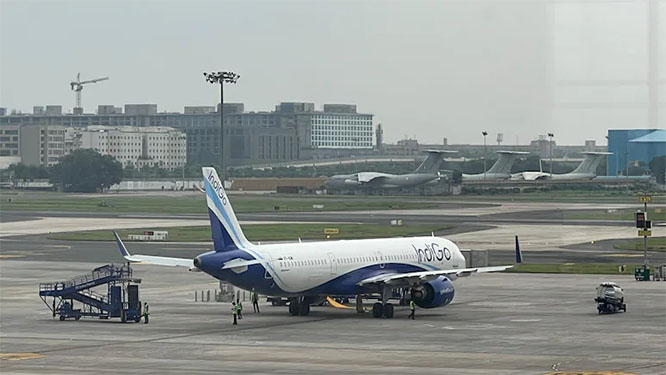
Domestic carrier IndiGo has cancelled over 180 flights from three major airports — Mumbai, Delhi and Bengaluru — on Thursday, December 4, as the airline struggles to secure the required crew to operate its flights in the wake of new flight-duty and rest-period norms for pilots.

While the number of cancellations at Mumbai airport stands at 86 (41 arrivals and 45 departures) for the day, at Bengaluru, 73 flights have been cancelled, including 41 arrivals, according to a PTI report that quoted sources.

"IndiGo cancelled over 180 flights on Thursday at three airports-Mumbai, Delhi and Bengaluru," the source told the news agency.

Besides, it had cancelled as many as 33 flights at Delhi airport for Thursday, the source said, adding, "The number of cancellations is expected to be higher by the end of the day."

The Gurugram-based airline's On-Time Performance (OTP) nosedived to 19.7 per cent at six key airports — Delhi, Mumbai, Chennai, Kolkata, Bengaluru and Hyderabad — on December 3, as it struggled to get the required crew to operate its services, down from almost half of December 2, when it was 35 per cent.

"IndiGo has been facing acute crew shortage since the implementation of the second phase of the FDTL (Flight Duty Time Limitations) norms, leading to cancellations and huge delays in its operations across the airports," a source had told PTI on Wednesday.

Chaos continued at several major airports for the third day on Thursday because of the cancellations.

A spokesperson for the Kempegowda International Airport (KIA) in Bengaluru said that 73 IndiGo flights had been cancelled on Thursday.

At least 150 flights were cancelled and dozens of others delayed on Wednesday, airport sources said, leaving thousands of travellers stranded, according to news agency Reuters.

The Directorate General of Civil Aviation (DGCA) has said it is investigating IndiGo flight disruptions and has asked the airline to submit the reasons for the current situation, as well as its plans to reduce flight cancellations and delays.

It may be mentioned here that the pilots' body, Federation of Indian Pilots (FIP), has alleged that IndiGo, despite getting a two-year preparatory window before the full implementation of new flight duty and rest period norms for cockpit crew, "inexplicably" adopted a "hiring freeze".

The FIP said it has urged the safety regulator, the DGCA, not to approve airlines' seasonal flight schedules unless they have adequate staff to operate their services "safely and reliably" in accordance with the New Flight Duty Time Limitations (FDTL) norms.

In a letter to the DGCA late on Wednesday, the FIP urged the DGCA to consider re-evaluating and reallocating slots to other airlines, which have the capacity to operate them without disruption during the peak holiday and fog season if IndiGo continues to "fail in delivering on its commitments to passengers due to its own avoidable staffing shortages."

Comments

Add new comment

  • Coastaldigest.com reserves the right to delete or block any comments.
  • Coastaldigset.com is not responsible for its readers’ comments.
  • Comments that are abusive, incendiary or irrelevant are strictly prohibited.
  • Please use a genuine email ID and provide your name to avoid reject.
News Network
December 3,2025

indigo.jpg

IndiGo, India’s largest airline, is battling one of its worst operational disruptions in recent years, with hundreds of delays and cancellations throwing domestic travel into chaos.

Government data on Tuesday showed its on-time performance plunging to 35%, an unusual dip for a carrier long associated with punctuality.

By Wednesday afternoon, airports in Delhi, Mumbai, Bengaluru and Hyderabad had collectively reported close to 200 cancellations, stranding travellers across the country.

Crew Shortage After New Duty Norms

A major trigger behind the meltdown is a severe crew shortage, especially among pilots, following the rollout of revised Flight Duty Time Limitation (FDTL) norms last month.

The rules mandate longer rest hours and more humane rosters — a shift IndiGo has struggled to incorporate across its vast network.

Sources said several flights were grounded due to lack of cabin crew, while some delays stretched upwards of eight hours.

With IndiGo controlling over 60% of India’s domestic aviation market, the ripple effect has impacted airports nationwide.

IndiGo Issues Apology, Lists “Compounding Factors”

In a statement, IndiGo acknowledged the large-scale disruption:

“We sincerely apologise to customers. A series of unforeseen operational challenges — technology glitches, winter schedule changes, adverse weather, system congestion and updated FDTL norms — created a compounding impact that could not have been anticipated.”

To stabilise operations, the airline has begun calibrated schedule adjustments for the next 48 hours, aiming to restore punctuality. Affected passengers are being offered refunds or alternate travel arrangements, IndiGo said.

What the FDTL Rules Require

The FDTL norms, designed to reduce pilot fatigue, cap duty and flying hours as follows:
•    Maximum 8 hours of flying per day
•    35 hours per week
•    125 hours per month
•    1,000 hours per year

Crew must also receive rest equalling twice the flight duration, with a minimum 10-hour rest period in any 24-hour window.

The DGCA introduced these limits to enhance flight safety.

Hyderabad: 33 Flights Cancelled, Long Queues Reported

Hyderabad’s Rajiv Gandhi International Airport saw heavy early-morning crowds as 33 IndiGo flights (arrivals and departures) were cancelled.

The airport clarified on X that operations were normal, advising passengers to contact IndiGo directly for latest flight status.

Cancellations included flights to and from Visakhapatnam, Goa, Ahmedabad, Delhi, Bengaluru, Chennai, Madurai, Hubli, Bhopal and Bhubaneswar.

Bengaluru: 42 Flights Disrupted

Bengaluru’s Kempegowda International Airport recorded 42 cancellations — 22 arrivals and 20 departures — affecting routes to Delhi, Mumbai, Chennai, Hyderabad, Goa, Kolkata and Lucknow.

Passengers Vent on Social Media

Irate travellers took to X to share their experiences. One passenger stranded in Hyderabad wrote: “I have been here since 3 a.m. and missed an important meeting.”

Another said: “My flight was pushed from 1:55 PM to 2:55 PM and now 4:35 PM. I was informed only three minutes before entering the airport.”

Delhi Airport Hit by Tech Glitch

At Delhi Airport, the disruption deepened due to a slowdown in the Amadeus system — used for reservations, check-ins and departure control.

The technical issue led to longer queues and sluggish processing, adding to delays already worsened by staff shortages.

Comments

Add new comment

  • Coastaldigest.com reserves the right to delete or block any comments.
  • Coastaldigset.com is not responsible for its readers’ comments.
  • Comments that are abusive, incendiary or irrelevant are strictly prohibited.
  • Please use a genuine email ID and provide your name to avoid reject.