Gaza hospitals stretched to breaking point by Israeli bombing; infections exploding: UN

News Network
December 13, 2023

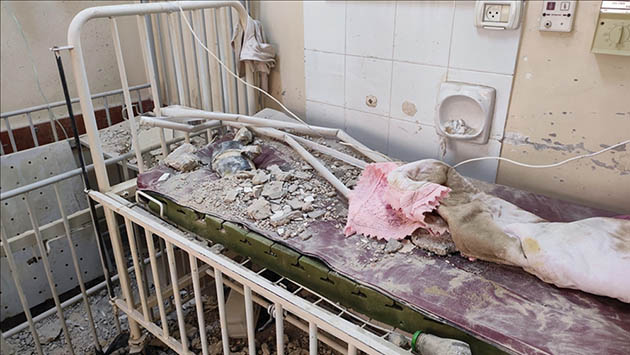
Gazahospital.jpg

The United Nations says only 13 out of 36 hospitals in the Gaza Strip are partially functional as Israeli occupation forces are targeting medical centers and staff amid heavily bombardment of the besieged territory.

The United Nations Office for the Coordination of Humanitarian Affairs (OCHA) said in a report on Tuesday that the services provided to patients in operational hospitals are “limited” as they have run out of bed capacity.

“The two major hospitals in southern Gaza are operating at three times above their bed capacity while facing critical shortages of basic supplies and fuel,” the report said. “Only one of these hospitals is in the north.”

“[Bed] occupancy rates are now reaching 206 percent in inpatient departments and 250 percent in intensive care units. Additionally, these hospitals are providing shelter to thousands of displaced people,” it added citing data from the Gaza Ministry of Health.

The report also said that the maternity department at Kamal Adwan Hospital in Beit Lahiya, north of Gaza, was hit on Monday, resulting in the death of several mothers.

The hospital remains surrounded by Israeli troops and tanks, and fighting has been reported in its vicinity for three consecutive days, the OCHA report added.

“The hospital is currently accommodating 65 patients, including 12 children in the intensive care unit (ICU) and six newborns in incubators. About 3,000 internally displaced persons (IDPs) remain trapped in the facility and are awaiting evacuation with extreme shortages of water, food, and power reported.”

Ahmed al-Kahlout, head of the Kamal Adwan Hospital, told Al Jazeera that “no one can leave” the hospital, which has been under siege by Israeli tanks for four days and they face “extremely difficult” conditions.

The OCHA report also said that for the sixth consecutive day, Al-Awda Hospital in Jabalya (northern Gaza) remains surrounded by Israeli forces as fighting has been reported in its vicinity.

“Reportedly, 250 doctors, patients, and their family members are trapped inside the hospital,” it said, adding that two medical staff were reportedly killed by Israeli forces while on duty inside the hospital on Saturday.

“Let us be clear: Al-Awda is a functioning hospital with medical staff and many patients in vulnerable condition. Targeting medical workers as they care for their patients is utterly reprehensible, utterly inhumane,” The Doctors Without Borders (Medecins Sans Frontieres, or MSF) said on X, formerly Twitter.

The vicinities of Al-Aqsa Hospital in Deir Al-Balah and Al-Amal Hospital in Khan Younis were also repeatedly bombarded on Sunday and Monday which impeded the access of dozens of casualties, according to the report.

Gaza hospitals are routinely viewed as mere military targets for the Israeli military. Israel has repeatedly claimed that Hamas locates its operational bases in tunnels under hospitals and other civilian infrastructure, a charge Hamas dismisses.

The Israeli army has so far failed to show convincing evidence of  either Hamas-run tunnels or a military command center under the hospitals.

Elsewhere in its report, OCHA voiced concerns over the rapid spread of infectious diseases in the Gaza Strip due to the “overcrowding and poor sanitary conditions” at shelters provided by the United Nations Relief and Works Agency for Palestine Refugees in the Near East (UNRWA) in the south.

“There have been significant increases in some communicable diseases and conditions such as diarrhea, acute respiratory infections, skin infections, and hygiene-related conditions like lice,” the report said.

The report added that on average, UNRWA shelters located in the middle and southern areas are currently sheltering nine times the number of IDPs as was planned for.

Since the start of the offensive on October 7, Israel has killed at least 18,205 Palestinians, mostly women and children, and injured 49,645 others.

Thousands more are also missing and presumed dead under the rubble in Gaza, which is under “complete siege” by Israel.

Earlier, WHO Director-General Tedros Adhanom Ghebreyesus warned that “Gaza’s health system is on its knees and collapsing, with the risk expected to worsen with the deteriorating situation and approaching winter conditions. 

Comments

Add new comment

  • Coastaldigest.com reserves the right to delete or block any comments.
  • Coastaldigset.com is not responsible for its readers’ comments.
  • Comments that are abusive, incendiary or irrelevant are strictly prohibited.
  • Please use a genuine email ID and provide your name to avoid reject.
News Network
November 21,2025

Bengaluru, Nov 21: The Karnataka government is facing pressure to overhaul its employment system after a high-level Cabinet sub-committee recommended the complete phase-out of job outsourcing in government offices, boards, and corporations by March 2028. The move is aimed at tackling a systemic issue that has led to the potential violation of constitutional reservation policies and the exploitation of workers.

The Call for Systemic Change

With over three lakh vacant posts currently being filled through private agencies on an outsource, insource, or daily wage basis, the sub-committee highlighted a significant lapse. "As a result, reservations are not being followed as per the Constitution and state laws. It’s an urgent need to take serious steps to change the system. It has been recommended to completely stop the system of outsourcing by March 2028," the panel stated in a document.

The practice of outsourcing involves private companies hiring workers to perform duties for a government agency. Critics argue this model results in lesser salaries, a lack of social security benefits (otherwise available to permanent government employees), and a failure to adhere to the provisions of Articles 14 and 15 of the Constitution, which guarantee equality before the law and prohibit discrimination.

The 'Bidar Model' as a Stop-Gap Solution

To regulate the current mode of employment and reduce worker exploitation until the 2028 deadline, the government plans to establish workers’ services multi-purpose cooperative societies across all districts, following the successful "Bidar Model."

The Bidar District Services of Labour Multi-purpose Cooperative Society Ltd., which operates under the District Commissioner, is cited as a successful example of providing a measure of social security to outsourced staff. Labour Department officials argue this society ensures workers receive their due wages and statutory facilities like ESI (Employees' State Insurance) and PF (Provident Fund), in exchange for a 1% service fee collected from the employees.

legislative push and Priority Insourcing

The recommendations, led by the sub-committee headed by Law and Parliamentary Affairs Minister H K Patil, are set to be discussed at the next Cabinet meeting. The committee has proposed the introduction of the Karnataka Outsourced Employees (Regulation, Placement and Welfare) Bill 2025.

In a move addressing immediate concerns, Labour Minister Santosh Lad, a member of the sub-committee, has reportedly assured that steps will be taken over the next 2-3 years to insource workers in "life-threatening services" on a priority basis. This includes essential personnel like pourakarmikas (sanitation workers), drivers, electrical staff in the Energy Department, and Health Department staff handling contagious diseases. The transition aims to grant these workers the long-term security and benefits they currently lack under the outsourcing system. 

Comments

Add new comment

  • Coastaldigest.com reserves the right to delete or block any comments.
  • Coastaldigset.com is not responsible for its readers’ comments.
  • Comments that are abusive, incendiary or irrelevant are strictly prohibited.
  • Please use a genuine email ID and provide your name to avoid reject.
News Network
December 3,2025

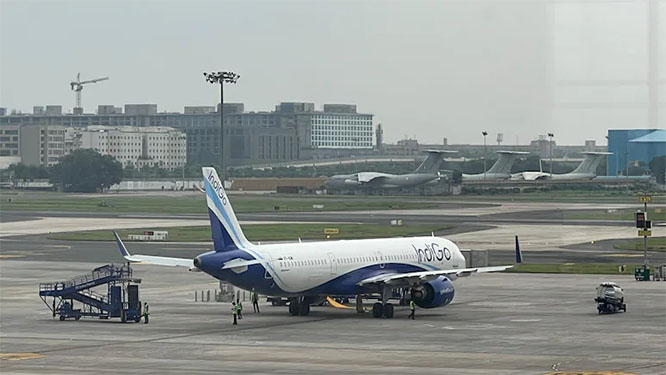
indigo.jpg

IndiGo, India’s largest airline, is battling one of its worst operational disruptions in recent years, with hundreds of delays and cancellations throwing domestic travel into chaos.

Government data on Tuesday showed its on-time performance plunging to 35%, an unusual dip for a carrier long associated with punctuality.

By Wednesday afternoon, airports in Delhi, Mumbai, Bengaluru and Hyderabad had collectively reported close to 200 cancellations, stranding travellers across the country.

Crew Shortage After New Duty Norms

A major trigger behind the meltdown is a severe crew shortage, especially among pilots, following the rollout of revised Flight Duty Time Limitation (FDTL) norms last month.

The rules mandate longer rest hours and more humane rosters — a shift IndiGo has struggled to incorporate across its vast network.

Sources said several flights were grounded due to lack of cabin crew, while some delays stretched upwards of eight hours.

With IndiGo controlling over 60% of India’s domestic aviation market, the ripple effect has impacted airports nationwide.

IndiGo Issues Apology, Lists “Compounding Factors”

In a statement, IndiGo acknowledged the large-scale disruption:

“We sincerely apologise to customers. A series of unforeseen operational challenges — technology glitches, winter schedule changes, adverse weather, system congestion and updated FDTL norms — created a compounding impact that could not have been anticipated.”

To stabilise operations, the airline has begun calibrated schedule adjustments for the next 48 hours, aiming to restore punctuality. Affected passengers are being offered refunds or alternate travel arrangements, IndiGo said.

What the FDTL Rules Require

The FDTL norms, designed to reduce pilot fatigue, cap duty and flying hours as follows:
•    Maximum 8 hours of flying per day
•    35 hours per week
•    125 hours per month
•    1,000 hours per year

Crew must also receive rest equalling twice the flight duration, with a minimum 10-hour rest period in any 24-hour window.

The DGCA introduced these limits to enhance flight safety.

Hyderabad: 33 Flights Cancelled, Long Queues Reported

Hyderabad’s Rajiv Gandhi International Airport saw heavy early-morning crowds as 33 IndiGo flights (arrivals and departures) were cancelled.

The airport clarified on X that operations were normal, advising passengers to contact IndiGo directly for latest flight status.

Cancellations included flights to and from Visakhapatnam, Goa, Ahmedabad, Delhi, Bengaluru, Chennai, Madurai, Hubli, Bhopal and Bhubaneswar.

Bengaluru: 42 Flights Disrupted

Bengaluru’s Kempegowda International Airport recorded 42 cancellations — 22 arrivals and 20 departures — affecting routes to Delhi, Mumbai, Chennai, Hyderabad, Goa, Kolkata and Lucknow.

Passengers Vent on Social Media

Irate travellers took to X to share their experiences. One passenger stranded in Hyderabad wrote: “I have been here since 3 a.m. and missed an important meeting.”

Another said: “My flight was pushed from 1:55 PM to 2:55 PM and now 4:35 PM. I was informed only three minutes before entering the airport.”

Delhi Airport Hit by Tech Glitch

At Delhi Airport, the disruption deepened due to a slowdown in the Amadeus system — used for reservations, check-ins and departure control.

The technical issue led to longer queues and sluggish processing, adding to delays already worsened by staff shortages.

Comments

Add new comment

  • Coastaldigest.com reserves the right to delete or block any comments.
  • Coastaldigset.com is not responsible for its readers’ comments.
  • Comments that are abusive, incendiary or irrelevant are strictly prohibited.
  • Please use a genuine email ID and provide your name to avoid reject.
News Network
November 22,2025

The Karnataka government has announced a 50% rebate on pending traffic and transport fines. The discount is available from November 21 to December 12.

The rebate applies to all traffic e-challans and violation cases booked by the RTO between 1991–92 and 2019–20. Officials clarified that the offer is not applicable to pending tax dues and is restricted only to traffic-violation fines.

Across Karnataka, more than 4 lakh RTO cases remain pending, including those involving transport vehicles. While thousands of vehicle owners have already cleared their dues, the department expects to generate substantial revenue through this limited-period rebate.

How to Pay and Avail the Discount

There are three ways to check and pay your pending fines:

1. Through Mobile Apps
Available on both Play Store and App Store:
•    Karnataka State Police (KSP) app
•    KarnatakaOne app
•    ASTraM app

Steps:
•    Enter your vehicle number in any of the above apps
•    Verify the photo/details of your vehicle
•    Pay the fine with the 50% discount applied

2. Visit a Traffic Police Station

You can pay your pending fine at any nearby traffic police station.

3. Visit the Traffic Management Centre (TMC)

•    Location: First Floor, Infantry Road, near Indian Express, Bengaluru

Transport Commissioner Yogeesh A M said, “We don't issue e-challans, so there's no online payment system.”

The department estimates ₹52 crore in pending RTO fines up to March 2020. “With the 50% rebate, we expect to collect around ₹25 crore if all dues are cleared,” he added.

Comments

Add new comment

  • Coastaldigest.com reserves the right to delete or block any comments.
  • Coastaldigset.com is not responsible for its readers’ comments.
  • Comments that are abusive, incendiary or irrelevant are strictly prohibited.
  • Please use a genuine email ID and provide your name to avoid reject.