Masks come off in Israel as the country vaunts covid-19 victory

Agencies
April 19, 2021

israel.jpg

Tel Aviv, Apr 19: Israelis stepped into the streets without masks on Sunday for the first time in a year, a key milestone as the country vaccinates its way out of a coronavirus nightmare.

"It's very strange but it's very nice," said Eliana Gamulka, 26, after getting off a bus near the busy Jerusalem shopping boulevard of Jaffa Street and removing her face covering.

"You can't pretend that you don't know anyone any more," she smiled.

With over half the population fully vaccinated in one of the world's fastest anti-Covid 19 inoculation campaigns, the health ministry announced on Thursday that masks would no longer be required in public outdoor spaces.
For Gamulka, a project manager, the good news came at the perfect time: just two weeks before her wedding.

It will be "very nice to celebrate with everyone, now without masks," she said. "The pictures will be great! I'm very relieved. We can start living again."

The vaccination of close to five million people has sent Israel's coronavirus caseload tumbling from some 10,000 new infections per day as recently as mid-January, to around 200 cases a day.

That has allowed the re-opening of schools, bars, restaurants and other indoor gatherings -- although masks are still required in indoor public spaces.

And even before Health Minister Yuli Edelstein's announcement came into effect, punters in the popular bars of Jerusalem's Mahane Yehuda market were mask-free and smiling on Thursday evening.

Yet on Sunday, office worker Ester Malka said she wasn't quite ready to let down her guard.

"We're allowed, but I'm still afraid, I got used to (wearing a mask)," she said.

"I feel like it's part of my life. We'll see what happens when everyone has taken them off. If it goes well for a couple of months, then I'll remove mine."

Israel just months ago had the world's highest infection rate, a coronavirus outbreak that left 6,300 people dead among 836,000 cases.

But the Jewish state sent its coronavirus caseload tumbling after striking a deal for a vast stock of Pfizer/BioNTech jabs.

In exchange, it agreed to pay above market price and share data it gathers on the recipients, using one of the world's most sophisticated medical data systems.

Since December, some 53 per cent of Israel's 9.3 million people have received both doses of the jab, including around four-fifths of the population aged over 20.

As recently as January it was registering 10,000 cases per day.

But as the effects of mass vaccination kicked in, by March it was able to implement a gradual re-opening.

"There's no better advertisement for Pfizer," said Shalom Yatzkan, a computer programmer who had been in quarantine after catching the virus.

"I was sick for three days, I had neck pains and felt weak," he said as he walked through central Jerusalem. "I just hope the new variants don't catch up with us."

Another Sunday landmark in Israel's exit from coronavirus restrictions was the full resumption of the country's educational system, without restrictions on the numbers of pupils in classrooms.

Speaking at a Jerusalem high school, Prime Minister Benjamin Netanyahu hailed the "festivity" of the day for the schools, while warning of complacency.

"We're not done with the coronavirus yet, since it can return," he said, stressing the need to obtain "millions more vaccinations".

"Sooner or later, we'll need another vaccination (dose)," he said.

The situation in Israel is in stark contrast to the occupied West Bank and the blockaded Gaza Strip, where infection rates remain high and vaccinations are low.

Gaza, which is ruled by the Islamist movement Hamas, said on Sunday it had recorded 23 deaths over the past 24 hours -- the highest ever daily coronavirus toll, with 761 deaths since the start of the pandemic.

Rights groups have urged Israel to supply vaccines to the 4.8 million Palestinians living there, but Israel says that falls under the Palestinian Authority's responsibility.

It has however vaccinated over 105,000 Palestinian workers who hold permits for employment in Israel and the settlements.

In Jerusalem, meanwhile, Gamulka was enjoying the simple pleasure of new-found freedoms.

"It's nice not to have something on your face any more," she said.

Comments

Add new comment

  • Coastaldigest.com reserves the right to delete or block any comments.
  • Coastaldigset.com is not responsible for its readers’ comments.
  • Comments that are abusive, incendiary or irrelevant are strictly prohibited.
  • Please use a genuine email ID and provide your name to avoid reject.
News Network
January 23,2026

modIKERALA.jpg

Prime Minister Narendra Modi, during his visit to Thiruvananthapuram on Friday, January 23, indicated that the Bharatiya Janata Party (BJP) is aiming to expand its political footprint in Kerala ahead of the Assembly elections scheduled in the coming months.

Speaking at a BJP-organised public meeting, Modi drew parallels between the party’s early electoral gains in Gujarat and its recent victory in the Thiruvananthapuram Municipal Corporation. The civic body win, which ended decades of Left control, was cited by the Prime Minister as a possible starting point for the party’s broader ambitions in the state.

Recalling BJP’s political trajectory in Gujarat, Modi said the party was largely insignificant before 1987 and received little media attention. He pointed out that the BJP’s first major breakthrough came with its victory in the Ahmedabad Municipal Corporation that year.

“Just as our journey in Gujarat began with one city, Kerala’s journey has also started with a single city,” Modi said, suggesting that the party’s municipal-level success could translate into wider electoral acceptance.

The Prime Minister alleged that successive governments led by the Left Democratic Front (LDF) and the United Democratic Front (UDF) had failed to adequately develop Thiruvananthapuram. He accused both fronts of corruption and neglect, claiming that basic infrastructure and facilities were denied to the capital city for decades.

According to Modi, the BJP’s control of the civic body represents a shift driven by public dissatisfaction with the existing political alternatives. He asserted that the BJP administration in Thiruvananthapuram had begun working towards development, though no specific details or timelines were outlined.

Addressing the gathering at Putharikandam Maidan, Modi said the BJP intended to project Thiruvananthapuram as a “model city,” reiterating his party’s commitment to governance-led change.

The Prime Minister’s visit to Kerala also included the inauguration of several development projects and the flagging off of new train services, as the BJP intensifies its political outreach in the poll-bound state.

Comments

Add new comment

  • Coastaldigest.com reserves the right to delete or block any comments.
  • Coastaldigset.com is not responsible for its readers’ comments.
  • Comments that are abusive, incendiary or irrelevant are strictly prohibited.
  • Please use a genuine email ID and provide your name to avoid reject.
News Network
January 20,2026

iran.jpg

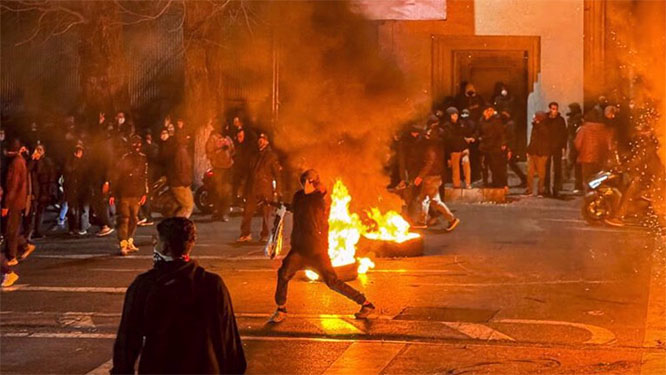
Iranian security and intelligence forces have captured more than 470 individuals in three provinces, identified as key figures behind the recent wave of violent unrest and terrorist activities linked to foreign-backed networks.

The Intelligence Ministry's provincial office in Khorasan Razavi announced on Monday the arrest of 192 armed terrorists, identified as the main agents behind recent riots in the region. 

According to an official statement, the detainees were involved in the killing of several security personnel and civilians, setting fire to mosques, public service facilities, and buses, as well as attacks on military and law enforcement centers.

The seized items from the group include several bulletproof vests, Kalashnikov rifles, hunting weapons, Winchester rifles, and various cold weapons such as daggers, swords, brass knuckles, tactical knives, crossbows, and chains.

Evidence indicates that some of the individuals were tied to hostile movements and terrorist organizations, with links overseas. Others were identified as members of violent criminal gangs, actively taking part in the unrest alongside their associates.

Simultaneously, in the western province of Lorestan, the IRGC announced the arrest of 134 individuals as the main leaders and influential field agents of a US-Israeli terrorist network.

The IRGC statement stated that these individuals formed terrorist cells during the recent unrest, committing "Daesh-like" acts.

They wounded security forces with firearms and cold weapons, and burned and destroyed public and private properties, including mosques, shops, banks, and private and public vehicles.

In the northwestern province of Zanjan, the police reported detaining 150 people identified as principal leaders and agents behind recent riots.

Authorities noted that these individuals were responsible for destroying public and private property and intentionally setting fire to vehicles in the province's squares.

Their crimes include shedding the blood of innocent people, destroying public and private property, attempting to enter military sites, disrupting public order, and spreading terror among citizens.

A variety of cold weapons were reportedly seized from the detainees.

What began late last month as peaceful protests over economic hardship across Iran turned violent after public statements by US and Israeli regime figures encouraged vandalism and disorder.

During the unrest, foreign-backed mercenaries rampaged through cities, killing security forces and civilians and damaging public property.

Comments

Add new comment

  • Coastaldigest.com reserves the right to delete or block any comments.
  • Coastaldigset.com is not responsible for its readers’ comments.
  • Comments that are abusive, incendiary or irrelevant are strictly prohibited.
  • Please use a genuine email ID and provide your name to avoid reject.
News Network
January 23,2026

oscar.jpg

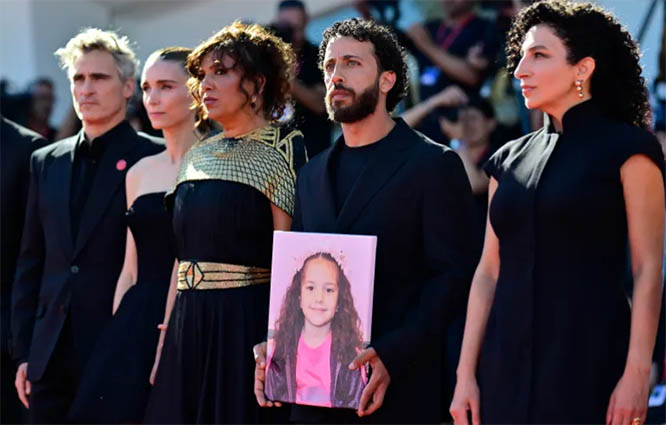
The Voice of Hind Rajab, inspired by the tragic final moments of a young Palestinian girl killed by Israeli fire in Gaza, has been nominated for an Academy Award in the Best International Feature Film category.

Directed by Tunisian filmmaker Kaouther Ben Hania, the film recounts the true story of five-year-old Hind Rajab, who lost her life in January 2024 while fleeing Israeli bombardment with her family.

The film features the real audio of Hind’s desperate call to the Palestinian Red Crescent Society, where she pleaded for help moments before the vehicle she was in was struck by 355 bullets.

The haunting narrative begins with a brief call made from the besieged Tel al-Hawa neighborhood of Gaza, where gunfire and armored vehicles drowned out every sound.

After witnessing the brutal killing of her family, she made a trembling call, her voice reduced to a whisper as she spoke of the massacre and her unbearable loneliness as the sole survivor.

Premiering at the Venice International Film Festival in September 2025, The Voice of Hind Rajab garnered widespread acclaim, receiving a record-setting 23-minute standing ovation and the Silver Lion Grand Jury Prize, the festival’s second-highest honor.

In her acceptance speech, Ben Hania dedicated the film to humanitarian workers and first responders in Gaza, emphasizing that Hind's voice symbolizes countless civilians affected by war.

She aims to give voice to victims often reduced to mere statistics, highlighting the broader suffering of civilians in war zones.

The film’s Oscar nomination underscores its powerful storytelling and ethical approach to depicting real-life tragedy, making it a crucial piece of contemporary cinema.

It serves not only as a narration of individual tragedy but also as an artistic and documentary response to the silence and censorship that often overshadow West Asian struggles and wars.

Using an innovative method she calls docufiction, Ben Hania bridges unvarnished reality and narrative structure, creating a work that is both artistically valuable and socially impactful.

Born in 1977 in Sidi Bouzid—later the epicenter of the Arab revolution—her background profoundly influenced her worldview and artistic approach.

She is a graduate of the Higher School of Audiovisual Arts of Tunis, Pantheon-Sorbonne University, and La Fémis in Paris, where her studies equipped her with the technical and theoretical tools needed to address complex subjects. 

Comments

Add new comment

  • Coastaldigest.com reserves the right to delete or block any comments.
  • Coastaldigset.com is not responsible for its readers’ comments.
  • Comments that are abusive, incendiary or irrelevant are strictly prohibited.
  • Please use a genuine email ID and provide your name to avoid reject.