



President Assad gave orders for peaceful power transition before leaving Syria: Russia

News Network
December 8, 2024

Russia says Syrian President Bashar al-Assad has issued orders for a peaceful transition of power before he resigned and departed from the country.

The Russian Foreign Ministry said in a statement on Sunday that President Assad decided to step down after negotiations with “a number of participants in the armed conflict on the territory of the Syrian Arab Republic.”

Assad, Russia said, gave “instructions for a peaceful transfer of power.”

The ministry did not provide further information regarding Assad's whereabouts.

According to the statement, Moscow “did not participate in these negotiations,” but it calls on all “parties involved to refrain from the use of violence and to resolve all issues of governance through political means.”

"In that regard, the Russian Federation is in contact with all groups of the Syrian opposition."

Moscow said Russia's military bases in the Arab country had been put on a state of high alert, but that there was no serious threat to them at the current time.

On Saturday evening, Iranian Foreign Minister Abbas Araghchi urged "political dialogue" between the Syrian government and militant groups after a meeting with foreign ministers of Russia and Turkey in the Qatari capital of Doha on Saturday evening.

Araghchi said there was a consensus among all the participants that hostilities in Syria must end immediately and the country’s territorial integrity and national sovereignty must be respected based on the UN resolution.

The meeting was also attended by United Nations Special Envoy for Syria Geir Pedersen, who had urged all parties “to spare bloodshed and focus on a political solution in accordance with Security Council Resolution 2254.”

The conflict began when Hayat Tahrir al-Sham (HTS) militant group launched a large-scale attack in Aleppo and Idlib provinces in the northwest of Syria on November 27, seizing several areas.

The group took control of parts of the country's second-biggest city, Aleppo, and advanced southward toward the city of Hama. Earlier on Sunday, the armed group declared that they had captured the capital, Damascus.

Comments

Add new comment

  • Coastaldigest.com reserves the right to delete or block any comments.
  • Coastaldigset.com is not responsible for its readers’ comments.
  • Comments that are abusive, incendiary or irrelevant are strictly prohibited.
  • Please use a genuine email ID and provide your name to avoid reject.
News Network
November 21,2025

Bengaluru, Nov 21: The Karnataka government is facing pressure to overhaul its employment system after a high-level Cabinet sub-committee recommended the complete phase-out of job outsourcing in government offices, boards, and corporations by March 2028. The move is aimed at tackling a systemic issue that has led to the potential violation of constitutional reservation policies and the exploitation of workers.

The Call for Systemic Change

With over three lakh vacant posts currently being filled through private agencies on an outsource, insource, or daily wage basis, the sub-committee highlighted a significant lapse. "As a result, reservations are not being followed as per the Constitution and state laws. It’s an urgent need to take serious steps to change the system. It has been recommended to completely stop the system of outsourcing by March 2028," the panel stated in a document.

The practice of outsourcing involves private companies hiring workers to perform duties for a government agency. Critics argue this model results in lesser salaries, a lack of social security benefits (otherwise available to permanent government employees), and a failure to adhere to the provisions of Articles 14 and 15 of the Constitution, which guarantee equality before the law and prohibit discrimination.

The 'Bidar Model' as a Stop-Gap Solution

To regulate the current mode of employment and reduce worker exploitation until the 2028 deadline, the government plans to establish workers’ services multi-purpose cooperative societies across all districts, following the successful "Bidar Model."

The Bidar District Services of Labour Multi-purpose Cooperative Society Ltd., which operates under the District Commissioner, is cited as a successful example of providing a measure of social security to outsourced staff. Labour Department officials argue this society ensures workers receive their due wages and statutory facilities like ESI (Employees' State Insurance) and PF (Provident Fund), in exchange for a 1% service fee collected from the employees.

legislative push and Priority Insourcing

The recommendations, led by the sub-committee headed by Law and Parliamentary Affairs Minister H K Patil, are set to be discussed at the next Cabinet meeting. The committee has proposed the introduction of the Karnataka Outsourced Employees (Regulation, Placement and Welfare) Bill 2025.

In a move addressing immediate concerns, Labour Minister Santosh Lad, a member of the sub-committee, has reportedly assured that steps will be taken over the next 2-3 years to insource workers in "life-threatening services" on a priority basis. This includes essential personnel like pourakarmikas (sanitation workers), drivers, electrical staff in the Energy Department, and Health Department staff handling contagious diseases. The transition aims to grant these workers the long-term security and benefits they currently lack under the outsourcing system. 

Comments

Add new comment

  • Coastaldigest.com reserves the right to delete or block any comments.
  • Coastaldigset.com is not responsible for its readers’ comments.
  • Comments that are abusive, incendiary or irrelevant are strictly prohibited.
  • Please use a genuine email ID and provide your name to avoid reject.
News Network
November 22,2025

gaza.jpg

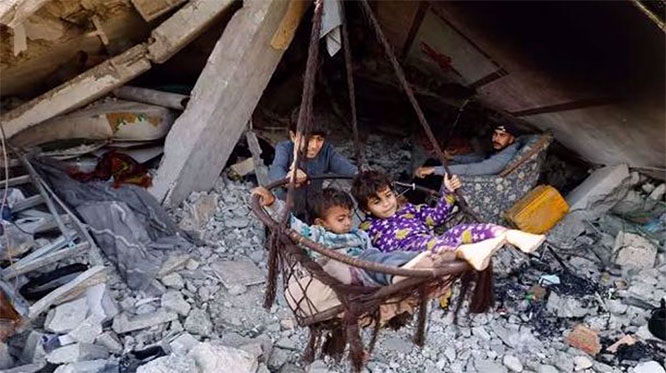
The Israeli regime’s forces have killed two Palestinian children in the Gaza Strip every day since the ceasefire began in early October, UNICEF has warned.

The UN children’s agency said on Friday that Israeli forces continue to attack Palestinians in Gaza even though the agreement was meant to stop the killing.

“Since 11 October, while the ceasefire has been in effect, at least 67 children have been killed in conflict-related incidents in the Gaza Strip. Dozens more have been injured. That is an average of almost two children killed every day since the ceasefire took effect,” UNICEF spokesperson Ricardo Pires said in Geneva, reminding that each number in the statistics represents a child whose life had ended violently.

“These are not statistics,” he said. “Each child had a story, a family, and a future that was stolen from them.”

Data from Palestinian factions, human rights groups, and government bodies recorded since the US-brokered ceasefire deal went into effect on October 10 show that Israeli forces have carried out numerous attacks, each constituting a separate ceasefire violation.

UNICEF teams say they repeatedly continue to witness heart-wrenching scenes of fearful Palestinian children sleeping outdoors with amputated limbs, while others live as orphans in flooded, makeshift shelters.

“I saw this myself in August. There is no safe place for them. The world cannot normalize their suffering,” Pires said, lamenting that the UN could “do a lot more if the aid that is really needed was entering faster.”

The UNICEF spokesperson warned that with the advent of winter, the risks for hundreds of thousands of displaced children will increase.

He warned, “The stakes are incredibly high” for children as winter acts as a threat multiplier, where children have no heating, no insulation, and few blankets. He said respiratory infections rise.

“Too many children have already paid the highest price,” Pires said. “Too many are still paying it, even under a ceasefire. The world promised them it would stop and that we would protect them.”

“Now we must act like it,” the UNICEF spokesperson added.

Since the Israeli regime launched its genocidal war against Palestinians in Gaza in October 2023, it has killed nearly 70,000 people in the territory, most of them women and children, and injured over 170,000 more, while reducing most of the structures in the enclave to rubble.

Comments

Add new comment

  • Coastaldigest.com reserves the right to delete or block any comments.
  • Coastaldigset.com is not responsible for its readers’ comments.
  • Comments that are abusive, incendiary or irrelevant are strictly prohibited.
  • Please use a genuine email ID and provide your name to avoid reject.
News Network
November 26,2025

students.jpg

Bengaluru, Nov 26: Karnataka is taking its first concrete steps towards lifting a three-decade-old ban on student elections in colleges and universities. Deputy Chief Minister D.K. Shivakumar announced Wednesday that the state government will form a small committee to study the reintroduction of campus polls, a practice halted in 1989 following incidents of violence.

Speaking at a 'Constitution Day' event organised by the Karnataka Congress, Mr. Shivakumar underscored the move's aim: nurturing new political leadership from the grassroots.

"Recently, (Leader of the Opposition in Lok Sabha) Rahul Gandhi wrote a letter to me and Chief Minister (Siddaramaiah) asking us to think about restarting student elections," Shivakumar stated. "I'm announcing today that we'll form a small committee and seek a report on this."

Student elections were banned in Karnataka in 1989, largely due to concerns over violence and the infiltration of political party affiliates into campus life. The ban effectively extinguished vibrant student bodies and the pipeline of young leaders they often produced.

Mr. Shivakumar, who also serves as the Karnataka Congress president, said that former student leaders will be consulted to "study the pros and cons" of the re-introduction.

Acknowledging the history of the ban, he added, "There were many criminal activities taking place back then. We’ll see how we can conduct (student) elections by regulating such criminal activities."

The Deputy CM reminisced about his own journey, which began on campus. He recalled his political activism at Sri Jagadguru Renukacharya College leading to his first Assembly ticket in 1985 at the age of 23. "That's how student leadership was at the time. Such leadership has gone today. College elections have stopped," he lamented, adding that for many, college elections were "like a big movement" where leaders were forged.

The move, driven by the Congress high command's push to cultivate young talent, will face scrutiny from academics and university authorities who have, in the past, expressed concern that the return of polls could disrupt the peaceful academic environment and turn campuses into political battlegrounds.

Comments

Add new comment

  • Coastaldigest.com reserves the right to delete or block any comments.
  • Coastaldigset.com is not responsible for its readers’ comments.
  • Comments that are abusive, incendiary or irrelevant are strictly prohibited.
  • Please use a genuine email ID and provide your name to avoid reject.