Saudi Arabia, China emerge as comprehensive strategic partners as Xi wraps up kingdom visit

News Network
December 10, 2022

arab.jpg

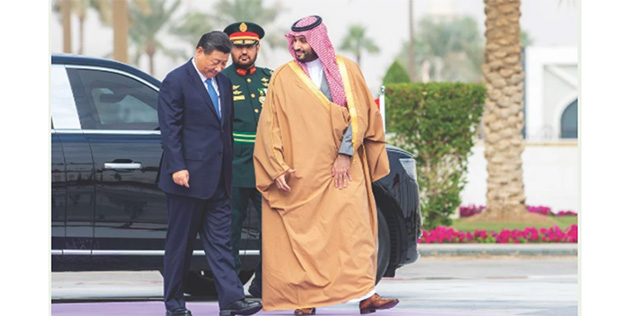
Riyadh: Saudi Arabia and China agreed to strengthen their strategic relations and expand commercial ties during Chinese President Xi Jinping’s three-day state visit to the Kingdom.

Xi and his delegation held talks with Saudi Arabia’s King Salman, Crown Prince Mohammed bin Salman, and the heads of key ministries, resulting in 35 memorandums of understanding and deals worth $30 billion.

The two sides signed a Comprehensive Strategic Partnership Agreement, committing to support each other’s core interests, sovereignty and territorial integrity, and to defend the principle of non-interference in the internal affairs of states.

Addressing the media at the conclusion of Xi’s visit on Friday, Prince Faisal bin Farhan, the Saudi minister of foreign affairs, said the deepening of relations with China did not mean the Kingdom was turning its back on the US and other Western allies.

He said: “Saudi Arabia’s main focus is how to grow economically, and through the work with strategic partners we will continue to find ways to enhance bilateral cooperation with all.

“The Kingdom is a member of the G20 and is aiming to become one of the top 15 economies globally. We have to be open to cooperation with everyone.

“There is no doubt that working together with the second largest economy in the world is vital to Saudi Arabia’s growth, but that does not mean that we cannot continue to work with the world’s largest economy.

“We strive to work with all large economies and others around the world. By working with various partners, it will ensure the transition of the Kingdom to another level of growth that cannot happen by declining opportunities from one country to another.

“We have to be open to cooperating with others and that has been the Kingdom’s philosophy to achieve mutual interests.”

The Saudi side reaffirmed its adherence to the one-China principle during the summit, while the Chinese side expressed support for the Kingdom in maintaining its security and stability, and rejected any attacks targeting civilians, civilian infrastructure, territories, and Saudi interests.

“We look to enhance our Comprehensive Strategic Partnership with China and find means to develop it beyond trade,” said Prince Faisal. “The partnership supports the Kingdom’s development and serves its interests.”

Regarding regional and international issues, the two sides welcomed the first China-GCC Summit and the first Arab-Chinese Summit, both of which were also held in Riyadh on Friday.

The two sides stressed the importance of enhancing cooperation through the high-level Saudi-Chinese Joint Committee to achieve common goals, enhance cooperation, and intensify communication between government and private sectors.

Both sides stressed the importance of stability in the global oil markets and agreed to explore common investment opportunities in petrochemicals, and to enhance cooperation in solar, wind, and other sources of renewable energy.

They also agreed to cooperate on hydrocarbons, energy efficiency, localization of energy sector components and supply chains, in addition to the peaceful uses of nuclear energy and the development of technologies like artificial intelligence.

In particular, the delegations stressed the importance of deepening cooperation with regard to the Belt and Road Initiative, including involvement in energy and investment partnerships and making use of the Kingdom’s location as a regional center.

The two sides welcomed the signing of the “harmonization plan” between the Kingdom’s Vision 2030 social reform and economic diversification agenda and China’s Belt and Road Initiative.

Xi announced the launch of the Belt and Road Initiative — formerly known as One Belt One Road — in 2013.

The initiative sets out to connect the markets and manufacturers of East Asia to those of Europe via a vast logistical and digital network running through Central Asia, the Middle East and North Africa in a modern-day reimagining of the ancient Silk Road.

China’s Belt and Road Initiative shares the same goal of boosting interconnectivity through cooperation in energy, trade, investment and technology as Saudi Arabia’s Vision 2030 agenda, launched in 2016 by the Saudi crown prince.

China is Saudi Arabia’s largest trading partner. According to Reuters news agency, bilateral trade between the two countries hit $87.3 billion in 2021, with Chinese exports to the Kingdom reaching $30.3 billion and China’s imports from Saudi Arabia totaling $57 billion.

China’s main exports to Saudi Arabia are textiles, electronics and machinery, while China mainly imports crude oil and primary plastics from the Kingdom. In the first 10 months of 2022, China’s Saudi oil imports reached 1.77 million barrels per day, valued at $55.5 billion, according to Chinese customs data.

The delegations agreed to boost the volume of non-oil trade, increase joint investments, expand capacity for commercial airlines, motivate private sector investment, and create an attractive investment environment.

In particular they agreed to deepen cooperation in the automotive industry, supply chains, logistics, water desalination, infrastructure, manufacturing, mining, and the financial sector.

The Saudi side said it hopes to attract Chinese expertise to participate in the Kingdom’s forthcoming mega-projects, and for Chinese companies to open regional headquarters in Saudi Arabia.

The two sides also welcomed agreements concerning hydrogen energy, the judiciary, Chinese language education, housing, direct investment, radio and television, the digital economy, economic development, standardization, the news media, tax administration, and anti-corruption.

The Chinese delegation also expressed its keenness to deepen investment cooperation in the digital economy and green development, enhance cooperation in e-commerce, and explore means of joint economic and trade cooperation with Africa.

Regarding the shared challenge of climate change, the Chinese delegation welcomed the Kingdom’s Saudi Green Initiative and Middle East Green Initiative and expressed its support for Saudi Arabia’s application of the circular carbon economy.

They also agreed to urge developed countries to take their historic responsibilities seriously, through the fulfillment of their obligations by greatly reducing emissions before the target date, and to tangibly help developing countries through financial, technical, and capacity-building support.

The two sides stressed the need to strengthen partnership in communications, digital economy, innovation, and space, to achieve better digital infrastructure for the future generations in both countries.

They also stressed the importance of enhancing cooperation and joint action on developing the air and sea transport sectors, modern transport modes and railways, and expediting the completion of studies on the Saudi land bridge project.

Both delegations affirmed their determination to develop cooperation in defense to combat organized crime, terrorism, and cybercrimes.

They also stressed the importance of strengthening health cooperation to combat current and future health threats and pandemics, and agreed to develop cooperation in the areas of heritage, culture, sport, tourism, and science.

Comments

Add new comment

  • Coastaldigest.com reserves the right to delete or block any comments.
  • Coastaldigset.com is not responsible for its readers’ comments.
  • Comments that are abusive, incendiary or irrelevant are strictly prohibited.
  • Please use a genuine email ID and provide your name to avoid reject.
News Network
November 21,2025

israel.jpg

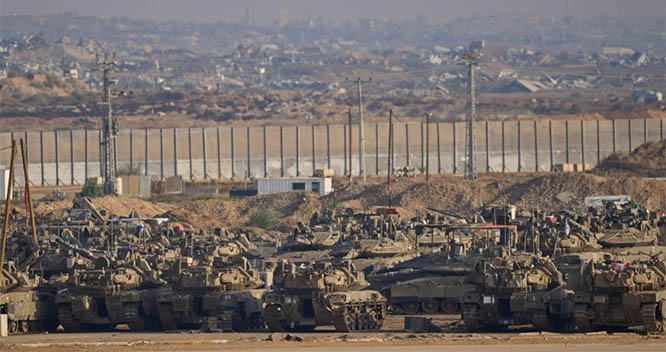
Local authorities say the Israeli military has expanded the so-called “yellow line” truce demarcation in Gaza City and repositioned its forces deeper into the territory in violation of a ceasefire agreement that came into force on October 10, besieging dozens of Palestinian families.

Gaza’s Government Media Office announced in a statement on Thursday that Israeli forces widened the boundary by shifting the markers, and advanced roughly 300 meters (984 feet) into the neighborhoods of Ash-Shaaf, An-Nazzaz and Baghdad Street.

The move pushed further into civilian areas, trapping families who were unable to flee as tanks rolled forward, it added.

“The fate of many of these families remains unknown amidst the shelling that targeted the area,” the office said, adding that the expansion of the yellow line shows a “blatant disregard” for the ceasefire deal.

On Friday, sources said the Israeli military carried out continued air and artillery strikes inside the so-called “yellow line” east of Khan Younis in the southern Gaza Strip.

According to the reports, Israeli warplanes and tanks targeted areas within the zone. One Palestinian was reported killed and several others wounded in the strikes, the sources said.

The fresh aggression came only a day after 25 Palestinians were killed in Israeli airstrikes on Gaza City and Khan Younis on Wednesday.

The media office reported that Israel has consistently violated the truce deal since its implementation last month, with near-daily attacks by air, artillery and direct shootings.

The office said over 400 violations have been documented. These breaches have resulted in the deaths of more than 300 Palestinians and left hundreds injured.

The Government Media Office in Gaza urged the guarantors of the ceasefire — the US, Egypt, Qatar and Turkey — to take swift action to halt the ongoing violations and facilitate the delivery of food, shelter materials, medical aid, and infrastructure equipment.

The so-called “yellow line,” set out in the agreement between Israel and Hamas resistance movement, refers to a non-physical partition where the Israeli military repositioned itself when the truce deal took effect.

It has allowed Israel, which routinely fires at Palestinians who approach the line, to retain control over more than half of the Gaza Strip.

International bodies, including the UN Independent International Commission of Inquiry, the International Association of Genocide Scholars, Amnesty International, Human Rights Watch, B’Tselem, and other rights groups, have concluded that the Israeli war on Gaza amounts to genocide.

In the attacks in Gaza since October 2023, Israel has killed at least 69,546 people and injured 170,833 others, leveling large swaths of the territory and displacing almost all of the population. 

Comments

Add new comment

  • Coastaldigest.com reserves the right to delete or block any comments.
  • Coastaldigset.com is not responsible for its readers’ comments.
  • Comments that are abusive, incendiary or irrelevant are strictly prohibited.
  • Please use a genuine email ID and provide your name to avoid reject.
News Network
November 26,2025

students.jpg

Bengaluru, Nov 26: Karnataka is taking its first concrete steps towards lifting a three-decade-old ban on student elections in colleges and universities. Deputy Chief Minister D.K. Shivakumar announced Wednesday that the state government will form a small committee to study the reintroduction of campus polls, a practice halted in 1989 following incidents of violence.

Speaking at a 'Constitution Day' event organised by the Karnataka Congress, Mr. Shivakumar underscored the move's aim: nurturing new political leadership from the grassroots.

"Recently, (Leader of the Opposition in Lok Sabha) Rahul Gandhi wrote a letter to me and Chief Minister (Siddaramaiah) asking us to think about restarting student elections," Shivakumar stated. "I'm announcing today that we'll form a small committee and seek a report on this."

Student elections were banned in Karnataka in 1989, largely due to concerns over violence and the infiltration of political party affiliates into campus life. The ban effectively extinguished vibrant student bodies and the pipeline of young leaders they often produced.

Mr. Shivakumar, who also serves as the Karnataka Congress president, said that former student leaders will be consulted to "study the pros and cons" of the re-introduction.

Acknowledging the history of the ban, he added, "There were many criminal activities taking place back then. We’ll see how we can conduct (student) elections by regulating such criminal activities."

The Deputy CM reminisced about his own journey, which began on campus. He recalled his political activism at Sri Jagadguru Renukacharya College leading to his first Assembly ticket in 1985 at the age of 23. "That's how student leadership was at the time. Such leadership has gone today. College elections have stopped," he lamented, adding that for many, college elections were "like a big movement" where leaders were forged.

The move, driven by the Congress high command's push to cultivate young talent, will face scrutiny from academics and university authorities who have, in the past, expressed concern that the return of polls could disrupt the peaceful academic environment and turn campuses into political battlegrounds.

Comments

Add new comment

  • Coastaldigest.com reserves the right to delete or block any comments.
  • Coastaldigset.com is not responsible for its readers’ comments.
  • Comments that are abusive, incendiary or irrelevant are strictly prohibited.
  • Please use a genuine email ID and provide your name to avoid reject.
News Network
November 24,2025

israelsyra.jpg

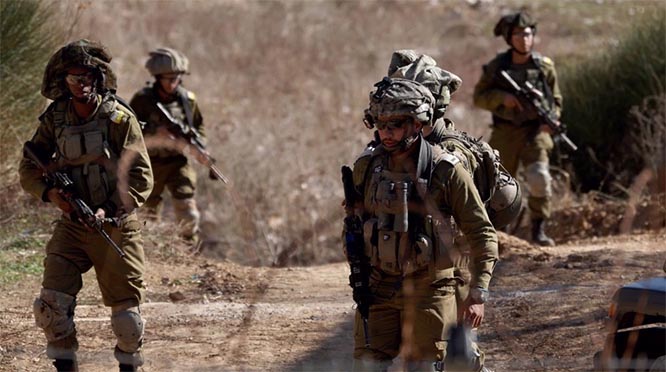
Israeli forces have pushed over the Syrian frontier, erecting a checkpoint and stopping vehicles in the southwestern city of Quneitra, in yet another breach of the Arab country’s sovereignty.

The violation took place on Sunday, when the troops made their way across the border, setting up the outpost near the Ain al-Bayda junction in northern Quneitra, Syrian outlets reported.

According to the al-Ikhbariya paper, an Israeli detachment positioned itself at the junction, halting cars and conducting searches.

The Syrian Arab News Agency (SANA) reported that three Israeli military vehicles then moved further into the northern countryside, deploying between the town of Jubata al-Khashab and the villages of Ofaniya and Ain al-Bayda. The agency added that a separate Israeli unit mounted a new incursion in the central region, approaching the villages of Umm Batina and al-Ajraf.

Residents said such activities have surged in recent months, pointing to Israeli advances onto farmland, leveling of extensive forested areas, arrests, and spread of mobile checkpoints.

The Israeli regime began markedly increasing its military aggression against Syria last year.

The escalation coincided with increasingly ferocious onslaughts throughout the country by the so-called Hay'at Tahrir al-Sham (HTS) Takfiri terrorist group, which the government of President Bashar al-Assad had confined to northwestern Syria. The HTS, however, managed to overthrow the government as the Israeli attacks would pummel the country’s civilian and defensive infrastructure.

Various reports have shown that, during the escalation, the regime conducted more than 1,000 airstrikes on the Syrian territory and over 400 ground raids into the south.

Following the collapse of the Assad government, Tel Aviv also widened its grip over the occupied Golan Heights by taking control of a demilitarized buffer zone, in defiance of a 1974 Disengagement Agreement. Earlier this month, senior Israeli officials, including Prime Minister Benjamin Netanyahu, visited the buffer zone, prompting expressions of alarm on the part of the United Nations.

The United States, the regime’s biggest ally, has, meanwhile, been fraternizing the HTS head Abu Mohammed al-Jolani amid the widely reported prospect of rapprochement with Tel Aviv.

Comments

Add new comment

  • Coastaldigest.com reserves the right to delete or block any comments.
  • Coastaldigset.com is not responsible for its readers’ comments.
  • Comments that are abusive, incendiary or irrelevant are strictly prohibited.
  • Please use a genuine email ID and provide your name to avoid reject.