What’s the situation on ground after U.S. bombardment of Iran’s key nuclear sites?

News Network
June 22, 2025

bombsUS.jpg

The United States has launched a direct military attack on Iran’s nuclear infrastructure, bombing three key facilities at Fordow, Natanz, and Isfahan. The move, ordered by U.S. President Donald Trump, comes just days after Israel initiated an unprecedented offensive on Iran.

“We have completed our very successful attack on the three nuclear sites in Iran,” Trump declared on Truth Social, referring to the strikes as a “spectacular military success.” The U.S. Air Force deployed stealth B-2 bombers armed with 13,000 kg bunker-busting bombs, while U.S. Navy submarines reportedly fired cruise missiles at strategic targets.

The sudden escalation has triggered alarm across the globe, evoking memories of the 2003 U.S. invasion of Iraq and raising fears of a wider regional war.

What Exactly Did the U.S. Bomb?

The targets were three of Iran’s most significant nuclear sites:

•    Fordow: A deeply buried underground uranium enrichment facility near Qom, heavily fortified and previously considered nearly impervious to aerial attack.

•    Natanz: Iran’s largest and most well-known enrichment complex. It was previously hit by Israeli strikes on June 13 and has long been seen as the heart of Iran’s nuclear ambitions.

•    Isfahan: A vital research and uranium conversion center that plays a key role in processing nuclear materials for reactor use.
According to U.S. media, the attack involved a combination of bunker buster bombs and cruise missiles, marking the first known combat use of the U.S. military’s GBU-57 Massive Ordnance Penetrator — capable of piercing dozens of meters of concrete.

How Much Damage Was Done?

President Trump claimed Iran’s enrichment capabilities were “completely and totally obliterated.” However, Iran offered a sharply different account.

Iranian officials said the Fordow facility had been evacuated in advance, minimizing any potential damage. The Atomic Energy Organization of Iran (AEOI) confirmed that no radiation leaks had occurred, and that field surveys found no contamination near any of the targeted sites.

Iranian authorities dismissed the attack as largely symbolic and vowed to continue their nuclear program, calling it the result of the sacrifices of the country’s “nuclear martyrs.”

The International Atomic Energy Agency (IAEA) also reported no rise in off-site radiation levels. Director Rafael Grossi announced that the agency would hold an emergency meeting on Monday to assess the full scope of the strikes.

Will Iran Retaliate Against the U.S.?

Iran has condemned the strikes as an act of war. Its Foreign Ministry called the attack a “dangerous escalation” and declared that Iran reserves the right to respond with full force to protect its sovereignty.

“The Islamic Republic of Iran considers it its right to stand against U.S. military aggression and defend national interests,” a statement said.

Military experts say retaliation is highly likely. Iran could:

•   Target U.S. military bases in the region — many of which are within range of Iranian drones and missiles.

•   Disrupt global shipping in the Persian Gulf, threatening oil supply routes.

•   Activate proxy forces in Iraq, Syria, and Lebanon to strike U.S. or allied targets.

•   Consider withdrawing from the Nuclear Non-Proliferation Treaty (NPT) — a move that could further escalate global tensions.

Iran has already signaled its intent by deploying the Kheibar Shekan missile, one of its most advanced, in a retaliatory strike on Israel.

Global Reaction: A Region on Edge

UN Secretary-General Antonio Guterres said he was “gravely alarmed,” warning that the U.S. strikes posed a direct threat to international peace and security.

“This is a dangerous escalation in a region already on the edge,” Guterres said. “There is a growing risk that this conflict could spiral out of control, with catastrophic consequences.”

Analysts believe the U.S. move might entangle it in a long-term conflict. Stephen Zunes, a Middle East expert at the University of San Francisco, said Iran has several “painful” options at its disposal and warned of a broad regional backlash.

Adam Weinstein, from the Quincy Institute, warned that this could be just the beginning. “The U.S. is now at risk of being pulled into a war of choice with Iran. What started as a single strike could become an open-ended escalation,” he said.

The Road Ahead

While the U.S. may have delivered a powerful military blow, the long-term consequences remain uncertain. Iran insists its nuclear program will continue. The region remains on high alert. And the prospect of a wider conflict now looms larger than ever.

As the dust settles, the world is watching closely — not just to assess the damage, but to see what comes next.

Comments

Add new comment

  • Coastaldigest.com reserves the right to delete or block any comments.
  • Coastaldigset.com is not responsible for its readers’ comments.
  • Comments that are abusive, incendiary or irrelevant are strictly prohibited.
  • Please use a genuine email ID and provide your name to avoid reject.
News Network
November 24,2025

Mangaluru, Nov 24: The original departure time of 11.10 pm was a distant memory for scores of Dammam-bound passengers at Mangaluru International Airport last Friday night, as their Air India Express flight was abruptly cancelled at the eleventh hour, sparking hours of frustration and chaos.

The flight, IX 885, initially scheduled to depart at 11.10 pm on November 22, was subject to two back-to-back reschedules—first pushed to 11.45 pm and then significantly postponed to 1.40 am—before the final, crushing announcement of cancellation was made. For the travellers, many of whom are likely expatriate workers with tight schedules, the last-minute change marked the beginning of a distressing ordeal.

"There was no drinking water, no food, and absolutely no proper guidance. We were left stranded like refugees," complained a stranded passenger.

According to multiple passenger accounts, the airline's ground staff failed to provide adequate support or essential amenities following the cancellation. Complaints poured in about the total absence of drinking water, food provisions, and any reliable guidance from the carrier's representatives. Travellers alleged they were left stranded for a considerable period, with no immediate arrangements or clear communication offered regarding accommodation or alternative travel to send them back home.

The incident has highlighted serious concerns over the carrier's contingency planning and customer service protocols during flight disruptions at one of India's key international gateways. The airline is yet to issue a comprehensive statement addressing the alleged lapse in passenger care.
 

Comments

Add new comment

  • Coastaldigest.com reserves the right to delete or block any comments.
  • Coastaldigset.com is not responsible for its readers’ comments.
  • Comments that are abusive, incendiary or irrelevant are strictly prohibited.
  • Please use a genuine email ID and provide your name to avoid reject.
News Network
November 22,2025

gaza.jpg

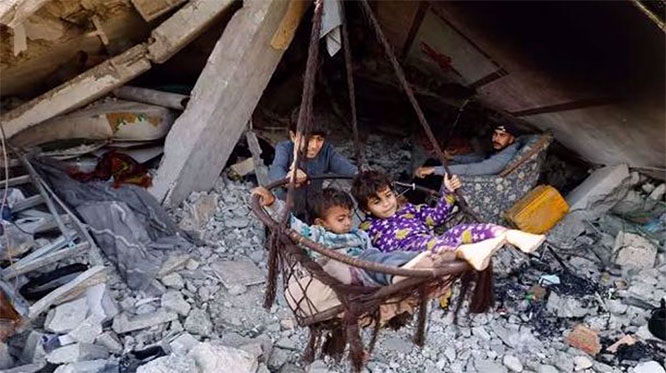
The Israeli regime’s forces have killed two Palestinian children in the Gaza Strip every day since the ceasefire began in early October, UNICEF has warned.

The UN children’s agency said on Friday that Israeli forces continue to attack Palestinians in Gaza even though the agreement was meant to stop the killing.

“Since 11 October, while the ceasefire has been in effect, at least 67 children have been killed in conflict-related incidents in the Gaza Strip. Dozens more have been injured. That is an average of almost two children killed every day since the ceasefire took effect,” UNICEF spokesperson Ricardo Pires said in Geneva, reminding that each number in the statistics represents a child whose life had ended violently.

“These are not statistics,” he said. “Each child had a story, a family, and a future that was stolen from them.”

Data from Palestinian factions, human rights groups, and government bodies recorded since the US-brokered ceasefire deal went into effect on October 10 show that Israeli forces have carried out numerous attacks, each constituting a separate ceasefire violation.

UNICEF teams say they repeatedly continue to witness heart-wrenching scenes of fearful Palestinian children sleeping outdoors with amputated limbs, while others live as orphans in flooded, makeshift shelters.

“I saw this myself in August. There is no safe place for them. The world cannot normalize their suffering,” Pires said, lamenting that the UN could “do a lot more if the aid that is really needed was entering faster.”

The UNICEF spokesperson warned that with the advent of winter, the risks for hundreds of thousands of displaced children will increase.

He warned, “The stakes are incredibly high” for children as winter acts as a threat multiplier, where children have no heating, no insulation, and few blankets. He said respiratory infections rise.

“Too many children have already paid the highest price,” Pires said. “Too many are still paying it, even under a ceasefire. The world promised them it would stop and that we would protect them.”

“Now we must act like it,” the UNICEF spokesperson added.

Since the Israeli regime launched its genocidal war against Palestinians in Gaza in October 2023, it has killed nearly 70,000 people in the territory, most of them women and children, and injured over 170,000 more, while reducing most of the structures in the enclave to rubble.

Comments

Add new comment

  • Coastaldigest.com reserves the right to delete or block any comments.
  • Coastaldigset.com is not responsible for its readers’ comments.
  • Comments that are abusive, incendiary or irrelevant are strictly prohibited.
  • Please use a genuine email ID and provide your name to avoid reject.
News Network
November 27,2025

siddDKS.jpg

Congress president Mallikarjun Kharge on Thursday announced that he will convene a high-level meeting in New Delhi with senior leaders — including Rahul Gandhi, Karnataka Chief Minister Siddaramaiah and Deputy Chief Minister D.K. Shivakumar — to resolve the escalating leadership turmoil in Karnataka and “put an end to the confusion.”

Kharge said the discussions would focus on the way forward for the ruling party, as rumours of a possible leadership change continue to swirl. The speculation has intensified after the Congress government crossed the halfway mark of its five-year term on November 20, reviving talk of an alleged 2023 “power-sharing agreement” between Siddaramaiah and Shivakumar.

“After reaching Delhi, I will call three or four important leaders and hold discussions. Once we talk, we will decide how to move ahead and end this confusion,” Kharge told reporters in Bengaluru, according to PTI.

When asked specifically about calling Siddaramaiah and Shivakumar to Delhi, he responded: “Certainly, we should call them. We will discuss with them and settle the issue.”

He confirmed that Rahul Gandhi, the Chief Minister, the Deputy Chief Minister and other senior members would be part of the deliberations. “After discussing with everyone, a decision will be made,” he said.

Meanwhile, Siddaramaiah held a separate strategy meeting at his Bengaluru residence with ministers and leaders seen as his close confidants, including G. Parameshwara, Satish Jarkiholi, H.C. Mahadevappa, K. Venkatesh and K.N. Rajanna.
Signalling calm, the Chief Minister told reporters, “Will go to Delhi if the high command calls.”

Shivakumar echoed a similar stance, saying he too would head to the national capital if summoned by the party leadership.

Comments

Add new comment

  • Coastaldigest.com reserves the right to delete or block any comments.
  • Coastaldigset.com is not responsible for its readers’ comments.
  • Comments that are abusive, incendiary or irrelevant are strictly prohibited.
  • Please use a genuine email ID and provide your name to avoid reject.