What’s the situation on ground after U.S. bombardment of Iran’s key nuclear sites?

News Network
June 22, 2025

bombsUS.jpg

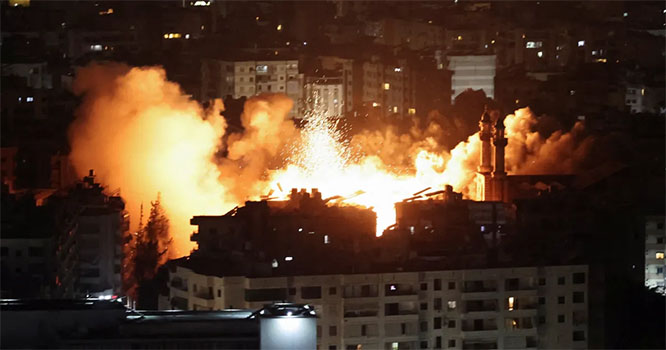
The United States has launched a direct military attack on Iran’s nuclear infrastructure, bombing three key facilities at Fordow, Natanz, and Isfahan. The move, ordered by U.S. President Donald Trump, comes just days after Israel initiated an unprecedented offensive on Iran.

“We have completed our very successful attack on the three nuclear sites in Iran,” Trump declared on Truth Social, referring to the strikes as a “spectacular military success.” The U.S. Air Force deployed stealth B-2 bombers armed with 13,000 kg bunker-busting bombs, while U.S. Navy submarines reportedly fired cruise missiles at strategic targets.

The sudden escalation has triggered alarm across the globe, evoking memories of the 2003 U.S. invasion of Iraq and raising fears of a wider regional war.

What Exactly Did the U.S. Bomb?

The targets were three of Iran’s most significant nuclear sites:

•    Fordow: A deeply buried underground uranium enrichment facility near Qom, heavily fortified and previously considered nearly impervious to aerial attack.

•    Natanz: Iran’s largest and most well-known enrichment complex. It was previously hit by Israeli strikes on June 13 and has long been seen as the heart of Iran’s nuclear ambitions.

•    Isfahan: A vital research and uranium conversion center that plays a key role in processing nuclear materials for reactor use.
According to U.S. media, the attack involved a combination of bunker buster bombs and cruise missiles, marking the first known combat use of the U.S. military’s GBU-57 Massive Ordnance Penetrator — capable of piercing dozens of meters of concrete.

How Much Damage Was Done?

President Trump claimed Iran’s enrichment capabilities were “completely and totally obliterated.” However, Iran offered a sharply different account.

Iranian officials said the Fordow facility had been evacuated in advance, minimizing any potential damage. The Atomic Energy Organization of Iran (AEOI) confirmed that no radiation leaks had occurred, and that field surveys found no contamination near any of the targeted sites.

Iranian authorities dismissed the attack as largely symbolic and vowed to continue their nuclear program, calling it the result of the sacrifices of the country’s “nuclear martyrs.”

The International Atomic Energy Agency (IAEA) also reported no rise in off-site radiation levels. Director Rafael Grossi announced that the agency would hold an emergency meeting on Monday to assess the full scope of the strikes.

Will Iran Retaliate Against the U.S.?

Iran has condemned the strikes as an act of war. Its Foreign Ministry called the attack a “dangerous escalation” and declared that Iran reserves the right to respond with full force to protect its sovereignty.

“The Islamic Republic of Iran considers it its right to stand against U.S. military aggression and defend national interests,” a statement said.

Military experts say retaliation is highly likely. Iran could:

•   Target U.S. military bases in the region — many of which are within range of Iranian drones and missiles.

•   Disrupt global shipping in the Persian Gulf, threatening oil supply routes.

•   Activate proxy forces in Iraq, Syria, and Lebanon to strike U.S. or allied targets.

•   Consider withdrawing from the Nuclear Non-Proliferation Treaty (NPT) — a move that could further escalate global tensions.

Iran has already signaled its intent by deploying the Kheibar Shekan missile, one of its most advanced, in a retaliatory strike on Israel.

Global Reaction: A Region on Edge

UN Secretary-General Antonio Guterres said he was “gravely alarmed,” warning that the U.S. strikes posed a direct threat to international peace and security.

“This is a dangerous escalation in a region already on the edge,” Guterres said. “There is a growing risk that this conflict could spiral out of control, with catastrophic consequences.”

Analysts believe the U.S. move might entangle it in a long-term conflict. Stephen Zunes, a Middle East expert at the University of San Francisco, said Iran has several “painful” options at its disposal and warned of a broad regional backlash.

Adam Weinstein, from the Quincy Institute, warned that this could be just the beginning. “The U.S. is now at risk of being pulled into a war of choice with Iran. What started as a single strike could become an open-ended escalation,” he said.

The Road Ahead

While the U.S. may have delivered a powerful military blow, the long-term consequences remain uncertain. Iran insists its nuclear program will continue. The region remains on high alert. And the prospect of a wider conflict now looms larger than ever.

As the dust settles, the world is watching closely — not just to assess the damage, but to see what comes next.

Comments

Add new comment

  • Coastaldigest.com reserves the right to delete or block any comments.
  • Coastaldigset.com is not responsible for its readers’ comments.
  • Comments that are abusive, incendiary or irrelevant are strictly prohibited.
  • Please use a genuine email ID and provide your name to avoid reject.
News Network
November 21,2025

israel.jpg

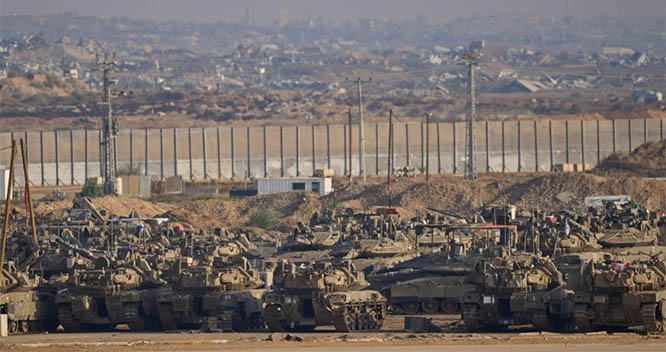
Local authorities say the Israeli military has expanded the so-called “yellow line” truce demarcation in Gaza City and repositioned its forces deeper into the territory in violation of a ceasefire agreement that came into force on October 10, besieging dozens of Palestinian families.

Gaza’s Government Media Office announced in a statement on Thursday that Israeli forces widened the boundary by shifting the markers, and advanced roughly 300 meters (984 feet) into the neighborhoods of Ash-Shaaf, An-Nazzaz and Baghdad Street.

The move pushed further into civilian areas, trapping families who were unable to flee as tanks rolled forward, it added.

“The fate of many of these families remains unknown amidst the shelling that targeted the area,” the office said, adding that the expansion of the yellow line shows a “blatant disregard” for the ceasefire deal.

On Friday, sources said the Israeli military carried out continued air and artillery strikes inside the so-called “yellow line” east of Khan Younis in the southern Gaza Strip.

According to the reports, Israeli warplanes and tanks targeted areas within the zone. One Palestinian was reported killed and several others wounded in the strikes, the sources said.

The fresh aggression came only a day after 25 Palestinians were killed in Israeli airstrikes on Gaza City and Khan Younis on Wednesday.

The media office reported that Israel has consistently violated the truce deal since its implementation last month, with near-daily attacks by air, artillery and direct shootings.

The office said over 400 violations have been documented. These breaches have resulted in the deaths of more than 300 Palestinians and left hundreds injured.

The Government Media Office in Gaza urged the guarantors of the ceasefire — the US, Egypt, Qatar and Turkey — to take swift action to halt the ongoing violations and facilitate the delivery of food, shelter materials, medical aid, and infrastructure equipment.

The so-called “yellow line,” set out in the agreement between Israel and Hamas resistance movement, refers to a non-physical partition where the Israeli military repositioned itself when the truce deal took effect.

It has allowed Israel, which routinely fires at Palestinians who approach the line, to retain control over more than half of the Gaza Strip.

International bodies, including the UN Independent International Commission of Inquiry, the International Association of Genocide Scholars, Amnesty International, Human Rights Watch, B’Tselem, and other rights groups, have concluded that the Israeli war on Gaza amounts to genocide.

In the attacks in Gaza since October 2023, Israel has killed at least 69,546 people and injured 170,833 others, leveling large swaths of the territory and displacing almost all of the population. 

Comments

Add new comment

  • Coastaldigest.com reserves the right to delete or block any comments.
  • Coastaldigset.com is not responsible for its readers’ comments.
  • Comments that are abusive, incendiary or irrelevant are strictly prohibited.
  • Please use a genuine email ID and provide your name to avoid reject.
News Network
November 24,2025

lebanon.jpg

Israel has launched a new act of aggression on a residential neighborhood in Lebanon's capital, Beirut, killing and injuring about two dozen civilians.

The Israeli regime's military said in a statement that its forces carried out a so-called precise strike in a residential apartment in Dahiyeh in the southern suburbs of Beirut on Sunday.

The aggression targeted residential areas, killing at least five people and injuring more than 28 people, Lebanon's Health Ministry said. 

Hezbollah announced the martyrdom of senior Hezbollah commander Haytham Ali Tabatabai and four resistance fighters.

Lebanese President Michel Aoun condemned the airstrike, calling it a clear demonstration of Tel Aviv’s disregard for repeated international calls to halt violations on Lebanese soil.

“Israel refuses to implement international resolutions and all efforts aimed at ending the escalation and restoring stability,” Aoun said, urging the international community to take action to prevent further aggression.

The Palestinian Islamic Jihad movement also condemned the attack, holding the international community accountable. 

“The international community bears responsibility and continues to provide cover for these attacks as long as it does not restrain the occupiers,” said Ali Abu Shahin, a member of the group’s political bureau.

Israeli prime minister Benjamin Netanyahu’s office announced that the Israeli army carried out a strike “in the heart of Beirut."

Netanyahu reportedly approved the operation following recommendations from top Israeli security officials.

Two senior US officials commented on the Israeli strike.

The first official said that Israel did not notify Americans in advance about the attack. "We were informed immediately after the strike was carried out."

The second senior official said that the "US knew for several days that Israel was planning to escalate its strikes in Lebanon, but did not know in advance the timing, location, or target of the strike."

Speaking from the site of the Israeli strike, Lebanese MP Ali Ammar condemned the attack as part of a broader campaign of aggression that has targeted "all of Lebanon since the Washington-sponsored ceasefire."

He stated that "any attack on Lebanon is a violation of red lines; this aggression is part and parcel of the entity that targets Lebanon's dignity, sovereignty, and security of citizens."

Ammar went on to say the resistance is responding with "utmost wisdom, patience, and will confront the enemy at the appropriate time."

"Unfortunately, the enemy is emboldened to commit its aggression by voices within Lebanon that have turned themselves into tools that support its aggression," he added.

The Israeli attack on the southern suburbs of the Lebanese capital is the latest blatant violation of the ceasefire Israel signed with Hezbollah in November 2024, which was intended to end hostilities that had escalated into full-scale war.

An Israeli strike on the Ain al-Hilweh camp near Sidon in southern Lebanon late Tuesday killed at least 14 people. It wounded several others, including young students, according to the Lebanese health ministry.

The military claimed the attack targeted “a Hamas training compound” used to plan and carry out attacks against the regime -- a claim that has frequently been made without evidence.

Hamas rejected the allegations as “a blatant lie aimed at justifying the massacre,” stating it had “no military installations in the Palestinian camps in Lebanon” and that the targeted site was merely “an open sports field.”

According to Lebanese authorities, Israeli attacks have killed approximately 4,000 people and displaced more than 1.2 million residents across the country since October 2023.

Comments

Add new comment

  • Coastaldigest.com reserves the right to delete or block any comments.
  • Coastaldigset.com is not responsible for its readers’ comments.
  • Comments that are abusive, incendiary or irrelevant are strictly prohibited.
  • Please use a genuine email ID and provide your name to avoid reject.
News Network
December 2,2025

A major upgrade in safety and monitoring is planned for Haj 2026, with every Indian pilgrim set to receive a Haj Suvidha smart wristband linked to the official Haj Suvidha mobile app. The initiative aims to support pilgrims—especially senior citizens—who may struggle with smartphones during the 45-day journey.

What the Smart Wristband Will Do

Officials said the device will come with:
•    Location tracking
•    Pedometer
•    SOS emergency button
•    Qibla compass
•    Prayer timings
•    Basic health monitoring

SP Tiwari, secretary of the UP State Haj Committee, said the goal is to make the pilgrimage safer and more comfortable.

“Most Hajis are elderly and not comfortable with mobile apps,” he said. “The smartwatch will help locate pilgrims who forget their way or cannot communicate their location.”

The wristbands will be monitored by the Consulate General of India in Saudi Arabia, similar to mobile tracking via the Haj Suvidha App.

Free Distribution and Training

•    Smart wristbands will be given free of cost.
•    Training for pilgrims will be conducted between January and February 2026.
•    Sample units will reach state Haj committees soon.
•    Final devices will be distributed as pilgrims begin their journey.

New Rules for Accommodation

Two major decisions have also been finalised for Haj 2026:
1.    Separate rooms for men and women – including married couples. They may stay on the same floor but must occupy different rooms, following stricter Saudi guidelines.
2.    Cooking banned – gas cylinders will not be allowed; all meals will be provided through official catering services arranged by the Haj Committee of India.

These decisions were finalised during a meeting of the Haj Committee of India and state representatives in Mumbai.

Haj Suvidha App Launched Earlier

The government launched the Haj Suvidha App in 2024, offering:

•    Training modules
•    Accommodation and flight details
•    Baggage information
•    SOS and translation tools
•    Grievance redressal

Haj 2026 Quota and Key States

•    India’s total Haj quota for 2026: 1,75,025 pilgrims
•    70% (1,25,000) allotted to the Haj Committee of India
•    30% (around 50,000) reserved for Haj Group Organisers

Uttar Pradesh has the largest allocation (around 30,000 seats), though approximately 18,000 pilgrims are expected to go this year. States with high pilgrim numbers include Kerala, Maharashtra and Gujarat.

Dates of Haj 2026

The pilgrimage is scheduled to take place from 24 May to 29 May, 2026 (tentative).
Haj is one of the five pillars of Islam and is mandatory for Muslims who meet the required conditions.

Comments

Add new comment

  • Coastaldigest.com reserves the right to delete or block any comments.
  • Coastaldigset.com is not responsible for its readers’ comments.
  • Comments that are abusive, incendiary or irrelevant are strictly prohibited.
  • Please use a genuine email ID and provide your name to avoid reject.