



Midwife Narasamma who performed 15,000 traditional deliveries in 70 years dies at 98

coastaldigest.com news network
December 25, 2018

Bengaluru, Dec 25: Padma Shri awardee Sulagitti Narasamma, the midwife who has credit of delivering birth of babies in traditional style for over five seven decades died in her house in remote Krishnapura village in Pavagada Taluk in Tumakuru district today. She was 98.

Narasamma had performed a record 15,000 traditional deliveries during her seven decades of service as maternity nurse in remote villages.

Narasamma was born in Krishnapura, Pavagada taluk in Tumkur district. Her mother tongue is Telugu. She belonged to a nomadic race and had no educational background. She married her husband, Anjinappa, at the age of 12.

They eventually had 12 children, although four of their sons died when young. She has 22 grandchildren. Her work has been honored with the National Citizen's award of India in 2012 and the country’s fourth highest civilian award, the Padma Shri in 2018.

Midwifery

Sulagitti' in Kannada means 'delivery work'. In 1940, and at the age of 20, Narasamma assisted at her first birth when she helped with the delivery of her aunt's baby. She learnt her midwifery skills from her grandmother, Marigemma, a midwife who also helped to deliver five of Narasamma's own babies.

Narasamma had the opportunity to practice her midwifery skills whenever nomadic tribes arrived at her village. She also learned the art of preparing natural medicine for pregnant women, and soon became competent in checking the health and position of the baby.

Narasamma was said to have a gift for feeling the pulse of the baby in the womb without the help of any instruments. She would also help new mothers with Ayurvedic medicines to help them with any difficulties they may face in the postpartum period.

She said in an interview earlier this year that she learnt the art of delivering babies from her grandmother, who too was a midwife. She assisted in her first delivery at the age of 20, and there was no end to the mark she would leave on the lives of the people of the region.

Narasamma was conferred an honorary doctorate by the Tumkur University in 2014. Other awards she received include the Vayoshreshta Samman in 2013, Kannada Rajyotsal Award in 2013, D Devaraj Urs Award in 2012, Kittur Rani Chennarng Award in 2013, the Murugha Sri Award from Murugha Mutt, and numerous other awards from NGO and social organisations.

Comments

Add new comment

  • Coastaldigest.com reserves the right to delete or block any comments.
  • Coastaldigset.com is not responsible for its readers’ comments.
  • Comments that are abusive, incendiary or irrelevant are strictly prohibited.
  • Please use a genuine email ID and provide your name to avoid reject.
News Network
December 7,2025

SHRIMP.jpg

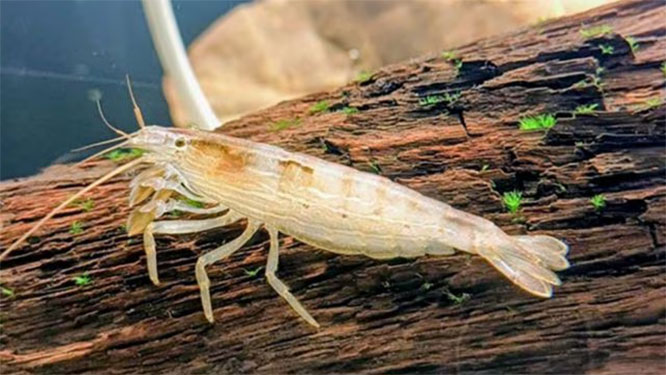
Mangaluru, Dec 7: A rare bamboo shrimp has been rediscovered on mainland India more than 70 years after it was last reported, confirming for the first time the presence of Atyopsis spinipes in the country. The find was made by researchers from the Centre for Climate Change Studies at Sathyabama Institute of Science and Technology, Chennai, during surveys in Karnataka and Odisha.

The team — shrimp expert Dr S Prakash, PhD scholar K Kunjulakshmi, and Mangaluru-based researcher Maclean Antony Santos — combined field surveys, ecological assessments and DNA analysis to identify the elusive species. Their findings, published in Zootaxa, resolve decades of taxonomic confusion stemming from a 1951 report that misidentified the species as Atyopsis moluccensis without strong evidence.

The shrimp has now been confirmed at two locations: the Mulki–Pavanje estuary near Mangaluru and the Kuakhai River in Bhubaneswar. Historical specimens from the Andaman Islands, previously labelled as A. moluccensis, were also found to be misidentified and actually belong to A. spinipes.

The rediscovery began after an aquarium hobbyist in Odisha spotted a shrimp in 2022, prompting systematic surveys across Udupi, Karwar and Mangaluru. Four female specimens were collected in Mulki and one in Odisha, all genetically matching.

Researchers warn the species may exist in very small, vulnerable populations as freshwater habitats face increasing pressure from pollution, sand mining and infrastructure development. All verified specimens have been deposited with the Zoological Survey of India for future reference.

Comments

Add new comment

  • Coastaldigest.com reserves the right to delete or block any comments.
  • Coastaldigset.com is not responsible for its readers’ comments.
  • Comments that are abusive, incendiary or irrelevant are strictly prohibited.
  • Please use a genuine email ID and provide your name to avoid reject.