



Modi govt bars first class travel, five-star hotel meetings for officials

October 31, 2014

New Delhi, Oct 31: Unveiling an austerity drive to cut non-plan expenditure by 10 per cent, the Narendra Modi government has barred bureaucrats from travelling first class on overseas visits and have been asked to use video conferencing as much as possible.

With an aim to restrict fiscal deficit to 4.1 per cent of GDP in 2014-15, the Finance Ministry has barred officials from holding meetings in five-star hotels and put a freeze on fresh appointments and filling up posts lying vacant for over one year.
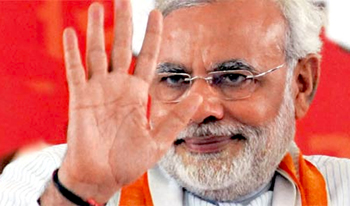
Modi govt
“While officers are entitled to various classes of air travel depending on seniority, utmost economy would need to be observed while exercising the choice keeping the limitations of budget in mind. However, there would no bookings in the first class,” said the office memorandum.

The facility of Video Conferencing, it said, “may be used effectively”.

The Finance Ministry said purchase of new vehicles to meet operational requirement of defence forces, Paramilitary forces and security organisations are permitted but ban on purchase of any other vehicles would continue. “Such measures are intended at promoting fiscal discipline, without restricting the operational efficiency of the government. In the context of the current fiscal situation, there is a need to continue to rationalise expenditure and optimise available resources,” it said. The government proposes to lower the fiscal deficit to 3 per cent of GDP by 2016-17. The deficit which had touched a high of 5.7 per cent in 2011-12, was brought down to 4.8 per cent in 2012-13 and further to 4.5 per cent in 2013-14 by way of austerity measures.

“The task before me is very challenging because we need to revive growth, particularly in manufacturing sector and infrastructure,” Finance Minister Arun Jaitley had said in his budget speech. He added that choice has to be made whether or not to be victims of mere populism and wasteful expenditure. The Finance Ministry said that the “mandatory 10 per cent cut” in plan expenditure will exclude interest payments, repayment of debt, defence, capital, salaries, pensions and grants to the state. “No re-appropriation of funds to augment the non-plan heads of expenditure on which cuts have been imposed, shall be allowed during the current fiscal,” it said.

It said the austerity measures would also apply to autonomous bodies, adding that no fresh commitments would be made over and above what was provided in the Budget. Only seminars and conferences that are absolutely essential should be organised, it said, adding that “holding of exhibitions/seminars/conferences abroad is strongly discouraged except in case of exhibitions for trade promotions.” It said in all cases of air travel the lowest air fare tickets available for entitled class are to be purchased. “No companion free ticket on domestic/international travel is to be availed of,” it added.

Referring to jobs in government departments, it said there will be a total ban on new posts and those that have remained vacant for more than a year will not be filled except “under very rare and unavoidable circumstances”. The Finance Ministry has also asked the departments to avoid bunching up expenditure in the last quarter to ensure that there is no infructuous or wasteful spending. It said the Secretaries would be responsible to ensure compliance of the austerity measures and the Financial Advisors would be required to submit reports to the Finance Ministry on a quarterly basis.

The non-plan expenditure of government deals with outlay on subsidies, interest payment, salary, among others.

For the current fiscal, the government has proposed a Plan expenditure of Rs 5.75 lakh crore, while that for non-Plan expenditure is over Rs 12.19 lakh crore.

Total budgeted expenditure estimates, including Plan and non-Plan stand at Rs 17,94,892 crore, higher than revised estimates for 2013-14 at Rs 15,90,434 crore.


Comments

Add new comment

  • Coastaldigest.com reserves the right to delete or block any comments.
  • Coastaldigset.com is not responsible for its readers’ comments.
  • Comments that are abusive, incendiary or irrelevant are strictly prohibited.
  • Please use a genuine email ID and provide your name to avoid reject.
News Network
December 16,2025

jordan.jpg

Prime Minister Narendra Modi on Monday held talks with Jordan’s King Abdullah II in Amman, during which the two leaders discussed ways to further strengthen bilateral relations, with the Prime Minister outlining an eight-point vision covering key areas of cooperation.

Describing the meeting as “productive”, PM Modi said he shared a roadmap focused on trade and economy, fertilisers and agriculture, information technology, healthcare, infrastructure, critical and strategic minerals, civil nuclear cooperation, and people-to-people ties.

In a post on social media platform X, the Prime Minister praised King Abdullah II’s personal commitment to advancing India–Jordan relations, particularly as both countries mark the 75th anniversary of the establishment of diplomatic ties this year.

“Held productive discussions with His Majesty King Abdullah II in Amman. His personal commitment towards vibrant India-Jordan relations is noteworthy. This year, we are celebrating the 75th anniversary of our bilateral diplomatic relations,” PM Modi said.

The meeting took place at the Al Husseiniya Palace, where the two leaders also exchanged views on regional and global issues of mutual interest. According to the Ministry of External Affairs (MEA), both sides agreed to further deepen cooperation in areas including trade and investment, defence and security, counter-terrorism and de-radicalisation, fertilisers and agriculture, infrastructure, renewable energy, tourism, and heritage.

The MEA said both leaders reaffirmed their united stand against terrorism.

PM Modi arrived in Amman earlier on Monday and was received by Jordanian Prime Minister Jafar Hassan, who accorded him a formal welcome. Following the talks, King Abdullah II hosted a banquet dinner in honour of the Prime Minister, reflecting the warmth of bilateral ties.

Jordan is the first leg of PM Modi’s three-nation tour. From Amman, the Prime Minister will travel to Ethiopia at the invitation of Prime Minister Abiy Ahmed Ali, marking his first official visit to the African nation. The tour will conclude with a visit to Oman.

Comments

Add new comment

  • Coastaldigest.com reserves the right to delete or block any comments.
  • Coastaldigset.com is not responsible for its readers’ comments.
  • Comments that are abusive, incendiary or irrelevant are strictly prohibited.
  • Please use a genuine email ID and provide your name to avoid reject.
News Network
December 16,2025

bengal.jpg

The deletion of over 58 lakh names from West Bengal’s draft electoral rolls following a Special Intensive Revision (SIR) has sparked widespread concern and is likely to deepen political tensions in the poll-bound state.

According to the Election Commission, the revision exercise has identified 24 lakh voters as deceased, 19 lakh as relocated, 12 lakh as missing, and 1.3 lakh as duplicate entries. The draft list, published after the completion of the first phase of SIR, aims to remove errors and duplication from the electoral rolls.

However, the scale of deletions has raised fears that a large number of eligible voters may have been wrongly excluded. The Election Commission has said that individuals whose names are missing can file objections and seek corrections. The final voter list is scheduled to be published in February next year, after which the Assembly election announcement is expected. Notably, the last Special Intensive Revision in Bengal was conducted in 2002.

The development has intensified the political row over the SIR process. Chief Minister Mamata Banerjee and her Trinamool Congress have strongly opposed the exercise, accusing the Centre and the Election Commission of attempting to disenfranchise lakhs of voters ahead of the elections.

Addressing a rally in Krishnanagar earlier this month, Banerjee urged people to protest if their names were removed from the voter list, alleging intimidation during elections and warning of serious consequences if voting rights were taken away.

The BJP, meanwhile, has defended the revision and accused the Trinamool Congress of politicising the issue to protect what it claims is an illegal voter base. Leader of the Opposition Suvendu Adhikari alleged that the ruling party fears losing power due to the removal of deceased, fake, and illegal voters.

The controversy comes amid earlier allegations by the Trinamool Congress that excessive work pressure during the SIR led to the deaths by suicide of some Booth Level Officers (BLOs), for which the party blamed the Election Commission. With the draft list now out, another round of political confrontation appears imminent.

As objections begin to be filed, the focus will be on whether the correction mechanism is accessible, transparent, and timely—critical factors in ensuring that no eligible voter is denied their democratic right ahead of a crucial election.

Comments

Add new comment

  • Coastaldigest.com reserves the right to delete or block any comments.
  • Coastaldigset.com is not responsible for its readers’ comments.
  • Comments that are abusive, incendiary or irrelevant are strictly prohibited.
  • Please use a genuine email ID and provide your name to avoid reject.
