Modi govt's crackdown on Muslim-run leather units dents exports, hits jobs

Agencies
October 3, 2017

New Delhi, Oct 3: A government crackdown on Muslim-dominated abattoirs and the trade of cattle dragged down India's exports of leather shoes by more than 13 percent in June, as leading global brands turned to China, Bangladesh, Indonesia and Pakistan to secure supplies.
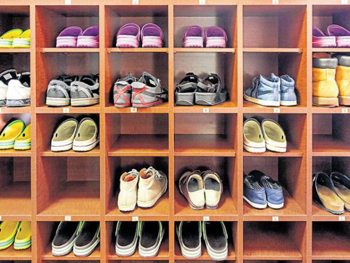
The drop in exports of shoes and leather garments comes as a setback for Prime Minister Narendra Modi, who has sought to create millions of jobs by more than doubling the leather industry's revenues to $27 billion by 2020.

Emboldened by the victory of Modi's Bharatiya Janata Party (BJP) in the 2014 general election, Hindu hard-liners, who consider cows sacred, became more assertive in their calls for a clamp-down on both the meat and leather industries, run by Muslims, who make up 14 percent of India's 1.3 billion people.

"The writing was already on the wall," Nazir Ahmed, CEO of shoemaker Park Exports, told Reuters by phone from Agra, a shoe-making hub and home to the Taj Mahal. "We have killed the goose that laid the golden egg."

India, the world's second-biggest supplier of shoes and leather garments, exports nearly half its leather goods, with overseas sales estimated at $5.7 billion in the 2016/17 fiscal year to March, down 3.2 percent from a year earlier. Footwear exports fell more than 4 percent in April-June, to $674 million.

Informal sector

In March, after being appointed chief minister of Uttar Pradesh, India's most populous state and a major leather exporter, Yogi Adityanath, a firebrand Hindu monk, ordered a closure of abattoirs operating without licenses.

Slaughterhouse owners complain that much of India's meat and leather trade takes place in the informal sector, and it's hard to get licences, especially for smaller units.

In May, citing cruelty to animals, the federal government banned the trade of cattle for slaughter, and restricted livestock sales only for agricultural purposes such as ploughing and dairy production.

But the country’s top court overturned that order, citing the hardship the ban had caused.

That has not brought relief as repeated attacks on trucks carrying cattle still rankle the leather trade.

"The supreme court has allowed the resumption of trade for cattle, but the ground reality is that cow vigilante groups continue to be active and no one wants to risk his life by transporting cattle," Ahmed said.

Deterred by a clutch of measures that squeezed the supply of leather, a key raw material, brands like H&M, Inditex -owned Zara and Clarks, cut back their orders to India, said M. Rafeeque Ahmed, a leading shoe exporter from the southern city of Chennai and former president of the Federation of Indian Export Organisations.

"We lost orders because our buyers were sceptical of our ability to meet their requirements. Instead, most buyers moved to rival suppliers in Asia and southeast Asia," he said.
A spokesman for India's trade ministry declined to comment.

Earlier this year, a finance ministry report said India should sign more free trade agreements and make tax and labour reforms to drive leather exports, which offer "tremendous opportunities for (the) creation of jobs."

The industry is also grappling with a Goods and Services Tax, introduced in July, which has pushed up production costs by 6-7 percent, exporters said.

Nowhere to hide

The crackdown also hurt day-workers employed at shoe and garment making units and hit leather supplies, forcing manufacturers to import hides from the United States, Australia, and some European nations, raising the cost of production and squeezing margins.
Many tanneries, as a result, have run out of leather.

"My business has come to a standstill because I don't have any inventory at all. Most large shoemakers are importing hides now," said a tannery owner, who asked not to be named so as to avoid retaliation from cow vigilante groups.

Nearly a third of the roughly 3 million-strong workforce, mostly lowly-paid casual workers employed in the leather sector, have lost their jobs in the past six months, according to six shoemakers and two tannery owners interviewed by Reuters for this article.

Since most Indian states have outlawed cow slaughter, the supply of leather largely comes from the legal slaughter of buffaloes whose skins are used in many leather goods.

"Everyone must abide by the rule on cow slaughter and respect sentiments, but by choking the supply of other animal hides, we have nearly killed a thriving industry," said Ahmed of Park Exports.

Comments

Add new comment

  • Coastaldigest.com reserves the right to delete or block any comments.
  • Coastaldigset.com is not responsible for its readers’ comments.
  • Comments that are abusive, incendiary or irrelevant are strictly prohibited.
  • Please use a genuine email ID and provide your name to avoid reject.
News Network
January 20,2026

DGP.jpg

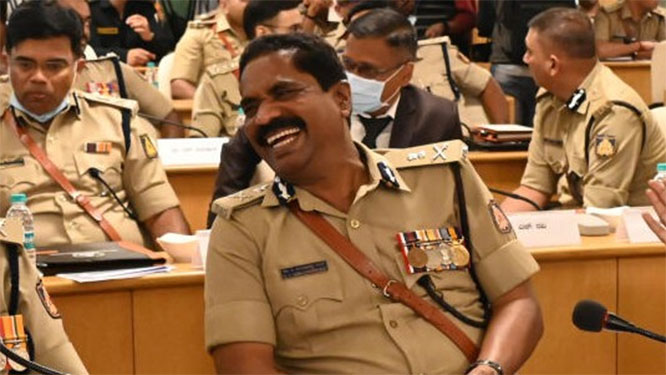
Karnataka DGP (Civil Rights Enforcement) K Ramachandra Rao was suspended with immediate effect, as per a state government order issued on Monday, 19 January. The order cited conduct unbecoming of a government servant and causing embarrassment to the state administration.

The Karnataka government suspended Rao after a purported video showed him in a compromising position with a woman inside his official chamber. The video went viral on social media. Rao rejected the videos outright, terming them "fabricated and false".

Who is K Ramachandra Rao?

Rao is a DGP-rank officer who was heading the Directorate of Civil Rights Enforcement until his suspension. He was promoted to DGP in September 2023 and assumed office in October 2023, the Sunday Guardian reported.

He also served as the Chairman and Managing Director of the Karnataka State Police Housing and Infrastructure Development Corporation Limited.

His stint as the Inspector General of Police (IGP) for the Southern Range was also marred by controversy. In 2014, during a cash seizure near Mysuru’s Yelwal, officials claimed the seized amount was ₹20 lakh, while the accused (Kerala-based merchants) claimed it was around ₹2.27 crore.

Rao, who was present during the seizure, denied all allegations. However, he was transferred soon after.

Allegations of collusion with a businessman surfaced, and a senior police officer was quoted by The Sunday Guardian as saying, “In Rao’s case, the CID has clearly mentioned that there was a great degree of lapse on the part of Rao and a deputy superintendent of police after it was brought to their notice that a few policemen, including a gunman attached to the IGP, were involved in the robbery.”

Rao had denied all wrongdoing in that incident. Despite past controversies, he rose to the state’s top police position, the Sunday Guardian reported.

Ranya Rao’s stepfather

Rao is the stepfather of Kannada actress Harshavardhini Ranya alias Ranya Rao, accused of orchestrating the illegal import of gold worth over ₹12.56 crore from Dubai to India along with two others — businessman Tarun Raju, and jewellery dealer Sahil Jain.

‘Obscene video’ controversy

A viral video showed Rao behaving inappropriately with a woman inside his office while in uniform.

The Karnataka government said in its Monday order that “vide videos and news reports widely broadcast on public news channels and media platforms, it is observed that Dr K Ramachandra Rao has acted in an obscene manner which is unbecoming of a Government Servant and also causing embarrassment to the Government.”

The order said the matter was examined by the state government, which found that the officer's conduct amounted to a violation of Rule 3 of the All India Services (Conduct) Rules, 1968.

The government said it is prima facie satisfied that "it is necessary to place Rao under suspension with immediate effect, pending inquiry".

During the suspension period, Rao will be entitled to subsistence allowance as per Rule 4 of the All India Services (Discipline and Appeal) Rules, 1969.

The order also places restrictions on his movement, stating that during the period of suspension, the officer must not leave headquarters under any circumstances without the written permission of the state government.

Comments

Add new comment

  • Coastaldigest.com reserves the right to delete or block any comments.
  • Coastaldigset.com is not responsible for its readers’ comments.
  • Comments that are abusive, incendiary or irrelevant are strictly prohibited.
  • Please use a genuine email ID and provide your name to avoid reject.
News Network
January 23,2026

oscar.jpg

The Voice of Hind Rajab, inspired by the tragic final moments of a young Palestinian girl killed by Israeli fire in Gaza, has been nominated for an Academy Award in the Best International Feature Film category.

Directed by Tunisian filmmaker Kaouther Ben Hania, the film recounts the true story of five-year-old Hind Rajab, who lost her life in January 2024 while fleeing Israeli bombardment with her family.

The film features the real audio of Hind’s desperate call to the Palestinian Red Crescent Society, where she pleaded for help moments before the vehicle she was in was struck by 355 bullets.

The haunting narrative begins with a brief call made from the besieged Tel al-Hawa neighborhood of Gaza, where gunfire and armored vehicles drowned out every sound.

After witnessing the brutal killing of her family, she made a trembling call, her voice reduced to a whisper as she spoke of the massacre and her unbearable loneliness as the sole survivor.

Premiering at the Venice International Film Festival in September 2025, The Voice of Hind Rajab garnered widespread acclaim, receiving a record-setting 23-minute standing ovation and the Silver Lion Grand Jury Prize, the festival’s second-highest honor.

In her acceptance speech, Ben Hania dedicated the film to humanitarian workers and first responders in Gaza, emphasizing that Hind's voice symbolizes countless civilians affected by war.

She aims to give voice to victims often reduced to mere statistics, highlighting the broader suffering of civilians in war zones.

The film’s Oscar nomination underscores its powerful storytelling and ethical approach to depicting real-life tragedy, making it a crucial piece of contemporary cinema.

It serves not only as a narration of individual tragedy but also as an artistic and documentary response to the silence and censorship that often overshadow West Asian struggles and wars.

Using an innovative method she calls docufiction, Ben Hania bridges unvarnished reality and narrative structure, creating a work that is both artistically valuable and socially impactful.

Born in 1977 in Sidi Bouzid—later the epicenter of the Arab revolution—her background profoundly influenced her worldview and artistic approach.

She is a graduate of the Higher School of Audiovisual Arts of Tunis, Pantheon-Sorbonne University, and La Fémis in Paris, where her studies equipped her with the technical and theoretical tools needed to address complex subjects. 

Comments

Add new comment

  • Coastaldigest.com reserves the right to delete or block any comments.
  • Coastaldigset.com is not responsible for its readers’ comments.
  • Comments that are abusive, incendiary or irrelevant are strictly prohibited.
  • Please use a genuine email ID and provide your name to avoid reject.
News Network
January 20,2026

iran.jpg

Iranian security and intelligence forces have captured more than 470 individuals in three provinces, identified as key figures behind the recent wave of violent unrest and terrorist activities linked to foreign-backed networks.

The Intelligence Ministry's provincial office in Khorasan Razavi announced on Monday the arrest of 192 armed terrorists, identified as the main agents behind recent riots in the region. 

According to an official statement, the detainees were involved in the killing of several security personnel and civilians, setting fire to mosques, public service facilities, and buses, as well as attacks on military and law enforcement centers.

The seized items from the group include several bulletproof vests, Kalashnikov rifles, hunting weapons, Winchester rifles, and various cold weapons such as daggers, swords, brass knuckles, tactical knives, crossbows, and chains.

Evidence indicates that some of the individuals were tied to hostile movements and terrorist organizations, with links overseas. Others were identified as members of violent criminal gangs, actively taking part in the unrest alongside their associates.

Simultaneously, in the western province of Lorestan, the IRGC announced the arrest of 134 individuals as the main leaders and influential field agents of a US-Israeli terrorist network.

The IRGC statement stated that these individuals formed terrorist cells during the recent unrest, committing "Daesh-like" acts.

They wounded security forces with firearms and cold weapons, and burned and destroyed public and private properties, including mosques, shops, banks, and private and public vehicles.

In the northwestern province of Zanjan, the police reported detaining 150 people identified as principal leaders and agents behind recent riots.

Authorities noted that these individuals were responsible for destroying public and private property and intentionally setting fire to vehicles in the province's squares.

Their crimes include shedding the blood of innocent people, destroying public and private property, attempting to enter military sites, disrupting public order, and spreading terror among citizens.

A variety of cold weapons were reportedly seized from the detainees.

What began late last month as peaceful protests over economic hardship across Iran turned violent after public statements by US and Israeli regime figures encouraged vandalism and disorder.

During the unrest, foreign-backed mercenaries rampaged through cities, killing security forces and civilians and damaging public property.

Comments

Add new comment

  • Coastaldigest.com reserves the right to delete or block any comments.
  • Coastaldigset.com is not responsible for its readers’ comments.
  • Comments that are abusive, incendiary or irrelevant are strictly prohibited.
  • Please use a genuine email ID and provide your name to avoid reject.