



Modi govt's NSG membership push 'ill-advised, unwarranted': Srinivasan

June 25, 2016

Hyderabad, Jun 25: Noted scientist and Atomic Energy Commission (AEC) member M R Srinivasan today said the Centre's push to gain Nuclear Suppliers Group membership was "unnecessary, unwarranted and ill-advised", a day after India failed in its bid to clinch membership of the 48-member club.
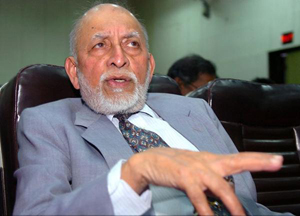
mr-srinivasan
The AEC, a body under the Department of Atomic Energy (DAE), would have advised the government to desist from such a move had it been consulted, he said.

Srinivasan, a former Chairman of the AEC, which looks after atomic energy activities in the country, argued that NSG membership does not make a difference to India's nuclear commerce as New Delhi has signed agreements with other countries for supply of reactors and uranium.

"Unnecessarily, India made a big hype about this admission into the NSG. It was completely unnecessary because the 2008 waiver was already enabling us to have nuclear commerce with nuclear advanced countries and we already have agreements with Russia, France and the United States for reactor projects...," he said in an interview to PTI today.

India also has uranium buying agreement with multiple countries, including Kazakhstan, Canada and Australia, Srinivasan noted, adding it was an "unwarranted and ill-advised initiative" to seek entry into the group of nuclear-supplier countries set up in 1974.

The Padma Bhushan awardee said failure to get in NSG would not have adverse impact on India's nuclear programme as New Delhi has its own capability "for designing and building reactors and fuel manufacturing, reprocessing and so on."

"On the ground, it won't make any difference (on failure to get NSG membership).

We already have a waiver. We are already having cooperation with important countries and countries who are able to supply uranium. There was no need for us to subject ourselves to embarrassment. Unfortunately, our (India's) self-esteem has been dented (with this failure)," the well-known 86-year-old nuclear scientist said.

"(Had) the matter been initially brought to the Atomic Energy Commission, (of) which I am still a member, and if they (the Government) had asked if we (the Government) should proceed with this issue (seeking NSG entry), I would have said the same thing -- 'don't raise the issue'," he said.

"But it was not brought to the Atomic Energy Commission. It's unfortunate. It was thought to be the preserve of Foreign Office...Ministry of External Affairs...I do not know. Needless drama (India's diplomatic push on NSG membership) has gone on for a number of days," he said.

Srinivasan, who played a key role in the development of India's nuclear power programme and Pressurised Heavy Water Reactor (PHWR), said that no evaluation was made about the perceived benefits of NSG membership.

"...whether we should have put so much efforts...Prime Minister going to so many countries, canvassing (for NSG entry). Somebody from Foreign Office who has done evaluation, either they did evaluation and their assumptions were not borne out or evaluation was not properly carried out. I am unhappy that we should put so much importance to this thing (NSG membership)," he said.

Needless expectations were raised on becoming part of the group and so much political capital at the highest level of Government of India and Prime Minister was deployed for the purpose, the noted scientist said.

"It was a quest we could have well avoided and an embarrassment we could well have avoided," he said, pointing out that India should have sensed the mood with China and some other countries raising objections to India's membership.

He also found fault with the media's description of the NSG as an "elite group".

"How can a 48-member NSG be an elite group? It got members like New Zealand, Ireland...all these people who have no nuclear programme of any kind," he said.


Comments

Add new comment

  • Coastaldigest.com reserves the right to delete or block any comments.
  • Coastaldigset.com is not responsible for its readers’ comments.
  • Comments that are abusive, incendiary or irrelevant are strictly prohibited.
  • Please use a genuine email ID and provide your name to avoid reject.
News Network
December 20,2025

train.jpg

At least seven elephants were killed and one calf injured after a herd collided with the Sairang-New Delhi Rajdhani Express in Assam's Hojai on Saturday morning, leading to disruption of rail services. 

The Sairang-New Delhi Rajdhani Express struck a herd of elephants, resulting in the derailment of the locomotive and five coaches. No passenger casualties or injuries were reported, officials said.

The New Delhi-bound train met with the accident around 2.17 am, PTI reported. The Sairang-New Delhi Rajdhani Express connects Mizoram's Sairang (near Aizawl) to Anand Vihar Terminal (Delhi). 

Railway has issued helpline numbers at the Guwahati Railway Station:-

•    0361-2731621
•    0361-2731622
•    0361-2731623

The accident site is located about 126 km from Guwahati. Following the incident, accident relief trains and railway officials rushed to the spot to initiate rescue operations.

Train Services Disrupted

Sources said that due to the derailment and elephant body parts scattered on the tracks, train services to Upper Assam and other parts of the Northeast were affected.

Passengers from the affected coaches were temporarily accommodated in vacant berths available in other coaches of the train. Once the train reaches Guwahati, additional coaches will be attached to accommodate all passengers, after which the train will resume its onward journey.

The incident occurred at a location that is not a designated elephant corridor. The loco pilot, upon spotting the herd on the tracks, applied emergency brakes. Despite this, the elephants dashed into the train, leading to the collision and derailment.

Last month, an elephant was killed after being hit by a train in Dhupguri in West Bengal's Jalpaiguri district. The incident took place on November 30. 

The adult elephant was killed on the spot, and a calf was discovered lying injured beside the tracks. 

Over 70 Elephants Killed In Train Collisions Over Last 5 Years

At least 79 elephants have died in train collisions across the country in the last five years, the Environment Ministry had informed Parliament in August.

In a written reply in the Lok Sabha, Minister of State for Environment Kirti Vardhan Singh had said the figure is based on reports from state governments and Union Territory administrations for the period 2020-21 to 2024-25.

He said that the ministry does not maintain consolidated data on the deaths of other wild animals on railway tracks, including in designated elephant corridors.

Singh confirmed that three elephants, including a mother and her calf, were killed on July 18 this year after being hit by a speeding express train on the Kharagpur-Tatanagar section in West Bengal's Paschim Midnapore district. The incident took place near Banstala between Jhargram and Banstala stations.

The minister said several measures have been taken jointly by the Environment Ministry and the Railways to prevent such accidents.

These include imposing speed restrictions in elephant habitats, pilot projects such as seismic sensor-based detection of elephants near tracks and construction of underpasses, ramps and fencing at vulnerable points.

The Wildlife Institute of India, in consultation with the ministry and other stakeholders, has also issued guidelines titled 'Eco-friendly Measures to Mitigate Impacts of Linear Infrastructure' to help agencies design railways and other projects in ways that reduce human-animal conflicts.

Singh added that capacity-building workshops were conducted for railway officials at the Wildlife Institute of India in 2023 and 2024 to raise awareness on elephant conservation and protection.

A detailed report titled 'Suggested Measures to Mitigate Elephant & Other Wildlife Train Collisions on Vulnerable Railway Stretches in India' had also been prepared after surveys across 127 railway stretches covering 3,452 km.

Of these, 77 stretches spanning 1,965 km in 14 states were prioritised for mitigation, with site-specific interventions suggested. 

Comments

Add new comment

  • Coastaldigest.com reserves the right to delete or block any comments.
  • Coastaldigset.com is not responsible for its readers’ comments.
  • Comments that are abusive, incendiary or irrelevant are strictly prohibited.
  • Please use a genuine email ID and provide your name to avoid reject.
News Network
December 16,2025

bengal.jpg

The deletion of over 58 lakh names from West Bengal’s draft electoral rolls following a Special Intensive Revision (SIR) has sparked widespread concern and is likely to deepen political tensions in the poll-bound state.

According to the Election Commission, the revision exercise has identified 24 lakh voters as deceased, 19 lakh as relocated, 12 lakh as missing, and 1.3 lakh as duplicate entries. The draft list, published after the completion of the first phase of SIR, aims to remove errors and duplication from the electoral rolls.

However, the scale of deletions has raised fears that a large number of eligible voters may have been wrongly excluded. The Election Commission has said that individuals whose names are missing can file objections and seek corrections. The final voter list is scheduled to be published in February next year, after which the Assembly election announcement is expected. Notably, the last Special Intensive Revision in Bengal was conducted in 2002.

The development has intensified the political row over the SIR process. Chief Minister Mamata Banerjee and her Trinamool Congress have strongly opposed the exercise, accusing the Centre and the Election Commission of attempting to disenfranchise lakhs of voters ahead of the elections.

Addressing a rally in Krishnanagar earlier this month, Banerjee urged people to protest if their names were removed from the voter list, alleging intimidation during elections and warning of serious consequences if voting rights were taken away.

The BJP, meanwhile, has defended the revision and accused the Trinamool Congress of politicising the issue to protect what it claims is an illegal voter base. Leader of the Opposition Suvendu Adhikari alleged that the ruling party fears losing power due to the removal of deceased, fake, and illegal voters.

The controversy comes amid earlier allegations by the Trinamool Congress that excessive work pressure during the SIR led to the deaths by suicide of some Booth Level Officers (BLOs), for which the party blamed the Election Commission. With the draft list now out, another round of political confrontation appears imminent.

As objections begin to be filed, the focus will be on whether the correction mechanism is accessible, transparent, and timely—critical factors in ensuring that no eligible voter is denied their democratic right ahead of a crucial election.

Comments

Add new comment

  • Coastaldigest.com reserves the right to delete or block any comments.
  • Coastaldigset.com is not responsible for its readers’ comments.
  • Comments that are abusive, incendiary or irrelevant are strictly prohibited.
  • Please use a genuine email ID and provide your name to avoid reject.
News Network
December 22,2025

The Bharatiya Janata Party (BJP) received ₹6,654.93 crore in donations during the 2024-25 financial year — a Lok Sabha election year — registering a 68 per cent increase over the previous fiscal.

In its annual contribution report submitted to the Election Commission on December 8, two days ahead of the deadline, the BJP disclosed all donations exceeding ₹20,000. The report, now available on the Commission’s website, covers contributions received between April 1, 2024 and March 30, 2025 — a period marked by the general election and Assembly polls in Arunachal Pradesh, Sikkim, Andhra Pradesh, Odisha, Jammu and Kashmir, Haryana, Jharkhand, Maharashtra and Delhi.

The BJP, the world’s largest political party by membership, had reported donations of ₹3,967 crore in 2023-24. The latest figures represent the party’s highest donation receipts in the last five years.

Electoral trusts accounted for around 40 per cent of the BJP’s total donations. The Prudent Electoral Trust contributed ₹2,180 crore, followed by the Progressive Electoral Trust with ₹757 crore and the New Democratic Electoral Trust with ₹150 crore. Contributions from other electoral trusts together amounted to ₹3,112.5 crore. The remaining funds came from corporate donors and individuals. Electoral trusts are entities set up by companies to channel donations to political parties.

Among major corporate contributors, Serum Institute of India donated ₹100 crore, Rungta Sons Private Limited ₹95 crore, Vedanta ₹67 crore, and Macrotech Developers (formerly Lodha Developers) ₹65 crore. Three Bajaj Group companies together contributed ₹65 crore, while Derive Investments donated ₹50 crore.

Other notable donors included Malabar Gold (₹10 crore), Kalyan Jewellers (₹15.1 crore), Hero Group (₹23.65 crore), Dilip Buildcon Group (₹29 crore), ITC Limited (₹35 crore), Wave Industries (₹5.25 crore) and Zerodha’s investment firm, promoted by Nikhil Kamath, which contributed ₹1.5 crore.

Several BJP leaders also made individual donations. Assam Chief Minister Himanta Biswa Sarma donated ₹3 lakh, Assam minister Pijush Hazarika ₹2.75 lakh, Union Education Minister Dharmendra Pradhan ₹1 lakh, Odisha Chief Minister Mohan Charan Majhi ₹5 lakh, Indore Mayor Pushyamitra Bhargava ₹1 lakh, and Akash Vijayvargiya, son of senior BJP leader Kailash Vijayvargiya, also donated ₹1 lakh, among others.

In contrast, most opposition parties reported a sharp decline in donations. The Congress received ₹522.13 crore in 2024-25, a fall of about 43 per cent from ₹1,129 crore in the previous year. The Trinamool Congress saw donations drop to ₹184.08 crore from ₹618.8 crore, while the Bharat Rashtra Samithi reported just ₹15.09 crore, down from ₹580 crore.

The Aam Aadmi Party, however, recorded an increase, collecting ₹39.2 crore compared to ₹22.1 crore last year. The Telugu Desam Party received ₹85.2 crore in donations, down from ₹274 crore, but also earned ₹102 crore through fees and subscriptions. The Biju Janata Dal reported ₹60 crore in donations, compared to ₹246 crore in the previous fiscal.

The 2024-25 financial year is also the first without electoral bonds, after the Supreme Court struck down the scheme as unconstitutional in February 2024. Since its introduction in 2018, the electoral bond scheme had enabled political parties to receive over ₹16,000 crore in anonymous donations, with the BJP receiving the largest share. 

Comments

Add new comment

  • Coastaldigest.com reserves the right to delete or block any comments.
  • Coastaldigset.com is not responsible for its readers’ comments.
  • Comments that are abusive, incendiary or irrelevant are strictly prohibited.
  • Please use a genuine email ID and provide your name to avoid reject.
