



Modi to use 'mosque diplomacy' in UAE

August 14, 2015

New Delhi, Aug 14: Prime Minister Narendra Modi will pay his first visit to a mosque during his two-day tour of the United Arab Emirates from Sunday.

modi
Modi will travel to Abu Dhabi on Sunday and meet Sheikh Mohamed bin Zayed Al Nahyan, the Crown Prince and deputy supreme commander of the UAE Armed Forces. He will visit the Sheikh Zayed Grand Mosque on Monday before travelling to Dubai, where he will address a congregation of expatriates from India, official sources said in New Delhi.

This will be his first visit to a mosque, at least after taking over as the Prime Minister in May 2014. He has visited and offered prayers at Hindu and Buddhist shrines during his earlier tours to Nepal, Japan and China. He also visited Dhakeshwari Jatiya Mandir, a Hindu temple in Dhaka, during his tour to Bangladesh in early June.

Modi’s visit to Sheikh Zayed Grand Mosque in Abu Dhabi appears to be politically significant, as it comes just ahead of the assembly elections in Bihar, where secular parties – Janata Dal (United), Rashtriya Janata Dal and Congress – have forged a joint front against the Bharatiya Janata Party.

During his tenure as Chief Minister of Gujarat, his refusal to wear a skull cap offered by a Muslim cleric during a “Sadbhavna fast” in Ahmedabad in September 2011 triggered a controversy. Modi, however, tried to reach out to the Muslim community after taking over as Prime Minister. He not only disapproved “hate-speeches” by some leaders of ruling BJP, but also had meetings with Muslim clerics in April and June this year and reassured them of his government’s commitment to religious freedom.

He sent Minister of State for Minority Affairs Mukhtar Abbas Naqvi to offer a ‘chaadar’ at the Dargah of Sufi saint Khwaja Moinuddin Chishti in Ajmer in Rajasthan.

During his visit to Kazakhstan in July, the Prime Minister lauded the Islamic heritage of both India and Central Asia for upholding highest ideals of tolerance and rejecting “forces of extremism”.

Modi’s plan to visit the Sheikh Zayed Grand Mosque is also being seen as an attempt to reach out to Muslims, both in the country and beyond.

The first President of UAE, Sheikh Zayed bin Sultan Al Nahyan, started building the grand mosque in 1996 and it was completed in 2007 – three years after his death.

Comments

Add new comment

  • Coastaldigest.com reserves the right to delete or block any comments.
  • Coastaldigset.com is not responsible for its readers’ comments.
  • Comments that are abusive, incendiary or irrelevant are strictly prohibited.
  • Please use a genuine email ID and provide your name to avoid reject.
News Network
December 19,2025

Mangaluru: In a decisive move to tackle the city’s deteriorating sanitation infrastructure, the Mangaluru City Corporation (MCC) has announced a massive ₹1,200 crore action plan to overhaul its underground drainage (UGD) network.

The initiative, spearheaded by Deputy Commissioner and MCC Administrator Darshan HV, aims to bridge "missing links" in the current system that have left residents grappling with overflowing sewage and environmental hazards.

The Breaking Point

The announcement follows a high-intensity phone-in session on Thursday, where the DC was flooded with grievances from frustrated citizens. Residents, including Savithri from Yekkur, described a harrowing reality: raw sewage from apartments leaking into stormwater drains, creating a "permanent stink" and turning residential zones into mosquito breeding grounds.

"We are facing immense difficulties due to the stench and the health risks. Local officials have remained silent until now," one resident reported during the session.

The Strategy: A Six-Year Vision

DC Darshan HV confirmed that the proposed plan is not a temporary patch but a comprehensive six-year roadmap designed to accommodate Mangaluru’s projected population growth. Key highlights of the plan include:

•    Infrastructure Expansion: Laying additional pipelines to connect older neighborhoods to the main grid.

•    STP Crackdown: Stricter enforcement of Sewage Treatment Plant (STP) regulations. While new apartments are required to have functional STPs, many older buildings lack them entirely, and several newer units are reportedly non-functional.

•    Budgetary Push: The plan has already been discussed with the district in-charge minister and the Secretary of the Urban Development Department. It is slated for formal presentation in the upcoming state budget.

Comments

Add new comment

  • Coastaldigest.com reserves the right to delete or block any comments.
  • Coastaldigset.com is not responsible for its readers’ comments.
  • Comments that are abusive, incendiary or irrelevant are strictly prohibited.
  • Please use a genuine email ID and provide your name to avoid reject.
News Network
December 7,2025

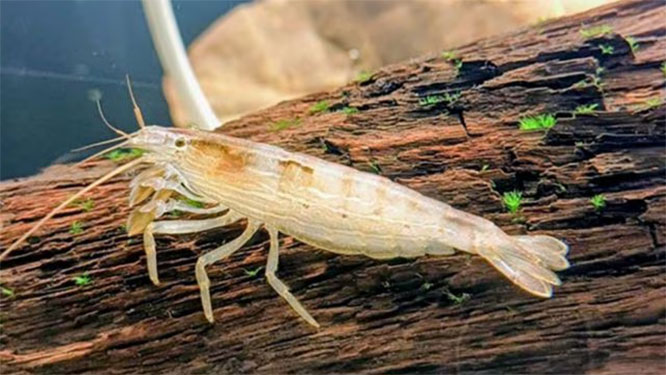
SHRIMP.jpg

Mangaluru, Dec 7: A rare bamboo shrimp has been rediscovered on mainland India more than 70 years after it was last reported, confirming for the first time the presence of Atyopsis spinipes in the country. The find was made by researchers from the Centre for Climate Change Studies at Sathyabama Institute of Science and Technology, Chennai, during surveys in Karnataka and Odisha.

The team — shrimp expert Dr S Prakash, PhD scholar K Kunjulakshmi, and Mangaluru-based researcher Maclean Antony Santos — combined field surveys, ecological assessments and DNA analysis to identify the elusive species. Their findings, published in Zootaxa, resolve decades of taxonomic confusion stemming from a 1951 report that misidentified the species as Atyopsis moluccensis without strong evidence.

The shrimp has now been confirmed at two locations: the Mulki–Pavanje estuary near Mangaluru and the Kuakhai River in Bhubaneswar. Historical specimens from the Andaman Islands, previously labelled as A. moluccensis, were also found to be misidentified and actually belong to A. spinipes.

The rediscovery began after an aquarium hobbyist in Odisha spotted a shrimp in 2022, prompting systematic surveys across Udupi, Karwar and Mangaluru. Four female specimens were collected in Mulki and one in Odisha, all genetically matching.

Researchers warn the species may exist in very small, vulnerable populations as freshwater habitats face increasing pressure from pollution, sand mining and infrastructure development. All verified specimens have been deposited with the Zoological Survey of India for future reference.

Comments

Add new comment

  • Coastaldigest.com reserves the right to delete or block any comments.
  • Coastaldigset.com is not responsible for its readers’ comments.
  • Comments that are abusive, incendiary or irrelevant are strictly prohibited.
  • Please use a genuine email ID and provide your name to avoid reject.