



The threat was from the Rashtriya Swayamsewak Sangh (RSS), the Bharatiya Janata Party and Shiv Sena in India, and rightwing Zionist organizations abroad, said A. Sayeed, SDPI 's national president.
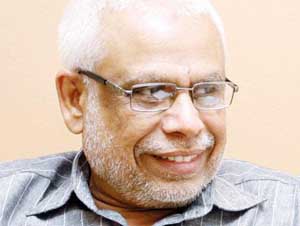
He said there are too many apolitical people in the country, including some intellectuals, writers and opinion makers watching from the sidelines. “They are not getting involved in politics. We find them on television programs discussing everything under the sun. There is a need for such people to come forward and work to clean up politics. This is the necessity of the time,” he said.
He said Israeli and other global anti-Muslim forces are influencing the Indian government. “They want political monopoly over Muslims in the entire world, not only in their countries, but communities in other countries. That is why they are targeting Indian Muslims,” he said.
Sayeed said the SDPI has formed committees in 13 states and has a presence in another five states. Some members hold seats on local bodies with the cooperation of others. “Rather than going for political positions we are at present focusing on organizing Muslims and other marginalized communities and bringing them under a single leader. That is more important for us than gaining any positions in the present situation.”
Sayeed claimed that many political parties have “bought” Muslim leaders. “Even maulanas ' are sharing platforms with Gujarat Chief Minister Narendra Modi. In such a situation, you cannot expect all Muslims to come together under one umbrella and work for a single cause. That is a truth from which we cannot escape,” he said. “We have to work for the emancipation of the community, and to achieve that we will have to fight very hard. Some internal work needs to be done in the community itself. At the same time we have to have internal secularism in the Muslim community.”
He said some Muslim parties are working toward this goal in parts of the country and have posts in various state governments. In Bangalore, the SDPI has one member, in Kerala three municipal councilors, and in Karnataka eight municipal councilors and several panchayat members.
“On a local level it is somewhat OK for a newly formed party. None of the leaders of our party has any experience in politics. This is not a party that has departed from any other main political party. It is not a faction. It is a grassroots party. We are training our cadres and members to work in the political field.”
He said the party does not have massive funding and collects monthly subscription fees from members. “We go to the public for donations. We don 't have much money in our purse. Ordinary people support us. That is our source of income,” he said.


Comments
Add new comment