The myth of the Indian vegetarian nation

Soutik Biswas for BBC
April 7, 2018

What are the most common myths and stereotypes about what Indians eat?

The biggest myth, of course, is that India is a largely vegetarian country.

But that's not the case at all. Past "non-serious" estimates have suggested that more than a third of Indians ate vegetarian food.

If you go by three large-scale government surveys, 23%-37% of Indians are estimated to be vegetarian. By itself this is nothing remarkably revelatory.

But new research by US-based anthropologist Balmurli Natrajan and India-based economist Suraj Jacob, points to a heap of evidence that even these are inflated estimations because of "cultural and political pressures". So people under-report eating meat - particularly beef - and over-report eating vegetarian food.

Taking all this into account, say the researchers, only about 20% of Indians are actually vegetarian - much lower than common claims and stereotypes suggest.

Hindus, who make up 80% of the Indian population, are major meat-eaters. Even only a third of the privileged, upper-caste Indians are vegetarian.

The government data shows that vegetarian households have higher income and consumption - are more affluent than meat-eating households. The lower castes, Dalits (formerly known as untouchables) and tribes-people are mainly meat eaters.

Vegetarian cities in India

             Indore: 49%

             Meerut: 36%

             Delhi: 30%

             Nagpur: 22%

             Mumbai: 18%

             Hyderabad: 11%

             Chennai: 6%

             Kolkata: 4%

(Average incidence of vegetarianism. Source: National Family Health Survey)

On the other hand, Dr Natrajan and Dr Jacob find the extent of beef eating is much higher than claims and stereotypes suggest.

At least 7% of Indians eat beef, according to government surveys.

But there is evidence to show that some of the official data is "considerably" under-reported because beef is "caught in cultural political and group identity struggles in India".

Narendra Modi's ruling Hindu nationalist BJP promotes vegetarianism and believes that the cow should be protected, because the country's majority Hindu population considers them holy. More than a dozen states have already banned the slaughter of cattle. And during Mr Modi's rule, vigilante cow protection groups, operating with impunity, have killed people transporting cattle.

The truth is millions of Indians, including Dalits, Muslims and Christians, consume beef. Some 70 communities in Kerala, for example, prefer beef to the more expensive goat meat.

Dr Natrajan and Dr Jacob conclude that in reality, closer to 15% of Indians - or about 180 million people - eat beef. That's a whopping 96% more than the official estimates.

And then there are the stereotypes of Indian food.

Delhi, where only a third of residents are thought to be vegetarian, may well deserve its reputation for being India's butter chicken capital.

But, the stereotype of Chennai as the hub of India's "south Indian vegetarian meal" is completely misplaced. Reason: only 6% of the city's residents are vegetarian, one survey suggests.

Many continue to believe that Punjab is "chicken loving" country. But the truth is that 75% of people in the northern state are vegetarian.

So how has the myth that India is a largely vegetarian country been spread so successfully?

For one, Dr Natrajan and Dr Jacob told me, in a "highly diverse society with food habits and cuisines changing every few kilometres and within social groups, any generalisation about large segments of the population is a function of who speaks for the group".

"This power to represent communities, regions, or even the entire country is what makes the stereotypes."

Also, they say, "the food of the powerful comes to stand in for the food of the people".

"The term non-vegetarian is a good case in point. It signals the social power of vegetarian classes, including their power to classify foods, to create a 'food hierarchy' wherein vegetarian food is the default and is having a higher status than meat. Thus it is akin to the term 'non-whites' coined by 'whites' to capture an incredibly diverse population who they colonised."

Migration

Secondly, the researchers say, some of the stereotype is enabled by migration.

So when south Indians migrate to northern and central India, their food comes to stand in for all south Indian cuisine. This is similarly true for north Indians who migrate to other parts of the country.

Finally, some of the stereotypes are perpetuated by the outsider - north Indians stereotype south Indians just by meeting a few of them without thinking about the diversity of the region and vice versa.

The foreign media, say the researchers, is also complicit "as it seeks to identify societies by a few essential characteristics".

Also, the study shows up the differences in food habits among men and women. More women, for example, say they are vegetarian than men.

The researchers say this could be partly explained by the fact that more men eat outside their homes and with "greater moral impunity than women", although eating out may not by itself result in eating meat.

Patriarchy - and politics - might have something to do with it.

"The burden of maintaining a tradition of vegetarianism falls disproportionately on the women," say Dr Natrajan and Dr Jacob.

Couples are meat eaters in about 65% of the surveyed households and vegetarians only in 20%. But in 12% of the cases the husband was a meat eater, while the wife was a vegetarian. Only in 3% cases was the reverse true.

Clearly, the majority of Indians consume some form of meat - chicken and mutton, mainly - regularly or occasionally, and eating vegetarian food is not practiced by the majority.

So why does vegetarianism exert a far greater influence on representations of India and Indians around the world? Does it have to do with "policing" of food choices and perpetuating food stereotypes in a vastly complex and multicultural society?

Comments

Add new comment

  • Coastaldigest.com reserves the right to delete or block any comments.
  • Coastaldigset.com is not responsible for its readers’ comments.
  • Comments that are abusive, incendiary or irrelevant are strictly prohibited.
  • Please use a genuine email ID and provide your name to avoid reject.
P A Hameed Padubidri
November 26,2025

CD.jpg

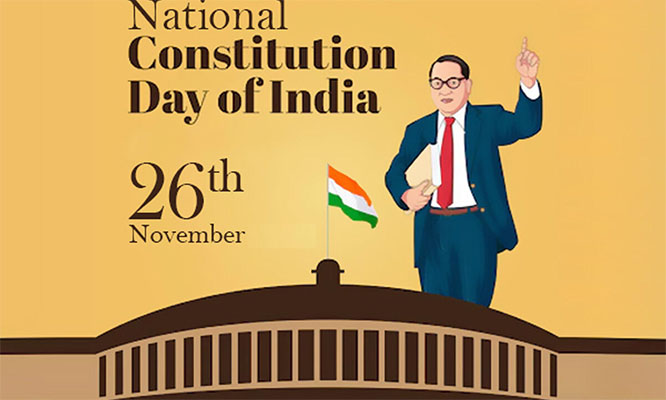
Constitution Day, also known as Samvidhan Divas, is observed every year on November 26 to honor the adoption of the Constitution of India and to recognize the visionary effort that shaped the world’s largest democracy.

Historical Background

It’s on November 26, 1949, the Constituent Assembly of India formally adopted the Constitution.This date is commemorated to acknowledge the completion of nearly three years of drafting, debate, and refinement.

On January 26, 1950, the Constitution came into force, marking India’s transition from a dominion to a sovereign republic.

The date 26 January was chosen to honor the “Purna Swaraj” declaration made in 1930 that marked the relentless efforts & sacrifices of the many. 

Why Constitution Day is Celebrated

* To honor & remember the framers of the Constitution, especially Dr. B. R. Ambedkar, the Chairman of the Drafting Committee, & many others. 

* To remind the citizens of the values, responsibilities, and rights enshrined in the Constitution.

* To promote constitutional values & literacy among students, institutions, and the general public.

* To reaffirm the nation’s commitment to justice, equality, liberty, fraternity and secular values. 

Vision and Significance of the Constitution

It establishes the fundamental political and legal framework for the nation.

Defines the structure, powers and functions of:
    •    The Executive
    •    The Legislature
    •    The Judiciary
    •    Guarantees a comprehensive set of Fundamental Rights, including:

-Equality before law
-Freedom of speech & expression
-Protection of life and personal liberty
-Freedom of religion
-Embeds Directive Principles of State Policy, guiding governance toward social justice and welfare.
-Introduces Fundamental Duties to ensure civic responsibility among citizens.

Key Features Celebrated on Constitution Day

-The Indian constitution is considered one of the longest written constitutions of the world. It’s systematically drafted considering almost all aspects that properly fits to the country. 

-Blend of multiple global constitutional principles while staying rooted in Indian values and realities.

-Framework that balances Federalism, Secularism, Democracy and Rule of Law. This makes everyone-from President to common man-below the law & are equal in the sight of law. 

-Another feature is that it’s based on built-in mechanisms for amendments, ensuring the Constitution grows with changing needs.

Message of the Day

The core ethos of this  Constitution Day is not merely about looking back at history-it’s a reminder of the continuous duty to protect democratic values, respect diversity and uphold the principles that define India as a sovereign, socialist, secular and democratic republic.

Happy Constitution Day to all my compatriots

Comments

Add new comment

  • Coastaldigest.com reserves the right to delete or block any comments.
  • Coastaldigset.com is not responsible for its readers’ comments.
  • Comments that are abusive, incendiary or irrelevant are strictly prohibited.
  • Please use a genuine email ID and provide your name to avoid reject.
News Network
November 21,2025

Bengaluru, Nov 21: The Karnataka government is facing pressure to overhaul its employment system after a high-level Cabinet sub-committee recommended the complete phase-out of job outsourcing in government offices, boards, and corporations by March 2028. The move is aimed at tackling a systemic issue that has led to the potential violation of constitutional reservation policies and the exploitation of workers.

The Call for Systemic Change

With over three lakh vacant posts currently being filled through private agencies on an outsource, insource, or daily wage basis, the sub-committee highlighted a significant lapse. "As a result, reservations are not being followed as per the Constitution and state laws. It’s an urgent need to take serious steps to change the system. It has been recommended to completely stop the system of outsourcing by March 2028," the panel stated in a document.

The practice of outsourcing involves private companies hiring workers to perform duties for a government agency. Critics argue this model results in lesser salaries, a lack of social security benefits (otherwise available to permanent government employees), and a failure to adhere to the provisions of Articles 14 and 15 of the Constitution, which guarantee equality before the law and prohibit discrimination.

The 'Bidar Model' as a Stop-Gap Solution

To regulate the current mode of employment and reduce worker exploitation until the 2028 deadline, the government plans to establish workers’ services multi-purpose cooperative societies across all districts, following the successful "Bidar Model."

The Bidar District Services of Labour Multi-purpose Cooperative Society Ltd., which operates under the District Commissioner, is cited as a successful example of providing a measure of social security to outsourced staff. Labour Department officials argue this society ensures workers receive their due wages and statutory facilities like ESI (Employees' State Insurance) and PF (Provident Fund), in exchange for a 1% service fee collected from the employees.

legislative push and Priority Insourcing

The recommendations, led by the sub-committee headed by Law and Parliamentary Affairs Minister H K Patil, are set to be discussed at the next Cabinet meeting. The committee has proposed the introduction of the Karnataka Outsourced Employees (Regulation, Placement and Welfare) Bill 2025.

In a move addressing immediate concerns, Labour Minister Santosh Lad, a member of the sub-committee, has reportedly assured that steps will be taken over the next 2-3 years to insource workers in "life-threatening services" on a priority basis. This includes essential personnel like pourakarmikas (sanitation workers), drivers, electrical staff in the Energy Department, and Health Department staff handling contagious diseases. The transition aims to grant these workers the long-term security and benefits they currently lack under the outsourcing system. 

Comments

Add new comment

  • Coastaldigest.com reserves the right to delete or block any comments.
  • Coastaldigset.com is not responsible for its readers’ comments.
  • Comments that are abusive, incendiary or irrelevant are strictly prohibited.
  • Please use a genuine email ID and provide your name to avoid reject.
News Network
November 24,2025

israelsyra.jpg

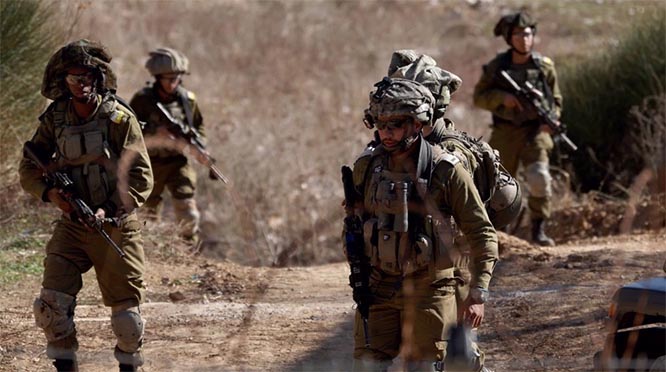
Israeli forces have pushed over the Syrian frontier, erecting a checkpoint and stopping vehicles in the southwestern city of Quneitra, in yet another breach of the Arab country’s sovereignty.

The violation took place on Sunday, when the troops made their way across the border, setting up the outpost near the Ain al-Bayda junction in northern Quneitra, Syrian outlets reported.

According to the al-Ikhbariya paper, an Israeli detachment positioned itself at the junction, halting cars and conducting searches.

The Syrian Arab News Agency (SANA) reported that three Israeli military vehicles then moved further into the northern countryside, deploying between the town of Jubata al-Khashab and the villages of Ofaniya and Ain al-Bayda. The agency added that a separate Israeli unit mounted a new incursion in the central region, approaching the villages of Umm Batina and al-Ajraf.

Residents said such activities have surged in recent months, pointing to Israeli advances onto farmland, leveling of extensive forested areas, arrests, and spread of mobile checkpoints.

The Israeli regime began markedly increasing its military aggression against Syria last year.

The escalation coincided with increasingly ferocious onslaughts throughout the country by the so-called Hay'at Tahrir al-Sham (HTS) Takfiri terrorist group, which the government of President Bashar al-Assad had confined to northwestern Syria. The HTS, however, managed to overthrow the government as the Israeli attacks would pummel the country’s civilian and defensive infrastructure.

Various reports have shown that, during the escalation, the regime conducted more than 1,000 airstrikes on the Syrian territory and over 400 ground raids into the south.

Following the collapse of the Assad government, Tel Aviv also widened its grip over the occupied Golan Heights by taking control of a demilitarized buffer zone, in defiance of a 1974 Disengagement Agreement. Earlier this month, senior Israeli officials, including Prime Minister Benjamin Netanyahu, visited the buffer zone, prompting expressions of alarm on the part of the United Nations.

The United States, the regime’s biggest ally, has, meanwhile, been fraternizing the HTS head Abu Mohammed al-Jolani amid the widely reported prospect of rapprochement with Tel Aviv.

Comments

Add new comment

  • Coastaldigest.com reserves the right to delete or block any comments.
  • Coastaldigset.com is not responsible for its readers’ comments.
  • Comments that are abusive, incendiary or irrelevant are strictly prohibited.
  • Please use a genuine email ID and provide your name to avoid reject.