



National Green Tribunal questions tradition of cremating in Hindus, says it causes air, water pollution

February 3, 2016

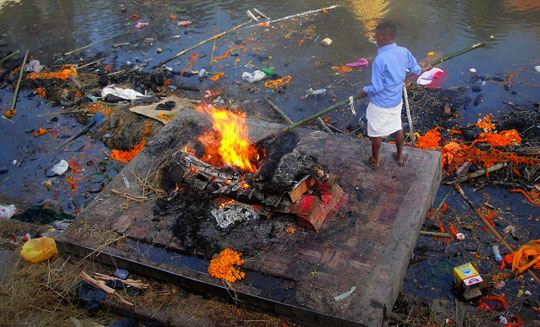
New Delhi, Feb 3: Putting a question mark on centuries-old tradition of cremation by Hindus, the National Green Tribunal (NGT) on Tuesday said the procedure to cremate human remains in open area leads to air pollution and subsequently it also effects natural water resources.
hinducr

Keeping in mind the growing level of pollution, especially in the national capital, the Tribunal asked the Union Environment Ministry and Delhi government to initiate programmes to provide alternative modes of cremation.

A brief outlook of the traditional system - After a person dies, as per Hinduism, the body is washed by family members and close friends as per tradition and later, it is cremated while following couple of religious procedures.

It is said that Hindus believe that soul of a dead person must be completely detached from the body and the material world, so that it can be reincarnated again. For this, an open cremation is needed so that the soul can be released easily as soon as the body is burned atop a massive pile of wood.

Many even use sandalwoods to form the death pyre.

The 'asthiyan' or the remains of the body along with the ashes are then submerged into the Ganges - the holy river.

Burning a body in the open and submerging the ashes into various rivers has been happening in India since ages.

However, it must be noted that there are a number of sects, sub-sects within Hinduism and traditions may vary according to different regions and their beliefs.

Now, the point here is, do these religious beliefs help to attain a person 'moksha' or does it cause an adverse effect on the environment?

NGT's direction - Pointing out the environment factor, a bench headed by Justice UD Salvi today said there was a need to adopt environment-friendly methods like electric crematoriums and use of CNG and change the “mindset of the people”.

“The issue involves question of faith and circumstances in which the people live, ... It is, therefore, the responsibility of the men who lead, particularly religious leaders, to steer the faith in a direction so as to change the mindset of people practising their faith and make them adopt practices which are environment-friendly.

“It is also the responsibility of the government to facilitate the making of the mindset of the citizens as well as to provide environment-friendly alternatives for cremation to its citizenry,” the bench said, directing authorities, including civic bodies, to educate the public in this regard.

The green panel further said the traditional means of cremation caused adverse impact on environment and dispersal of ashes in the river led to water pollution.

“Religions of the world, therefore, conceived of different methods for disposal of the dead on the basis of their theology and the circumstances in which the believers lived. Where there was plenty of wood, the individuals thought of disposal of their dead by burning with wood, but where there was scarcity of wood the individuals buried their dead,” it said.

The NGT was hearing a plea by advocate DM Bhalla who had said that cremation of humans by conventional methods added to air pollution, therefore, alternative modes of cremation needed to be used.

Bhalla contended that cremation of human remains by traditional method involving wood has serious impact on the environment as “the forest cover is sacrificed and obnoxious gases emanated from the burning of human mortal remains pollute the air.”

A second take - Taking note of the NGT's point of view, cloud of black smoke reaching upto the sky is a common sight in most open crematoriums in India.

According to some environmentalists, the ceremony of burning human bodies using wood, with the belief that it releases the soul, is actually a threat to the environment.

According to a report, in the whole year, around 50 to 60 million trees are burned during cremations in India.

Also, cremation in open grounds generate large amounts of ashes, which are later submerged into rivers and water bodies, especially the Ganga river.

So, are we really polluting our environment?

However, in order to tackle the environmental pollution, the concept of electric cremation was commissioned in India in January 1989, as a part of the Ganga Action Plan.

Well, it remains to be seen whether people would be ready to shed away their traditional belief and accept the change for a better cause.

Comments

Add new comment

  • Coastaldigest.com reserves the right to delete or block any comments.
  • Coastaldigset.com is not responsible for its readers’ comments.
  • Comments that are abusive, incendiary or irrelevant are strictly prohibited.
  • Please use a genuine email ID and provide your name to avoid reject.
News Network
December 6,2025

indigoticket.jpg

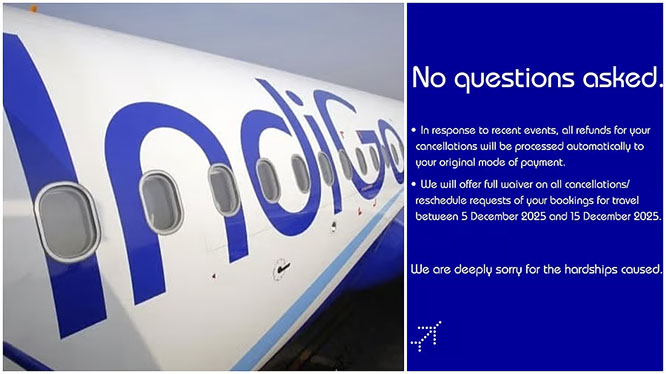
With IndiGo flight disruptions impacting thousands of passengers, the airline on Saturday said that it will offer full waiver on all cancellations/reschedule requests for travel bookings between December 5, 2025 and December 15, 2025.

Earlier in the day, the civil aviation ministry had directed the airline to complete the ticket refund process for the cancelled flights by Sunday evening, as well as ensure baggage separated from the travellers are delivered in the next two days.

In a post on X, titled 'No questions asked', IndiGo wrote, "In response to recent events, all refunds for your cancellations will be processed automatically to your original mode of payment."

"We are deeply sorry for the hardships caused," it further added.

Several passengers, however, complained of not getting full refund as promised by the airline.

Netizens have shared screenchots of getting charged for airline cancellation fee and convenience fee.

"Please tell me why u have did this airline cancellation charges when u say full amount will be refunded (sic)," a user wrote sharing a screenshot of the refund page.

"Well, but you have still debited the convenience charges," wrote another.

Passengers have also raised concerns about the "cancel" option being disabled on the IndiGo app. "First enable the 'Cancel' button on your App & offer full refund on tickets cancelled by customers between the said dates," wrote a user.

A day after the country's largest airline, IndiGo, cancelled more than 1,000 flights and caused disruptions for the fifth day on Saturday, the ministry said that any delay or non-compliance in refund processing will invite immediate regulatory action.

The refund process for all cancelled or disrupted flights must be completed by 8 pm on Sunday, the ministry said in a statement.

"Airlines have also been instructed not to levy any rescheduling charges for passengers whose travel plans were affected by cancellations," it said.

On Saturday, more than 400 flights were cancelled at various airports.

IndiGo has also been instructed to set up dedicated passenger support and refund facilitation cells.

Comments

Add new comment

  • Coastaldigest.com reserves the right to delete or block any comments.
  • Coastaldigset.com is not responsible for its readers’ comments.
  • Comments that are abusive, incendiary or irrelevant are strictly prohibited.
  • Please use a genuine email ID and provide your name to avoid reject.
News Network
December 16,2025

jordan.jpg

Prime Minister Narendra Modi on Monday held talks with Jordan’s King Abdullah II in Amman, during which the two leaders discussed ways to further strengthen bilateral relations, with the Prime Minister outlining an eight-point vision covering key areas of cooperation.

Describing the meeting as “productive”, PM Modi said he shared a roadmap focused on trade and economy, fertilisers and agriculture, information technology, healthcare, infrastructure, critical and strategic minerals, civil nuclear cooperation, and people-to-people ties.

In a post on social media platform X, the Prime Minister praised King Abdullah II’s personal commitment to advancing India–Jordan relations, particularly as both countries mark the 75th anniversary of the establishment of diplomatic ties this year.

“Held productive discussions with His Majesty King Abdullah II in Amman. His personal commitment towards vibrant India-Jordan relations is noteworthy. This year, we are celebrating the 75th anniversary of our bilateral diplomatic relations,” PM Modi said.

The meeting took place at the Al Husseiniya Palace, where the two leaders also exchanged views on regional and global issues of mutual interest. According to the Ministry of External Affairs (MEA), both sides agreed to further deepen cooperation in areas including trade and investment, defence and security, counter-terrorism and de-radicalisation, fertilisers and agriculture, infrastructure, renewable energy, tourism, and heritage.

The MEA said both leaders reaffirmed their united stand against terrorism.

PM Modi arrived in Amman earlier on Monday and was received by Jordanian Prime Minister Jafar Hassan, who accorded him a formal welcome. Following the talks, King Abdullah II hosted a banquet dinner in honour of the Prime Minister, reflecting the warmth of bilateral ties.

Jordan is the first leg of PM Modi’s three-nation tour. From Amman, the Prime Minister will travel to Ethiopia at the invitation of Prime Minister Abiy Ahmed Ali, marking his first official visit to the African nation. The tour will conclude with a visit to Oman.

Comments

Add new comment

  • Coastaldigest.com reserves the right to delete or block any comments.
  • Coastaldigset.com is not responsible for its readers’ comments.
  • Comments that are abusive, incendiary or irrelevant are strictly prohibited.
  • Please use a genuine email ID and provide your name to avoid reject.
News Network
December 6,2025

pilot.jpg

New Delhi: IndiGo, India’s largest airline, faced major operational turbulence this week after failing to prepare for new pilot-fatigue regulations issued by the Directorate General of Civil Aviation (DGCA). The stricter rules—designed to improve flight safety—took effect in phases through 2024, with the latest implementation on November 1. IndiGo has acknowledged that inadequate roster planning led to widespread cancellations and delays.

Below are the key DGCA rules that affected IndiGo’s operations:

1. Longer Mandatory Weekly Rest

Weekly rest for pilots has been increased from 36 hours to 48 hours.

The government says the extended break is essential to curb cumulative fatigue. This rule remains in force despite the current crisis.

2. Cap on Night Landings

Pilots can now perform only two night landings per week—a steep reduction from the earlier limit of six.

Night hours, defined as midnight to early morning, are considered the least alert period for pilots.

Given the disruptions, this rule has been temporarily relaxed for IndiGo until February 10.

3. Reduced Maximum Night Flight Duty

Flight duty that stretches into the night is now capped at 10 hours.

This measure has also been kept on hold for IndiGo until February 10 to stabilize operations.

4. Weekly Rest Cannot Be Replaced With Personal Leave

Airlines can no longer count a pilot’s personal leave as part of the mandatory 48-hour rest.

Pilots say this closes a loophole that previously reduced actual rest time.

Currently, all airlines are exempt from this rule to normalise travel.

5. Mandatory Fatigue Monitoring

Airlines must submit quarterly fatigue reports along with corrective actions to DGCA.

This system aims to create a transparent fatigue-tracking framework across the industry.

The DGCA has stressed that these rules were crafted to strengthen flight safety and align India with global fatigue-management standards. The temporary relaxations are expected to remain until February 2025, giving IndiGo time to stabilise its schedules and restore normal air travel.

Comments

Add new comment

  • Coastaldigest.com reserves the right to delete or block any comments.
  • Coastaldigset.com is not responsible for its readers’ comments.
  • Comments that are abusive, incendiary or irrelevant are strictly prohibited.
  • Please use a genuine email ID and provide your name to avoid reject.

