



Netaji's cotton khakis caught fire during Taipei plane crash, says eyewitness

January 10, 2016

London, Jan 10: A British website, set up to catalogue the last days of Netaji Subhas Chandra Bose, has released what it claims are eyewitness accounts of the day he was reportedly killed in a plane crash in Taiwan on August 18, 1945.
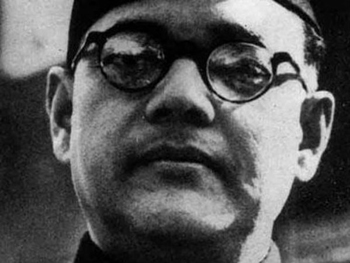
netaji
The latest set of documents quote several people who were reportedly involved in the matter related to the accident as well as two British intelligence reports that revisited the crash site to establish the facts.

The website also sheds light on what may have been the freedom fighter's dying words, which reflected his devotion to the cause of India's freedom.

"For 70 years, there have been doubts in certain circles whether such a tragedy at all took place. Four separate reports each corroborating the other constitute irresistible evidence to the contrary," says a statement issued by www.bosefiles.info.

The documents say that early in the morning on 18 August 1945, a Japanese Air Force bomber took off from Tourane in Vietnam with Bose and 12 or 13 other passengers and crew.

Also on board was Lt Gen Tsunamasa Shidei of the Japanese Army and the planned flight path was Heito-Taipei-Dairen-Tokyo.

The three-member Netaji Inquiry Committee, instituted by the government of India in 1956 and headed by Major General Shah Nawaz Khan of Bose's Indian National Army (INA), was told that since "the weather was perfect and the engines (of the aircraft) worked smoothly" the pilot decided to overfly Heito and proceed straight to Taipei, arriving there late morning or early afternoon.

Major Taro Kono, a Japanese Air Staff Officer and one of the passengers, told the committee: "I noticed that the engine on the left side of the plane was not functioning properly. I, therefore, went inside the plane and after examining the engine inside, I found it to be working all right."

He added the accompanying engineer "also tested the engine and certified its air-worthiness".

Captain Nakamura alias Yamamoto, the ground engineer in charge of maintenance at the airport, concurred with Major Kono "that the engine of the left side was defective".

He said the pilot told him "it was a brand new engine". He went on to say: "After slowing down the engine, he (the pilot) adjusted it for about five minutes. The engine was tested twice by Major Takizawa (the pilot). After being adjusted, I satisfied myself that the condition of the engine was all right. Major Takizawa also agreed with me that there was nothing wrong with the engine."

However, soon after the aircraft was airborne there was, according to Colonel Habib ur Rahman - Bose's ADC and a co-passenger, a loud explosion.

He described it as "a noise like a cannon shot". Nakamura, who was watching from the ground, said: "Immediately on taking off, the plane tilted to its left side and I saw something fall down from the plane, which I later found was the propeller."

He also maintained that the maximum height gained by the aircraft was 30-40 metres.

He estimated "the plane crashed about 100 metres beyond the concrete runway" and immediately caught fire in the front portion.

Colonel Rahman recounted: "Netaji turned towards me. I said 'Aagey Say Nikaleay, Pichey Say Rasta Nahin Hai'. (Please get out through the front; there is no way in the rear.) "We could not get through the entrance door as it was all blocked and jammed by packages and other things. So Netaji got out through the fire; actually he rushed through the fire. I followed him through the same flames.

"The moment I got out, I saw him about 10 yards ahead of me, standing, looking in the opposite direction to mine towards the west. His clothes were on fire. I rushed and I experienced great difficulty in unfastening his bush-shirt belt. His trousers were not so much on fire and it was not necessary to take them off."

Rahman was in woollen uniform, whereas Bose was in cotton khakis, which, it was assessed, caught fire more easily.

Rahman added: "I laid him down on the ground and noticed a very deep cut on his head, probably on the left side. His face had been scorched by heat and his hair had also caught fire and singed.

"Netaji enquired from me in Hindustani: Aap Ko Ziada To Nahin Lagi?" (Hope you have not been hurt badly). I replied, I feel that I will be all right. About himself he said that he felt that he would not survive."

Bose added: "Jab Apney Mulk Wapis Jayen To Mulki Bhaiyon Ko Batana Ki Mein Akhri Dam Tak Mulk Ki Azadi Ke Liyay Larta Raha Hoon; Woh Jangi Azadi Ko Jari Rakhen. Hindustan Zaroor Azad Hoga, Oos Ko Koi Gulam Nahin Rakh Sakta. (When you go back to the country, tell the people that up to the last I have been fighting for the liberation of my country; they should continue to struggle, and I am sure India will be free before long. Nobody can keep India in bondage now.)"

Lieutenent Col Shiro Nonogaki, who was on the flight, said: "When I first saw Netaji after the plane crash, he was standing somewhere near the left tip of the left wing of the plane. His clothes were on fire and his assistant (Col Rahman) was trying to take off his coat."

There were variations in the details provided by Rahman, Nonogaki, Kono, Takahashi and Nakamura. They were giving evidence 11 years after the accident.

But in essence there was no disagreement between their testimonies on the fact of the crash and Bose suffering severe burns and injuries as a consequence, the website notes.

Netaji was rushed to the nearby Nanmon Military Hospital in a critical condition. In September 1945, British authorities in India sent intelligence teams comprising of Messrs Finney and Davies, HK Roy and KP De to Bangkok, Saigon and Taipei to enquire about the whereabouts of Bose and, if possible, to arrest him. They, instead, returned with the story of the crash.


Comments

Anwar
 - 
Sunday, 10 Jan 2016

Assalamu alaikum Sar zameen e Hindusthan=United India= Real India=Present India+Pakistan+Bangladesh+Afghanistan.

Add new comment

  • Coastaldigest.com reserves the right to delete or block any comments.
  • Coastaldigset.com is not responsible for its readers’ comments.
  • Comments that are abusive, incendiary or irrelevant are strictly prohibited.
  • Please use a genuine email ID and provide your name to avoid reject.
News Network
December 13,2025

New Delhi: School-going children are picking up drug and smoking habits and engaging in consumption of alcohol, with the average age of introduction to such harmful substances found to be around 13 years, suggesting a need for earlier interventions as early as primary school, a multi-city survey by AIIMS-Delhi said.

The findings also showed substance use increased in higher grades, with grade XI/XII students two times more likely to report use of substances when compared with grade VIII students. This emphasised the importance of continued prevention and intervention through middle and high school.

The study led by Dr Anju Dhawan of AIIMS's National Drug Dependence Treatment Centre, published in the National Medical Journal of India this month, looks at adolescent substance use across diverse regions.

The survey included 5,920 students from classes 8, 9, 11 and 12 in urban government, private and rural schools across 10 cities -- Bengaluru, Chandigarh, Delhi, Dibrugarh, Hyderabad, Imphal, Jammu, Lucknow, Mumbai, and Ranchi. The data were collected between May 2018 and June 2019.

The average age of initiation for any substance was 12.9 (2.8) years. It was lowest for inhalants (11.3 years) followed by heroin (12.3 years) and opioid pharmaceuticals (without prescription; 12.5 years).

Overall, 15.1 per cent of participants reported lifetime use, 10.3 per cent reported past year use, and 7.2 per cent reported use in the past month of any substance, the study found.

The most common substances used in the past year, after tobacco (4 per cent) and alcohol (3.8 per cent), were opioids (2.8 per cent), followed by cannabis (2 per cent) and inhalants (1.9 per cent). Use of non-prescribed pharmaceutical opioids was most common among opioid users (90.2 per cent).

On being asked, 'Do you think this substance is easily available for a person of your age' separately for each substance category, nearly half the students (46.3 per cent) endorsed that tobacco products and more than one-third of the students (36.5 per cent) agreed that a person of their age can easily procure alcohol products.

Similarly, for Bhang (21.9 per cent), ganja/charas (16.1 per cent), inhalants (15.2 per cent), sedatives (13.7 per cent), opium and heroin (10 per cent each), the students endorsed that these can be easily procured.

About 95 per cent of the children, irrespective of their grade, agreed with the statement that 'drug use is harmful'.

The rates of substance use (any) among boys were significantly higher than those of girls for substance use (ever), use in the past year and use in the past 30 days. Compared to grade VIII students, grade IX students were more likely, and grade XI/XII students were twice as likely to have used any substance (ever).

The likelihood of past-year use of any substance was also higher for grade IX students and for grade XI/XII students as compared to grade VIII students.

About 40 per cent of students mentioned that they had a family member who used tobacco or alcohol each. The use of cannabis (any product) and opioid (any product) by a family member was reported by 8.2 per cent and 3.9 per cent of students, respectively, while the use of other substances, such as inhalants/sedatives by family was 2-3 per cent, the study found.

A relatively smaller percentage of students reported use of tobacco or alcohol among peers as compared to among family members, while a higher percentage reported inhalants, sedatives, cannabis or opioid use among peers.

Children using substances (past year) compared to non-users reported significantly higher any substance use by their family members and peers.

There were 25.7 per cent students who replied 'yes' to the question 'conflicts/fights often occur in your family'. Most students also replied affirmatively to 'family members are aware of how their time is being spent' and 'damily members are aware of with whom they spend their time'.

Comments

Add new comment

  • Coastaldigest.com reserves the right to delete or block any comments.
  • Coastaldigset.com is not responsible for its readers’ comments.
  • Comments that are abusive, incendiary or irrelevant are strictly prohibited.
  • Please use a genuine email ID and provide your name to avoid reject.
News Network
December 20,2025

train.jpg

At least seven elephants were killed and one calf injured after a herd collided with the Sairang-New Delhi Rajdhani Express in Assam's Hojai on Saturday morning, leading to disruption of rail services. 

The Sairang-New Delhi Rajdhani Express struck a herd of elephants, resulting in the derailment of the locomotive and five coaches. No passenger casualties or injuries were reported, officials said.

The New Delhi-bound train met with the accident around 2.17 am, PTI reported. The Sairang-New Delhi Rajdhani Express connects Mizoram's Sairang (near Aizawl) to Anand Vihar Terminal (Delhi). 

Railway has issued helpline numbers at the Guwahati Railway Station:-

•    0361-2731621
•    0361-2731622
•    0361-2731623

The accident site is located about 126 km from Guwahati. Following the incident, accident relief trains and railway officials rushed to the spot to initiate rescue operations.

Train Services Disrupted

Sources said that due to the derailment and elephant body parts scattered on the tracks, train services to Upper Assam and other parts of the Northeast were affected.

Passengers from the affected coaches were temporarily accommodated in vacant berths available in other coaches of the train. Once the train reaches Guwahati, additional coaches will be attached to accommodate all passengers, after which the train will resume its onward journey.

The incident occurred at a location that is not a designated elephant corridor. The loco pilot, upon spotting the herd on the tracks, applied emergency brakes. Despite this, the elephants dashed into the train, leading to the collision and derailment.

Last month, an elephant was killed after being hit by a train in Dhupguri in West Bengal's Jalpaiguri district. The incident took place on November 30. 

The adult elephant was killed on the spot, and a calf was discovered lying injured beside the tracks. 

Over 70 Elephants Killed In Train Collisions Over Last 5 Years

At least 79 elephants have died in train collisions across the country in the last five years, the Environment Ministry had informed Parliament in August.

In a written reply in the Lok Sabha, Minister of State for Environment Kirti Vardhan Singh had said the figure is based on reports from state governments and Union Territory administrations for the period 2020-21 to 2024-25.

He said that the ministry does not maintain consolidated data on the deaths of other wild animals on railway tracks, including in designated elephant corridors.

Singh confirmed that three elephants, including a mother and her calf, were killed on July 18 this year after being hit by a speeding express train on the Kharagpur-Tatanagar section in West Bengal's Paschim Midnapore district. The incident took place near Banstala between Jhargram and Banstala stations.

The minister said several measures have been taken jointly by the Environment Ministry and the Railways to prevent such accidents.

These include imposing speed restrictions in elephant habitats, pilot projects such as seismic sensor-based detection of elephants near tracks and construction of underpasses, ramps and fencing at vulnerable points.

The Wildlife Institute of India, in consultation with the ministry and other stakeholders, has also issued guidelines titled 'Eco-friendly Measures to Mitigate Impacts of Linear Infrastructure' to help agencies design railways and other projects in ways that reduce human-animal conflicts.

Singh added that capacity-building workshops were conducted for railway officials at the Wildlife Institute of India in 2023 and 2024 to raise awareness on elephant conservation and protection.

A detailed report titled 'Suggested Measures to Mitigate Elephant & Other Wildlife Train Collisions on Vulnerable Railway Stretches in India' had also been prepared after surveys across 127 railway stretches covering 3,452 km.

Of these, 77 stretches spanning 1,965 km in 14 states were prioritised for mitigation, with site-specific interventions suggested. 

Comments

Add new comment

  • Coastaldigest.com reserves the right to delete or block any comments.
  • Coastaldigset.com is not responsible for its readers’ comments.
  • Comments that are abusive, incendiary or irrelevant are strictly prohibited.
  • Please use a genuine email ID and provide your name to avoid reject.