How Bhatkal trio rescued two Omanis from drowning off Al-Seeb coast at midnight

coastaldigest.com news network
August 31, 2020

SMM.JPG

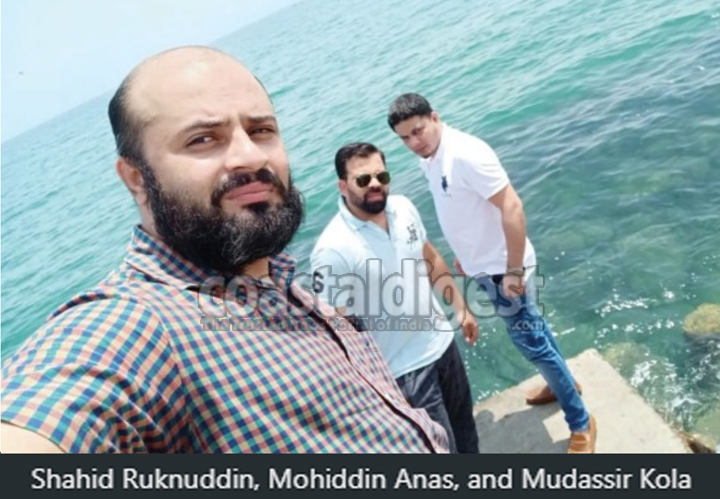
Muscat, Aug 31: Three Indian expats hailing from Bhatkal, a coastal town located in south Indian state of Karnataka, have become the talk of the town after they rescued two Omanis from drowning risking their own lives.

The NRI heroes are Shahid Ruknuddin, Mohiddin Anas, and Mudassir Kola, who live in Al-Seeb, a coastal fishing city, located several kilometres northwest of Muscat, in north-eastern Oman.

The incident occurred on August 28, when two Omani nationals had gone out to sea along with their friends. Unfortunately, their boat capsized off the coast due to rough weather.

At the same time, the expat trio had gone to the same beach in the hopes of catching some fish. They were unsuccessful and were about to return, when they heard faint cries in the distance.

Concerned that it might be someone calling for help, they switched on their torch to see if they could spot anyone shouting for help from the water.

Mohiddin Anas, recalling their experience, said, “At about 11:30 pm, we went to the beach to try and catch some fish. Because the tide was low, we decided to stand on the rocks that would normally be submerged underwater to see if we could catch any. We heard someone shouting from a distance, but decided to ignore them, because we thought someone might be playing a joke from the parking lot.

“We stayed there for about 25 minutes, and decided to go home, but the shouting persisted, so we definitely felt someone was calling out to us,” he added.

“Since we had a very powerful torch to help us see underneath the waves. We switched our torch on and off to signal them, and each time they saw the signal, they’d shout at us loudly. We didn’t know what they were saying, but we knew someone was calling to us.

“We realised they were nearly a 45-minute swim away from us, they were quite far away,” added Anas.

“When we pointed the torch in the direction of their shouting, all we could see were a pair of eyes in the waves, at a distance. They were Omanis shouting at us in Arabic, but we don’t understand the language, so it was difficult to understand what they were saying.

“Keen to ensure the locals were rescued at the earliest, they gestured towards the stranded Omanis to swim towards them. The locals swam with all their might against the momentum of the rough waves, but had become exhausted about 20 or 30 metres away from the shore.

“Concerned they might not make it and caring little for his own safety, Shahid jumped into the water, which contained many jagged rocks, so that he could bring the two Omanis onto land before their situation worsened. On reaching dry land, the locals immediately ran to another boat, which they took out to sea to rescue the third Omani who had gone out to sea with them.

“They told us their friend was still out there, and he had to be rescued, although he knew how to swim,” he recalled.

“By this time, Shahid’s legs were bleeding, so we had to help him back to his room to rest. We went home at about two in the morning. They were trembling because of their ordeal, but are otherwise unharmed.”

Sharing his experiences of the part he played in rescuing the Omanis, Shahid asked that others be careful while going out to see, so that they do not face such a trying ordeal, one which they might not be so lucky to survive.

“The waves were very rough, and these people tried very hard to make it to the shore,” he said.

“To anyone planning to go out to the sea, please don’t go when the weather is bad, especially at night. There might not be anyone there to help you. I told my family of my involvement in helping these people, and my mother said it was our destiny to be there and save them,” said Shahid, who is now recuperating at home after his late-night experience.

“My shop may not be doing too well at the moment, but all of my concerns around it evaporated when I did my duty. The humanity we all have is more important than anything else in this world.”

Comments

Add new comment

  • Coastaldigest.com reserves the right to delete or block any comments.
  • Coastaldigset.com is not responsible for its readers’ comments.
  • Comments that are abusive, incendiary or irrelevant are strictly prohibited.
  • Please use a genuine email ID and provide your name to avoid reject.
News Network
November 21,2025

Tejas.jpg

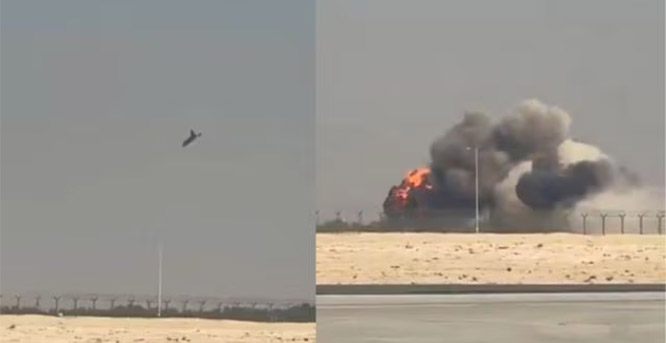
An Indian Air Force (IAF) Tejas fighter jet crashed on Friday, November 21, afternoon during its aerial demonstration at the Dubai Air Show, plunging to the ground at around 2:10 pm local time while performing a manoeuvre before thousands of spectators.

The IAF confirmed the incident, stating that a Tejas aircraft participating in the show had crashed and that further details were being gathered. An Air Force spokesperson said more information would be shared after initial assessments.

The crash sent thick black smoke billowing into the sky near the airport, causing panic among visitors, including families and children who had gathered to watch the display. Authorities have not yet confirmed whether the pilot managed to eject before the aircraft went down. Emergency response teams rushed to the scene, and officials have not released information on casualties or damage so far.

The Tejas is a 4.5-generation, multi-role fighter aircraft developed indigenously by Hindustan Aeronautics Limited (HAL). Designed for versatility, it is capable of offensive air support, close combat, ground attack missions and maritime operations. The aircraft family includes single-seat fighters and twin-seat trainers for both the Air Force and Navy.

HAL describes the latest version, the LCA Mk1A, as the most advanced in the series, featuring an AESA radar, an upgraded electronic warfare suite with radar-warning and self-protection jamming, smart multifunction displays, a digital map generator, a combined interrogator–transponder system and a modern radio altimeter. These enhancements significantly improve the aircraft’s combat capability and survivability.

Further updates from IAF and UAE authorities are awaited.

Comments

Add new comment

  • Coastaldigest.com reserves the right to delete or block any comments.
  • Coastaldigset.com is not responsible for its readers’ comments.
  • Comments that are abusive, incendiary or irrelevant are strictly prohibited.
  • Please use a genuine email ID and provide your name to avoid reject.
News Network
November 24,2025

Mangaluru, Nov 24: The original departure time of 11.10 pm was a distant memory for scores of Dammam-bound passengers at Mangaluru International Airport last Friday night, as their Air India Express flight was abruptly cancelled at the eleventh hour, sparking hours of frustration and chaos.

The flight, IX 885, initially scheduled to depart at 11.10 pm on November 22, was subject to two back-to-back reschedules—first pushed to 11.45 pm and then significantly postponed to 1.40 am—before the final, crushing announcement of cancellation was made. For the travellers, many of whom are likely expatriate workers with tight schedules, the last-minute change marked the beginning of a distressing ordeal.

"There was no drinking water, no food, and absolutely no proper guidance. We were left stranded like refugees," complained a stranded passenger.

According to multiple passenger accounts, the airline's ground staff failed to provide adequate support or essential amenities following the cancellation. Complaints poured in about the total absence of drinking water, food provisions, and any reliable guidance from the carrier's representatives. Travellers alleged they were left stranded for a considerable period, with no immediate arrangements or clear communication offered regarding accommodation or alternative travel to send them back home.

The incident has highlighted serious concerns over the carrier's contingency planning and customer service protocols during flight disruptions at one of India's key international gateways. The airline is yet to issue a comprehensive statement addressing the alleged lapse in passenger care.
 

Comments

Add new comment

  • Coastaldigest.com reserves the right to delete or block any comments.
  • Coastaldigset.com is not responsible for its readers’ comments.
  • Comments that are abusive, incendiary or irrelevant are strictly prohibited.
  • Please use a genuine email ID and provide your name to avoid reject.
News Network
November 24,2025

israelsyra.jpg

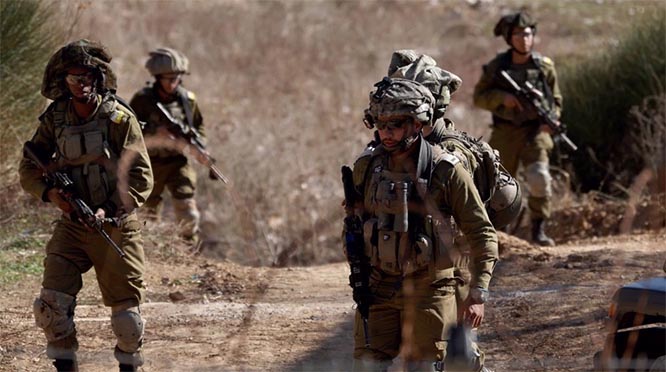
Israeli forces have pushed over the Syrian frontier, erecting a checkpoint and stopping vehicles in the southwestern city of Quneitra, in yet another breach of the Arab country’s sovereignty.

The violation took place on Sunday, when the troops made their way across the border, setting up the outpost near the Ain al-Bayda junction in northern Quneitra, Syrian outlets reported.

According to the al-Ikhbariya paper, an Israeli detachment positioned itself at the junction, halting cars and conducting searches.

The Syrian Arab News Agency (SANA) reported that three Israeli military vehicles then moved further into the northern countryside, deploying between the town of Jubata al-Khashab and the villages of Ofaniya and Ain al-Bayda. The agency added that a separate Israeli unit mounted a new incursion in the central region, approaching the villages of Umm Batina and al-Ajraf.

Residents said such activities have surged in recent months, pointing to Israeli advances onto farmland, leveling of extensive forested areas, arrests, and spread of mobile checkpoints.

The Israeli regime began markedly increasing its military aggression against Syria last year.

The escalation coincided with increasingly ferocious onslaughts throughout the country by the so-called Hay'at Tahrir al-Sham (HTS) Takfiri terrorist group, which the government of President Bashar al-Assad had confined to northwestern Syria. The HTS, however, managed to overthrow the government as the Israeli attacks would pummel the country’s civilian and defensive infrastructure.

Various reports have shown that, during the escalation, the regime conducted more than 1,000 airstrikes on the Syrian territory and over 400 ground raids into the south.

Following the collapse of the Assad government, Tel Aviv also widened its grip over the occupied Golan Heights by taking control of a demilitarized buffer zone, in defiance of a 1974 Disengagement Agreement. Earlier this month, senior Israeli officials, including Prime Minister Benjamin Netanyahu, visited the buffer zone, prompting expressions of alarm on the part of the United Nations.

The United States, the regime’s biggest ally, has, meanwhile, been fraternizing the HTS head Abu Mohammed al-Jolani amid the widely reported prospect of rapprochement with Tel Aviv.

Comments

Add new comment

  • Coastaldigest.com reserves the right to delete or block any comments.
  • Coastaldigset.com is not responsible for its readers’ comments.
  • Comments that are abusive, incendiary or irrelevant are strictly prohibited.
  • Please use a genuine email ID and provide your name to avoid reject.