



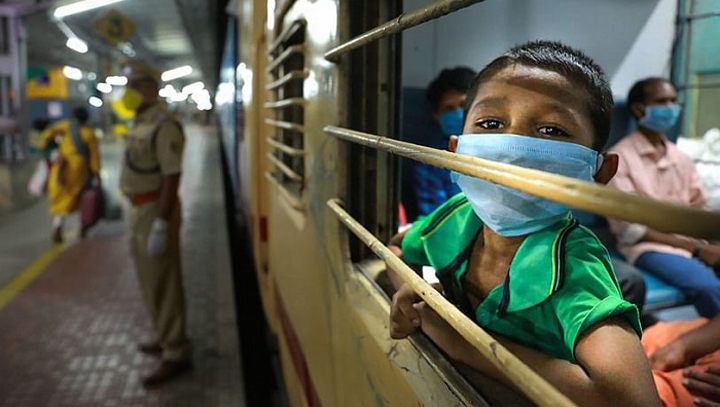
45% of Karnataka's population was infected with covid-19 by August, says a new study

News Network
November 10, 2020

karcor.JPG

Bengaluru, Nov 10: A whopping 44.5% of Karnataka’s population was infected with Covid-19 by the end of August, said a team of Indian and American researchers who completed a randomised Covid-19 testing study.

This estimate stands in sharp contrast to the state’s official sero-survey which determined that 27.3% of the population was exposed to the virus. The diverging studies appear to suggest that this is because the state’s sero-survey did not conduct enough random tests.

The survey, titled “Karnataka Seroprevalence Study” (KSS), began on June 15 and ended on August 29. It saw researchers from Duke University in North Carolina, the University of Chicago, the Centre for Monitoring Indian Economy (CMIE) and Mapmygenome, supported by the State Covid Task Force, reach out to 1,907 random households across 20 districts of Karnataka.

The homes were identified from an existing and representative sample of 9,717 households, drawn from the Pyramids Household Survey (CPHS), a longitudinal household panel data set assembled by the Mumbai-based Centre for Monitoring Indian Economy (CMIE).

The survey has now estimated that a shocking 3.15 crore residents had been infected by the virus by the end of August 2020, which is higher than the figure of 1.93 crore persons currently infected or recovered from Covid according to the government survey.

Another key finding is that rural areas have been hit equally badly as urban areas because of returning migrants and because there were fewer lockdowns there due to ongoing agricultural activities.

Commissioner of Health Pankaj Kumar Pandey said the disparity in findings could be due to KSS’ small sample size.

 “A small sample size can skew estimates. Plus the KSS’ use of households sourced from an economic survey can create a distorted picture. The state’s sero-survey results, meantime, have tallied largely with nationwide sero-survey results,” he said.

One of the authors of the KSS study, Associate Professor Manoj Mohanan of the Sanford School of Public Policy at Duke, told DH that one reason for the disparity is the different strategies used.

“We aimed to get at the population-representative sample while the state’s study focused on target-risk groups. This is likely to cause some variation, especially because consent rates are likely to differ,” he said.

That the studies used different antibody tests is also a factor, he added. “We relied on the Elisa test for the RBD spike protein that was developed by THSTI while the other study relied on the Covid Kavach Elisa,” he said.

Scientists of the DBT India Consortium for Covid-19 Research had published a paper in August showing that the ICMR-designed Covid Kavach Elisa test has a specificity of 99.5% and a sensitivity of 75.7%. In contrast, THSTI’s Elisa test was shown to have a specificity of 100% and a sensitivity of 84.7%.

“Sensitivity” is the ability to identify those with antibodies to Sars-Cov-2 (true positive rate), and “specificity” is the ability to identify those without antibodies to Sars-CoV-2 (true negative rate).

Professor Mohanan also pointed out that the RT-PCR positive rates in the state’s sero-survey (12.7%) are “slightly higher than the high-end of our estimates for current infection”.

Comments

Add new comment

  • Coastaldigest.com reserves the right to delete or block any comments.
  • Coastaldigset.com is not responsible for its readers’ comments.
  • Comments that are abusive, incendiary or irrelevant are strictly prohibited.
  • Please use a genuine email ID and provide your name to avoid reject.
News Network
December 20,2025

Mangaluru, Dec 20: The Mangaluru City Police have issued a detailed traffic advisory ahead of the inaugural ceremony of Karavali Utsava, which will be held at the Karavali Utsava Ground on Saturday.

The festival will be inaugurated at 6:00 pm by Dakshina Kannada District Minister Dinesh Gundu Rao. Cultural and public programmes will be held at the venue every evening and will continue until January 2.

According to City Police Commissioner Sudheer Kumar Reddy, parking of vehicles is strictly prohibited on both sides of the road from Lalbagh to Karavali Utsava Ground. Visitors are requested to park their vehicles only at designated parking areas.

To help the public, traffic signboards and parking guidance flex boards have been installed along the routes leading to the venue. The police have urged commuters and visitors to follow these instructions to ensure smooth traffic movement.

Designated Parking Locations

•    Urwa Market Ground – Cars
•    Gandhinagar Government School (near Press Club) – Two-wheelers and cars
•    Ladyhill Church parking area – Two-wheelers and cars
•    Canara School Ground, Mannagudda – Two-wheelers and cars
•    Thimmappa Hotel premises – Two-wheelers and cars
•    Scout and Guide Bhavana premises (behind Karavali Utsava Grounds) – Two-wheelers
•    Urwa Market Road – Two-wheelers
•    Hat Hill Road – Two-wheelers

The police have appealed to the public to cooperate by following traffic rules and parking guidelines to avoid inconvenience during the festival.

Comments

Add new comment

  • Coastaldigest.com reserves the right to delete or block any comments.
  • Coastaldigset.com is not responsible for its readers’ comments.
  • Comments that are abusive, incendiary or irrelevant are strictly prohibited.
  • Please use a genuine email ID and provide your name to avoid reject.
News Network
December 13,2025

New Delhi: School-going children are picking up drug and smoking habits and engaging in consumption of alcohol, with the average age of introduction to such harmful substances found to be around 13 years, suggesting a need for earlier interventions as early as primary school, a multi-city survey by AIIMS-Delhi said.

The findings also showed substance use increased in higher grades, with grade XI/XII students two times more likely to report use of substances when compared with grade VIII students. This emphasised the importance of continued prevention and intervention through middle and high school.

The study led by Dr Anju Dhawan of AIIMS's National Drug Dependence Treatment Centre, published in the National Medical Journal of India this month, looks at adolescent substance use across diverse regions.

The survey included 5,920 students from classes 8, 9, 11 and 12 in urban government, private and rural schools across 10 cities -- Bengaluru, Chandigarh, Delhi, Dibrugarh, Hyderabad, Imphal, Jammu, Lucknow, Mumbai, and Ranchi. The data were collected between May 2018 and June 2019.

The average age of initiation for any substance was 12.9 (2.8) years. It was lowest for inhalants (11.3 years) followed by heroin (12.3 years) and opioid pharmaceuticals (without prescription; 12.5 years).

Overall, 15.1 per cent of participants reported lifetime use, 10.3 per cent reported past year use, and 7.2 per cent reported use in the past month of any substance, the study found.

The most common substances used in the past year, after tobacco (4 per cent) and alcohol (3.8 per cent), were opioids (2.8 per cent), followed by cannabis (2 per cent) and inhalants (1.9 per cent). Use of non-prescribed pharmaceutical opioids was most common among opioid users (90.2 per cent).

On being asked, 'Do you think this substance is easily available for a person of your age' separately for each substance category, nearly half the students (46.3 per cent) endorsed that tobacco products and more than one-third of the students (36.5 per cent) agreed that a person of their age can easily procure alcohol products.

Similarly, for Bhang (21.9 per cent), ganja/charas (16.1 per cent), inhalants (15.2 per cent), sedatives (13.7 per cent), opium and heroin (10 per cent each), the students endorsed that these can be easily procured.

About 95 per cent of the children, irrespective of their grade, agreed with the statement that 'drug use is harmful'.

The rates of substance use (any) among boys were significantly higher than those of girls for substance use (ever), use in the past year and use in the past 30 days. Compared to grade VIII students, grade IX students were more likely, and grade XI/XII students were twice as likely to have used any substance (ever).

The likelihood of past-year use of any substance was also higher for grade IX students and for grade XI/XII students as compared to grade VIII students.

About 40 per cent of students mentioned that they had a family member who used tobacco or alcohol each. The use of cannabis (any product) and opioid (any product) by a family member was reported by 8.2 per cent and 3.9 per cent of students, respectively, while the use of other substances, such as inhalants/sedatives by family was 2-3 per cent, the study found.

A relatively smaller percentage of students reported use of tobacco or alcohol among peers as compared to among family members, while a higher percentage reported inhalants, sedatives, cannabis or opioid use among peers.

Children using substances (past year) compared to non-users reported significantly higher any substance use by their family members and peers.

There were 25.7 per cent students who replied 'yes' to the question 'conflicts/fights often occur in your family'. Most students also replied affirmatively to 'family members are aware of how their time is being spent' and 'damily members are aware of with whom they spend their time'.

Comments

Add new comment

  • Coastaldigest.com reserves the right to delete or block any comments.
  • Coastaldigset.com is not responsible for its readers’ comments.
  • Comments that are abusive, incendiary or irrelevant are strictly prohibited.
  • Please use a genuine email ID and provide your name to avoid reject.