Here are key takeaways from Karnataka Budget 2024

News Network
February 16, 2024

budget.jpg

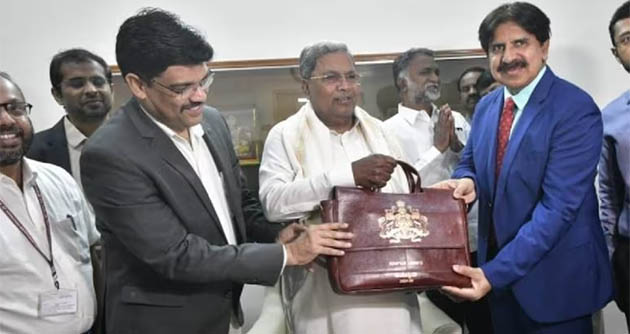
Karnataka Chief Minister Siddaramaiah on Friday presented his record 15th Budget as Finance Minister, and the second under the present Congress regime. In his address to the Karnataka Assembly, he emphasised that his government was striving to establish a new standard of development, known as the 'Karnataka Model of Development,' based on the principles of justice, equality, and fraternity enshrined in the Constitution.

Agriculture:

1) Siddaramaiah announced the implementation of ‘Karnataka Raitha Samruddhi Yojane’ to encourage integrated farming by consolidating various pro-farmer schemes.

2) He also announced the formation of Agriculture Development Authority to facilitate effective implementation of policies related to agriculture and allied activities coming under various departments.

3) Establishment of food parks at airports in Sogane of Shivamogga, Ittangihala of Vijayapura and Pujenahalli of Bengaluru Rural district.

Horticulture:

1) Setting up of Kissan Malls in select districts to provide farmers with horticulture-related technical guidance, market connectivity, farming implements and agro-products under one roof.

2) State-of-the-art international floriculture market to be established in Bengaluru city under Public-Private Partnership.

Animal Husbandry:

1) Construction of new building to 200 veterinary institutions which are in dilapidated condition at a cost of Rs 100 crore.

Fisheries:

1) Rs 7 crore for purchase of sea ambulance for protection of fishermen.
2) Financial assistance to 10,000 houseless fishermen for construction of houses under various housing schemes.

Co-operation:

1) Target of providing record crop loan of Rs 27,000 crore to more than 36 lakh famers in the state.

2) The Karnataka government will also urge the Centre to announce MSP for important crops such as arecanut, onion, grapes, mango, banana and other horticultural crops and to fix MSP based on the formula of cost of cultivation plus 50 per cent profit as per the report by Swaminathan panel.

Water resource:

1) Rs 365 crore project of flowing water from Bhima and Kagina Rivers to Bennetora reservoir to provide drinking water to Kalaburagi city.

School Education and Literacy:

1) 2000 Government Primary Schools to be converted as bi-lingual medium schools to enhance quality of education.

2) NEET/ JEE/ CET coaching to be imparted to 20,000 science students of Government PU Colleges.

Higher Education Department:

1) Rs 100 crore to develop University Visveswaraya College of Engineering on the lines of IIT.

2) Rs 30 crore to upgrade 30 women’s colleges and government women’s polytechnics.

Health:

1) Rs 187 crore to construct critical care block buildings in seven districts.

2) 50 new blood storage units to be established in North Karnataka in next two years.

Medical Education:

1) Rs 20 crore for robotic surgery facility in Institute of Nephro-Urology in Bengaluru.

2) Health repository to be created under Digital Health Society to make treatment details available from single source.

Woman and Child Development:

1) Rs 28,608 crore allocated for Gruhalakshmi gurarantee scheme.

2) Rs 90 crore to be spent on providing 75,938 smartphones to Anganwadi workers and supervisors.

3) Rs 200 crore to construct 1,000 Anganwadis.

4) Enhancement of Pension under Maithri scheme to the linguistic minorities from Rs 800 to Rs 1,200.

Social Welfare:

1) Monthly food allowance to be enhanced by Rs 100 per student for students studying in residential schools and hostels under the social welfare, tribal welfare, backward classes and minority welfare departments.

2) A corpus fund of Rs 35 crore to be set up to bear the cost for treatment of rare diseases and expensive treatments for SC and ST communities.

Scheduled Tribe Welfare:

1) The Ashram schools working under Scheduled Tribe Welfare Department to be re-named as Maharshi Valmiki Adivasi Budakattu Vasathi Shale, and Class 6 & 8 will be started in schools with Class 5 and 7 respectively. The student strength to be enhanced from 25 to 40 in each class.

2) Rs 15,000 stipend to be paid to 200 engineering graduates who got admission in IISc, IIT and NIT for short term professional training courses.

Minorities Welfare:

1) Rs 50 crore for Jain pilgrimage centres and Rs 200 crore for the development of Christian community.

2) Rs 2 crore for the welfare of Sikligar Sikh community, Rs 1 crore to gurudwara in Bidar.

3) Rs 10 crore to encourage minority women SHGs to take up self- employment activities

Housing:

1) Target of construction of three lakh houses this year.

Food, Civil Supplies and Consumer Affairs:

1) Rs 4,595 transferred to 4.02 crore beneficiaries under Annabhagya till January, 2024.

2) Anna-Suvidha programme to be launched to facilitate senior citizens above the age of 80 by door delivery of food grains.

Skill Development:

1) Café Sanjeevini, rural canteens and 2,500 coffee kiosks to be established for women.

2) 50,000 Women SHG owned micro-enterprises to be developed in next two years.

Rural Development and Panchayath Raj:

1) Solar street lights to be installed in 50 panchayaths and systematic metering to be done in 200 panchayaths to reduce electricity charges.

2) Circular economy to be encouraged for sustainable solid waste management in rural areas.

3) The monthly incentive to freed persons from bonded labour system to be increased to Rs 2,000.

Urban Development:

1) Brand Bengaluru launched to develop Bengaluru as a world class city.

2) Efforts to ease traffic congestion will be made by completing white topping works, tunnel to be constructed in Hebbal Junction on pilot basis and installing Area Traffic Signal Control System in 28 importance junctions of the city.

3) Peripheral ring road to be developed under new concept as Bengaluru Business Corridor.

4) 250 meter tall sky-deck to be built in Bengaluru city.

5) 44-km length to be added for the Bengaluru Metro Rail network by March 2025.

6) Feasibility report to extend Metro to Tumkur from BIEC and to Devanahalli from KIAL.

7) 1,334 new electric buses and 820 BS VI diesel buses to be added to the fleet of buses in BMTC.

8) The Cauvery Stage 5 project at a cost of Rs 5,550 crore providing drinking water to 12 lakh people will be commissioned by May 2024.

9) The curbs on businesses during night time to be extended till 1 am in Bengaluru and 10 city corporations in the state.

10) The towns on the outskirts of Bengaluru such as Devanahalli, Nelamangala, Hosakote, Doddaballapura, Magadi and Bidadi will be developed as satellite towns with road and train connectivity.

Energy:

1) 1.65 crore consumers registered under Gruha Jyoti Scheme.

2) Under Phase II of solarisation of IP set feeder, 4.30 lakh IP sets to be solarised by implementing solar projects of 1,192 MW.

PWD:

1) 875-km state highway development at a cost of Rs 5,736 crore with the assistance of external financial institutes under KSHIP-4 in the current year.

2) Construction of six railway overbridges at a cost of Rs 350 crore.

3) Action to construct dedicated economic corridors from Mangaluru port to Bengaluru and Bidar to Bengaluru.

Commerce and Industries:

1) A grant of Rs 50 crore for supplemental infrastructure to the mega textile park project establishing in Kalburgi district in collaboration with state and central government.

Kannada and Culture:

1) A grant of Rs one crore to undertake literature survey, collection, publication and propagation programmes including Tatvapada, Keerthana Sahitya and Bhakti movement through Saintpoet Kanakadasa Study Centre.

2) Steps will be taken to ensure that 60 per cent of signage is in Kannada in the nameplates of all offices, shops and various commercial enterprises under Kannada Language Comprehensive Development Act.

Forest, Ecology and Environment:

1) To address man-animal conflict, measures to form one new task force in Bandipur this year. Allocation of Rs 10 crore to strengthen these task forces.

Excise:

1) IML and beer slab to be revised by rationalising the declared slabs of liquor.

 

Comments

Add new comment

  • Coastaldigest.com reserves the right to delete or block any comments.
  • Coastaldigset.com is not responsible for its readers’ comments.
  • Comments that are abusive, incendiary or irrelevant are strictly prohibited.
  • Please use a genuine email ID and provide your name to avoid reject.
coastaldigest.com news network
January 19,2026

badriya.jpg

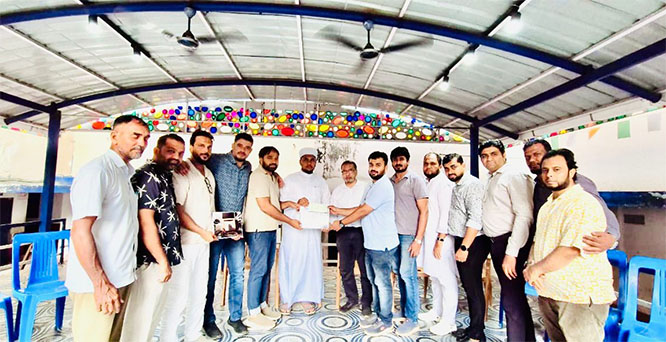
Mangaluru: The Phase I project of Badria Vision 2028 was formally launched at a ceremony held at the Badria Campus on January 17, marking an important step in the institution’s long-term development roadmap.

The programme was attended by P.B. Abdul Hameed, Secretary of the MEA, and P.C. Hasir, Correspondent of the MEA, who presided over the event and underscored the institution’s commitment to growth and academic excellence.

Office-bearers of the Badria Alumni Association were present in large numbers, including A.K. Sajid (President), Shamsuddin and S.M. Farooq (Vice-Presidents), Shaheed (General Secretary), and Khaleel (Treasurer), reflecting strong alumni engagement in the initiative.

The gathering was blessed by Sayyid Shamsuddeen Basith Thangal Kukkaje, Qateeb of Zeenat Yatheem Bakshi, who led a special dua seeking divine guidance and success for the project.

The ceremony also witnessed the participation of prominent alumnus and local corporate professional Abdul Latheef, along with alumni members Naushad, Kalandar, Safwan, members of the core committee, and several other former students.

A key moment of the event was the formal handover of a cheque to Ameen Woodland Architect, signalling the immediate commencement of construction work under Phase I of the project.

Organisers said the launch of Phase I reflects a shared vision, institutional unity, and collective resolve to realise the objectives of Badria Vision 2028.

Comments

Add new comment

  • Coastaldigest.com reserves the right to delete or block any comments.
  • Coastaldigset.com is not responsible for its readers’ comments.
  • Comments that are abusive, incendiary or irrelevant are strictly prohibited.
  • Please use a genuine email ID and provide your name to avoid reject.
News Network
January 23,2026

Mangaluru: The Karnataka Government Polytechnic (KPT), Mangaluru, has achieved autonomous status from the All India Council for Technical Education (AICTE), becoming the first government polytechnic in the country to receive such recognition in its 78-year history. The status was granted by AICTE, New Delhi, and subsequently approved by the Karnataka Board of Technical Education in October last year.

Officials said the autonomy was conferred a few months ago. Until recently, AICTE extended autonomous status only to engineering colleges, excluding diploma institutions. However, with a renewed national focus on skill development, several government polytechnics across India have now been granted autonomy.

KPT, the second-largest polytechnic in Karnataka, was established in 1946 with four branches and has since expanded to offer eight diploma programmes, including computer science and polymer technology. The institution is spread across a 19-acre campus.

Ravindra M Keni, the first dean of the institution, told The Times of India that AICTE had proposed autonomous status for polytechnic institutions that are over 25 years old. “Many colleges applied. In the first round, 100 institutions were shortlisted, which was further narrowed down to 15 in the second round. We have already completed one semester after becoming an autonomous institution,” he said. He added that nearly 500 students are admitted annually across eight three-year diploma courses.

Explaining the factors that helped KPT secure autonomy, Keni said the institution has consistently recorded 100 per cent admissions and placements for its graduates. He also noted its strong performance in sports, with the college emerging champions for 12 consecutive years, along with active student participation in NCC and NSS activities.

Autonomous status allows KPT to design industry-oriented curricula, conduct examinations, prepare question papers, and manage academic documentation independently. The institution can also directly collaborate with industries and receive priority funding from AICTE or the Ministry of Education. While academic autonomy has been granted, financial control will continue to rest with the state government.

“There will be separate committees for examinations, question paper setting, boards of studies, and boards of examiners. The institution will now have the freedom to conduct admissions without government notifications and issue its own marks cards,” Keni said, adding that new academic initiatives would be planned after a year of functioning under the autonomous framework.

Comments

Add new comment

  • Coastaldigest.com reserves the right to delete or block any comments.
  • Coastaldigset.com is not responsible for its readers’ comments.
  • Comments that are abusive, incendiary or irrelevant are strictly prohibited.
  • Please use a genuine email ID and provide your name to avoid reject.
coastaldigest.com news network
January 19,2026

rizwanzameer.jpg

Bengaluru: As the dust settles on the recent legislative session, the corridors of Vidhana Soudha are buzzing with more than just policy talk. A high-stakes game of political musical chairs has begun, exposing a deepening rift within the Congress party’s Muslim leadership as a major Cabinet reshuffle looms.

With the party hierarchy signaling a "50% refresh" to gear up for the 2028 Assembly elections, the race to fill three projected Muslim ministerial berths has transformed from a strategic discussion into an all-out turf war.

The "Star Son" Spark

The internal friction turned public this week following provocative remarks by Zaid Khan, actor and son of Wakf Minister Zameer Ahmed Khan. Zaid’s claim—that his father "helped" secure a ticket for Shivajinagar MLA Rizwan Arshad in 2023—has acted as a lightning rod for resentment.

Rizwan’s camp was quick to fire back, dismissing the comment as a desperate attempt by Zameer to manufacture seniority. "Rizwan’s political pedigree was forged in the NSUI and Youth Congress long before Zameer even stepped into the party," a supporter noted, highlighting Rizwan’s tenure as an AICC secretary and his two-term presidency of the State Youth Congress.

A Tale of Two Loyalists

While both Zameer Ahmed Khan and Rizwan Arshad are staunch allies of Chief Minister Siddaramaiah and represent Bengaluru strongholds, their political DNA could not be more different:

•    Zameer Ahmed Khan: A four-time MLA who crossed over from JD(S) in 2018. Known for his "overzealous" and often polarizing outreach during communal flashpoints—from the DJ Halli riots to the recent Wakf land notice controversy—his style has frequently left the Congress high command in a state of "discomfort."

•    Rizwan Arshad: A homegrown organizational man. Seen as a "quiet performer," Arshad represents the sophisticated, moderate face of the party, preferred by those who find Zameer’s brand of politics too volatile.

The Outsiders Looking In

The bickering isn't limited to a duo. The "Beary" community, represented by leaders like N A Haris and Saleem Ahmed, is demanding its pound of flesh. Saleem Ahmed, the Chief Whip in the Legislative Council, has dropped the veil of diplomacy, openly declaring his ministerial aspirations.

"I was the only working president not included in the Cabinet last time," Saleem noted pointedly, signaling that the "loyalty quota" is no longer enough to keep the peace.

As Chief Minister Siddaramaiah prepares to finalize the list, he faces a delicate balancing act: rewarding the aggressive grassroots mobilization of Zameer’s camp without alienating the organizational stalwarts and minority sub-sects who feel increasingly sidelined by the "Chamarajpet-Shivajinagar" binary.

Comments

Add new comment

  • Coastaldigest.com reserves the right to delete or block any comments.
  • Coastaldigset.com is not responsible for its readers’ comments.
  • Comments that are abusive, incendiary or irrelevant are strictly prohibited.
  • Please use a genuine email ID and provide your name to avoid reject.