How ‘immoral policing’ incidents chipping away at social harmony in Mangaluru

News Network
February 25, 2023

Park.jpg

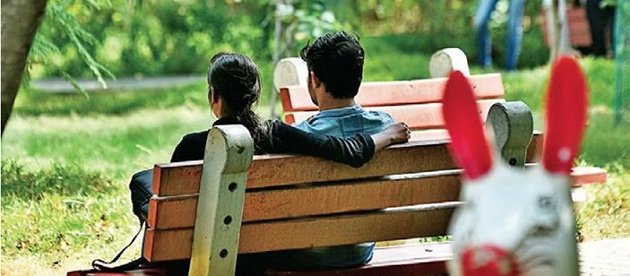
The rising incidents of moral policing in coastal Karnataka, especially in Mangaluru, in the last few years have cast a shadow over the port city, once known as a liberal society with a cosmopolitan culture. Social activists in the region reason that the deterioration in the social harmony happened after the growth of right-wing organisations, which have gained ground in the coastal belt.

They attribute the recurrence of such incidents as a result of the impunity granted to moral policing, political support to the outfits and a passive approach of the ruling BJP. Moral policing occurs mostly where the Hindutva outfits like Bajrang Dal are strong, which has affected the psyche of the young generation including students. The most glaring incident in the recent past was reported on July 25 last year when Bajrang Dal activists barged into a pub in the city protesting against women partying at the venue. Students were abused and chased away by the protestors. The attack reminded everyone of the notorious assault on girls at another pub by Sri Rama Sene members in 2009.

Observers say in most of the cases registered by the police, the accused go unpunished due to lack of evidence provided by law enforcement agencies. A top police official, on condition of anonymity, told PTI they intervene only when complaints are raised about illegal activities in pubs and public places. Right-wing organisations, including the Vishwa Hindu Parishad (VHP) and its youth wing Bajrang Dal, claim that their workers are only trying to protect the culture and tradition of the country and reminding the young generation about dignified behaviour in public spaces. "The activists carry out such protests only to protect the culture and dignity of the nation," says VHP leader Sharan Pumpwell.

He claims that people belonging to different religions partying and drinking are against the basic tenets of our culture and the activists react only when complaints are received from the public. Police said arrests are being made in many cases when a complaint is lodged. On several occasions, the victims do not wish to proceed with the cases, they contended. In 2022, there were 41 moral policing cases in Dakshina Kannada and Udupi districts, according to Suresh B Bhat, activist and member of the Karnataka Communal Harmony Forum and People's Union for Civil Liberties (PUCL), as detailed in a report titled 'Chronicle of communal incidents in coastal districts of Karnataka'.

Of the incidents, 37 were by Hindu vigilantes while four were by fringe groups of Muslim vigilantes. There was an increase in the number of instances of moral policing too, as in 2021, a total of 37 incidents were reported, while in 2020, only nine such cases were reported. In such instances of moral policing, couples who belonged to different faiths were either assaulted or handed over to the police by the vigilante groups, even if both the parties had been together wilfully. Police pointed out that the act of moral policing does not fall under any specific section of the Indian Penal Code (IPC).

However, their actions can attract charges under certain IPC sections. According to police, on moral policing incidents, they have been registering cases under IPC Sections 354 (outraging modesty of woman), 342 (wrongful confinement), 354 (molestation), 323 (voluntarily causing hurt) and 149 (unlawful assembly). DYFI leader Muneer Katipalla claims frequent incidents of moral policing occur with the tacit support of the ruling BJP in the state who prefer to remain mute spectators to such activities. These incidents are reflections of the agenda of polarisation, he asserted. Karnataka Chief Minister Basavaraj Bommai had last year stirred a controversy by his comment on moral policing. "When sentiments are hurt, there will be action and reaction," he said, inviting sharp criticism from the Opposition and social activists. 

Last year, several cases of moral policing were reported in the city including the attack on the pub. Right-wing activists had assaulted a Muslim youth for travelling with a girl of a different faith in the city on March 5. Again, on August 30, a 19-year-old Muslim student was beaten up and threatened by his college mates for befriending a Hindu girl. A 27-year-old Muslim youth was dragged out of a private bus at Naguri in the city on October 21 and beaten up for travelling with a Hindu woman. Bajrang Dal district leader Puneet Attavar had openly stated in December last that their activists will confront Muslim youth in the company of Hindu girls during New Year parties.

Police said activists of Hindutva outfits were behind the majority of attacks, while a section of Muslims were also involved in certain cases. After the infamous attack on party-goers at the pub by Sri Rama Sene activists in 2009, the court which heard the case had opined that the investigating officer had not provided sufficient evidence in the moral policing case. While acquitting the accused in the assault case in 2018, the court had observed that the officer failed to produce videos of the incident, which was shown by television channels. An indirect attempt was made by the officer to protect the real culprits, the court had remarked.

Activists in the city and the public in general feel the ugly behaviour exhibited by vigilantes must be prevented at any cost to ensure a dignified social atmosphere prevails in the city and the wider coastal region of the state. 

Comments

Add new comment

  • Coastaldigest.com reserves the right to delete or block any comments.
  • Coastaldigset.com is not responsible for its readers’ comments.
  • Comments that are abusive, incendiary or irrelevant are strictly prohibited.
  • Please use a genuine email ID and provide your name to avoid reject.
News Network
February 1,2026

Bengaluru: Karnataka Deputy Chief Minister D K Shivakumar on Sunday criticised the Union Budget presented by Finance Minister Nirmala Sitharaman, claiming it offered no tangible benefit to the state.

Though he said he was yet to study the budget in detail, Shivakumar asserted that Karnataka had gained little from it. “There is no benefit for our state from the central budget. I was observing it. They have now named a programme after Mahatma Gandhi, after repealing the MGNREGA Act that was named after him,” he said.

Speaking to reporters here, the Deputy Chief Minister demanded the restoration of MGNREGA, and made it clear that the newly enacted rural employment scheme — VB-G RAM G — which proposes a 60:40 fund-sharing formula between the Centre and the states, would not be implemented in Karnataka.

“I don’t see any major share for our state in this budget,” he added.

Shivakumar, who also holds charge of Bengaluru development, said there were high expectations for the city from the Union Budget. “The Prime Minister calls Bengaluru a ‘global city’, but what has the Centre done for it?” he asked.

He also drew attention to the problems faced by sugar factories, particularly those in the cooperative sector, alleging a lack of timely decisions and support from the central government.

Noting that the Centre has the authority to fix the minimum support price (MSP) for agricultural produce, Shivakumar said the Union government must take concrete steps to protect farmers’ interests.

Comments

Add new comment

  • Coastaldigest.com reserves the right to delete or block any comments.
  • Coastaldigset.com is not responsible for its readers’ comments.
  • Comments that are abusive, incendiary or irrelevant are strictly prohibited.
  • Please use a genuine email ID and provide your name to avoid reject.
coastaldigest.com news network
January 19,2026

rizwanzameer.jpg

Bengaluru: As the dust settles on the recent legislative session, the corridors of Vidhana Soudha are buzzing with more than just policy talk. A high-stakes game of political musical chairs has begun, exposing a deepening rift within the Congress party’s Muslim leadership as a major Cabinet reshuffle looms.

With the party hierarchy signaling a "50% refresh" to gear up for the 2028 Assembly elections, the race to fill three projected Muslim ministerial berths has transformed from a strategic discussion into an all-out turf war.

The "Star Son" Spark

The internal friction turned public this week following provocative remarks by Zaid Khan, actor and son of Wakf Minister Zameer Ahmed Khan. Zaid’s claim—that his father "helped" secure a ticket for Shivajinagar MLA Rizwan Arshad in 2023—has acted as a lightning rod for resentment.

Rizwan’s camp was quick to fire back, dismissing the comment as a desperate attempt by Zameer to manufacture seniority. "Rizwan’s political pedigree was forged in the NSUI and Youth Congress long before Zameer even stepped into the party," a supporter noted, highlighting Rizwan’s tenure as an AICC secretary and his two-term presidency of the State Youth Congress.

A Tale of Two Loyalists

While both Zameer Ahmed Khan and Rizwan Arshad are staunch allies of Chief Minister Siddaramaiah and represent Bengaluru strongholds, their political DNA could not be more different:

•    Zameer Ahmed Khan: A four-time MLA who crossed over from JD(S) in 2018. Known for his "overzealous" and often polarizing outreach during communal flashpoints—from the DJ Halli riots to the recent Wakf land notice controversy—his style has frequently left the Congress high command in a state of "discomfort."

•    Rizwan Arshad: A homegrown organizational man. Seen as a "quiet performer," Arshad represents the sophisticated, moderate face of the party, preferred by those who find Zameer’s brand of politics too volatile.

The Outsiders Looking In

The bickering isn't limited to a duo. The "Beary" community, represented by leaders like N A Haris and Saleem Ahmed, is demanding its pound of flesh. Saleem Ahmed, the Chief Whip in the Legislative Council, has dropped the veil of diplomacy, openly declaring his ministerial aspirations.

"I was the only working president not included in the Cabinet last time," Saleem noted pointedly, signaling that the "loyalty quota" is no longer enough to keep the peace.

As Chief Minister Siddaramaiah prepares to finalize the list, he faces a delicate balancing act: rewarding the aggressive grassroots mobilization of Zameer’s camp without alienating the organizational stalwarts and minority sub-sects who feel increasingly sidelined by the "Chamarajpet-Shivajinagar" binary.

Comments

Add new comment

  • Coastaldigest.com reserves the right to delete or block any comments.
  • Coastaldigset.com is not responsible for its readers’ comments.
  • Comments that are abusive, incendiary or irrelevant are strictly prohibited.
  • Please use a genuine email ID and provide your name to avoid reject.
News Network
January 20,2026

iran.jpg

Iranian security and intelligence forces have captured more than 470 individuals in three provinces, identified as key figures behind the recent wave of violent unrest and terrorist activities linked to foreign-backed networks.

The Intelligence Ministry's provincial office in Khorasan Razavi announced on Monday the arrest of 192 armed terrorists, identified as the main agents behind recent riots in the region. 

According to an official statement, the detainees were involved in the killing of several security personnel and civilians, setting fire to mosques, public service facilities, and buses, as well as attacks on military and law enforcement centers.

The seized items from the group include several bulletproof vests, Kalashnikov rifles, hunting weapons, Winchester rifles, and various cold weapons such as daggers, swords, brass knuckles, tactical knives, crossbows, and chains.

Evidence indicates that some of the individuals were tied to hostile movements and terrorist organizations, with links overseas. Others were identified as members of violent criminal gangs, actively taking part in the unrest alongside their associates.

Simultaneously, in the western province of Lorestan, the IRGC announced the arrest of 134 individuals as the main leaders and influential field agents of a US-Israeli terrorist network.

The IRGC statement stated that these individuals formed terrorist cells during the recent unrest, committing "Daesh-like" acts.

They wounded security forces with firearms and cold weapons, and burned and destroyed public and private properties, including mosques, shops, banks, and private and public vehicles.

In the northwestern province of Zanjan, the police reported detaining 150 people identified as principal leaders and agents behind recent riots.

Authorities noted that these individuals were responsible for destroying public and private property and intentionally setting fire to vehicles in the province's squares.

Their crimes include shedding the blood of innocent people, destroying public and private property, attempting to enter military sites, disrupting public order, and spreading terror among citizens.

A variety of cold weapons were reportedly seized from the detainees.

What began late last month as peaceful protests over economic hardship across Iran turned violent after public statements by US and Israeli regime figures encouraged vandalism and disorder.

During the unrest, foreign-backed mercenaries rampaged through cities, killing security forces and civilians and damaging public property.

Comments

Add new comment

  • Coastaldigest.com reserves the right to delete or block any comments.
  • Coastaldigset.com is not responsible for its readers’ comments.
  • Comments that are abusive, incendiary or irrelevant are strictly prohibited.
  • Please use a genuine email ID and provide your name to avoid reject.