Karnataka tops states, UTs in providing access to justice: IJR 2022

News Network
April 4, 2023

Bengaluru, Apr 4: Karnataka tops the list of states and Union Territories in providing access to justice and three other southern states figure among the best five, according to the India Justice Report 2022.

The IJR, which was released here on Tuesday, said except for Delhi and Chandigarh, no state or union territory spends more than one per cent of its total annual expenditure on judiciary where the vacancy of judges in high courts stands at 30 per cent.

The IJR, an initiative of the Tata Trusts launched in 2019, said as of December 2022, the country had 19 judges for every 10 lakh people and a backlog of 4.8 crore cases. The Law Commission had suggested, as early as in 1987, that there should be 50 judges for every 10 lakh people in a decade’s time.

The statistics were shared in IJR which ranked states and UTs on various parameters like vacancies in judiciary, budgetary allocations, infrastructure, human resources, legal aid, condition of prisons, functioning of police and state human rights commissions.

The Tata Trusts website describes IJR as a "unique initiative" that "ranks individual Indian states in relation to their capacity to deliver access to justice".

While Karnataka topped the chart among 18 large and mid-size states having a population of over 1 crore each, it was followed by Tamil Nadu, Telangana, Gujarat and Andhra Pradesh.

The list of seven small states, having a population of less than one crore each, was headed by Sikkim, followed by Arunachal Pradesh and Tripura.

“The justice system as a whole remains affected by low budgets. Except for two union territories, Delhi and Chandigarh, no state spends more than 1 per cent of its total annual expenditure on the judiciary.

“Vacancy is an issue across the police, prison staff, legal aid, and judiciary. For 1.4 billion (140 crore) people, India has about 20,076 judges with about 22 per cent sanctioned posts vacant. Vacancy among high court judges is at 30 per cent.

“In the police, women are only about 11.75 per cent, despite their numbers doubling in the last decade. About 29 per cent of the officer positions are vacant. The police to population ratio is 152.8 per lakh. The international standard is 222,” the report said.

It said prisons are over-occupied at over 130 per cent and more than two-thirds of the prisoners (77.1 per cent) are awaiting the completion of investigation or trial.

The IJR said most of the states have not fully utilised funds given to them by the Centre and their own increase in spending on the police, prisons, and judiciary has not kept pace with overall increase in state expenditure.

Retired Supreme Court judge Justice Madan B Lokur said, “The third IJR shows that states are making a substantive improvement over the last two ones in terms of adding new dimensions on diversity, training, and infrastructure. Some states have dramatically improved their performance but there is a lot that needs to be done on the whole.”

“So far as the police is concerned there does appear to be a shortage of women officers in police. Legal aid is doing better but still a lot of people need to be provided quality free legal aid, we need to increase the confidence that people have in our services,” he said.

Maja Daruwala, Chief Editor of IJR 2022, said as a member of the comity of nations and, more importantly, as a commitment to itself, India has promised that by 2030 it will have ensured access to justice for all and built effective, accountable, and inclusive institutions at all levels.

“But the official statistics brought together in the IJR this year show that we still have a long way to go. I would again urge that the provision of affordable, efficient and accessible justice services to each one of us be treated as necessary as food, education, or health.

"For this to happen more resources need to be ploughed into it, much more capacity built and much more attention paid to curing long standing deficiencies,” she said.

The report said Karnataka remains the only state to have consistently met its quota for SC, ST and OBC positions, both among police officers and the constabulary.

“In the judiciary, at the subordinate/ district court level, no state met all the three quotas. Only Gujarat and Chhattisgarh met their respective SC quotas. Arunachal Pradesh, Telangana, and Uttarakhand met their respective ST quotas. Kerala, Sikkim, Andhra Pradesh, Maharashtra, Tamil Nadu, Chhattisgarh, and Telangana met OBC quotas,” it said.

Regarding the share of women in key positions across the justice system, which includes police, prisons, judiciary and legal aid, the report states that one out of 10 is a woman.

“While the overall share of women in the police force is about 11.75 per cent, in the officer ranks it is still lower at 8 per cent. Only 13 per cent of high court judges and 35 per cent of subordinate court judges are women. Among prison staff, they are 13 per cent. A majority of states has increased the share of women panel lawyers. Nationally, the share has increased from 18 per cent to 25 per cent,” it said.

It said one in four police stations does not have a single CCTV and nearly three in 10 police stations do not have women help desks.

The report said about 30 per cent (391) of prisons record occupancy rates of above 150 per cent and 54 per cent (709) run above 100 per cent capacity.

“With the exception of Andaman and Nicobar Islands, Arunachal Pradesh, Mizoram, Tripura, and Madhya Pradesh, the undertrial population of all states and Union Territories exceeds 60 per cent," it said.

On the aspect of workload in judiciary, the report said in 28 states/ Union Territories, one in every four high court cases is pending for more than five years. In district courts of 11 states/UTs, one in every four cases is pending for more than five years,” the report said.

The IJR said the population per subordinate court judge and high court judge is 71,224 persons and 17,65,760 persons respectively.

With regard to budgets, it found the national per capita spend on legal aid, including the expenditure of the National Legal Services Authority (NALSA) and the state/ UT governments themselves, is a meagre Rs 4.57 per annum.

Excluding NALSA, this figure drops to Rs 3.87 and, if only NALSA’s budget (2021-22) is considered, the per capita spend is Rs 1.06 only, it said.

It said the national per capita spend on prisons is Rs 43. Nationally, the annual average spend per prisoner has gone down to Rs 38,028 from Rs 43,062. Andhra Pradesh records the highest annual spend on a prisoner at Rs 2,11,157.

“The national per capita spend on judiciary stands at Rs. 146,” it said, adding the national per capita spend on police is at Rs 1151.

“IJR 2022 has reiterated both immediate and foundational corrections. It has flagged urgent filling of vacancies and increased representation. To effect an irreversible change, it has exhorted that Justice delivery be designated as an essential service,” it concluded.

The third IJR also assessed the capacity of the 25 State Human Rights Commissions (SHRC) and found that there are 33,312 pending cases before these panels in March 2021 and the national average vacancy across 25 SHRCs is at 44 per cent.

The statistics show nine states have been working with 50 per cent or more vacancies among members in SHRCs and only six states have women in their executive staff.

Comments

Add new comment

  • Coastaldigest.com reserves the right to delete or block any comments.
  • Coastaldigset.com is not responsible for its readers’ comments.
  • Comments that are abusive, incendiary or irrelevant are strictly prohibited.
  • Please use a genuine email ID and provide your name to avoid reject.
News Network
November 27,2025

DKSvokkaliga.jpg

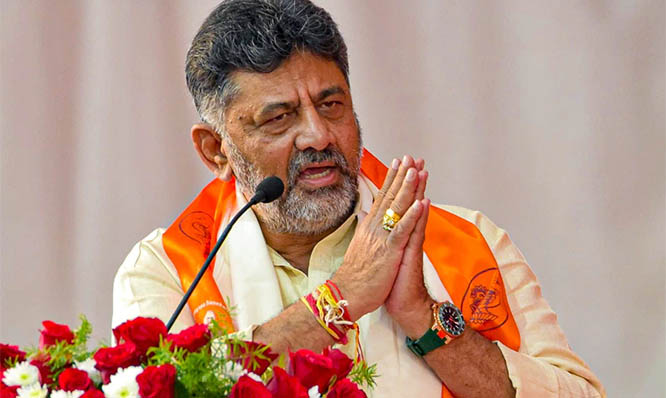
Bengaluru: The Vokkaligara Sangha on Thursday issued a stern warning to the Congress, saying the party could face serious electoral repercussions if Deputy Chief Minister D.K. Shivakumar is not appointed as Chief Minister.

The warning follows the public backing of Shivakumar’s chief ministerial ambition by top Vokkaliga pontiff Nirmalanandanatha Swami, who urged the Congress high command to honor his claim.

“The community supported Congress in the 2023 Assembly elections only because Shivakumar had a real chance to become CM. If he is cheated, we’ll teach the party a big lesson,” said newly elected Sangha president L. Srinivas. He added that Vokkaligas would organize protests under the guidance of community leaders.

General Secretary C.G. Gangadhar pointed out that Congress won more seats in the Vokkaliga-dominated Old Mysuru region due to Shivakumar’s influence, adding, “If Congress wants to retain power, Shivakumar should be made the CM.”

Outgoing president Kenchappa Gowda emphasized Shivakumar’s contribution to Congress’ victory. “Our community voted for Congress thinking he would become CM. Siddaramaiah has also served the party well, but Shivakumar should now be given a chance,” he said.

Former general-secretary Konappa Reddy appealed to Sonia and Rahul Gandhi to recognize Shivakumar’s loyalty and service, saying, “Congress is known to keep its promises. We hope it won’t break the promise made to him.”

Comments

Add new comment

  • Coastaldigest.com reserves the right to delete or block any comments.
  • Coastaldigset.com is not responsible for its readers’ comments.
  • Comments that are abusive, incendiary or irrelevant are strictly prohibited.
  • Please use a genuine email ID and provide your name to avoid reject.
P A Hameed Padubidri
November 26,2025

CD.jpg

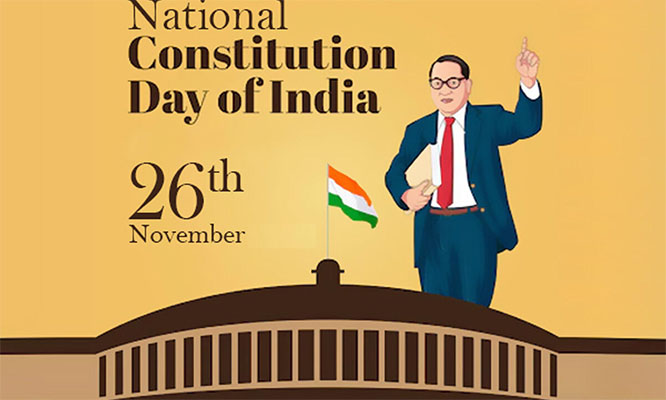
Constitution Day, also known as Samvidhan Divas, is observed every year on November 26 to honor the adoption of the Constitution of India and to recognize the visionary effort that shaped the world’s largest democracy.

Historical Background

It’s on November 26, 1949, the Constituent Assembly of India formally adopted the Constitution.This date is commemorated to acknowledge the completion of nearly three years of drafting, debate, and refinement.

On January 26, 1950, the Constitution came into force, marking India’s transition from a dominion to a sovereign republic.

The date 26 January was chosen to honor the “Purna Swaraj” declaration made in 1930 that marked the relentless efforts & sacrifices of the many. 

Why Constitution Day is Celebrated

* To honor & remember the framers of the Constitution, especially Dr. B. R. Ambedkar, the Chairman of the Drafting Committee, & many others. 

* To remind the citizens of the values, responsibilities, and rights enshrined in the Constitution.

* To promote constitutional values & literacy among students, institutions, and the general public.

* To reaffirm the nation’s commitment to justice, equality, liberty, fraternity and secular values. 

Vision and Significance of the Constitution

It establishes the fundamental political and legal framework for the nation.

Defines the structure, powers and functions of:
    •    The Executive
    •    The Legislature
    •    The Judiciary
    •    Guarantees a comprehensive set of Fundamental Rights, including:

-Equality before law
-Freedom of speech & expression
-Protection of life and personal liberty
-Freedom of religion
-Embeds Directive Principles of State Policy, guiding governance toward social justice and welfare.
-Introduces Fundamental Duties to ensure civic responsibility among citizens.

Key Features Celebrated on Constitution Day

-The Indian constitution is considered one of the longest written constitutions of the world. It’s systematically drafted considering almost all aspects that properly fits to the country. 

-Blend of multiple global constitutional principles while staying rooted in Indian values and realities.

-Framework that balances Federalism, Secularism, Democracy and Rule of Law. This makes everyone-from President to common man-below the law & are equal in the sight of law. 

-Another feature is that it’s based on built-in mechanisms for amendments, ensuring the Constitution grows with changing needs.

Message of the Day

The core ethos of this  Constitution Day is not merely about looking back at history-it’s a reminder of the continuous duty to protect democratic values, respect diversity and uphold the principles that define India as a sovereign, socialist, secular and democratic republic.

Happy Constitution Day to all my compatriots

Comments

Add new comment

  • Coastaldigest.com reserves the right to delete or block any comments.
  • Coastaldigset.com is not responsible for its readers’ comments.
  • Comments that are abusive, incendiary or irrelevant are strictly prohibited.
  • Please use a genuine email ID and provide your name to avoid reject.
News Network
November 21,2025

Tejas.jpg

An Indian Air Force (IAF) Tejas fighter jet crashed on Friday, November 21, afternoon during its aerial demonstration at the Dubai Air Show, plunging to the ground at around 2:10 pm local time while performing a manoeuvre before thousands of spectators.

The IAF confirmed the incident, stating that a Tejas aircraft participating in the show had crashed and that further details were being gathered. An Air Force spokesperson said more information would be shared after initial assessments.

The crash sent thick black smoke billowing into the sky near the airport, causing panic among visitors, including families and children who had gathered to watch the display. Authorities have not yet confirmed whether the pilot managed to eject before the aircraft went down. Emergency response teams rushed to the scene, and officials have not released information on casualties or damage so far.

The Tejas is a 4.5-generation, multi-role fighter aircraft developed indigenously by Hindustan Aeronautics Limited (HAL). Designed for versatility, it is capable of offensive air support, close combat, ground attack missions and maritime operations. The aircraft family includes single-seat fighters and twin-seat trainers for both the Air Force and Navy.

HAL describes the latest version, the LCA Mk1A, as the most advanced in the series, featuring an AESA radar, an upgraded electronic warfare suite with radar-warning and self-protection jamming, smart multifunction displays, a digital map generator, a combined interrogator–transponder system and a modern radio altimeter. These enhancements significantly improve the aircraft’s combat capability and survivability.

Further updates from IAF and UAE authorities are awaited.

Comments

Add new comment

  • Coastaldigest.com reserves the right to delete or block any comments.
  • Coastaldigset.com is not responsible for its readers’ comments.
  • Comments that are abusive, incendiary or irrelevant are strictly prohibited.
  • Please use a genuine email ID and provide your name to avoid reject.