Mangaluru: Ward Committee training workshop held to strengthen civic participation

News Network
January 6, 2022

wardcommittee.jpg

Mangaluru, Jan 6: To strengthen civic participation and facilitate ward committee meetings with citizens in Mangaluru, Mangaluru City Corporation and Janaagraha Centre for Citizenship and Democracy organised a Ward Committee training workshop for the newly appointed Ward Committee members on Thursday at Kundmul Rangarao Townhall.

Inaugurating the programme, Mangaluru Mayor Premanand Shetty said that Ward Committees act as link between the ward residents and Corporators who represent the Mangaluru City Corporation. 

“Mangaluru is the second city in the state to implement Ward Committees. The members have many responsibilities. They need to assess the facilities and infrastructure in the ward, ensure Solid Waste Management happens effectively, ensure timely collection of taxes, prepare and submit ward development scheme to the Corporation among others. Hence, it is important that Ward Committees meet every month to enhance transparency, accountability and smooth functioning,” the Mayor said.

“There are a few criteria for one to become a ward committee member. In some wards, we could not find eligible applicants. We will be taking steps in the future days to invite applicants in these wards and hence strengthen the ward committees to function in its full capacity,” the Mayor added.

“Ward Committees are a constitutional mandate. There were some challenges in forming Ward Committees in Mangaluru. But this was because we wanted to ensure it happens in a proper and transparent manner. We invited applications, objections and even assessed every objection we received. We worked with the Police Commissioner to verify the profiles of the Ward Committee applicants and then the final list was released. We are open to changes if any issues, even in the future. We want citizens to have confidence in this decentralized process,” said Mangaluru City Commissioner Akshy Sridhar.

“To ensure Ward Committees function smoothly, we need to have a collaborative approach and not a conflict approach. Ward Committees need to work as a consulting body where problems can be discussed and solutions can be thought about and implemented,” Sridhar added.

Speaking on the commencement of Ward Committees, the dates and venues will be announced at the earliest, Sridhar said.

Sapna Karim, Head, Civic Participation, Janaagraha, resource person for the Workshop, explained functions of Ward Committees, responsibilities of the Ward Committee members as well as the process on how Ward Committees meetings need to be held.

“Ward Committees are a starting point of governance that a citizen can engage with. It empowers citizens to vote on local decisions. Helps implement ''bottom-up" approach in planning and budgeting. Ward Committees play a key role in planning, prioritizing, supervising & validating civic works,” Sapna added.

Dr Shikaripura Krishnamurthy, Director, Abhiyanam, Organisation for Research and Training in HRD said that Ward Committees play a key role in deciding the development of the Ward. He said that every member needs to assess the facilities in the ward and grade the ward. Only then, one can get a clear idea on what the ward lacks and how it can be developed. Each ward member should inculcate a competitive spirit to make their ward the best, he added.

Ward Committee Training Workshop for Councillors and Nodal Officers

A Ward Committee Training Workshop was held for Councillors and Nodal Officers at MCC Council Hall on Wednesday.

The workshop was taken up by Sapna Karim, Head, Civic Participation, Janaagraha and Dr Shikaripura Krishnamurthy, Director, Abhiyanam, Organisation for Research and Training in HRD.

workshop.jpg

About Janaagraha 

Janaagraha is a non-profit trust, working towards the mission of transforming the quality of life in India’s cities and towns. Founded in 2001 by Ramesh Ramanathan and Swati Ramanathan, it started as a movement to include people’s participation in public governance and has now evolved into a robust institution for citizenship and democracy. The core idea of Janaagraha’s work does not revolve around fixing problems but instead seeking to fix the system that can solve the problems. To achieve this objective, Janaagraha works with citizens to catalyse active citizenship in city neighbourhoods and with governments to institute reforms to city governance (what we call “City-Systems”). 

We believe that improved quality of life is directly linked to improved quality of infrastructure, services, and citizenship. Janaagraha hence works at intersections to fix the city systems across law, policy, institutions with a specific focus on sectors such as Climate Change, Gender Equality & Public Safety, Water and Sanitation, Education, and Public Health using tools and activities like Civic Participation, Municipal Finance, Advocacy and instilling 21st Century skills among youth to empower them to become active citizens. By strengthening urban capacities and resources, Janaagraha aims to achieve its mission of improving City Systems and Quality of life.

In January 2021, Janaagraha had organized participatory budgeting initiative MyCityMyBudget in Mangaluru. Over 1000 Mangaluru citizens submitted inputs how Mangaluru budget needs to be spent, which was later made into a report and submitted to the MCC.

Comments

Add new comment

  • Coastaldigest.com reserves the right to delete or block any comments.
  • Coastaldigset.com is not responsible for its readers’ comments.
  • Comments that are abusive, incendiary or irrelevant are strictly prohibited.
  • Please use a genuine email ID and provide your name to avoid reject.
News Network
February 1,2026

Bengaluru, Feb 1: For travelers landing at Kempegowda International Airport (KIA), the sleek, wood-paneled curves of Terminal 2 promise a world-class welcome. But the famed “Garden City” charm quickly withers at the curb. As India’s aviation sector swells to record numbers—handling over 43 million passengers in Bengaluru alone this past year—the “last mile” has turned into a marathon of frustration.

The Bengaluru Logjam: Rules vs Reality

While the city awaits the 2027 completion of the Namma Metro Blue Line, the interim has been chaotic. Recent “decongestion” rules at Terminal 1 have pushed app-based cab pickups to distant parking zones, forcing weary passengers into a 20-minute walk with luggage.

“I landed after ten months away and felt like a stranger in my own city,” says Ruchitha Jain, a Koramangala resident. “My driver couldn’t find me, staff couldn’t guide me, and the so-called ‘Premium’ lane is just a fancy tax on convenience.”

•    The Cost of Distance: A 40-km cab ride can now easily cross ₹1,500, driven by demand pricing and airport surcharges.

•    The Bus Gap: While Vayu Vajra remains a lifeline, its ₹300–₹400 fare is often cited as the most expensive airport bus service in the country.

A National Pattern of Disconnect

The struggle is not unique to Karnataka. From Chennai’s coast to Hyderabad’s plateau, India’s airports tell a familiar story: brilliant runways, broken exits.

City:    Primary Issue   |    Recent Development

Bengaluru:    Cab pickup restrictions & distance  |    App-based taxis shifted to far parking zones; long walks and fare spikes reported

Chennai:    Multi-Level Parking (MLCP) hike  |    Passengers report 40-minute walks to reach cab pickup points

Hyderabad:    “Taxi mafia” & touting  |    Over 440 touting cases reported; security presence intensified

Mumbai:    Fare scams  |     Tourists charged ₹18,000 for just 400 metres, triggering police action

In Hyderabad, travelers continue to battle entrenched local groups that intimidate Uber and Ola drivers, pushing passengers toward overpriced private taxis. Chennai flyers, meanwhile, complain that reaching the designated pickup zones now takes longer than short-haul flights from cities like Coimbatore.

The ‘Budget Day’ Hope

As Finance Minister Nirmala Sitharaman presents the Union Budget 2026 today, the aviation sector is watching closely. With the government’s renewed emphasis on multimodal integration, there is cautious hope for funding toward seamless airport-metro-bus hubs.

The vision is clear: a future where planes, trains, and metros speak the same language. Until then, passengers at KIA—and airports across India—will continue to discover that the hardest part of flying isn’t the thousands of kilometres in the air, but the last few on the ground.

Comments

Add new comment

  • Coastaldigest.com reserves the right to delete or block any comments.
  • Coastaldigset.com is not responsible for its readers’ comments.
  • Comments that are abusive, incendiary or irrelevant are strictly prohibited.
  • Please use a genuine email ID and provide your name to avoid reject.
News Network
January 31,2026

Roy.jpg

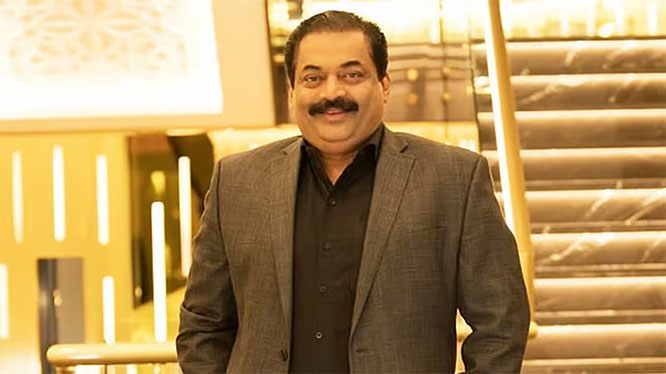
Bengaluru: The shooting incident involving CJ Roy, founder of the Confident Group, has once again put the spotlight on a businessman whose life has swung between flamboyant global success and persistent controversy at home.

Though Roy’s business interests extended across continents, his roots lay firmly in Karnataka. An alumnus of Christ School in Bengaluru, he later moved to Tumakuru to pursue an engineering degree. Those familiar with his early years describe him as intensely ambitious, beginning his career as a salesman at a small electronics firm dealing in computers.

Roy’s entry into large-scale real estate came through the Crystal Group, where he worked closely with Latha Namboothiri and rose from manager to director. However, the launch of the Confident Group in 2005 was clouded by industry speculation. Insiders speak of a fallout involving alleged “benami” properties and claims of deception that ultimately led to his independent venture—an episode Roy spent years trying to distance himself from, according to associates.

A tale of two cities

Roy’s professional trajectory diverged sharply across geographies.

In Dubai, he built a reputation as a bold and efficient developer, completing massive luxury residential projects in record time—some reportedly within 11 months. His rapid project delivery and lavish lifestyle in the Emirates earned him admiration and visibility in the real estate sector.

In Bengaluru, however, his image remained far more fractured. Sources say Roy stayed away from the city for several years amid disputes over unpaid dues to vendors and suppliers. Several projects were allegedly stalled, with accusations of unfulfilled commitments to cement and steel suppliers continuing to follow him.

Roy’s return to Bengaluru’s business and social circles began around 2018, marked by a conscious attempt at rebranding. His appointment as Honorary Consul of the Slovak Republic added diplomatic legitimacy, which he complemented with visible CSR initiatives, including ambulance donations and high-profile charity events.

Heavy police presence in Langford Town

Following the incident, police personnel from the Central division were deployed outside the Confident Group building in Langford Town, which also houses the Slovak Honorary Consulate in Bengaluru.

The otherwise busy premises near Hosur Road wore a deserted look on Friday, reflecting the shock and uncertainty that followed the tragedy.

Comments

Add new comment

  • Coastaldigest.com reserves the right to delete or block any comments.
  • Coastaldigset.com is not responsible for its readers’ comments.
  • Comments that are abusive, incendiary or irrelevant are strictly prohibited.
  • Please use a genuine email ID and provide your name to avoid reject.
News Network
January 23,2026

modIKERALA.jpg

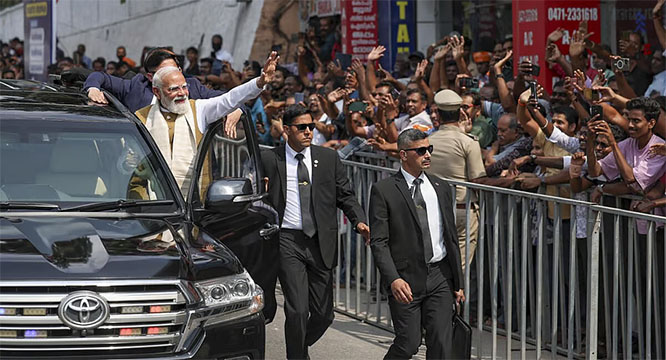
Prime Minister Narendra Modi, during his visit to Thiruvananthapuram on Friday, January 23, indicated that the Bharatiya Janata Party (BJP) is aiming to expand its political footprint in Kerala ahead of the Assembly elections scheduled in the coming months.

Speaking at a BJP-organised public meeting, Modi drew parallels between the party’s early electoral gains in Gujarat and its recent victory in the Thiruvananthapuram Municipal Corporation. The civic body win, which ended decades of Left control, was cited by the Prime Minister as a possible starting point for the party’s broader ambitions in the state.

Recalling BJP’s political trajectory in Gujarat, Modi said the party was largely insignificant before 1987 and received little media attention. He pointed out that the BJP’s first major breakthrough came with its victory in the Ahmedabad Municipal Corporation that year.

“Just as our journey in Gujarat began with one city, Kerala’s journey has also started with a single city,” Modi said, suggesting that the party’s municipal-level success could translate into wider electoral acceptance.

The Prime Minister alleged that successive governments led by the Left Democratic Front (LDF) and the United Democratic Front (UDF) had failed to adequately develop Thiruvananthapuram. He accused both fronts of corruption and neglect, claiming that basic infrastructure and facilities were denied to the capital city for decades.

According to Modi, the BJP’s control of the civic body represents a shift driven by public dissatisfaction with the existing political alternatives. He asserted that the BJP administration in Thiruvananthapuram had begun working towards development, though no specific details or timelines were outlined.

Addressing the gathering at Putharikandam Maidan, Modi said the BJP intended to project Thiruvananthapuram as a “model city,” reiterating his party’s commitment to governance-led change.

The Prime Minister’s visit to Kerala also included the inauguration of several development projects and the flagging off of new train services, as the BJP intensifies its political outreach in the poll-bound state.

Comments

Add new comment

  • Coastaldigest.com reserves the right to delete or block any comments.
  • Coastaldigset.com is not responsible for its readers’ comments.
  • Comments that are abusive, incendiary or irrelevant are strictly prohibited.
  • Please use a genuine email ID and provide your name to avoid reject.