



‘Not so serious issue... we use names of Ravana, Shakuni too’: Education Minister on professor referring a Muslim student ‘Kasab’

News Network
November 30, 2022

bcnagesh.jpg

Bengaluru, Nov 30: Karnataka Minister of School Education and Literacy B C Nagesh reacting to the recent controversy following an assistant professor referring to a Muslim student as “Kasab”, felt that it is “not so serious”.

He also sought to know why names from a particular community became a national issue, but names like “Ravana” or “Shakuni” which are so commonly used for referring, does not become an issue at all.

“It is unfortunate, the incident shouldn’t have taken place, the teacher should not have used that name. But I also feel that it is not such (a) serious thing, because we use the name of Ravana for many students many times, we also use the name of Shakuni many times, but that doesn’t become an issue at all,” Nagesh said.

Speaking to reporters, he said, “Why the name of (a person) who belongs to a particular community becomes an issue, I don’t know. Though the issue has been taken seriously and action has been taken against the teacher. But, why some names become a national issue, I cannot understand.” On Monday, a video showing an assistant professor in Manipal calling a student by the name “Kasab”, and the student countering it, had gone viral.

Later, the professor tendered an apology. The video had gone viral on social media, and the university has debarred the faculty from classes.

Comments

Add new comment

  • Coastaldigest.com reserves the right to delete or block any comments.
  • Coastaldigset.com is not responsible for its readers’ comments.
  • Comments that are abusive, incendiary or irrelevant are strictly prohibited.
  • Please use a genuine email ID and provide your name to avoid reject.
News Network
January 20,2026

iran.jpg

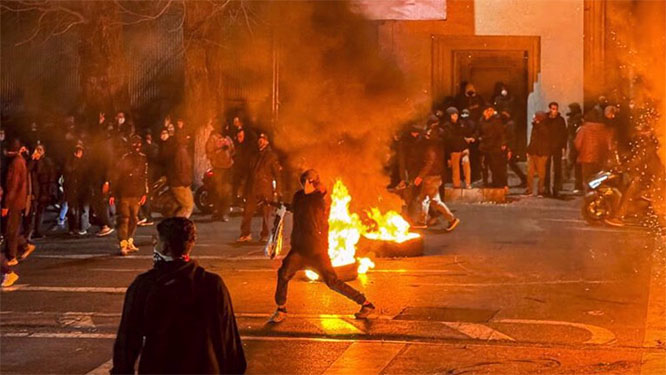
Iranian security and intelligence forces have captured more than 470 individuals in three provinces, identified as key figures behind the recent wave of violent unrest and terrorist activities linked to foreign-backed networks.

The Intelligence Ministry's provincial office in Khorasan Razavi announced on Monday the arrest of 192 armed terrorists, identified as the main agents behind recent riots in the region. 

According to an official statement, the detainees were involved in the killing of several security personnel and civilians, setting fire to mosques, public service facilities, and buses, as well as attacks on military and law enforcement centers.

The seized items from the group include several bulletproof vests, Kalashnikov rifles, hunting weapons, Winchester rifles, and various cold weapons such as daggers, swords, brass knuckles, tactical knives, crossbows, and chains.

Evidence indicates that some of the individuals were tied to hostile movements and terrorist organizations, with links overseas. Others were identified as members of violent criminal gangs, actively taking part in the unrest alongside their associates.

Simultaneously, in the western province of Lorestan, the IRGC announced the arrest of 134 individuals as the main leaders and influential field agents of a US-Israeli terrorist network.

The IRGC statement stated that these individuals formed terrorist cells during the recent unrest, committing "Daesh-like" acts.

They wounded security forces with firearms and cold weapons, and burned and destroyed public and private properties, including mosques, shops, banks, and private and public vehicles.

In the northwestern province of Zanjan, the police reported detaining 150 people identified as principal leaders and agents behind recent riots.

Authorities noted that these individuals were responsible for destroying public and private property and intentionally setting fire to vehicles in the province's squares.

Their crimes include shedding the blood of innocent people, destroying public and private property, attempting to enter military sites, disrupting public order, and spreading terror among citizens.

A variety of cold weapons were reportedly seized from the detainees.

What began late last month as peaceful protests over economic hardship across Iran turned violent after public statements by US and Israeli regime figures encouraged vandalism and disorder.

During the unrest, foreign-backed mercenaries rampaged through cities, killing security forces and civilians and damaging public property.

Comments

Add new comment

  • Coastaldigest.com reserves the right to delete or block any comments.
  • Coastaldigset.com is not responsible for its readers’ comments.
  • Comments that are abusive, incendiary or irrelevant are strictly prohibited.
  • Please use a genuine email ID and provide your name to avoid reject.