Centre still examining inclusion of Tulu, Kodava in 8th Schedule

coastaldigest.com news network
July 22, 2017

New Delhi, Jul 22: An internal committee of the Home Ministry is looking into inclusion of Tulu and Kodava languages in the Eighth Schedule of the Constitution, according to the union government.

tulupatherga

Responding to a private member’s bill moved by B K Hariprasad (Congress), Minister of State for Home Affairs Kiran Rijiju told the Rajya Sabha on Friday that the official panel tasked to come out with the objective criterion on inclusion of more languages in the Schedule.

The Eighth Schedule of the Constitution is currently recognises 22 languages while cases are pending for 16 other languages including Tulu and Kodava. Two previous expert panels, Pahwa Committee in 1996 and Sitakanta Mohapatra Committee in 2003, could not conclusively form the criteria to decide on inclusion of other languages in the Eighth Schedule.

Rijiju said the Union government had now set up a panel, headed by an additional secretary rank officer with members from the Ministry of Human Resource Development, Ministry of Information and Broadcasting, Department of Personnel and Training, Central Institute of Indian Languages, Mysuru and the Sahitya Akademi to come up with a concrete solution.

The issue had come up in the Upper House in April too when the Congress member Oscar Fernandes even sang a few lines in Tulu after he was prompted by his colleague Jairam Ramesh.

 

Comments

Add new comment

  • Coastaldigest.com reserves the right to delete or block any comments.
  • Coastaldigset.com is not responsible for its readers’ comments.
  • Comments that are abusive, incendiary or irrelevant are strictly prohibited.
  • Please use a genuine email ID and provide your name to avoid reject.
coastaldigest.com news network
January 19,2026

badriya.jpg

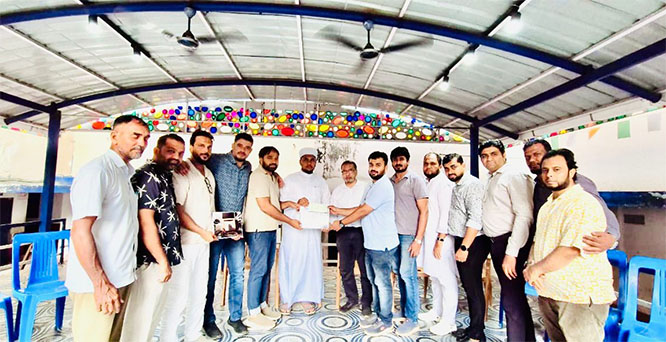
Mangaluru: The Phase I project of Badria Vision 2028 was formally launched at a ceremony held at the Badria Campus on January 17, marking an important step in the institution’s long-term development roadmap.

The programme was attended by P.B. Abdul Hameed, Secretary of the MEA, and P.C. Hasir, Correspondent of the MEA, who presided over the event and underscored the institution’s commitment to growth and academic excellence.

Office-bearers of the Badria Alumni Association were present in large numbers, including A.K. Sajid (President), Shamsuddin and S.M. Farooq (Vice-Presidents), Shaheed (General Secretary), and Khaleel (Treasurer), reflecting strong alumni engagement in the initiative.

The gathering was blessed by Sayyid Shamsuddeen Basith Thangal Kukkaje, Qateeb of Zeenat Yatheem Bakshi, who led a special dua seeking divine guidance and success for the project.

The ceremony also witnessed the participation of prominent alumnus and local corporate professional Abdul Latheef, along with alumni members Naushad, Kalandar, Safwan, members of the core committee, and several other former students.

A key moment of the event was the formal handover of a cheque to Ameen Woodland Architect, signalling the immediate commencement of construction work under Phase I of the project.

Organisers said the launch of Phase I reflects a shared vision, institutional unity, and collective resolve to realise the objectives of Badria Vision 2028.

Comments

Add new comment

  • Coastaldigest.com reserves the right to delete or block any comments.
  • Coastaldigset.com is not responsible for its readers’ comments.
  • Comments that are abusive, incendiary or irrelevant are strictly prohibited.
  • Please use a genuine email ID and provide your name to avoid reject.
News Network
January 16,2026

tourism.jpg

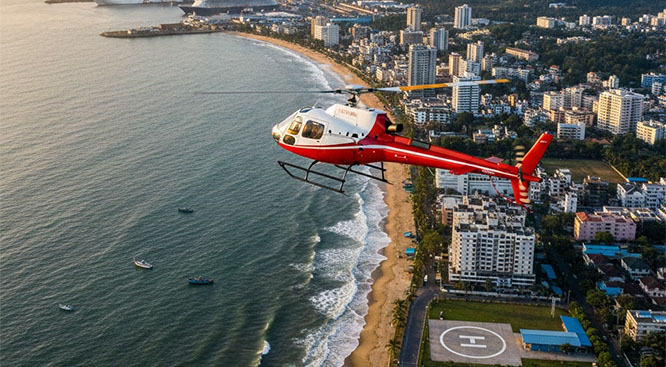
Following a record-breaking response to experimental joyrides during the Karavali Utsava, the Dakshina Kannada district administration has signaled a major shift toward high-end travel. Officials are now laying the groundwork to transform Mangaluru into a permanent heli-tourism hub, connecting the state’s most sacred pilgrim centers and untouched coastal gems via the skies.

The move comes as the Karnataka government readies a specialized tourism policy for the coast, aimed at drawing global investors. With Mangaluru already serving as a critical nexus for education, healthcare, and maritime trade, the introduction of a scheduled helicopter service is seen as the "missing link" in the region’s economic evolution.

By the Numbers: A Flying Success

The data from the recent 10-day trial (beginning December 26) paints a clear picture of high demand:

•    Total Passengers: 1,032
•    Ride Duration: 7 minutes
•    Ticket Price: ₹3,500 per person
•    Origin of Tourists: Significant turnout from Kerala, Udupi, and Karwar.

Bridging the Gap for Global Travelers

Deputy Commissioner Darshan HV emphasized that the vision extends far beyond festival joyrides. Currently, international tourists arriving via luxury cruises at the New Mangalore Port (peak season December–April) often find themselves "landlocked" by time.

"Foreign visitors staying for just 24 to 48 hours currently struggle to visit inland attractions like Chikkamagaluru or Kodagu due to road travel times," a senior official noted. "A permanent heli-link would make these Western Ghats destinations accessible in under 30 minutes."

Beyond Tourism: Medical and Logistics

The administration is also looking at the humanitarian and logistical benefits. As a medical powerhouse, Mangaluru’s private hospitals could utilize the proposed permanent helipads for:

1.    Cardiac Emergencies: Rapid transfer of critical patients.
2.    Organ Transplants: Vital "green corridors" through the air to save lives.
3.    Regional Connectivity: Linking remote areas like Puttur, Sullia, and Beltangady to the main city.

While the Karavali Utsava has traditionally focused on beach-side festivities, the DC confirmed that the district is now evaluating formal proposals from private operators. The goal is to establish a network of permanent helipads that will eventually offer regular sorties to Kudremukh National Park and the scenic heights of the Western Ghats.

Comments

Add new comment

  • Coastaldigest.com reserves the right to delete or block any comments.
  • Coastaldigset.com is not responsible for its readers’ comments.
  • Comments that are abusive, incendiary or irrelevant are strictly prohibited.
  • Please use a genuine email ID and provide your name to avoid reject.
News Network
January 23,2026

Mangaluru: The Karnataka Government Polytechnic (KPT), Mangaluru, has achieved autonomous status from the All India Council for Technical Education (AICTE), becoming the first government polytechnic in the country to receive such recognition in its 78-year history. The status was granted by AICTE, New Delhi, and subsequently approved by the Karnataka Board of Technical Education in October last year.

Officials said the autonomy was conferred a few months ago. Until recently, AICTE extended autonomous status only to engineering colleges, excluding diploma institutions. However, with a renewed national focus on skill development, several government polytechnics across India have now been granted autonomy.

KPT, the second-largest polytechnic in Karnataka, was established in 1946 with four branches and has since expanded to offer eight diploma programmes, including computer science and polymer technology. The institution is spread across a 19-acre campus.

Ravindra M Keni, the first dean of the institution, told The Times of India that AICTE had proposed autonomous status for polytechnic institutions that are over 25 years old. “Many colleges applied. In the first round, 100 institutions were shortlisted, which was further narrowed down to 15 in the second round. We have already completed one semester after becoming an autonomous institution,” he said. He added that nearly 500 students are admitted annually across eight three-year diploma courses.

Explaining the factors that helped KPT secure autonomy, Keni said the institution has consistently recorded 100 per cent admissions and placements for its graduates. He also noted its strong performance in sports, with the college emerging champions for 12 consecutive years, along with active student participation in NCC and NSS activities.

Autonomous status allows KPT to design industry-oriented curricula, conduct examinations, prepare question papers, and manage academic documentation independently. The institution can also directly collaborate with industries and receive priority funding from AICTE or the Ministry of Education. While academic autonomy has been granted, financial control will continue to rest with the state government.

“There will be separate committees for examinations, question paper setting, boards of studies, and boards of examiners. The institution will now have the freedom to conduct admissions without government notifications and issue its own marks cards,” Keni said, adding that new academic initiatives would be planned after a year of functioning under the autonomous framework.

Comments

Add new comment

  • Coastaldigest.com reserves the right to delete or block any comments.
  • Coastaldigset.com is not responsible for its readers’ comments.
  • Comments that are abusive, incendiary or irrelevant are strictly prohibited.
  • Please use a genuine email ID and provide your name to avoid reject.