



No funds for Mangalore runway extension

March 11, 2011

airport

Mangalore, March 11: A plan to extend the Mangalore airport's tabletop runway, which witnessed the decade's worst plane crash in India, remains stuck 10 months after it was announced as both the airports regulator and the Karnataka government are reluctant to bear the expense.

In May, an Air India Boeing 737-800 flying in from Dubai overshot the airfield and crashed into an adjacent hill, killing 158 passengers and crew. The airport is on top of a hill with deep gorges on all sides of the runway, which gives the airfield its prefix.

Immediately after the crash, the aviation ministry said the runway would be extended by 1,000m, or about 3,280ft, to make it safe to land wide body aircraft used in long-haul international flights.

Mangalore is not a designated international airport but was cleared five years ago to handle flights to and from Dubai. The coastal city caters to a large population of passengers from within and neighbouring areas, including Kerala, who work in West Asia.

“We have sent the proposal (to the regulator and the state government). The plan is still at a concept stage,” said Mangalore airport director M.R. Vasudeva. “No physical designs are drawn.”

The tabletop runway at Mangalore airport measures about 9,400ft, long enough to accommodate aircraft such as Airbus A310 but inadequate to handle larger planes.

The International Civil Aviation Organization (ICAO), a global monitoring body for the industry, stipulates the airfield length required to handle widebody aircraft such as the Boeing 747 at 12,000ft.

“Even the Boeing 737s land with a lesser load on plane as it is not possible to carry full load for a safe landing,” said an airport official at Mangalore airport, who declined to be named.

An official with the Airports Authority of India (AAI) said it is already investing at least Rs.6,000 crore in 35 airports to upgrade facilities and is not ready to put money into expanding the Mangalore airfield.

“We are investing in airports of Chennai, Kolkata, the North-East and other regions,” the official said. “Hence, there is a shortage of funds.”

A Karnataka government official, also declining to be named, said the state does not plan to invest in the project. “There is no direct revenue benefit from the airport to the state.”

A probe into the fatal crash by the directorate general of civil aviation, India's regulator for the sector, blamed the tragedy on pilot error, exonerating the tabletop runway that was being blamed by some experts.

Mangalore deputy commissioner Subodh Yadav said discussions on expanding the runway were on but the airport has not sent a written proposal for extending the runway.

“Even if the work begins, the project needs huge investment. For instance, filling the valley requires Rs.300-400 crore,” he said.

India has two other tabletop airfields—at Kozhikode and Shimla. The runway at Kozhikode was extended from 6,138ft to 9,438ft in 2007. The airfield at Shimla measures 3,959ft.

Vasudeva said the Mangalore airport sent a proposal to both AAI and the state government in July to extend the airfield by 1,000m to the south.

AAI had rejected an earlier proposal sent on March 2010, before the crash, to extend the runway by 500m on both ends, saying the plan was not feasible as it would require extensive evacuation.

According to the second proposal, about 5,000 people living near the airport would have to be evacuated. It has estimated that acquiring the land and compensating the people alone would cost Rs.200 crore. A total estimate for the entire project as proposed was not available.

Passenger traffic at Mangalore airport has steadily grown over the years. It handled at least 800,000 passengers in 2010 compared with 263,000 in 2004, according to an AAI report on passenger movement, mainly due to operations between Dubai and Mangalore that began in 2006.

“AAI should have taken at least some measures to avoid a repeat of (the) crash incident even if the runway cannot be extended at the moment,” said Mohan Ranganathan, a Chennai-based aviation expert.

He suggested that AAI at least increase the runway-end safety area (RESA)—a buffer area to protect aircraft—from 90m to 240m and install an engineered materials arresting system.

The system is a mixture of light-weight concrete at the end of the runway so an aircraft can sink safely even if it overshoots the field, though the plane would need repairs later. “At least it wouldn't go down,” Ranganathan said.


Comments

Add new comment

  • Coastaldigest.com reserves the right to delete or block any comments.
  • Coastaldigset.com is not responsible for its readers’ comments.
  • Comments that are abusive, incendiary or irrelevant are strictly prohibited.
  • Please use a genuine email ID and provide your name to avoid reject.
coastaldigest.com news network
January 19,2026

badriya.jpg

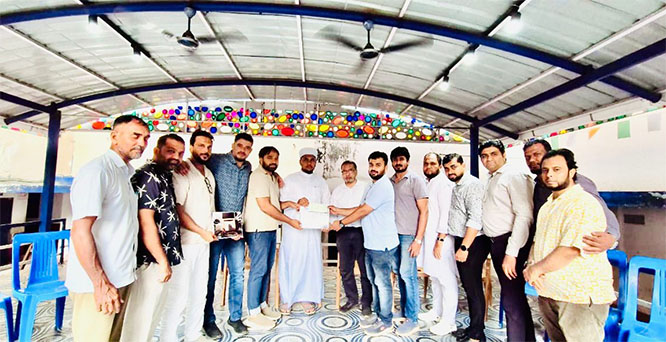
Mangaluru: The Phase I project of Badria Vision 2028 was formally launched at a ceremony held at the Badria Campus on January 17, marking an important step in the institution’s long-term development roadmap.

The programme was attended by P.B. Abdul Hameed, Secretary of the MEA, and P.C. Hasir, Correspondent of the MEA, who presided over the event and underscored the institution’s commitment to growth and academic excellence.

Office-bearers of the Badria Alumni Association were present in large numbers, including A.K. Sajid (President), Shamsuddin and S.M. Farooq (Vice-Presidents), Shaheed (General Secretary), and Khaleel (Treasurer), reflecting strong alumni engagement in the initiative.

The gathering was blessed by Sayyid Shamsuddeen Basith Thangal Kukkaje, Qateeb of Zeenat Yatheem Bakshi, who led a special dua seeking divine guidance and success for the project.

The ceremony also witnessed the participation of prominent alumnus and local corporate professional Abdul Latheef, along with alumni members Naushad, Kalandar, Safwan, members of the core committee, and several other former students.

A key moment of the event was the formal handover of a cheque to Ameen Woodland Architect, signalling the immediate commencement of construction work under Phase I of the project.

Organisers said the launch of Phase I reflects a shared vision, institutional unity, and collective resolve to realise the objectives of Badria Vision 2028.

Comments

Add new comment

  • Coastaldigest.com reserves the right to delete or block any comments.
  • Coastaldigset.com is not responsible for its readers’ comments.
  • Comments that are abusive, incendiary or irrelevant are strictly prohibited.
  • Please use a genuine email ID and provide your name to avoid reject.
News Network
February 1,2026

Golf.jpg

The coastal city of Mangaluru is gearing up for a major sporting milestone with the launch of a Golf Excellence Academy at the Pilikula Golf Club (PGC), scheduled to open on May 31. The initiative aims to position Mangaluru firmly on India’s national golfing map.

Speaking to reporters on Saturday during PGC’s first-ever floodlit Pro-Am tournament, club captain Manoj Kumar Shetty said the project is being funded by UAE-based philanthropist Michael D’Souza and is currently in the design phase. Experts from leading golf academies across the country are expected to visit Mangaluru to help shape the training programme and infrastructure.

The academy will train 20 young golfers at a time, with a long-term vision of producing national-level players from the region. Until now, PGC relied on an in-house coach, but the recent renovation of the course and the introduction of floodlights have opened new possibilities for expanding the sport.

Shetty said discussions are underway with two reputed coaching academies, whose heads are expected to visit PGC shortly. “A dormitory for trainers is already under construction. We are inviting academies to assess the facilities and suggest changes so we can build a truly world-class Golf Excellence Academy,” he said.

Professional golfer Aryan Roopa Anand noted that the floodlit course would be a game-changer for young players. “Students can now practise after school hours, even up to 8 or 9 pm, without compromising on academics,” he said.

Comments

Add new comment

  • Coastaldigest.com reserves the right to delete or block any comments.
  • Coastaldigset.com is not responsible for its readers’ comments.
  • Comments that are abusive, incendiary or irrelevant are strictly prohibited.
  • Please use a genuine email ID and provide your name to avoid reject.
News Network
January 20,2026

Mangaluru: In a major step towards strengthening rural innovation, the Office of the Principal Scientific Adviser (PSA) to the Government of India is supporting the establishment of RuTAGe Smart Village Centres (RSVCs) across the country through collaborations with academic institutions, civil society organisations and philanthropic partners.

As part of this national initiative, Nitte (Deemed to be University) will set up the first RSVCs in the region at Nitte GP in Udupi district and at the Nitte Health Centre, Sevanjali Trust, Farangipete, in Dakshina Kannada district. The centres will be inaugurated on January 21. In South India, the programme is being implemented by the Section Infin-8 Foundation (SI-8).

Speaking to reporters on Monday, SI-8 founder-director Vishwas US said experts from Nitte University and SI-8 would work closely with farmers, students, youth and local entrepreneurs to adapt and deploy technologies tailored to local needs.

Project head Prof Iddya Karunasagar, representing Nitte DU, said the RSVCs at Nitte and Farangipete would serve as demonstration hubs for a wide range of agriculture, energy, skill-development and assistive technologies. These include solar dryers for fruits, vegetables and crops; soil-testing solutions; power weeders and women-friendly farm tools; wind-powered devices for rural artisans; grain storage systems; grass-cutting and tree-climbing equipment; and liquid fertiliser production using cowshed waste.

SI-8 CEO Aravind C Kumar said the centres would also provide access to digital and knowledge-based platforms such as ISRO applications, government scheme portals, market linkage tools and gamified learning resources, along with assistive technologies for persons with visual impairments.

Highlighting the broader impact of the initiative, Principal Scientific Adviser Prof Ajay Kumar Sood said it demonstrated how applied research could bridge the rural–urban divide and help create self-reliant, technology-enabled villages.

The initiative has been made possible through philanthropic support from Dr NC Murthy of ACM Business Solutions, LLC, USA. Dr Sapna Poti, Director (Strategic Alliances) at the Office of the Principal Scientific Adviser, said the long-term objective is to build self-sufficient, technology-driven communities capable of generating sustainable livelihoods on their own.

Comments

Add new comment

  • Coastaldigest.com reserves the right to delete or block any comments.
  • Coastaldigset.com is not responsible for its readers’ comments.
  • Comments that are abusive, incendiary or irrelevant are strictly prohibited.
  • Please use a genuine email ID and provide your name to avoid reject.