Sheshadri bats for director's creative liberty at Bettada Jeeva screening

[email protected] (CD Network)
July 15, 2011

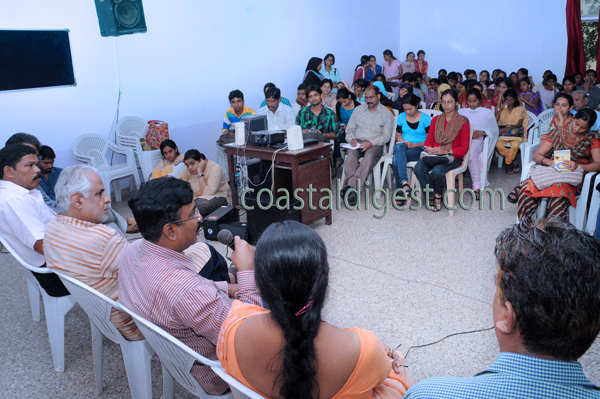
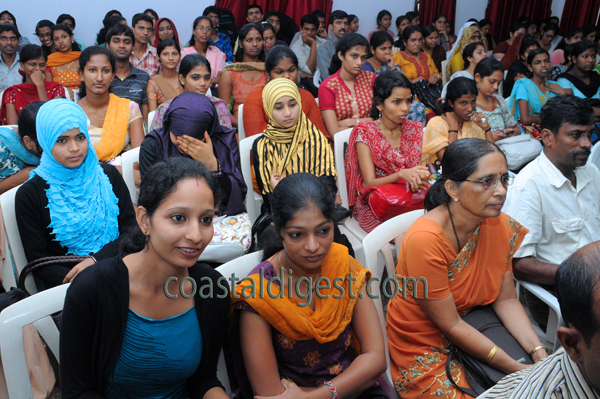
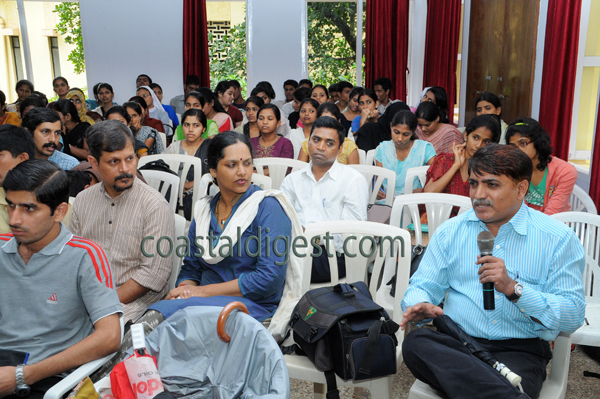
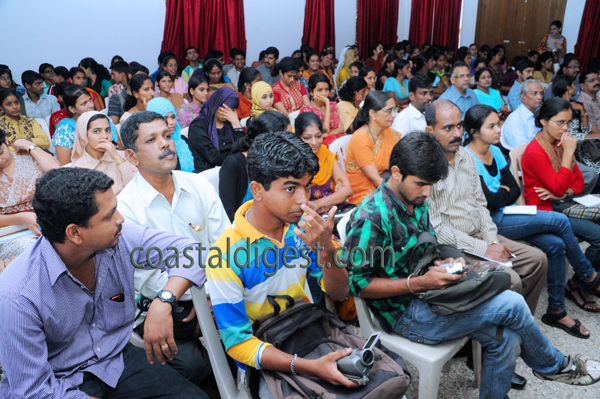
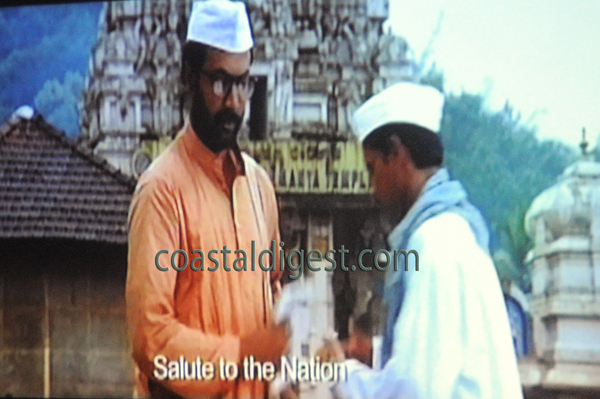
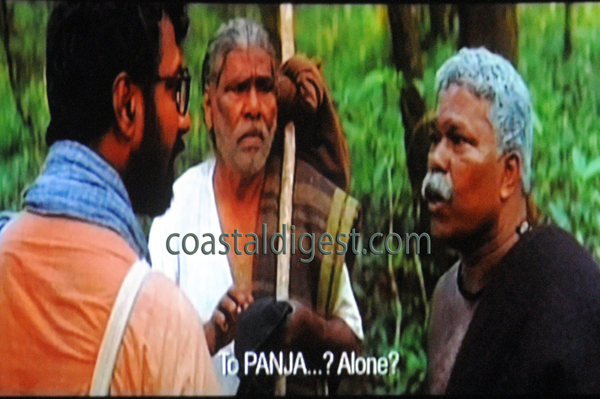
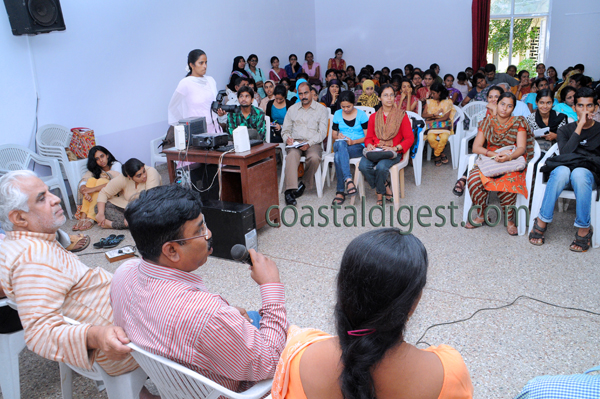
Mangalore, July 15: The perennial dilemma faced by a film director while transforming a classical work into visual form dominated the discussions that followed the screening of P. Sheshadri's award-winning movie “Bettada Jeeva” at Roshni Nilaya here on Friday.

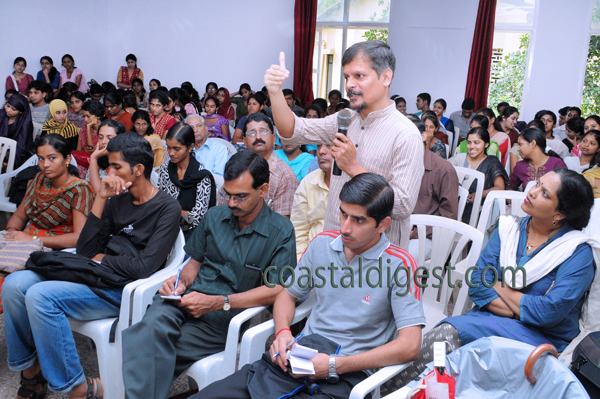
Reacting to an observation made by journalist Praveen Padigar that the movie did not have the same climax as in the Shivarama Karanth's celebrated novel and that the movie did not end as a 'madhura smrithi' (pleasant memories), director Sheshadri said that he deliberately wanted to leave the audience with some disturbing questions.

“I have taken the creative liberty while adapting Bettada Jeeva into the film form. I wanted to portray how modernization has brought in a change in the values by showing the fugitive returning to a completely commercialized place in his pursuit of the dream village, he was enamored with for its hospitality and innocence,” Mr Sheshadri said.

Defending his decision of not adhering strictly to the original novel, Mr Sheshadri said, any classical work possessed the innate strength of leaving the reader with an experience that is his own. “The Western Ghats seen by Karanth could have been different from what we are seeing today. The values have also changed. I am afraid even Karanth would have thought differently about the experiences if he were to react to a similar situation today,” Mr Sheshadri said.

“A novel is always a novel and its cinematic adaptation will always be influenced by the director's perception of the novel. Then there is always the creative freedom, which is very important for any director. If a director does not have anything to say the he would not venture into making the movie based on a classic,” he said.

He also agreed that the authors generally agreed with the director's perception of the movie. This was true in the case of Chomana Dudi, which was brought to celluloid by B.V. Karanth, he added.

Sheshadri then explained the making of the movie Bettada Jeeva and said he did not expect that movie would be such a success.

“The novel “Bettada Jeeva” haunted me for more than three decades. When I read it for the first time in my high school days, it did not make much of an impact on me. However, it kept coming back to me during various phases in my life, and I finally mustered the courage,” he said.

“On the hindsight I think I should have waited bit more on this venture, I could have become more mature,” he added.

Mr Sheshadri is the first-ever director to win the national award for six consecutive films including the best environmental film award for Bettada Jeeva.

“Munnudi” based on Boluvaru Mohammed Kunhi's story “Muttuchera” won him his first national award in 2001. That was the beginning and then followed “Athithi” (2002), “Beru” (2004), “Tutturi” (2007) and “Vimukti” (2009), all national award winning films.

“I was a bit apprehensive as several directors who had made an attempt to work on this novel had abandoned it since all it had were only a series of incidents,” sayid Sheshadri.

“It is easy to elongate a short story, but it is difficult to trim a novel. However, slowly incidents started converting into images,” he recalled.

Sheshadri found it difficult to find a suitable location. Finally he zeroed in on a place 40 km from Subramanya. It is a place Karanth visits in the novel. Along with writer Gopalakrishna Pai and Katte Govindaiah's son, Karanth's good old friend, they visited places Karanth had gone seven decades ago.

“We found Kelabylu of Karanth in Kujagodu village in the interiors of Western Ghats. Things started falling in place once shooting started and professional artistes including Dattanna, Rameshwari Varma, Suchendra Prasad filled life into the characters,” he said.

Speaking on his role in the movie, Dattanna said, playing Gopalaiah's character gave him immense satisfaction as his was a role replete with zest for life and heart for challenge. “Gopalaiah lived as an integral part of the forest and stood out for his leadership abilities without being too dominating,” he said, but admitted playing his role was not a challenging job for him as everything was laid out at the screen play stage itself.

“But bringing out the innate personal traits of the characters was a big challenge. The director has handled it very smartly,” he added.

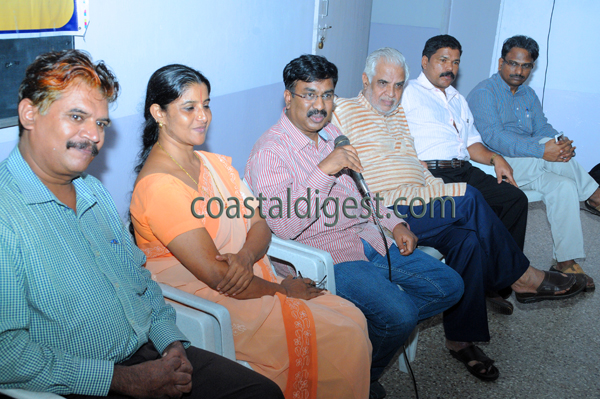
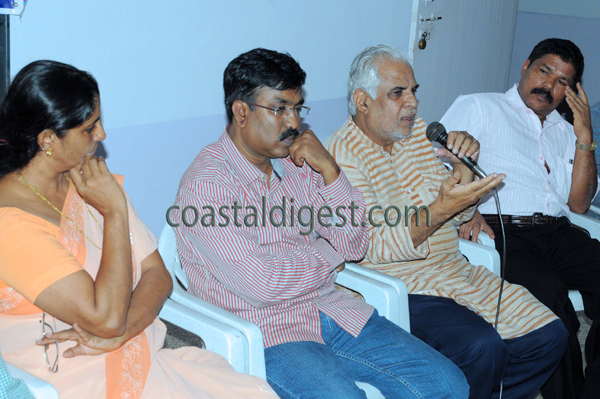
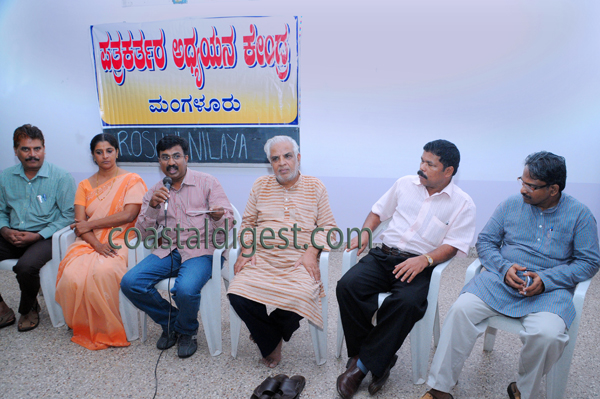
Shobhana Manohar, HoD of English, Roshni Nilaya, BH Maheshcandra, bureau chief, Prajavani, Mangalore, Natesh Ullal, theatre person, Govind Belgaumkar, bureau chief, The Hindu, Mangalore, participated in the discussion.

The programme was organized by the Pathrakarthara Adhayayana Kendra Mangalore.

bj_0

bj_1

bj_2

bj_3

bj_4

bj_5

bj_6

bj_7

bj_8

bj_9

bj_10

bj_11

bj_12

bj_13

bj_14

Comments

Add new comment

  • Coastaldigest.com reserves the right to delete or block any comments.
  • Coastaldigset.com is not responsible for its readers’ comments.
  • Comments that are abusive, incendiary or irrelevant are strictly prohibited.
  • Please use a genuine email ID and provide your name to avoid reject.
coastaldigest.com news network
January 19,2026

rizwanzameer.jpg

Bengaluru: As the dust settles on the recent legislative session, the corridors of Vidhana Soudha are buzzing with more than just policy talk. A high-stakes game of political musical chairs has begun, exposing a deepening rift within the Congress party’s Muslim leadership as a major Cabinet reshuffle looms.

With the party hierarchy signaling a "50% refresh" to gear up for the 2028 Assembly elections, the race to fill three projected Muslim ministerial berths has transformed from a strategic discussion into an all-out turf war.

The "Star Son" Spark

The internal friction turned public this week following provocative remarks by Zaid Khan, actor and son of Wakf Minister Zameer Ahmed Khan. Zaid’s claim—that his father "helped" secure a ticket for Shivajinagar MLA Rizwan Arshad in 2023—has acted as a lightning rod for resentment.

Rizwan’s camp was quick to fire back, dismissing the comment as a desperate attempt by Zameer to manufacture seniority. "Rizwan’s political pedigree was forged in the NSUI and Youth Congress long before Zameer even stepped into the party," a supporter noted, highlighting Rizwan’s tenure as an AICC secretary and his two-term presidency of the State Youth Congress.

A Tale of Two Loyalists

While both Zameer Ahmed Khan and Rizwan Arshad are staunch allies of Chief Minister Siddaramaiah and represent Bengaluru strongholds, their political DNA could not be more different:

•    Zameer Ahmed Khan: A four-time MLA who crossed over from JD(S) in 2018. Known for his "overzealous" and often polarizing outreach during communal flashpoints—from the DJ Halli riots to the recent Wakf land notice controversy—his style has frequently left the Congress high command in a state of "discomfort."

•    Rizwan Arshad: A homegrown organizational man. Seen as a "quiet performer," Arshad represents the sophisticated, moderate face of the party, preferred by those who find Zameer’s brand of politics too volatile.

The Outsiders Looking In

The bickering isn't limited to a duo. The "Beary" community, represented by leaders like N A Haris and Saleem Ahmed, is demanding its pound of flesh. Saleem Ahmed, the Chief Whip in the Legislative Council, has dropped the veil of diplomacy, openly declaring his ministerial aspirations.

"I was the only working president not included in the Cabinet last time," Saleem noted pointedly, signaling that the "loyalty quota" is no longer enough to keep the peace.

As Chief Minister Siddaramaiah prepares to finalize the list, he faces a delicate balancing act: rewarding the aggressive grassroots mobilization of Zameer’s camp without alienating the organizational stalwarts and minority sub-sects who feel increasingly sidelined by the "Chamarajpet-Shivajinagar" binary.

Comments

Add new comment

  • Coastaldigest.com reserves the right to delete or block any comments.
  • Coastaldigset.com is not responsible for its readers’ comments.
  • Comments that are abusive, incendiary or irrelevant are strictly prohibited.
  • Please use a genuine email ID and provide your name to avoid reject.
News Network
January 31,2026

Roy.jpg

Bengaluru: The shooting incident involving CJ Roy, founder of the Confident Group, has once again put the spotlight on a businessman whose life has swung between flamboyant global success and persistent controversy at home.

Though Roy’s business interests extended across continents, his roots lay firmly in Karnataka. An alumnus of Christ School in Bengaluru, he later moved to Tumakuru to pursue an engineering degree. Those familiar with his early years describe him as intensely ambitious, beginning his career as a salesman at a small electronics firm dealing in computers.

Roy’s entry into large-scale real estate came through the Crystal Group, where he worked closely with Latha Namboothiri and rose from manager to director. However, the launch of the Confident Group in 2005 was clouded by industry speculation. Insiders speak of a fallout involving alleged “benami” properties and claims of deception that ultimately led to his independent venture—an episode Roy spent years trying to distance himself from, according to associates.

A tale of two cities

Roy’s professional trajectory diverged sharply across geographies.

In Dubai, he built a reputation as a bold and efficient developer, completing massive luxury residential projects in record time—some reportedly within 11 months. His rapid project delivery and lavish lifestyle in the Emirates earned him admiration and visibility in the real estate sector.

In Bengaluru, however, his image remained far more fractured. Sources say Roy stayed away from the city for several years amid disputes over unpaid dues to vendors and suppliers. Several projects were allegedly stalled, with accusations of unfulfilled commitments to cement and steel suppliers continuing to follow him.

Roy’s return to Bengaluru’s business and social circles began around 2018, marked by a conscious attempt at rebranding. His appointment as Honorary Consul of the Slovak Republic added diplomatic legitimacy, which he complemented with visible CSR initiatives, including ambulance donations and high-profile charity events.

Heavy police presence in Langford Town

Following the incident, police personnel from the Central division were deployed outside the Confident Group building in Langford Town, which also houses the Slovak Honorary Consulate in Bengaluru.

The otherwise busy premises near Hosur Road wore a deserted look on Friday, reflecting the shock and uncertainty that followed the tragedy.

Comments

Add new comment

  • Coastaldigest.com reserves the right to delete or block any comments.
  • Coastaldigset.com is not responsible for its readers’ comments.
  • Comments that are abusive, incendiary or irrelevant are strictly prohibited.
  • Please use a genuine email ID and provide your name to avoid reject.
News Network
January 20,2026

Mangaluru: In a major step towards strengthening rural innovation, the Office of the Principal Scientific Adviser (PSA) to the Government of India is supporting the establishment of RuTAGe Smart Village Centres (RSVCs) across the country through collaborations with academic institutions, civil society organisations and philanthropic partners.

As part of this national initiative, Nitte (Deemed to be University) will set up the first RSVCs in the region at Nitte GP in Udupi district and at the Nitte Health Centre, Sevanjali Trust, Farangipete, in Dakshina Kannada district. The centres will be inaugurated on January 21. In South India, the programme is being implemented by the Section Infin-8 Foundation (SI-8).

Speaking to reporters on Monday, SI-8 founder-director Vishwas US said experts from Nitte University and SI-8 would work closely with farmers, students, youth and local entrepreneurs to adapt and deploy technologies tailored to local needs.

Project head Prof Iddya Karunasagar, representing Nitte DU, said the RSVCs at Nitte and Farangipete would serve as demonstration hubs for a wide range of agriculture, energy, skill-development and assistive technologies. These include solar dryers for fruits, vegetables and crops; soil-testing solutions; power weeders and women-friendly farm tools; wind-powered devices for rural artisans; grain storage systems; grass-cutting and tree-climbing equipment; and liquid fertiliser production using cowshed waste.

SI-8 CEO Aravind C Kumar said the centres would also provide access to digital and knowledge-based platforms such as ISRO applications, government scheme portals, market linkage tools and gamified learning resources, along with assistive technologies for persons with visual impairments.

Highlighting the broader impact of the initiative, Principal Scientific Adviser Prof Ajay Kumar Sood said it demonstrated how applied research could bridge the rural–urban divide and help create self-reliant, technology-enabled villages.

The initiative has been made possible through philanthropic support from Dr NC Murthy of ACM Business Solutions, LLC, USA. Dr Sapna Poti, Director (Strategic Alliances) at the Office of the Principal Scientific Adviser, said the long-term objective is to build self-sufficient, technology-driven communities capable of generating sustainable livelihoods on their own.

Comments

Add new comment

  • Coastaldigest.com reserves the right to delete or block any comments.
  • Coastaldigset.com is not responsible for its readers’ comments.
  • Comments that are abusive, incendiary or irrelevant are strictly prohibited.
  • Please use a genuine email ID and provide your name to avoid reject.