RTE should not be restricted to school kids'

May 11, 2012

A_Hindh_1

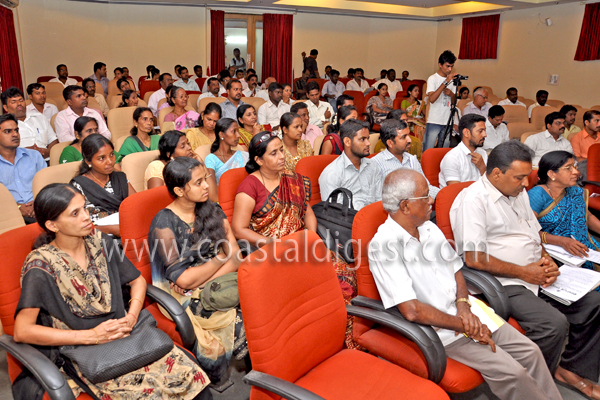
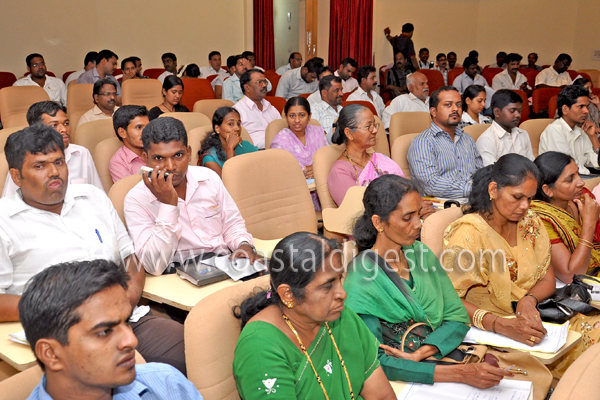
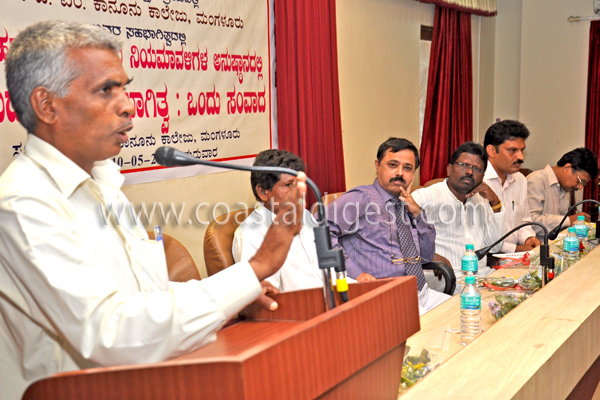
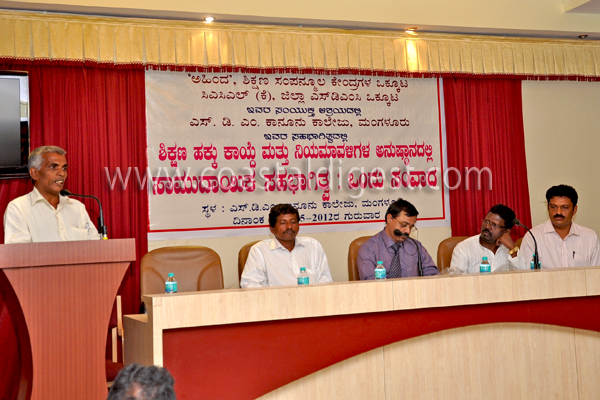
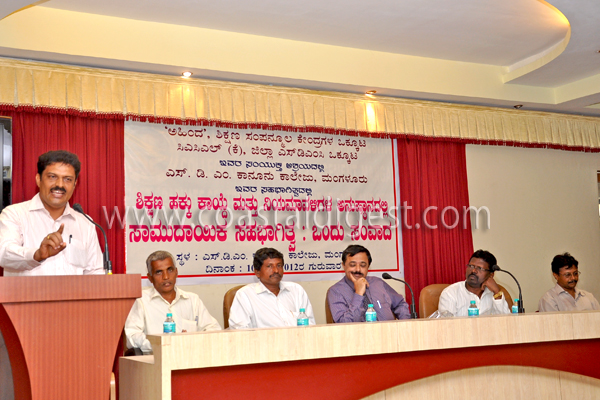
Mangalore, May 11: The right to education should not be restricted to children between the age group of six and 14 as mentioned in the act, said P Lolaksha, working president of Ahinda, an organization of backward, minority and dalits.

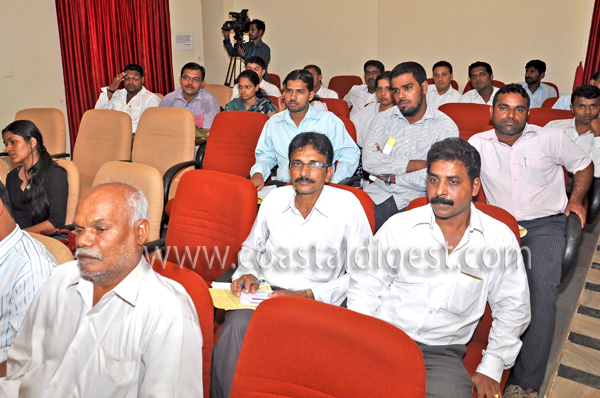
He was speaking at a consultation programme on the Right to Education Act 2009 organised at SDM College here on Thursday.

Federation of Education Resource Centres ( FERC), Federation of School Development and Monitoring Committees (FSDMC), Campaign Against Child Labour - Karnataka ( CACL-K) and members of various like-minded organizations took part in the programme.

Mr Lolaksha said all poor and underprivileged students should be able to pursue higher education. The present social and economic environment does not allow poor students to pursue higher education. As per the Juvenile Justice Act, upto 18 years all are considered as children.

“The government needs to amend rules as to bring children below 18 years to the purview of the act," he said.

Even though the act came into force in 2009, it took three years for the state government to notify rules based on it, he lamented.

"A section of the society, which enjoy all privileges, are behind the delay in the implementation of RTE Act. Though there are many conditions in the act, only the part which mandates 25 per cent seats for poor, has been made a subject of debate across the nation," he added.

FERC president Umesh Nirmal said that children in rural areas are forced to work to earn money for their education during vacation. "It is unfortunate that as per the records there is no child labour in the state. Participation of society is important in creating awareness against child labour," Nirmal added.
A_Hindh_2

A_Hindh_3

A_Hindh_4

A_Hindh_5

A_Hindh_6

Comments

Add new comment

  • Coastaldigest.com reserves the right to delete or block any comments.
  • Coastaldigset.com is not responsible for its readers’ comments.
  • Comments that are abusive, incendiary or irrelevant are strictly prohibited.
  • Please use a genuine email ID and provide your name to avoid reject.
News Network
December 16,2025

Mangaluru, Dec 16: The Mangaluru City police have significantly escalated their campaign against drug trafficking, arresting 25 individuals and booking 12 cases under the Narcotic Drugs and Psychotropic Substances (NDPS) Act between November 30 and December 13. The crackdown resulted in the seizure of a substantial quantity of illicit substances, including 685.6 grams of MDMA and 1.5 kg of ganja.

The success of this recent drive has been significantly boosted by the city’s innovative, QR code-based anonymous reporting system.

"The anonymous reporting system has received an encouraging response. Several recent arrests were made based on inputs received through this system, helping police tighten the noose around drug peddlers," said the City Police Commissioner.

The latest arrests contribute to a robust year-to-date record, underscoring the police's relentless commitment to combating the drug menace.

Up to December 14 this year, the police have registered a total of 107 cases of drug peddling, leading to the arrest of 219 peddlers. Furthermore, they have booked 562 cases of drug consumption, resulting in the arrest of 671 individuals.

The scale of the seizure for the year reflects the magnitude of the problem being tackled: police have seized 320.6 kg of ganja worth ₹88.7 lakh and 1.4 kg of MDMA valued at ₹1.2 crore. Other significant seizures include hydro-weed ganja worth ₹94.7 lakh and cocaine worth ₹1.9 lakh, among others.

The Commissioner emphasized a policy of rigorous enforcement: "We ensure that peddlers are caught red-handed so that they cannot later dispute the case or claim innocence."

To counter the rising trend of substance abuse among youth, the Mangaluru City police have rolled out uniform guidelines for random drug testing across educational institutions.

As part of the drive, tests were conducted in approximately 100 institutions, screening an estimated 5,500 to 6,000 students in the first phase. 20 students tested positive for drug consumption during the initial screening.

Students who tested positive have been provided counselling and are scheduled for re-testing in the second quarter. The testing will also be expanded to students not covered in the first phase. In a move to ensure strict implementation, police personnel were deployed in mufti in some institutions. Reiterating a zero-tolerance stance, the Commissioner confirmed that random testing will continue, and colleges have also been instructed to conduct drug tests at the time of admission to deter substance abuse from an early stage.

Comments

Add new comment

  • Coastaldigest.com reserves the right to delete or block any comments.
  • Coastaldigset.com is not responsible for its readers’ comments.
  • Comments that are abusive, incendiary or irrelevant are strictly prohibited.
  • Please use a genuine email ID and provide your name to avoid reject.