Karandlaje demands UPCL to compensate evacuees and victims

[email protected] (CD Network)
August 24, 2012

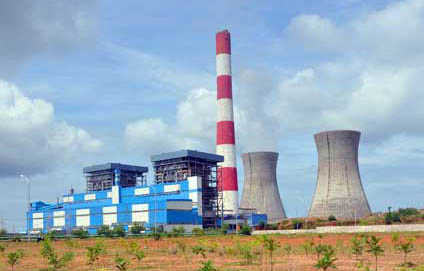
Padubidri, August 24: Udupi Power Corporation Limited thermal plant should compensate the evacuees and victims said Energy Minister Shobha Karandlaje.

Speaking to the UPCL officials, here, on Friday, the minister also urged the company to thoroughly follow the environment safety measures in the plant and also in the project area.

“The Company should properly execute its corporate social responsibilities, besides taking up safety measures in the project area, especially at the cooling towers, ash pond and pipelines”, she said.

UPCL CEO Ravindran explained the safety measures adopted to control the environment pollutions in the area.

“The water is collected from sea and drift eliminator is used to eliminate the salt contents. Electrostatic precipitators remove 80 per cent of the fly ashes and only small amount of ashes are released into air through chimneys. The sulphur content is also removed. The high pressure turbine enables the cooling of the sea water.

Air quality monitors are also introduced at the main gates. The project has come up in 570 acres of land, of which the main plant covers the area up to 400 acres,” he added.

Yellur Gram Panchayath Member Nagesh Bhat alleged that the Company has not taken any precautionary measures to avoid environment disasters even after repeated appeals. The water bodies in the surrounding 8 kms radius are polluted.

Following the implementation of safety measures, the water is purified only up to 60 per cent. Although they claim that only .01 per cent of fly ash is released to air through chimneys, it is not less than 4 tonnes of fly ash that is released every day. In ash pond, heavy particles are made to settle down in the water.

However, it proves to be environment hazardous, he added and stressed for proper compensation as there is plenty of crop loss in the surrounding region.

Principal Secretary, Energy Narasimha Raju inquired regarding monthly monitoring of wells and other water drains and pipelines in the area. However, DC Dr M T Reju said that there are no complainants of breakage in pipeline after the month of June.

Ravindran said that as a part of corporate social responsibility, the Company has taken up projects like recycling factory and also water harvesting plant. About 1/3rd of the plant area is used for afforestation and 2.30 lakhs saplings have been planted in the area. The Company has earmarked Rs 5 crores for corporate social responsibility, of which Rs 4 crores is already spent.

“We have also contributed to educational and health facilities and an artificial limb center is set up,” he added.

The DC said that district administration has given guidelines to offer drinking water facilities to the people in the surrounding areas. The major works taken up by the company is constructing roads than anything else, he added.

Karandlaje said that UPCL has not compensated as many as 360 fishermen families at the cost of Rs 6 crore as directed by the government. The fishing trade of these fishermen was badly affected owing to the installation of the plant.

However, the Company officials said that there is no end for the demands by fishermen and the company is ready to deposit the fund with the DC. Ravindran said the company has employed 46 people from the families of evacuees and remaining people have been given compensation.

The DC said that as many as 900 applications have come from the people who were displaced due to the project.

District-in-Charge Minister Kota Srinivas Poojary said that all applications should be verified and also Tahsildar should take the responsibilities of identifying the eligible for compensation packages.

shobha_1

shobha_4

Comments

Add new comment

  • Coastaldigest.com reserves the right to delete or block any comments.
  • Coastaldigset.com is not responsible for its readers’ comments.
  • Comments that are abusive, incendiary or irrelevant are strictly prohibited.
  • Please use a genuine email ID and provide your name to avoid reject.
coastaldigest.com news network
February 5,2026

protestkerala.jpg

Mangaluru: The KSRTC Mangaluru division has rolled back the fare hike on buses operating on the Mangaluru–Kasaragod route following the suspension of toll collection at the Arikkady toll plaza near Kumbala in Kasaragod district.

The fare revision had been implemented after the National Highways Authority of India (NHAI) began toll collection at the Arikkady plaza on NH-66. As a result, fares for ordinary and Rajahamsa services were increased by ₹7 and ₹10, respectively, raising the bus fare from Mangaluru to Kasaragod from ₹81 to ₹88.

Senior Divisional Controller of KSRTC’s Mangaluru division, Rajesh Shetty, said the fares were reduced after toll collection at the Arikkady plaza was stopped. “The tollgate began operations on January 13, and the toll amount was deducted from the FASTag accounts of KSRTC buses operating on the route. Following an order from the central government to suspend toll collection, KSRTC has also withdrawn the additional fare with immediate effect,” he said.

At present, vehicles travelling on the Mangaluru–Kasaragod route pay toll only at the Talapady toll plaza. The toll for light motor vehicles (LMVs) at Talapady is ₹80 for a same-day return, while heavy vehicles, including buses, are charged ₹250. At Arikkady, the toll rates were ₹130 for LMVs (same-day return) and ₹450 for buses.

Protests against Arikkady toll plaza

The Arikkady toll plaza witnessed widespread protests from January 12, the day toll collection commenced. On the second day, an action committee led by Manjeshwar MLA A K M Ashraf launched an indefinite protest at the site. Except for the BJP, leaders and workers of most major political parties participated in the agitation.

On the night of January 14, a large number of protesters gathered at the plaza and vandalised property, following which authorities temporarily suspended toll operations. The BJP later also expressed opposition to the toll plaza and criticised NHAI’s decision. 

Comments

Add new comment

  • Coastaldigest.com reserves the right to delete or block any comments.
  • Coastaldigset.com is not responsible for its readers’ comments.
  • Comments that are abusive, incendiary or irrelevant are strictly prohibited.
  • Please use a genuine email ID and provide your name to avoid reject.
News Network
February 3,2026

Bengaluru: Following reports of fresh Nipah virus (NiV) cases in West Bengal and heightened vigilance across parts of Southeast Asia, the Karnataka Health Department has placed the state on high alert and activated emergency preparedness protocols.

Health officials said enhanced surveillance measures have been initiated after two healthcare workers in Barasat, West Bengal, tested positive for the virus earlier this month. While no cases have been reported in Karnataka so far, authorities said the state’s past exposure to Nipah outbreaks and high inter-state mobility warranted preventive action.

Officials have directed district health teams to intensify monitoring, particularly at hospitals and points of entry, and to ensure early detection and isolation of suspected cases.

High Mortality Virus with Multiple Transmission Routes

Nipah virus is a zoonotic disease that can spread from animals to humans and has a reported fatality rate ranging between 60 and 75 per cent. Fruit bats, also known as flying foxes, are the natural reservoirs of the virus and can transmit it by contaminating food sources with saliva or urine.

Known modes of transmission include:

•    Contaminated food: Consumption of fruits partially eaten by bats or raw date-palm sap
•    Animal contact: Exposure to infected pigs or other animals
•    Human-to-human transmission: Close contact with body fluids of infected persons, particularly in healthcare settings

Symptoms and Disease Progression

The incubation period typically ranges from 4 to 14 days, though delayed onset has also been reported. Early symptoms often resemble common viral infections, making prompt clinical suspicion critical.

•    Initial symptoms: Fever, headache, body aches, fatigue, sore throat
•    Progressive symptoms: Drowsiness, disorientation, altered mental state
•    Severe stage: Seizures, neck stiffness and acute encephalitis, which can rapidly progress to coma

Public Health Advisory

The Health Department has issued precautionary guidelines urging the public to adopt risk-avoidance practices to prevent any local spillover.

Do’s
•    Wash fruits thoroughly before consumption
•    Drink boiled and cooled water
•    Use protective equipment while handling livestock
•    Maintain strict hand hygiene

Don’ts
•    Avoid fruits found on the ground or showing bite marks
•    Do not consume beverages made from raw tree sap, including toddy
•    Avoid areas with dense bat populations
•    Do not handle sick or dead animals

Preparedness Measures

Officials confirmed that isolation wards are being readied in major government hospitals and that medical staff are being sensitised to identify early warning signs.

“There is no cause for panic, but there is a need for heightened vigilance,” a senior health official said, adding that there is currently no approved vaccine or specific antiviral treatment for Nipah, and care remains largely supportive.

Comments

Add new comment

  • Coastaldigest.com reserves the right to delete or block any comments.
  • Coastaldigset.com is not responsible for its readers’ comments.
  • Comments that are abusive, incendiary or irrelevant are strictly prohibited.
  • Please use a genuine email ID and provide your name to avoid reject.
News Network
February 5,2026

In an era where digital distractions are the primary rival to academic excellence, the Karnataka Education Department is taking the fight directly to the living room. As the SSLC (Class 10) annual examinations loom, officials have launched a localized "digital strike" to ensure students aren't losing their competitive edge to scrolling or soap operas.

The 7-to-9 Lockdown

The department has issued a formal directive urging—and in some cases, enforcing via home visits—a total blackout of mobile phones and television sets between 7:00 PM and 9:00 PM. This two-hour window is being designated as "sacred study time" across the state until the examinations conclude on April 2.

Key Pillars of the Initiative:

•    Doorstep Advocacy: Teachers are transitioning from classrooms to living rooms, meeting parents to explain the psychological benefits of a distraction-free environment.

•    Parental Accountability: The campaign shifts the burden of discipline from the student to the household, asking parents to lead by example and switch off their own devices.

•    The Timeline: The focus remains sharp on the upcoming exam block, scheduled from March 18 to April 2.

"The objective is simple: uninterrupted focus. We are reclaiming the evening hours for the students, ensuring their environment is as prepared as their minds," stated a senior department official.

Student vs. Reality

While the student community has largely welcomed the "forced focus"—with many admitting they lack the willpower to ignore notifications—the move has sparked a debate on enforceability. Without a "TV Police," the success of this initiative rests entirely on the shoulders of parents and the persuasive power of visiting educators.

Comments

Add new comment

  • Coastaldigest.com reserves the right to delete or block any comments.
  • Coastaldigset.com is not responsible for its readers’ comments.
  • Comments that are abusive, incendiary or irrelevant are strictly prohibited.
  • Please use a genuine email ID and provide your name to avoid reject.