



2-year iqamas likely for expats in 'green' firms

[email protected] (Arab News)
May 7, 2013

Jeddah, May 7: The Labor Ministry is considering granting employees in some companies residency permits for two years, thereby making an exception to a decision issued earlier regarding renewing residence permits on an annual basis.

iqamas

Speaking to Arab News, Mohammad Al-Asmari, adviser to the labor minister, said: “No official statement has been issued in this regard yet. However, the move to grant two-year work permits to companies in the green and platinum zones, aims to help and encourage firms cooperating with ministry's nationalization plans.”

He indicated that the companies that increase the Saudization percentage would be given more privileges, and regulations would be eased for them.

Meanwhile, Ahmad Al-Humeidan, secretary-general for Workers Affairs at the ministry, said a decision has been taken to reconsider renewing work permits every two years instead of annually.

The ministry and the Public Directorate of Passports are currently undertaking a study, Al-Humeidan revealed. However, he did not specify when the results would be finalized and announced. He had earlier admitted to another local newspaper that many sectors are suffering from restrictions on recruitment of foreign labor and residency permits, especially in construction, operation and maintenance sectors, adding that it is not possible to immediately nationalize all professions.

Meanwhile, the Interior Ministry urged all violators of residency law to take advantage of the three-month grace period granted by the king and correct their status.

The ministry warned that both the employer and the employee would be subject to set penalties if found violating the rules and regulations after the grace period.

Comments

Add new comment

  • Coastaldigest.com reserves the right to delete or block any comments.
  • Coastaldigset.com is not responsible for its readers’ comments.
  • Comments that are abusive, incendiary or irrelevant are strictly prohibited.
  • Please use a genuine email ID and provide your name to avoid reject.
News Network
December 7,2025

SHRIMP.jpg

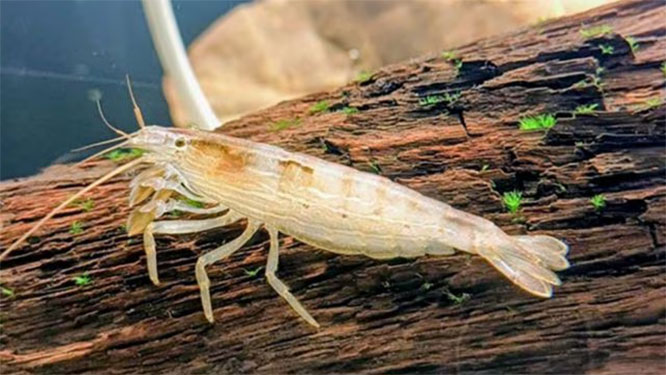
Mangaluru, Dec 7: A rare bamboo shrimp has been rediscovered on mainland India more than 70 years after it was last reported, confirming for the first time the presence of Atyopsis spinipes in the country. The find was made by researchers from the Centre for Climate Change Studies at Sathyabama Institute of Science and Technology, Chennai, during surveys in Karnataka and Odisha.

The team — shrimp expert Dr S Prakash, PhD scholar K Kunjulakshmi, and Mangaluru-based researcher Maclean Antony Santos — combined field surveys, ecological assessments and DNA analysis to identify the elusive species. Their findings, published in Zootaxa, resolve decades of taxonomic confusion stemming from a 1951 report that misidentified the species as Atyopsis moluccensis without strong evidence.

The shrimp has now been confirmed at two locations: the Mulki–Pavanje estuary near Mangaluru and the Kuakhai River in Bhubaneswar. Historical specimens from the Andaman Islands, previously labelled as A. moluccensis, were also found to be misidentified and actually belong to A. spinipes.

The rediscovery began after an aquarium hobbyist in Odisha spotted a shrimp in 2022, prompting systematic surveys across Udupi, Karwar and Mangaluru. Four female specimens were collected in Mulki and one in Odisha, all genetically matching.

Researchers warn the species may exist in very small, vulnerable populations as freshwater habitats face increasing pressure from pollution, sand mining and infrastructure development. All verified specimens have been deposited with the Zoological Survey of India for future reference.

Comments

Add new comment

  • Coastaldigest.com reserves the right to delete or block any comments.
  • Coastaldigset.com is not responsible for its readers’ comments.
  • Comments that are abusive, incendiary or irrelevant are strictly prohibited.
  • Please use a genuine email ID and provide your name to avoid reject.