




Fingerprints may soon be needed to get SIM cards

[email protected] (News Network)
July 3, 2013

Fingerprints
New Delhi, Jul 3: Noting that even the mandatory physical verification system doesn't prevent SIM cards to fall into wrong hands, the home ministry has asked the department of telecommunication (DoT) to explore an option of making it compulsory for cellphone service providers to take fingerprints or any other biometric feature of the subscriber, akin to Aadhaar, before activating the mobile numbers.

The ministry, in its note to the DoT, suggested that the department may also maintain a central database comprising biometric features of all subscribers and opt for linking it with the National Intelligence Grid (NATGRID) for keeping those data at one place from national security point of view.

An official said the department would discuss the matter with all stakeholders including telecom service providers for devising an alternative system as it was noted that the existing ones (physical verification) was not happening in all cases due to sheer competition among retailers to sell as many SIM cars as possible.

Though the system of issuing SIM cards was tightened a bit after 26\11 Mumbai terror attack when investigators found that the Lashkar-e-Taiba (LeT) terrorists had used Indian SIM cards which were procured by their local contacts on the basis of forged documents, it did not prevent its misuse.

The DoT had last year made it mandatory for a mobile service provider to physically verify an applicant before issuing a SIM card. But, the state police from across the country complained how the retailers give it a miss despite repeated warnings because they did not face strict action from the service providers.

"The issue was discussed even during the chief ministers' conference on internal security here last month when it was pointed out that how SIM cards were being procured by terrorists\criminals on the basis of forged documents in absence of retailers' and distributors' failure to adhere to the mandatory norms of physical verification," said an official.

The matter was recently also raised by the Delhi Police Commissioner Neeraj Kumar, who on May 15 wrote to the home ministry, pitching for introducing a system of getting biometric details of subscribers before issuing SIM cards to them.

Kumar had reportedly complained that the cut-throat competition among the mobile service providers had led to laxity in carrying out the prescribed physical verification of an applicant. He pointed out that the distributors were making bulk sale of SIM cards to criminals which have serious implications for national security.

Citing a recent case in which the police had caught an unauthorized retailer who had sold 490 SIM cards on the basis of forged IDs, the commissioner had pointed that no worthwhile verification was being made due to illegal nexus of distributors and employees of the service providers.

Kumar also suggested that the DoT and TRAI should be requested to impose heavy penalties and exercise stricter control.

At present, pre-activated SIM cards attract a penalty of Rs 50,000 each in addition to an immediate disconnection of the mobile service.

Comments

Add new comment

  • Coastaldigest.com reserves the right to delete or block any comments.
  • Coastaldigset.com is not responsible for its readers’ comments.
  • Comments that are abusive, incendiary or irrelevant are strictly prohibited.
  • Please use a genuine email ID and provide your name to avoid reject.
News Network
December 7,2025

SHRIMP.jpg

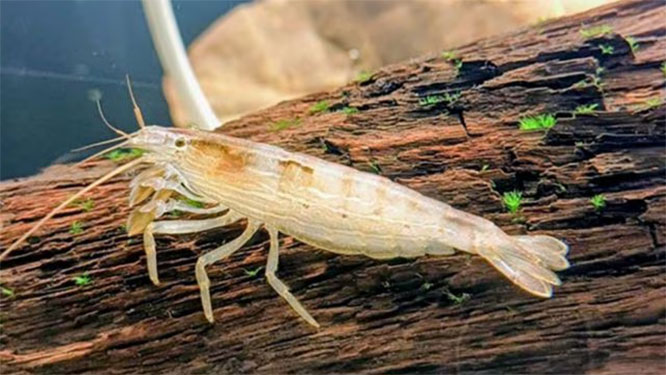
Mangaluru, Dec 7: A rare bamboo shrimp has been rediscovered on mainland India more than 70 years after it was last reported, confirming for the first time the presence of Atyopsis spinipes in the country. The find was made by researchers from the Centre for Climate Change Studies at Sathyabama Institute of Science and Technology, Chennai, during surveys in Karnataka and Odisha.

The team — shrimp expert Dr S Prakash, PhD scholar K Kunjulakshmi, and Mangaluru-based researcher Maclean Antony Santos — combined field surveys, ecological assessments and DNA analysis to identify the elusive species. Their findings, published in Zootaxa, resolve decades of taxonomic confusion stemming from a 1951 report that misidentified the species as Atyopsis moluccensis without strong evidence.

The shrimp has now been confirmed at two locations: the Mulki–Pavanje estuary near Mangaluru and the Kuakhai River in Bhubaneswar. Historical specimens from the Andaman Islands, previously labelled as A. moluccensis, were also found to be misidentified and actually belong to A. spinipes.

The rediscovery began after an aquarium hobbyist in Odisha spotted a shrimp in 2022, prompting systematic surveys across Udupi, Karwar and Mangaluru. Four female specimens were collected in Mulki and one in Odisha, all genetically matching.

Researchers warn the species may exist in very small, vulnerable populations as freshwater habitats face increasing pressure from pollution, sand mining and infrastructure development. All verified specimens have been deposited with the Zoological Survey of India for future reference.

Comments

Add new comment

  • Coastaldigest.com reserves the right to delete or block any comments.
  • Coastaldigset.com is not responsible for its readers’ comments.
  • Comments that are abusive, incendiary or irrelevant are strictly prohibited.
  • Please use a genuine email ID and provide your name to avoid reject.