




Did ambulance strike result in the death of an infant?

[email protected] (CD Network)
August 4, 2013
ambulance
Belthangady, Aug 4: Despite assurances by the Minister of Health and Family Welfare U T Khader that the on-going strike by 'Jeevarakshaka' ambulance workers across the state had not affected the public, the death of an infant in Bantwal due to lack of proper medical assistance may prove otherwise.

This incident took place in Belthangady taluk.

Hailing from a poor background, Dharnappa Poojary and Babi, residents of Koyyur in Bantwal taluk, were expecting their second child in the first week of August. During her pregnancy, Babi was staying at her maternal house in Shibaje in Belthangady taluk, and routinely visited a maternity hospital in Ujire for check-ups during her term.

In the wee hours of Friday, June 26, Babi began developing labour pains and family members immediately dialled 108 for emergency services. However, due to delay in the response of an ambulance, she had to be taken in a private vehicle for a distance till the ambulance arrived at the spot. Although she was being rushed to a hospital, Babi gave birth in the ambulance itself.

There was only a KSRTC driver in the ambulance who was not trained to hande medical emergencies. Due to the absence of trained personnel and adequate medical facilities in the ambulance, Babi was taken along with her baby boy to a nearby hospital and given first aid. The doctors advised the family to take the mother and infant to Wenlock hospital, as the baby was not given proper medical assistance following the delivery.

Unfortunately, the infant died a week later on August 2. It is said that the subsequent death of the infant occurred due to insufficient medical facility during and after delivery in the ambulance.

Since the drivers and medical staff operating the emergency ambulances have been on protest, the government has temporarily appointed KSRTC drivers to keep the service running.

Comments

Add new comment

  • Coastaldigest.com reserves the right to delete or block any comments.
  • Coastaldigset.com is not responsible for its readers’ comments.
  • Comments that are abusive, incendiary or irrelevant are strictly prohibited.
  • Please use a genuine email ID and provide your name to avoid reject.
News Network
December 7,2025

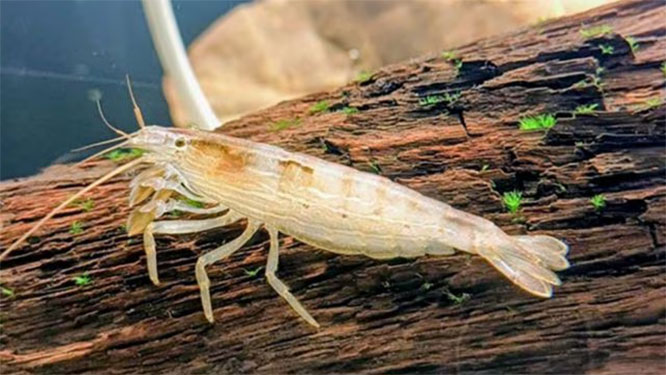
SHRIMP.jpg

Mangaluru, Dec 7: A rare bamboo shrimp has been rediscovered on mainland India more than 70 years after it was last reported, confirming for the first time the presence of Atyopsis spinipes in the country. The find was made by researchers from the Centre for Climate Change Studies at Sathyabama Institute of Science and Technology, Chennai, during surveys in Karnataka and Odisha.

The team — shrimp expert Dr S Prakash, PhD scholar K Kunjulakshmi, and Mangaluru-based researcher Maclean Antony Santos — combined field surveys, ecological assessments and DNA analysis to identify the elusive species. Their findings, published in Zootaxa, resolve decades of taxonomic confusion stemming from a 1951 report that misidentified the species as Atyopsis moluccensis without strong evidence.

The shrimp has now been confirmed at two locations: the Mulki–Pavanje estuary near Mangaluru and the Kuakhai River in Bhubaneswar. Historical specimens from the Andaman Islands, previously labelled as A. moluccensis, were also found to be misidentified and actually belong to A. spinipes.

The rediscovery began after an aquarium hobbyist in Odisha spotted a shrimp in 2022, prompting systematic surveys across Udupi, Karwar and Mangaluru. Four female specimens were collected in Mulki and one in Odisha, all genetically matching.

Researchers warn the species may exist in very small, vulnerable populations as freshwater habitats face increasing pressure from pollution, sand mining and infrastructure development. All verified specimens have been deposited with the Zoological Survey of India for future reference.

Comments

Add new comment

  • Coastaldigest.com reserves the right to delete or block any comments.
  • Coastaldigset.com is not responsible for its readers’ comments.
  • Comments that are abusive, incendiary or irrelevant are strictly prohibited.
  • Please use a genuine email ID and provide your name to avoid reject.