



Agrarian crisis, not 'theft' lowering cattle count

[email protected] (Mohit M. Rao,The Hindu)
August 19, 2013
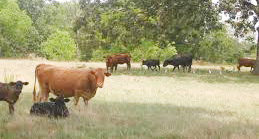
Mangalore, Aug 19: In what is an oft-quoted figure, many rightwing organisations cite the decline in cattle population – as much as 1.5 lakh cattle in five years – as a result of the “menace of cow slaughter and thefts” here. However, officials of the Department of Animal Husbandry, attribute it to a larger agrarian crisis.
cattle_grazing

The quinquennial (every five years) All India Livestock census reveals that in 2007 there were 3.96 lakh cows and 15,000 buffaloes in the district. In the 19th round of survey conducted in 2012, the provisional figures drop to 2.5 lakh cattle and 3,570 buffaloes – or 36 per cent and 75 per cent decline respectively.

To understand the decline, the figures of households involved in livestock rearing must also be seen. Not considering poultry, one in three farmers has given up their livestock in the five-year period, implying the younger generation has not continued the same agricultural practices.

Reasons

While commenting that cattle population had declined across the State- oxen are being phased out due to mechanisation of agriculture-K.V. Halagappa, Deputy Director, Department of Animal Husbandry, said the decline was far steeper in Dakshina Kannada.

With fragmented land holdings, no gomala land (pastures), a farmer has to rely on supplied fodder and feed, which was expensive, he said. “Labour is also a major problem here, while the children of farmers are moving away from agriculture. All contribute to the decline,” he said. From around 12 heads of cattle in 2008, to just two now, Giri Shankar, a farmer in Peramogeru village in Bantwal, said the cost of cattle feed and labour costs have shot up. “We don't get workers easily. We cannot sustain dairy farming along with our other agriculture activities. Only those with large herds and exclusively into diary farming can make a profit,” he said.

Though the procurement price of milk has nearly tripled in four years, these factors overweigh the benefits of cattle rearing. The economic viability is further stark when the trends in breeds of cattle are observed. A little more than half of indigenous breeds – generally low milk-yielding breeds – have gone out, while exotic crossbreeds such as Jersey have a better-off 16 per cent decline.

The cost of feed is now at Rs. 1,000 for 50 kg, and getting two people to take care of the cows is difficult, says Jagannath Shetty, farmer, Bantwal.

“I have nine cows, and I can barely sustain them. Even hay is difficult to get as paddy cultivation is also falling,” says Sucharith Shetty, farmer, Moodbidri.

Comments

Add new comment

  • Coastaldigest.com reserves the right to delete or block any comments.
  • Coastaldigset.com is not responsible for its readers’ comments.
  • Comments that are abusive, incendiary or irrelevant are strictly prohibited.
  • Please use a genuine email ID and provide your name to avoid reject.
News Network
December 7,2025

SHRIMP.jpg

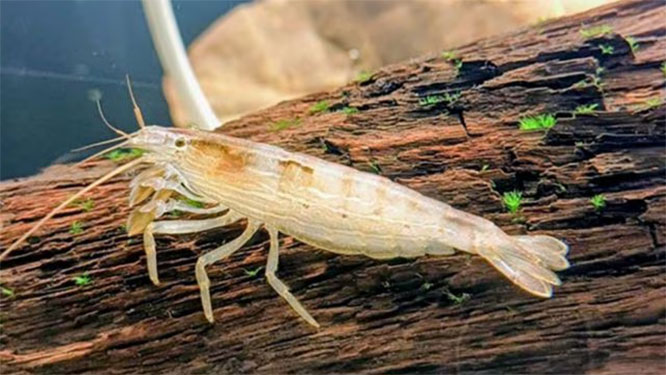
Mangaluru, Dec 7: A rare bamboo shrimp has been rediscovered on mainland India more than 70 years after it was last reported, confirming for the first time the presence of Atyopsis spinipes in the country. The find was made by researchers from the Centre for Climate Change Studies at Sathyabama Institute of Science and Technology, Chennai, during surveys in Karnataka and Odisha.

The team — shrimp expert Dr S Prakash, PhD scholar K Kunjulakshmi, and Mangaluru-based researcher Maclean Antony Santos — combined field surveys, ecological assessments and DNA analysis to identify the elusive species. Their findings, published in Zootaxa, resolve decades of taxonomic confusion stemming from a 1951 report that misidentified the species as Atyopsis moluccensis without strong evidence.

The shrimp has now been confirmed at two locations: the Mulki–Pavanje estuary near Mangaluru and the Kuakhai River in Bhubaneswar. Historical specimens from the Andaman Islands, previously labelled as A. moluccensis, were also found to be misidentified and actually belong to A. spinipes.

The rediscovery began after an aquarium hobbyist in Odisha spotted a shrimp in 2022, prompting systematic surveys across Udupi, Karwar and Mangaluru. Four female specimens were collected in Mulki and one in Odisha, all genetically matching.

Researchers warn the species may exist in very small, vulnerable populations as freshwater habitats face increasing pressure from pollution, sand mining and infrastructure development. All verified specimens have been deposited with the Zoological Survey of India for future reference.

Comments

Add new comment

  • Coastaldigest.com reserves the right to delete or block any comments.
  • Coastaldigset.com is not responsible for its readers’ comments.
  • Comments that are abusive, incendiary or irrelevant are strictly prohibited.
  • Please use a genuine email ID and provide your name to avoid reject.