



Gulf countries among world's top generators of food waste

coastaldigest.com news network
July 17, 2014

Food wastage
Dubai, Jul 17: The six-member countries of the Gulf Cooperation Council (GCC) generate over 150 million tonnes of municipal waste every year, standing out among the world's top generators of food waste, according to a new report.

The GCC countries comprising Bahrain, Kuwait, Oman, Qatar, Saudi Arabia and the UAE, are expected to generate more waste during the Muslim fasting month of Ramadan, says a 2014 report released by the Environment Agency — Abu Dhabi.

The food waste in the UAE comprises 39 per cent of an average household's organic waste, but during Ramadan, as per the estimates by Dubai municipality, this ratio increases to roughly 55 per cent or 1,850 tonnes.

In Bahrain, food waste is expected to exceed 400 tonnes per day during Ramadan, according to Bahrain's Supreme Council for Environment Waste Disposal.

Most GCC countries face a dearth in arable land and fresh water sources thus, depend heavily upon imported food staples to meet domestic food demand.

The UAE, Bahrain, Qatar and Oman import over 90 per cent of their food requirements and rely heavily on desalination for their potable water needs.

"While the month of Ramadan focuses on introspection, community service and expression of gratitude, the way in which many people place an emphasis on food can pose a problem," said Jeroen Vincent, COO of global waste management company averda.

"Food waste isn't new, and it most definitely isn't just an issue in the GCC, as it forms the third-largest component of generated waste by weight globally. Statistics show one third of the global food supply, around 1.3 billion tonnes, is wasted every year," Vincent said.

"High income groups usually generate more food waste per capita, primarily due to the mindset that there always needs to be enough to eat at iftar, even if most of the food ends up in the landfill," he said.

Comments

Add new comment

  • Coastaldigest.com reserves the right to delete or block any comments.
  • Coastaldigset.com is not responsible for its readers’ comments.
  • Comments that are abusive, incendiary or irrelevant are strictly prohibited.
  • Please use a genuine email ID and provide your name to avoid reject.
News Network
December 19,2025

Mangaluru: In a decisive move to tackle the city’s deteriorating sanitation infrastructure, the Mangaluru City Corporation (MCC) has announced a massive ₹1,200 crore action plan to overhaul its underground drainage (UGD) network.

The initiative, spearheaded by Deputy Commissioner and MCC Administrator Darshan HV, aims to bridge "missing links" in the current system that have left residents grappling with overflowing sewage and environmental hazards.

The Breaking Point

The announcement follows a high-intensity phone-in session on Thursday, where the DC was flooded with grievances from frustrated citizens. Residents, including Savithri from Yekkur, described a harrowing reality: raw sewage from apartments leaking into stormwater drains, creating a "permanent stink" and turning residential zones into mosquito breeding grounds.

"We are facing immense difficulties due to the stench and the health risks. Local officials have remained silent until now," one resident reported during the session.

The Strategy: A Six-Year Vision

DC Darshan HV confirmed that the proposed plan is not a temporary patch but a comprehensive six-year roadmap designed to accommodate Mangaluru’s projected population growth. Key highlights of the plan include:

•    Infrastructure Expansion: Laying additional pipelines to connect older neighborhoods to the main grid.

•    STP Crackdown: Stricter enforcement of Sewage Treatment Plant (STP) regulations. While new apartments are required to have functional STPs, many older buildings lack them entirely, and several newer units are reportedly non-functional.

•    Budgetary Push: The plan has already been discussed with the district in-charge minister and the Secretary of the Urban Development Department. It is slated for formal presentation in the upcoming state budget.

Comments

Add new comment

  • Coastaldigest.com reserves the right to delete or block any comments.
  • Coastaldigset.com is not responsible for its readers’ comments.
  • Comments that are abusive, incendiary or irrelevant are strictly prohibited.
  • Please use a genuine email ID and provide your name to avoid reject.
News Network
December 15,2025

Mangaluru, Dec 15: Educational institutions in Mangaluru that rely on the popular Mangala Stadium for their annual sports events are bracing for an inconvenience as the city's key sporting venue is set to close its gates for a significant upgrade. The stadium is expected to be unavailable for approximately two months starting from January 15, 2026.

The closure is necessitated by a proposed overhaul of the stadium's facilities, with a special focus on upgrading the synthetic track. Pradeep Dsouza, Assistant Director of the District of Youth Empowerment and Sports (DYES), Dakshina Kannada, confirmed the development.

"Experts have visited the stadium, conducted a thorough inspection, and have given the go-ahead for a complete makeover," Dsouza stated. "Funds have been allocated for the project, and we are currently awaiting the final green signal from state officials to commence the work. We anticipate that the work will likely begin in the second week of January. Consequently, we have stopped renting out the stadium to colleges and other organizations in preparation for the upgrade."

The timing presents a logistical challenge for colleges, as many schools have already concluded their sports meets.

"Colleges will now be organizing their events and will need to find alternative locations to host their sports meets," Dsouza added. He suggested a few potential venues, including the Dakshina Kannada police ground, University College grounds, Panambur grounds, Swaraj Maidan in Moodbidri, and the Mangalore University sports grounds in Konaje.

However, many institutions note that finding a comparable venue will be difficult. While the DK police ground and University College grounds are closer to the city center, they do not possess the extensive facilities and infrastructure offered by Mangala Stadium.

Dr. P Dayananda Pai - P Satisha Govt First Grade College, Carstreet, is one such institution dependent on the stadium. Principal Jayakar Bhandary expressed hope for a swift completion of the work. "We expect the work to be completed at the earliest. If not, we will be forced to look for other venues to host the sports day for our students," Bhandary said, highlighting the pressing need for the city's main sporting facility.

Comments

Add new comment

  • Coastaldigest.com reserves the right to delete or block any comments.
  • Coastaldigset.com is not responsible for its readers’ comments.
  • Comments that are abusive, incendiary or irrelevant are strictly prohibited.
  • Please use a genuine email ID and provide your name to avoid reject.
News Network
December 7,2025

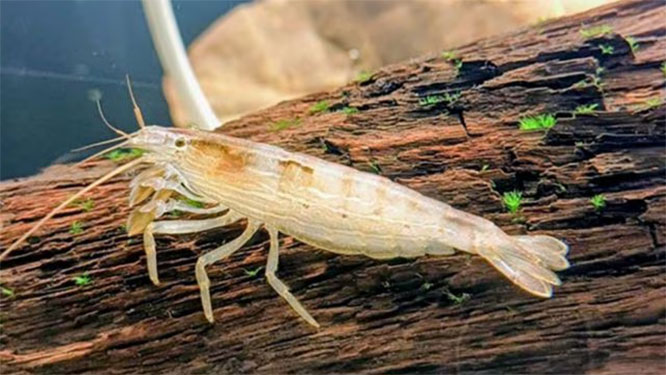
SHRIMP.jpg

Mangaluru, Dec 7: A rare bamboo shrimp has been rediscovered on mainland India more than 70 years after it was last reported, confirming for the first time the presence of Atyopsis spinipes in the country. The find was made by researchers from the Centre for Climate Change Studies at Sathyabama Institute of Science and Technology, Chennai, during surveys in Karnataka and Odisha.

The team — shrimp expert Dr S Prakash, PhD scholar K Kunjulakshmi, and Mangaluru-based researcher Maclean Antony Santos — combined field surveys, ecological assessments and DNA analysis to identify the elusive species. Their findings, published in Zootaxa, resolve decades of taxonomic confusion stemming from a 1951 report that misidentified the species as Atyopsis moluccensis without strong evidence.

The shrimp has now been confirmed at two locations: the Mulki–Pavanje estuary near Mangaluru and the Kuakhai River in Bhubaneswar. Historical specimens from the Andaman Islands, previously labelled as A. moluccensis, were also found to be misidentified and actually belong to A. spinipes.

The rediscovery began after an aquarium hobbyist in Odisha spotted a shrimp in 2022, prompting systematic surveys across Udupi, Karwar and Mangaluru. Four female specimens were collected in Mulki and one in Odisha, all genetically matching.

Researchers warn the species may exist in very small, vulnerable populations as freshwater habitats face increasing pressure from pollution, sand mining and infrastructure development. All verified specimens have been deposited with the Zoological Survey of India for future reference.

Comments

Add new comment

  • Coastaldigest.com reserves the right to delete or block any comments.
  • Coastaldigset.com is not responsible for its readers’ comments.
  • Comments that are abusive, incendiary or irrelevant are strictly prohibited.
  • Please use a genuine email ID and provide your name to avoid reject.