US eyes more cuts in Indian imports of Iranian oil

May 7, 2012

clinton

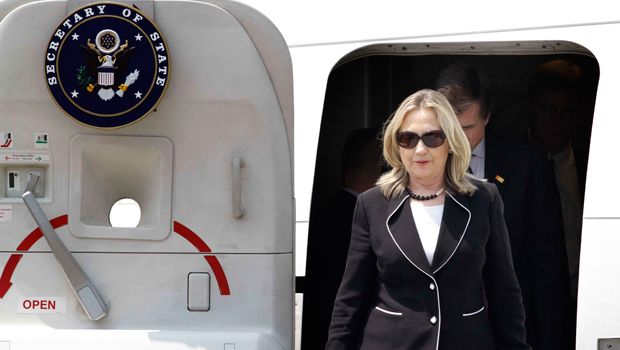
Kolkata, May 7: India: Hoping to wean India from Iranian oil imports, US Secretary of State Hillary Rodham Clinton is urging Indian leaders to explore alternative suppliers as she opens a three-day visit to the energy-starved South Asian giant that will also focus on regional security and easing trade restrictions.

Clinton arrived in the eastern city of Kolkata — the first secretary of state to visit the former colonial capital of 14 million — on Sunday after visits to China and Bangladesh as officials traveling with her said the Iranian oil imports would top an agenda that includes India’s relations with nuclear rival Pakistan and the future of Afghanistan.

India has huge energy needs to fuel its rapid growth and has made some progress in easing its dependence on Iranian oil. But a senior US official said the United States wants to see more.

The official, who spoke on condition of anonymity to preview Clinton’s private discussions in Kolkata and New Delhi, said the “trend lines are good” but “we really need to receive assurances that they are going to continue to make good progress.”

Like other major consumers of Iranian oil, India could face US sanctions by the end of June if the Obama administration determines it has not made significant cuts in imports under a law aimed at squeezing Iran’s petroleum industry to press the country to comply with international demands over its nuclear program.

A dozen European nations and Japan have already been spared from those sanctions after the administration determined they had substantially reduced their Iranian oil imports. India, along with China, South Korea, Turkey and South Africa, has still not received such waivers.

India imports around 70 percent of its oil, and about 9 percent of the imports are from Iran. The US official said India had recently stepped up imports of oil from Saudi Arabia to make up for the reduction in Iranian oil and that the US was eager to see the Indians explore other alternatives. Iran is India’s second-largest crude oil supplier after Saudi Arabia and according to media reports imports 550,000 barrels a day.

India has been pushing its oil companies to cut back their crude imports from Iran and an Indian official, speaking on condition of anonymity per custom, said the government is willing to discuss the matter. The official expressed hope India will be exempted from the sanctions.

“We believe we have a strong case, which we will put forth,” the official said.

India and Iran reached a deal earlier this year that would allow India to pay for about 45 percent its Iranian oil purchases in rupees. Iran would then use the Indian currency to buy goods from India.

International economic sanctions on Iran had made oil trade difficult, because Indian oil importers had to scramble to find banks willing to handle transactions with Tehran. The barter exchange would help India pay for the Iranian crude without resorting to dollar payments, thus bypassing international banks.

An Indian delegation visited Iran in March to promote Indian goods including machinery, iron, steel, minerals and automobiles and Clinton’s visit coincides with that of a large Iranian group that will be in New Delhi to explore Indian goods and services Tehran can buy to offset the enormous rupee payments running into billions of dollars that Iran has accumulated.

The US official downplayed the presence of the Iranian delegation, saying. “I don’t think we are too concerned about it.” The official added that the US special envoy for global energy issues, Carlos Pasqual, will visit India later in May to follow up on Clinton’s talks, the official said.

In her talks with Indian officials, Clinton will also be pressing for the country to continue economic reforms and trade liberalization, including dropping restrictions on foreign investment in the finance sector and allowing large western retailers to open up, the US official said.

Before heading to New Delhi on Monday, Clinton will meet in Kolkata with Chief Minister Mamata Banerjee, the top elected leader of West Bengal state. Banerjee, a key partner of India’s ruling coalition, has in recent months opposed many of the Prime Minister Manmohan Singh-led Congress party’s plans to carry out economic reforms.

Clinton is expected to push for expanding US investment opportunities in West Bengal and seek Banerjee’s views on the entry of WalMart-type multi-brand retailers into India. Banerjee has been a vocal opponent of opening up India’s retail sector saying it would harm poor shop owners.

In talks with Singh in New Delhi, Clinton will look at regional security issues and the India-US Strategic Dialogue meeting scheduled to be held in Washington next month. India’s major concern, however, is the security situation in Afghanistan following the drawdown of NATO troops from the war-torn country in 2014. India has been taking a lead in the reconstruction efforts in Afghanistan and plans to host a regional investors’ conference on Afghanistan in June.

The US will also be looking at trade and investment opportunities in India. With its economy expected to grow at around 7 percent over the next few years, India is an important market for US exports. Trade between the two countries is expected to cross $100 billion this year.

However, some of the sheen has worn off the high expectations from US-India relations in the years following the signing of a landmark civil nuclear deal in 2008. Washington was riled when India chose a French company for an $11 billion order for 126 fighter jets for the Indian air force. India has sourced numerous other big ticket defense purchases from US companies.

There is also a growing perception in Washington that the Indian government has not delivered on economic reforms and has been dragging its feet on implementing key nuclear legislation that would enable US companies to invest in India.

Over the past year, Singh’s government has been bogged down by a series of scandals and resistance from its coalition partners that have brought economic reforms to a halt.

Comments

Add new comment

  • Coastaldigest.com reserves the right to delete or block any comments.
  • Coastaldigset.com is not responsible for its readers’ comments.
  • Comments that are abusive, incendiary or irrelevant are strictly prohibited.
  • Please use a genuine email ID and provide your name to avoid reject.
News Network
December 3,2025

indigo.jpg

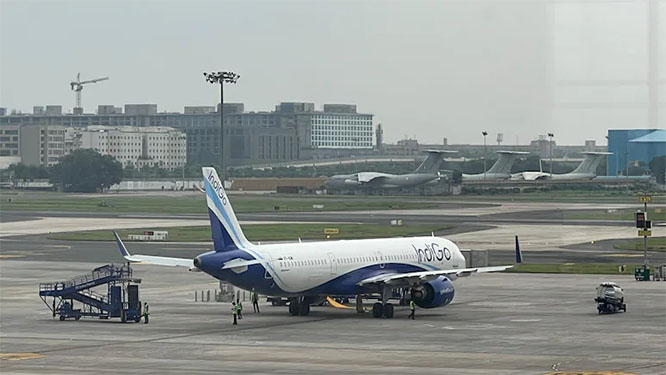
IndiGo, India’s largest airline, is battling one of its worst operational disruptions in recent years, with hundreds of delays and cancellations throwing domestic travel into chaos.

Government data on Tuesday showed its on-time performance plunging to 35%, an unusual dip for a carrier long associated with punctuality.

By Wednesday afternoon, airports in Delhi, Mumbai, Bengaluru and Hyderabad had collectively reported close to 200 cancellations, stranding travellers across the country.

Crew Shortage After New Duty Norms

A major trigger behind the meltdown is a severe crew shortage, especially among pilots, following the rollout of revised Flight Duty Time Limitation (FDTL) norms last month.

The rules mandate longer rest hours and more humane rosters — a shift IndiGo has struggled to incorporate across its vast network.

Sources said several flights were grounded due to lack of cabin crew, while some delays stretched upwards of eight hours.

With IndiGo controlling over 60% of India’s domestic aviation market, the ripple effect has impacted airports nationwide.

IndiGo Issues Apology, Lists “Compounding Factors”

In a statement, IndiGo acknowledged the large-scale disruption:

“We sincerely apologise to customers. A series of unforeseen operational challenges — technology glitches, winter schedule changes, adverse weather, system congestion and updated FDTL norms — created a compounding impact that could not have been anticipated.”

To stabilise operations, the airline has begun calibrated schedule adjustments for the next 48 hours, aiming to restore punctuality. Affected passengers are being offered refunds or alternate travel arrangements, IndiGo said.

What the FDTL Rules Require

The FDTL norms, designed to reduce pilot fatigue, cap duty and flying hours as follows:
•    Maximum 8 hours of flying per day
•    35 hours per week
•    125 hours per month
•    1,000 hours per year

Crew must also receive rest equalling twice the flight duration, with a minimum 10-hour rest period in any 24-hour window.

The DGCA introduced these limits to enhance flight safety.

Hyderabad: 33 Flights Cancelled, Long Queues Reported

Hyderabad’s Rajiv Gandhi International Airport saw heavy early-morning crowds as 33 IndiGo flights (arrivals and departures) were cancelled.

The airport clarified on X that operations were normal, advising passengers to contact IndiGo directly for latest flight status.

Cancellations included flights to and from Visakhapatnam, Goa, Ahmedabad, Delhi, Bengaluru, Chennai, Madurai, Hubli, Bhopal and Bhubaneswar.

Bengaluru: 42 Flights Disrupted

Bengaluru’s Kempegowda International Airport recorded 42 cancellations — 22 arrivals and 20 departures — affecting routes to Delhi, Mumbai, Chennai, Hyderabad, Goa, Kolkata and Lucknow.

Passengers Vent on Social Media

Irate travellers took to X to share their experiences. One passenger stranded in Hyderabad wrote: “I have been here since 3 a.m. and missed an important meeting.”

Another said: “My flight was pushed from 1:55 PM to 2:55 PM and now 4:35 PM. I was informed only three minutes before entering the airport.”

Delhi Airport Hit by Tech Glitch

At Delhi Airport, the disruption deepened due to a slowdown in the Amadeus system — used for reservations, check-ins and departure control.

The technical issue led to longer queues and sluggish processing, adding to delays already worsened by staff shortages.

Comments

Add new comment

  • Coastaldigest.com reserves the right to delete or block any comments.
  • Coastaldigset.com is not responsible for its readers’ comments.
  • Comments that are abusive, incendiary or irrelevant are strictly prohibited.
  • Please use a genuine email ID and provide your name to avoid reject.
News Network
November 21,2025

Tejas.jpg

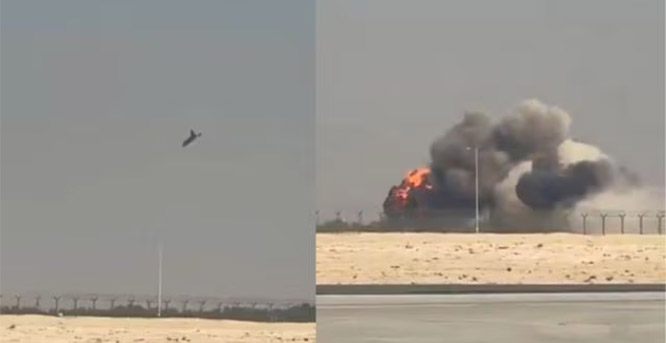
An Indian Air Force (IAF) Tejas fighter jet crashed on Friday, November 21, afternoon during its aerial demonstration at the Dubai Air Show, plunging to the ground at around 2:10 pm local time while performing a manoeuvre before thousands of spectators.

The IAF confirmed the incident, stating that a Tejas aircraft participating in the show had crashed and that further details were being gathered. An Air Force spokesperson said more information would be shared after initial assessments.

The crash sent thick black smoke billowing into the sky near the airport, causing panic among visitors, including families and children who had gathered to watch the display. Authorities have not yet confirmed whether the pilot managed to eject before the aircraft went down. Emergency response teams rushed to the scene, and officials have not released information on casualties or damage so far.

The Tejas is a 4.5-generation, multi-role fighter aircraft developed indigenously by Hindustan Aeronautics Limited (HAL). Designed for versatility, it is capable of offensive air support, close combat, ground attack missions and maritime operations. The aircraft family includes single-seat fighters and twin-seat trainers for both the Air Force and Navy.

HAL describes the latest version, the LCA Mk1A, as the most advanced in the series, featuring an AESA radar, an upgraded electronic warfare suite with radar-warning and self-protection jamming, smart multifunction displays, a digital map generator, a combined interrogator–transponder system and a modern radio altimeter. These enhancements significantly improve the aircraft’s combat capability and survivability.

Further updates from IAF and UAE authorities are awaited.

Comments

Add new comment

  • Coastaldigest.com reserves the right to delete or block any comments.
  • Coastaldigset.com is not responsible for its readers’ comments.
  • Comments that are abusive, incendiary or irrelevant are strictly prohibited.
  • Please use a genuine email ID and provide your name to avoid reject.
News Network
December 4,2025

indigoflight.jpg

Domestic carrier IndiGo has cancelled over 180 flights from three major airports — Mumbai, Delhi and Bengaluru — on Thursday, December 4, as the airline struggles to secure the required crew to operate its flights in the wake of new flight-duty and rest-period norms for pilots.

While the number of cancellations at Mumbai airport stands at 86 (41 arrivals and 45 departures) for the day, at Bengaluru, 73 flights have been cancelled, including 41 arrivals, according to a PTI report that quoted sources.

"IndiGo cancelled over 180 flights on Thursday at three airports-Mumbai, Delhi and Bengaluru," the source told the news agency.

Besides, it had cancelled as many as 33 flights at Delhi airport for Thursday, the source said, adding, "The number of cancellations is expected to be higher by the end of the day."

The Gurugram-based airline's On-Time Performance (OTP) nosedived to 19.7 per cent at six key airports — Delhi, Mumbai, Chennai, Kolkata, Bengaluru and Hyderabad — on December 3, as it struggled to get the required crew to operate its services, down from almost half of December 2, when it was 35 per cent.

"IndiGo has been facing acute crew shortage since the implementation of the second phase of the FDTL (Flight Duty Time Limitations) norms, leading to cancellations and huge delays in its operations across the airports," a source had told PTI on Wednesday.

Chaos continued at several major airports for the third day on Thursday because of the cancellations.

A spokesperson for the Kempegowda International Airport (KIA) in Bengaluru said that 73 IndiGo flights had been cancelled on Thursday.

At least 150 flights were cancelled and dozens of others delayed on Wednesday, airport sources said, leaving thousands of travellers stranded, according to news agency Reuters.

The Directorate General of Civil Aviation (DGCA) has said it is investigating IndiGo flight disruptions and has asked the airline to submit the reasons for the current situation, as well as its plans to reduce flight cancellations and delays.

It may be mentioned here that the pilots' body, Federation of Indian Pilots (FIP), has alleged that IndiGo, despite getting a two-year preparatory window before the full implementation of new flight duty and rest period norms for cockpit crew, "inexplicably" adopted a "hiring freeze".

The FIP said it has urged the safety regulator, the DGCA, not to approve airlines' seasonal flight schedules unless they have adequate staff to operate their services "safely and reliably" in accordance with the New Flight Duty Time Limitations (FDTL) norms.

In a letter to the DGCA late on Wednesday, the FIP urged the DGCA to consider re-evaluating and reallocating slots to other airlines, which have the capacity to operate them without disruption during the peak holiday and fog season if IndiGo continues to "fail in delivering on its commitments to passengers due to its own avoidable staffing shortages."

Comments

Add new comment

  • Coastaldigest.com reserves the right to delete or block any comments.
  • Coastaldigset.com is not responsible for its readers’ comments.
  • Comments that are abusive, incendiary or irrelevant are strictly prohibited.
  • Please use a genuine email ID and provide your name to avoid reject.