



It is Rs37,80,000,000,000 loss to the country

August 18, 2012
coal_block

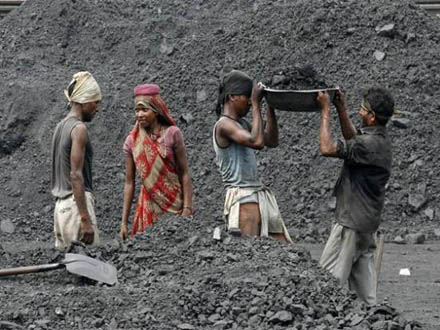
New Delhi, August 18: The CAG reports on allocation of coal blocks, ultra mega power projects and public private partnership in Indira Gandhi international airport have put the UPA government in a tight spot as the revenue loss from these projects amount to a whopping Rs3.78 lakh crore approximately.

Terming it the “biggest ever scam”, the Opposition immediately went for the government’s jugular. For the next few days, one can expect Parliament to witness pandemonium over this as the BJP-led NDA sharpens its claws and prepares to launch a frontal assault on the government.

To make the calculation simpler, let us look at the breakup: For coal allocation, the loss is Rs1.86 lakh crore, for the power projects it is 0.29 lakh crore and for the Indira Gandhi international airport 1.63 lakh crore (as quoted by the Delhi International Airport Limited). The CAG has a conservative figure of Rs24,000 crore.

For the government, this was a huge loss of face because it was prime minister Manmohan Singh who held charge of the coal portfolio when the coal blocks allocations were done. Going by the figures revealed by the CAG (Comptroller and Auditor General), the coal block allocation scam alone is the biggest ever and has caused the government a staggering loss of Rs 1.86 lakh crore. This surpasses the figure of the 2G scam, which hovered around Rs 1.76 lakh crore.

Even as the Opposition demanded Singh’s resignation, the Congress fielded Manish Tiwari to take the brunt of the NDA criticism. Tiwari was scathing in his attack on the CAG reports.

“When the coal blocks have been allotted for captive use and the coal is not for sale, how can the auditor arrive at any figure of the gain that would accrue to the allottees?” he asked.

Stressing that even in the 2G case, the Supreme Court had not endorsed the CAG’s concept of a presumptive loss, Tiwari said the CAG’s calculations have, in fact, no basis.

On the other hand, summarily dismissing the Opposition’s demand for Singh’s resignation, Union coal minister Sriprakash Jaiswal said, “The ministry does not agree with the assessments made by the auditor. There was nothing wrong with the process of finalising the allottees as it was done under the existing process.”

The BJP was unfazed by the Congress logic and its assertions against the CAG. The party made a simple point. It went on insisting that Singh should take moral responsibility and resign. After all, between 2004 and 2009, Singh was for the most part the minister for coal except for brief periods when Jharkhand Mukti Morcha leader Shibu Soren took charge of the portfolio.

BJP leaders Sushma Swaraj and Arun Jaitley came down heavily on the prime minister holding him directly responsible for the loss of Rs1.86 lakh crore to the exchequer. The BJP leaders pointed out that the CAG had shown how the government had not implemented its own decision to allow competitive bidding — a decision which was taken on June 18, 2004.

“He [Singh] has to seriously introspect, impose on himself the moral censure of quitting himself,” Jaitley said.

Swaraj said the party would go on demanding the resignation of the prime minister in Parliament.

In these politically impactful reports, the CAG has slammed the UPA government for delaying the competitive bidding process in the allocation of coal blocks. According to the report tabled in Parliament, 57 coal blocks were allocated to private sector companies that may have resulted in windfall profit for the companies while the government suffered heavy losses.

In another report on ultra mega power projects, the CAG has questioned the government’s decision to allow Reliance Power to use excess coal from the allocated blocks for its other projects.

According to the CAG report, Reliance Power, at the time the contract was awarded, had said the company would be able to use 20 million tonnes from the two blocks and there would be sufficient coal for the Sasan UMPP.

In the same report, the CAG has urged the government to review the award of the Chhatrasaal coal block to Reliance Power for providing level playing field to other power developers. The CAG has pegged the profit of the private power company to Rs29,033 crore.

These three critical reports meant yet another beating for Congress that already has a battered image. Already, the government, suffering from a policy stasis because of a lack of political consensus, has failed to defend itself in the face of huge and unprecedented corruption charges.

Now, the coal block allocation scam threatens to taint the Mr Clean persona of the prime minister. The Congress will require a lot of positive energy to emerge from this crisis with its head held high.

Comments

Add new comment

  • Coastaldigest.com reserves the right to delete or block any comments.
  • Coastaldigset.com is not responsible for its readers’ comments.
  • Comments that are abusive, incendiary or irrelevant are strictly prohibited.
  • Please use a genuine email ID and provide your name to avoid reject.
News Network
December 2,2025

A major upgrade in safety and monitoring is planned for Haj 2026, with every Indian pilgrim set to receive a Haj Suvidha smart wristband linked to the official Haj Suvidha mobile app. The initiative aims to support pilgrims—especially senior citizens—who may struggle with smartphones during the 45-day journey.

What the Smart Wristband Will Do

Officials said the device will come with:
•    Location tracking
•    Pedometer
•    SOS emergency button
•    Qibla compass
•    Prayer timings
•    Basic health monitoring

SP Tiwari, secretary of the UP State Haj Committee, said the goal is to make the pilgrimage safer and more comfortable.

“Most Hajis are elderly and not comfortable with mobile apps,” he said. “The smartwatch will help locate pilgrims who forget their way or cannot communicate their location.”

The wristbands will be monitored by the Consulate General of India in Saudi Arabia, similar to mobile tracking via the Haj Suvidha App.

Free Distribution and Training

•    Smart wristbands will be given free of cost.
•    Training for pilgrims will be conducted between January and February 2026.
•    Sample units will reach state Haj committees soon.
•    Final devices will be distributed as pilgrims begin their journey.

New Rules for Accommodation

Two major decisions have also been finalised for Haj 2026:
1.    Separate rooms for men and women – including married couples. They may stay on the same floor but must occupy different rooms, following stricter Saudi guidelines.
2.    Cooking banned – gas cylinders will not be allowed; all meals will be provided through official catering services arranged by the Haj Committee of India.

These decisions were finalised during a meeting of the Haj Committee of India and state representatives in Mumbai.

Haj Suvidha App Launched Earlier

The government launched the Haj Suvidha App in 2024, offering:

•    Training modules
•    Accommodation and flight details
•    Baggage information
•    SOS and translation tools
•    Grievance redressal

Haj 2026 Quota and Key States

•    India’s total Haj quota for 2026: 1,75,025 pilgrims
•    70% (1,25,000) allotted to the Haj Committee of India
•    30% (around 50,000) reserved for Haj Group Organisers

Uttar Pradesh has the largest allocation (around 30,000 seats), though approximately 18,000 pilgrims are expected to go this year. States with high pilgrim numbers include Kerala, Maharashtra and Gujarat.

Dates of Haj 2026

The pilgrimage is scheduled to take place from 24 May to 29 May, 2026 (tentative).
Haj is one of the five pillars of Islam and is mandatory for Muslims who meet the required conditions.

Comments

Add new comment

  • Coastaldigest.com reserves the right to delete or block any comments.
  • Coastaldigset.com is not responsible for its readers’ comments.
  • Comments that are abusive, incendiary or irrelevant are strictly prohibited.
  • Please use a genuine email ID and provide your name to avoid reject.
News Network
December 3,2025

indigo.jpg

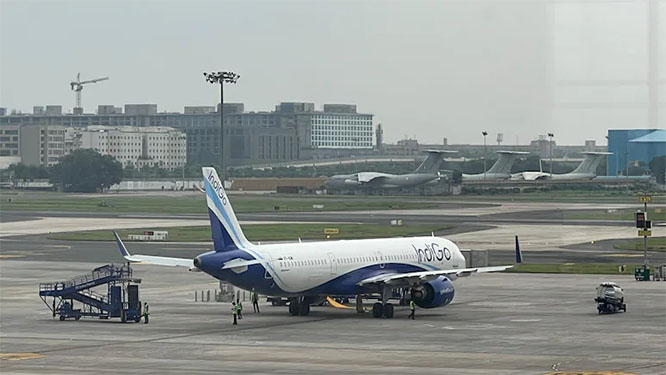
IndiGo, India’s largest airline, is battling one of its worst operational disruptions in recent years, with hundreds of delays and cancellations throwing domestic travel into chaos.

Government data on Tuesday showed its on-time performance plunging to 35%, an unusual dip for a carrier long associated with punctuality.

By Wednesday afternoon, airports in Delhi, Mumbai, Bengaluru and Hyderabad had collectively reported close to 200 cancellations, stranding travellers across the country.

Crew Shortage After New Duty Norms

A major trigger behind the meltdown is a severe crew shortage, especially among pilots, following the rollout of revised Flight Duty Time Limitation (FDTL) norms last month.

The rules mandate longer rest hours and more humane rosters — a shift IndiGo has struggled to incorporate across its vast network.

Sources said several flights were grounded due to lack of cabin crew, while some delays stretched upwards of eight hours.

With IndiGo controlling over 60% of India’s domestic aviation market, the ripple effect has impacted airports nationwide.

IndiGo Issues Apology, Lists “Compounding Factors”

In a statement, IndiGo acknowledged the large-scale disruption:

“We sincerely apologise to customers. A series of unforeseen operational challenges — technology glitches, winter schedule changes, adverse weather, system congestion and updated FDTL norms — created a compounding impact that could not have been anticipated.”

To stabilise operations, the airline has begun calibrated schedule adjustments for the next 48 hours, aiming to restore punctuality. Affected passengers are being offered refunds or alternate travel arrangements, IndiGo said.

What the FDTL Rules Require

The FDTL norms, designed to reduce pilot fatigue, cap duty and flying hours as follows:
•    Maximum 8 hours of flying per day
•    35 hours per week
•    125 hours per month
•    1,000 hours per year

Crew must also receive rest equalling twice the flight duration, with a minimum 10-hour rest period in any 24-hour window.

The DGCA introduced these limits to enhance flight safety.

Hyderabad: 33 Flights Cancelled, Long Queues Reported

Hyderabad’s Rajiv Gandhi International Airport saw heavy early-morning crowds as 33 IndiGo flights (arrivals and departures) were cancelled.

The airport clarified on X that operations were normal, advising passengers to contact IndiGo directly for latest flight status.

Cancellations included flights to and from Visakhapatnam, Goa, Ahmedabad, Delhi, Bengaluru, Chennai, Madurai, Hubli, Bhopal and Bhubaneswar.

Bengaluru: 42 Flights Disrupted

Bengaluru’s Kempegowda International Airport recorded 42 cancellations — 22 arrivals and 20 departures — affecting routes to Delhi, Mumbai, Chennai, Hyderabad, Goa, Kolkata and Lucknow.

Passengers Vent on Social Media

Irate travellers took to X to share their experiences. One passenger stranded in Hyderabad wrote: “I have been here since 3 a.m. and missed an important meeting.”

Another said: “My flight was pushed from 1:55 PM to 2:55 PM and now 4:35 PM. I was informed only three minutes before entering the airport.”

Delhi Airport Hit by Tech Glitch

At Delhi Airport, the disruption deepened due to a slowdown in the Amadeus system — used for reservations, check-ins and departure control.

The technical issue led to longer queues and sluggish processing, adding to delays already worsened by staff shortages.

Comments

Add new comment

  • Coastaldigest.com reserves the right to delete or block any comments.
  • Coastaldigset.com is not responsible for its readers’ comments.
  • Comments that are abusive, incendiary or irrelevant are strictly prohibited.
  • Please use a genuine email ID and provide your name to avoid reject.
News Network
November 21,2025

Tejas.jpg

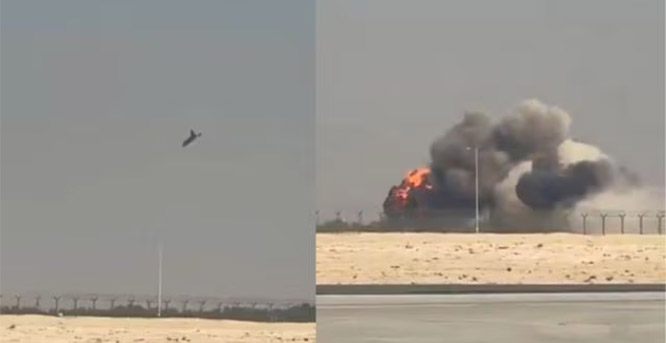
An Indian Air Force (IAF) Tejas fighter jet crashed on Friday, November 21, afternoon during its aerial demonstration at the Dubai Air Show, plunging to the ground at around 2:10 pm local time while performing a manoeuvre before thousands of spectators.

The IAF confirmed the incident, stating that a Tejas aircraft participating in the show had crashed and that further details were being gathered. An Air Force spokesperson said more information would be shared after initial assessments.

The crash sent thick black smoke billowing into the sky near the airport, causing panic among visitors, including families and children who had gathered to watch the display. Authorities have not yet confirmed whether the pilot managed to eject before the aircraft went down. Emergency response teams rushed to the scene, and officials have not released information on casualties or damage so far.

The Tejas is a 4.5-generation, multi-role fighter aircraft developed indigenously by Hindustan Aeronautics Limited (HAL). Designed for versatility, it is capable of offensive air support, close combat, ground attack missions and maritime operations. The aircraft family includes single-seat fighters and twin-seat trainers for both the Air Force and Navy.

HAL describes the latest version, the LCA Mk1A, as the most advanced in the series, featuring an AESA radar, an upgraded electronic warfare suite with radar-warning and self-protection jamming, smart multifunction displays, a digital map generator, a combined interrogator–transponder system and a modern radio altimeter. These enhancements significantly improve the aircraft’s combat capability and survivability.

Further updates from IAF and UAE authorities are awaited.

Comments

Add new comment

  • Coastaldigest.com reserves the right to delete or block any comments.
  • Coastaldigset.com is not responsible for its readers’ comments.
  • Comments that are abusive, incendiary or irrelevant are strictly prohibited.
  • Please use a genuine email ID and provide your name to avoid reject.