No minimum balance in your SBI account? Pay fine from April 1

March 4, 2017

Mumbai, Mar 4: From the beginning of the next financial year (April 1), failing to maintain a monthly average balance (MAB) in your State Bank of India (SBI) savings accounts will attract a charge.
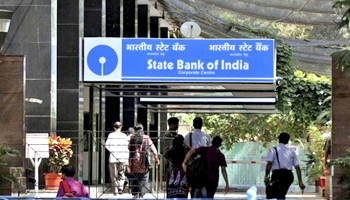
sbi
SBI had suspended this charge in July 2012 to expand its customer base and generate low-cost deposits, as those in savings account earn interest rate of only 4 per cent. The bank said it is resuming the charge to partly cover costs for maintaining systems and operations of savings accounts. The charge will be calculated based on the gap between the MAB and the actual balance in the accounts.

According to an SBI communication, MAB for those with accounts at branches in metropolitan areas would be Rs 5,000. If the difference between the MAB and the actual amount in the account is 50 per cent or Rs 2,500, SBI will slap a charge of Rs 50. If the difference is between 50 and 75 per cent, SBI will charge Rs 75, and till 100 per cent, it will charge Rs 100.

For rural areas, MAB is lower — Rs 1,000. The penalty for not maintaining MAB is also much lower.

A senior SBI executive said the bank had, at present, 250 million savings accounts. “Since Prime Minister announced demonetisation of old Rs 500 and Rs 1,000 notes on November 8 last year, the bank had opened a large number of savings accounts — especially till end-December,” he said.

The executive added, “Managing these accounts, including those with zero balance, involves expenses such as running operations and systems. It is also an effort to stem the outflow of money from savings accounts, especially those opened recently.”

SBI is not alone. Private banks also charge a levy for non-maintenance of minimum balance.

For instance, HDFC Bank’s average monthly balance (AMB) requirement for a regular savings account is Rs 10,000 for metro or urban branches and Rs 5,000 for semi-urban branches. If the actual amount in the savings account is greater than or equal to Rs 7,500 but less than Rs 10,000, a levy of Rs 150 is charged; if it is greater than or equal to Rs 5,000 but less than Rs 7,500, there is a levy of Rs 300. There is no levy in semi-urban areas.

If AMB is greater than or equal to Rs 2,500 but less than Rs 5,000, urban and metro customers are charged Rs 450 while semi-urban customers have to pay Rs 150. Likewise, if AMB is below Rs 2,500, customers in urban and metros have to pay a charge of Rs 600, while the same is Rs 300 for semi-urban. For rural branches, the average quarterly balance (AQB) is Rs 2,500 or fixed deposit of Rs 10,000 for a minimum of a-year-and-a-day period is mandated. If AQB is lower than Rs 2,500 but equal to or more than Rs 1,000, the levy is Rs 270, while the same is Rs 450 if AQB is below Rs 1,000. Service tax and cess are also applicable.

The country’s top private banks such as HDFC Bank, ICICI Bank and Axis Bank have also taken steps to cover costs. In the past few days, they have re-introduced charges on cash transactions through branch walk-ins beyond a few free ones. SBI also charges customers for cash withdrawals at branches beyond certain free transactions, but these (typically Rs 50 per transaction plus service tax) are much lower than those of private banks.

While each of the three private banks have different ways of charging their customers, analysts said HDFC Bank might see larger gains as charges have increased by Rs 50 to Rs 150 (taxes as applicable) per transaction (beyond the initial free ones in a month) as the bank reintroduced them. For Axis Bank and ICICI Bank, this may not move the needle much as the quantum of charges remains at pre-demonetisation levels.

“We have only reintroduced these charges,” an Axis Bank spokesperson said.

Analysts are also questioning if banks had to take this step to push their customers towards digital payment modes.

“Having invested heavily on technology, what the banks have done makes sense,” said R Sreeshankar, head of research, Prabhudas Lilladher.

He feels banks are moving towards globally accepted practices of charging customers for branch transactions.

Deven Choksey, managing director, KRChoksey Investment Managers, said by reintroducing charges on cash transactions, banks were creating a level playing field between cash and digital operations. “Digital transactions are income lucrative and by reintroducing charges banks are perhaps plugging the gap,” he added.

The average cost incurred towards servicing a customer at branches is pegged at Rs 50-70. Experts said tightening costs was essential to remain profitable, given the current competition.

The move also comes at a time when banks, both public and private, could see pressure on non-interest income. With bond yields inching up, analysts are predicting that banks might see sober treasury gains (some may even report a treasury loss) in the March quarter.

Rajnish Kumar, managing director, National Banking Group, SBI, said the bank had reduced interest rates on term deposits, up to 5 basis points in certain maturity buckets in March. SBI’s rates in certain maturity buckets were higher than the market rates.

The bank was in a comfortable position as far as resources were concerned because of surge in the deposits after demonetisation. Ruling out revision in lending rates for now, Kumar said these would remain stable.

“There is little room for change after a sharp 90 basis point cut in the marginal cost of funds-based lending rate in January,” he added.

Comments

Add new comment

  • Coastaldigest.com reserves the right to delete or block any comments.
  • Coastaldigset.com is not responsible for its readers’ comments.
  • Comments that are abusive, incendiary or irrelevant are strictly prohibited.
  • Please use a genuine email ID and provide your name to avoid reject.
News Network
December 16,2025

SMR1.jpg

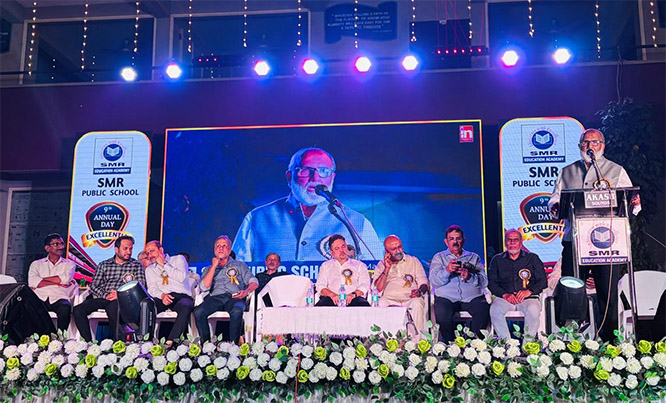
Melkar (Bantwal): The 9th Annual Day celebration of SMR Public School, titled “EXCELLENTIA”, was held on December 15 with great enthusiasm and dignity, marking a significant milestone in the institution’s journey towards academic excellence and holistic development.

The programme was inaugurated by Dr. U. T. Iftikar Ali. The chief guests were Dr. Akhtar Hussain, Mr. P. Moosabba Beary, Mr. Zakaria Jokattre, and Dr. T. M. Abdul Rahuf—whose inspiring addresses motivated the students and appreciated the school’s contributions to education.

Mr. Abdul Nasir, Mr. Ibrahim Gadiyar, Mr. Razak Golthamajal, Mr. Sali Koya, Mr. Arshad Hussain, Mr. Ismail Balanoor, Mr. Feroz Bawa, Mr. Sahul Hameed, Mr. Abubakkar, Mr. Hameed K. Mani, Mr. Abdul Majeed (Principal, Melkar Women’s College), and Mr. Abdul Lathief (Former Principal, Melkar Women’s College) were the guests of honour.

The Annual Report was presented by the Headmistress, Ms. Fathimathul Zaheera, highlighting the school’s achievements and progress during the academic year. The Presidential Address was delivered by the Chairman of SMR Public School, Dr. Haji S. M. Rasheed, who emphasised the vital role of education in shaping students’ futures and stressed the importance of discipline, dedication, and consistent effort in achieving 100 per cent academic results.

Secretary of SMR Public School, Mr. Rifath Ahmed, and PTA President, Mr. Sandeep Kumar, were also present on the occasion.

The Annual Day celebration showcased the collective efforts of students and teachers and reaffirmed the school’s commitment to quality education and all-round development. The programme concluded with a vote of thanks, expressing gratitude to all dignitaries, parents, and well-wishers for their support. The 9th Annual Day—EXCELLENTIA—was a memorable and successful event, leaving a lasting impression on everyone present. 

SMR3.jpg

SMR2.jpg

Comments

Add new comment

  • Coastaldigest.com reserves the right to delete or block any comments.
  • Coastaldigset.com is not responsible for its readers’ comments.
  • Comments that are abusive, incendiary or irrelevant are strictly prohibited.
  • Please use a genuine email ID and provide your name to avoid reject.
coastaldigest.com news network
December 20,2025

Mangaluru, Dec 20: City Police Commissioner Sudheer Kumar Reddy has issued a high-alert warning to vehicle owners regarding a surge in cyber fraud targeting those looking to pay traffic violation fines. Fraudsters are reportedly exploiting recent government discount schemes on traffic penalties to deceive citizens.

The Scam: How Fraudsters Strike

Criminals are using SMS, WhatsApp, and social media to circulate suspicious links and APK files (Android application packages). They claim these apps allow users to pay e-challans at a discount.

•    Device Hacking: Downloading these unauthorized apps gives hackers full access to the victim's smartphone.

•    Financial Theft: Once the phone is compromised, fraudsters intercept OTPs and personal data to drain bank accounts.

•    Phishing Sites: Fake websites mimicking official portals are also being used to harvest banking credentials.

Already, two residents within Mangaluru city limits have reported significant financial losses after falling victim to these fraudulent apps.

Comments

Add new comment

  • Coastaldigest.com reserves the right to delete or block any comments.
  • Coastaldigset.com is not responsible for its readers’ comments.
  • Comments that are abusive, incendiary or irrelevant are strictly prohibited.
  • Please use a genuine email ID and provide your name to avoid reject.
News Network
December 19,2025

Mangaluru: In a decisive move to tackle the city’s deteriorating sanitation infrastructure, the Mangaluru City Corporation (MCC) has announced a massive ₹1,200 crore action plan to overhaul its underground drainage (UGD) network.

The initiative, spearheaded by Deputy Commissioner and MCC Administrator Darshan HV, aims to bridge "missing links" in the current system that have left residents grappling with overflowing sewage and environmental hazards.

The Breaking Point

The announcement follows a high-intensity phone-in session on Thursday, where the DC was flooded with grievances from frustrated citizens. Residents, including Savithri from Yekkur, described a harrowing reality: raw sewage from apartments leaking into stormwater drains, creating a "permanent stink" and turning residential zones into mosquito breeding grounds.

"We are facing immense difficulties due to the stench and the health risks. Local officials have remained silent until now," one resident reported during the session.

The Strategy: A Six-Year Vision

DC Darshan HV confirmed that the proposed plan is not a temporary patch but a comprehensive six-year roadmap designed to accommodate Mangaluru’s projected population growth. Key highlights of the plan include:

•    Infrastructure Expansion: Laying additional pipelines to connect older neighborhoods to the main grid.

•    STP Crackdown: Stricter enforcement of Sewage Treatment Plant (STP) regulations. While new apartments are required to have functional STPs, many older buildings lack them entirely, and several newer units are reportedly non-functional.

•    Budgetary Push: The plan has already been discussed with the district in-charge minister and the Secretary of the Urban Development Department. It is slated for formal presentation in the upcoming state budget.

Comments

Add new comment

  • Coastaldigest.com reserves the right to delete or block any comments.
  • Coastaldigset.com is not responsible for its readers’ comments.
  • Comments that are abusive, incendiary or irrelevant are strictly prohibited.
  • Please use a genuine email ID and provide your name to avoid reject.