



No Muslims, no single women: Housing bias turning Indian cities into ghettos

January 24, 2017

Mumbai, Jan 24: On the inauguration of US President Donald Trump, an Indian real estate company ran an advertisement with the slogan 'Homes that don't discriminate', calling for an end to prejudice in India's housing market based on gender, religion or caste.
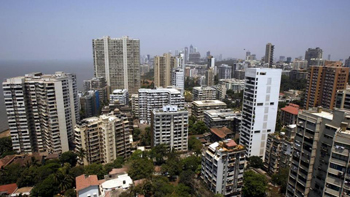
Housingbias
While the ad was unusual, the sentiment was familiar to millions of Indians who have tried to rent or buy city homes only to be denied because they were single, ate meat, were of a certain caste or from a certain region.

Informal rules and discrimination by Indian landlords to keep out religious minorities and single people are eroding the multi-cultural nature of India's cities and dividing communities into ghettos, analysts say.

"It's 2017 - and we're still encountering discrimination," said Rishi Dogra of NestAway Technologies that ran the ad.

"People should be able to move freely and find a living space anywhere in the country," said Dogra, marketing head for the company founded by four young male graduates after they had trouble finding a home in Bengaluru.

Such discrimination has forced many people to the suburbs, making Indian city centres less diverse and cosmopolitan, with high rents already making them unaffordable to poorer workers.

Mumbai, India's financial hub and a magnet for migrants from across the country, has traditionally had enclaves for Catholics, Parsis, Bohri Muslims and others. They set up housing societies, or co-operatives, to help other community members.

As the city grew and drew more migrants, powerful housing societies have often denied homes on the basis of religion, caste, food preferences and even professions.

The divide grew after bloody Hindu-Muslim riots in 1992-93 and still persists, said Zakia Soman, a co-founder at Bharatiya Muslim Mahila Andolan, a non-profit organisation for Muslim women.

A Facebook group called 'Indians Against Discrimination' was set up in 2015 after a young Muslim woman was asked to leave her flat a week after she moved in, because of her religion.

"When it comes to living spaces, we have become very insular," Soman said.

"The city is getting increasingly ghettoised as a result, weakening our social fabric and polarising us further. That doesn't bode well," she said.

Local courts have ruled against discrimination by housing associations in several cases, but there have also been contradictory rulings.

Discrimination

In a 2005 case, the Supreme Court ruled in favour of a Parsi housing society in Ahmedabad, saying it could limit its membership to Parsis and not admit others.

"The constitution guarantees our right to equality, but housing societies can still frame their own guidelines which may be discriminatory," said Vinod Sampat, a real estate lawyer.

A draft housing policy for Maharashtra state, where Mumbai is located, has dropped a clause that prevents discrimination in housing. This may leave those looking to rent or buy property with fewer protections, Sampat said.

Government officials have said non-discrimination is already protected by the constitution, so there is no need for the clause.

That has not reassured people like Shikha Makan, who made a film called 'Bachelor Girls' on housing bias against single women - including Bollywood actors - in Mumbai.

"Not being able to find a home in a big city like Mumbai is a shame," she said.

"It is marginalising single women and other minorities."

Comments

Add new comment

  • Coastaldigest.com reserves the right to delete or block any comments.
  • Coastaldigset.com is not responsible for its readers’ comments.
  • Comments that are abusive, incendiary or irrelevant are strictly prohibited.
  • Please use a genuine email ID and provide your name to avoid reject.
News Network
December 16,2025

Mangaluru, Dec 16: The Mangaluru City police have significantly escalated their campaign against drug trafficking, arresting 25 individuals and booking 12 cases under the Narcotic Drugs and Psychotropic Substances (NDPS) Act between November 30 and December 13. The crackdown resulted in the seizure of a substantial quantity of illicit substances, including 685.6 grams of MDMA and 1.5 kg of ganja.

The success of this recent drive has been significantly boosted by the city’s innovative, QR code-based anonymous reporting system.

"The anonymous reporting system has received an encouraging response. Several recent arrests were made based on inputs received through this system, helping police tighten the noose around drug peddlers," said the City Police Commissioner.

The latest arrests contribute to a robust year-to-date record, underscoring the police's relentless commitment to combating the drug menace.

Up to December 14 this year, the police have registered a total of 107 cases of drug peddling, leading to the arrest of 219 peddlers. Furthermore, they have booked 562 cases of drug consumption, resulting in the arrest of 671 individuals.

The scale of the seizure for the year reflects the magnitude of the problem being tackled: police have seized 320.6 kg of ganja worth ₹88.7 lakh and 1.4 kg of MDMA valued at ₹1.2 crore. Other significant seizures include hydro-weed ganja worth ₹94.7 lakh and cocaine worth ₹1.9 lakh, among others.

The Commissioner emphasized a policy of rigorous enforcement: "We ensure that peddlers are caught red-handed so that they cannot later dispute the case or claim innocence."

To counter the rising trend of substance abuse among youth, the Mangaluru City police have rolled out uniform guidelines for random drug testing across educational institutions.

As part of the drive, tests were conducted in approximately 100 institutions, screening an estimated 5,500 to 6,000 students in the first phase. 20 students tested positive for drug consumption during the initial screening.

Students who tested positive have been provided counselling and are scheduled for re-testing in the second quarter. The testing will also be expanded to students not covered in the first phase. In a move to ensure strict implementation, police personnel were deployed in mufti in some institutions. Reiterating a zero-tolerance stance, the Commissioner confirmed that random testing will continue, and colleges have also been instructed to conduct drug tests at the time of admission to deter substance abuse from an early stage.

Comments

Add new comment

  • Coastaldigest.com reserves the right to delete or block any comments.
  • Coastaldigset.com is not responsible for its readers’ comments.
  • Comments that are abusive, incendiary or irrelevant are strictly prohibited.
  • Please use a genuine email ID and provide your name to avoid reject.