



Nod to Real Estate Bill by Parliament; relief for home buyers

March 15, 2016

New Delhi, Mar 15: It will now be difficult for promoters and builders to delay projects, with Parliament today giving nod to a bill which gives relief to home-buyers and proposes imprisonment of up to three years besides monetary penalties for any violation of rules.
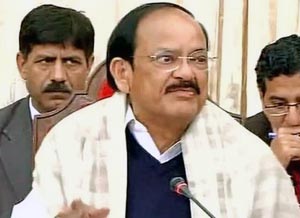
naidu

The Real Estate (Regulation and Development) Bill, 2013, approved by Lok Sabha today, five days after its passage by Rajya Sabha, is designed to protect consumer interest, ensure efficiency in all property-related transactions, improve accountability of developers, boost transparency and attract more investments to the sector, the government said.

It provides for setting up of a Real Estate Regulatory Authorities (RERAs) which will ensure timely execution of projects.

The RERAs will regulate transactions related to both residential and commercial projects and ensure their timely completion and handover.

The proposed law makes it mandatory for all residential and commercial projects to register with the Regulator and will apply to new and ongoing projects.

Appellate Tribunals will now be required to adjudicate cases in 60 days as against the earlier provision of 90 days and Regulatory Authorities will have to dispose of complaints in 60 days. In the earlier bill, no time frame was indicated.

The Bill provides for imprisonment of up to three years in case of promoters and up to one year in case of real estate agents and buyers for any violation of orders of Appellate Tribunals or monetary penalties or both.

Replying to debate on the bill, Urban Development Minister M Venkaiah Naidu said the Bill envisages that "What you are committing, what you are promising, please fulfill. What you are promising through advertisements, please fulfill that. That is the purpose of this Bill."

Naidu also sought cooperation from the states for faster clearances to projects to make this Bill, which will override all state legislations, a success.

"We are trying to make the beautiful advertisements given by developers in front page of newspapers dutyful. Our ultimate intension is to ensure consumer satisfaction. Once the Bill is notified, you will get more investments in the real estate sector, early clearances and property prices will come down," he said.

Government is also trying to bring in a National Urban Rental Housing Policy, he said, adding that the policy would take into account the requirements of tenancy hassles in modern days.

"There will be a boom in the real estate sector because of the Bill. Private people, foreign investors, will come and invest. People will buy more properties," the minister said.

Naidu said there has been numerous delays in project execution which the law seeks to address. "Real Estate Bill is a regulation and not a strangulation".

The law provides for builders mandatorly setting aside 70 per cent of money collected from buyers during the pre-sale of homes, for sole use for construction of the project.

Naidu said the bill also provides for buyers and developers paying the same interest rate for any delays in payment or delivery of project respectively.

He said as per the Bill, open parking is part of common area because people sell flats separately and car parking separately. Project can be developed in phases but provisions of the law will apply to each phase.

The Bill was first introduced in the Rajya Sabha in 2013.
"It was originally a Congress party baby. It was a baby which was left out and now we are adopting it," Naidu said.

At this, Congress leader Mallikarjun Kharge remarked that the NDA government should not met out "step motherly" attitude to the Bill.

Naidu said the mandatory registration for projects has been brought down to 500 sq m area, or those comprising eight flats, from 4,000 sq mt proposed in the previous version of UPA government.

It provides for a clear definition of carpet area and a system that would require the consent of two-thirds of the buyers in case there are changes in project plans.

Naidu said Parliament is not interfering in the process of buying or selling of a property and instead is ensuring customer satisfaction.

"If the builders have any problem, I can meet them any time. Whatever difficulties they face, we are willing to discuss," he said.


Comments

Virginia
 - 
Thursday, 14 Apr 2016

I loved as much as you will receive carried out right here.
The sketch is tasteful, your authored subject matter
stylish. nonetheless, you command get got an impatience over
that you wish be delivering the following. unwell unquestionably
come further formerly again as exactly the same nearly very often inside case you shield
this hike.

my blog :: digital grand piano reviews: http://www.lucianoamato.it/itemlist/user/22897

Add new comment

  • Coastaldigest.com reserves the right to delete or block any comments.
  • Coastaldigset.com is not responsible for its readers’ comments.
  • Comments that are abusive, incendiary or irrelevant are strictly prohibited.
  • Please use a genuine email ID and provide your name to avoid reject.
News Network
December 16,2025

jordan.jpg

Prime Minister Narendra Modi on Monday held talks with Jordan’s King Abdullah II in Amman, during which the two leaders discussed ways to further strengthen bilateral relations, with the Prime Minister outlining an eight-point vision covering key areas of cooperation.

Describing the meeting as “productive”, PM Modi said he shared a roadmap focused on trade and economy, fertilisers and agriculture, information technology, healthcare, infrastructure, critical and strategic minerals, civil nuclear cooperation, and people-to-people ties.

In a post on social media platform X, the Prime Minister praised King Abdullah II’s personal commitment to advancing India–Jordan relations, particularly as both countries mark the 75th anniversary of the establishment of diplomatic ties this year.

“Held productive discussions with His Majesty King Abdullah II in Amman. His personal commitment towards vibrant India-Jordan relations is noteworthy. This year, we are celebrating the 75th anniversary of our bilateral diplomatic relations,” PM Modi said.

The meeting took place at the Al Husseiniya Palace, where the two leaders also exchanged views on regional and global issues of mutual interest. According to the Ministry of External Affairs (MEA), both sides agreed to further deepen cooperation in areas including trade and investment, defence and security, counter-terrorism and de-radicalisation, fertilisers and agriculture, infrastructure, renewable energy, tourism, and heritage.

The MEA said both leaders reaffirmed their united stand against terrorism.

PM Modi arrived in Amman earlier on Monday and was received by Jordanian Prime Minister Jafar Hassan, who accorded him a formal welcome. Following the talks, King Abdullah II hosted a banquet dinner in honour of the Prime Minister, reflecting the warmth of bilateral ties.

Jordan is the first leg of PM Modi’s three-nation tour. From Amman, the Prime Minister will travel to Ethiopia at the invitation of Prime Minister Abiy Ahmed Ali, marking his first official visit to the African nation. The tour will conclude with a visit to Oman.

Comments

Add new comment

  • Coastaldigest.com reserves the right to delete or block any comments.
  • Coastaldigset.com is not responsible for its readers’ comments.
  • Comments that are abusive, incendiary or irrelevant are strictly prohibited.
  • Please use a genuine email ID and provide your name to avoid reject.
News Network
December 6,2025

pilot.jpg

New Delhi: IndiGo, India’s largest airline, faced major operational turbulence this week after failing to prepare for new pilot-fatigue regulations issued by the Directorate General of Civil Aviation (DGCA). The stricter rules—designed to improve flight safety—took effect in phases through 2024, with the latest implementation on November 1. IndiGo has acknowledged that inadequate roster planning led to widespread cancellations and delays.

Below are the key DGCA rules that affected IndiGo’s operations:

1. Longer Mandatory Weekly Rest

Weekly rest for pilots has been increased from 36 hours to 48 hours.

The government says the extended break is essential to curb cumulative fatigue. This rule remains in force despite the current crisis.

2. Cap on Night Landings

Pilots can now perform only two night landings per week—a steep reduction from the earlier limit of six.

Night hours, defined as midnight to early morning, are considered the least alert period for pilots.

Given the disruptions, this rule has been temporarily relaxed for IndiGo until February 10.

3. Reduced Maximum Night Flight Duty

Flight duty that stretches into the night is now capped at 10 hours.

This measure has also been kept on hold for IndiGo until February 10 to stabilize operations.

4. Weekly Rest Cannot Be Replaced With Personal Leave

Airlines can no longer count a pilot’s personal leave as part of the mandatory 48-hour rest.

Pilots say this closes a loophole that previously reduced actual rest time.

Currently, all airlines are exempt from this rule to normalise travel.

5. Mandatory Fatigue Monitoring

Airlines must submit quarterly fatigue reports along with corrective actions to DGCA.

This system aims to create a transparent fatigue-tracking framework across the industry.

The DGCA has stressed that these rules were crafted to strengthen flight safety and align India with global fatigue-management standards. The temporary relaxations are expected to remain until February 2025, giving IndiGo time to stabilise its schedules and restore normal air travel.

Comments

Add new comment

  • Coastaldigest.com reserves the right to delete or block any comments.
  • Coastaldigset.com is not responsible for its readers’ comments.
  • Comments that are abusive, incendiary or irrelevant are strictly prohibited.
  • Please use a genuine email ID and provide your name to avoid reject.
News Network
December 13,2025

New Delhi: School-going children are picking up drug and smoking habits and engaging in consumption of alcohol, with the average age of introduction to such harmful substances found to be around 13 years, suggesting a need for earlier interventions as early as primary school, a multi-city survey by AIIMS-Delhi said.

The findings also showed substance use increased in higher grades, with grade XI/XII students two times more likely to report use of substances when compared with grade VIII students. This emphasised the importance of continued prevention and intervention through middle and high school.

The study led by Dr Anju Dhawan of AIIMS's National Drug Dependence Treatment Centre, published in the National Medical Journal of India this month, looks at adolescent substance use across diverse regions.

The survey included 5,920 students from classes 8, 9, 11 and 12 in urban government, private and rural schools across 10 cities -- Bengaluru, Chandigarh, Delhi, Dibrugarh, Hyderabad, Imphal, Jammu, Lucknow, Mumbai, and Ranchi. The data were collected between May 2018 and June 2019.

The average age of initiation for any substance was 12.9 (2.8) years. It was lowest for inhalants (11.3 years) followed by heroin (12.3 years) and opioid pharmaceuticals (without prescription; 12.5 years).

Overall, 15.1 per cent of participants reported lifetime use, 10.3 per cent reported past year use, and 7.2 per cent reported use in the past month of any substance, the study found.

The most common substances used in the past year, after tobacco (4 per cent) and alcohol (3.8 per cent), were opioids (2.8 per cent), followed by cannabis (2 per cent) and inhalants (1.9 per cent). Use of non-prescribed pharmaceutical opioids was most common among opioid users (90.2 per cent).

On being asked, 'Do you think this substance is easily available for a person of your age' separately for each substance category, nearly half the students (46.3 per cent) endorsed that tobacco products and more than one-third of the students (36.5 per cent) agreed that a person of their age can easily procure alcohol products.

Similarly, for Bhang (21.9 per cent), ganja/charas (16.1 per cent), inhalants (15.2 per cent), sedatives (13.7 per cent), opium and heroin (10 per cent each), the students endorsed that these can be easily procured.

About 95 per cent of the children, irrespective of their grade, agreed with the statement that 'drug use is harmful'.

The rates of substance use (any) among boys were significantly higher than those of girls for substance use (ever), use in the past year and use in the past 30 days. Compared to grade VIII students, grade IX students were more likely, and grade XI/XII students were twice as likely to have used any substance (ever).

The likelihood of past-year use of any substance was also higher for grade IX students and for grade XI/XII students as compared to grade VIII students.

About 40 per cent of students mentioned that they had a family member who used tobacco or alcohol each. The use of cannabis (any product) and opioid (any product) by a family member was reported by 8.2 per cent and 3.9 per cent of students, respectively, while the use of other substances, such as inhalants/sedatives by family was 2-3 per cent, the study found.

A relatively smaller percentage of students reported use of tobacco or alcohol among peers as compared to among family members, while a higher percentage reported inhalants, sedatives, cannabis or opioid use among peers.

Children using substances (past year) compared to non-users reported significantly higher any substance use by their family members and peers.

There were 25.7 per cent students who replied 'yes' to the question 'conflicts/fights often occur in your family'. Most students also replied affirmatively to 'family members are aware of how their time is being spent' and 'damily members are aware of with whom they spend their time'.

Comments

Add new comment

  • Coastaldigest.com reserves the right to delete or block any comments.
  • Coastaldigset.com is not responsible for its readers’ comments.
  • Comments that are abusive, incendiary or irrelevant are strictly prohibited.
  • Please use a genuine email ID and provide your name to avoid reject.
