One million species risk extinction due to humans: draft UN report

Agencies
April 24, 2019

UN, Apr 24: Up to one million species face extinction due to human influence, according to a draft UN report obtained by AFP that painstakingly catalogues how humanity has undermined the natural resources upon which its very survival depends.

The accelerating loss of clean air, drinkable water, CO2-absorbing forests, pollinating insects, protein-rich fish and storm-blocking mangroves -- to name but a few of the dwindling services rendered by Nature -- poses no less of a threat than climate change, says the report, set to be unveiled May 6.

Indeed, biodiversity loss and global warming are closely linked, according to the 44-page Summary for Policy Makers, which distills a 1,800-page UN assessment of scientific literature on the state of Nature.

Delegates from 130 nations meeting in Paris from April 29 will vet the executive summary line-by-line.

Wording may change, but figures lifted from the underlying report cannot be altered.

"We need to recognise that climate change and loss of Nature are equally important, not just for the environment, but as development and economic issues as well," Robert Watson, chair of the UN-mandated body that compiled the report, told AFP, without divulging its findings.

"The way we produce our food and energy is undermining the regulating services that we get from Nature," he said, adding that only "transformative change" can stem the damage.

Deforestation and agriculture, including livestock production, account for about a quarter of greenhouse gas emissions, and have wreaked havoc on natural ecosystems as well.

The Intergovernmental Science-Policy Platform on Biodiversity and Ecosystem Services (IPBES) report warns of "an imminent rapid acceleration in the global rate of species extinction." The pace of loss "is already tens to hundreds of times higher than it has been, on average, over the last 10 million years," it notes. "Half-a-million to a million species are projected to be threatened with extinction, many within decades." Many experts think a so-called "mass extinction event" -- only the sixth in the last half-billion years -- is already under way.

The most recent saw the end of the Cretaceous period some 66 million years ago, when a 10-kilometre-wide asteroid strike wiped out most lifeforms.

Scientists estimate that Earth is today home to some eight million distinct species, a majority of them insects.

A quarter of catalogued animal and plant species are already being crowded, eaten or poisoned out of existence.

The drop in sheer numbers is even more dramatic, with wild mammal biomass -- their collective weight -- down by 82 per cent.

Humans and livestock account for more than 95 per cent of mammal biomass.

"If we're going to have a sustainable planet that provides services to communities around the world, we need to change this trajectory in the next ten years, just as we need to do that with climate," noted WWF chief scientist Rebecca Shaw, formerly a member of the UN scientific bodies for both climate and biodiversity.

The direct causes of species loss, in order of importance, are shrinking habitat and land-use change, hunting for food or illicit trade in body parts, climate change, pollution, and alien species such as rats, mosquitoes and snakes that hitch rides on ships or planes, the report finds.

"There are also two big indirect drivers of biodiversity loss and climate change -- the number of people in the world and their growing ability to consume," said Watson. Once seen as primarily a future threat to animal and plant life, the disruptive impact of global warming has accelerated.

Shifts in the distribution of species, for example, will likely double if average temperature go up a notch from 1.5 degrees Celsius (2.7 Fahrenheit) to 2 C.

So far, the global thermometer has risen 1C compared with mid-19th century levels.

The 2015 Paris Agreement enjoins nations to cap the rise to "well below" 2C.

But a landmark UN climate report in October said that would still be enough to boost the intensity and frequency of deadly heatwaves, droughts, floods and storms.

Other findings in the report include:

Three-quarters of land surfaces, 40 per cent of the marine environment, and 50 per cent of inland waterways across the globe have been "severely altered".

Many of the areas where Nature's contribution to human wellbeing will be most severely compromised are home to indigenous peoples and the world's poorest communities that are also vulnerable to climate change.

More than two billion people rely on wood fuel for energy, four billion rely on natural medicines, and more than 75 percent of global food crops require animal pollination.

Nearly half of land and marine ecosystems have been profoundly compromised by human interference in the last 50 years.

Subsidies to fisheries, industrial agriculture, livestock raising, forestry, mining and the production of biofuel or fossil fuel energy encourage waste, inefficiency and over-consumption.

The report cautioned against climate change solutions that may inadvertently harm Nature.

The use, for example, of biofuels combined with "carbon capture and storage" -- the sequestration of CO2 released when biofuels are burned -- is widely seen as key in the transition to green energy on a global scale.

But the land needed to grow all those biofuel crops may wind up cutting into food production, the expansion of protected areas or reforestation efforts.

Comments

Add new comment

  • Coastaldigest.com reserves the right to delete or block any comments.
  • Coastaldigset.com is not responsible for its readers’ comments.
  • Comments that are abusive, incendiary or irrelevant are strictly prohibited.
  • Please use a genuine email ID and provide your name to avoid reject.
News Network
January 28,2026

ajit.jpg

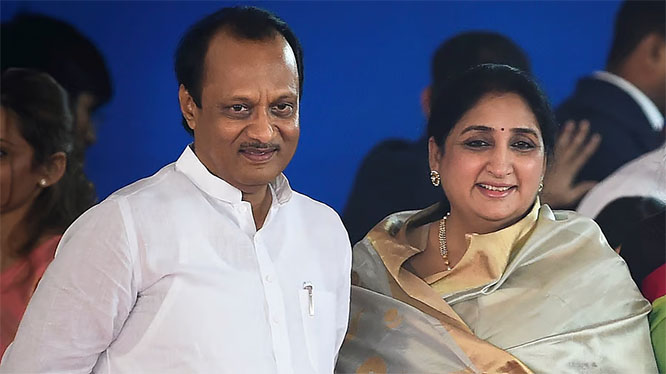
Mumbai: The sudden death of Maharashtra Deputy Chief Minister Ajit Pawar in a plane crash in his hometown of Baramati has plunged the state into political uncertainty, raising a pressing question for both the Nationalist Congress Party (NCP) and its rival faction, the Nationalist Congress Party (Sharadchandra Pawar): what next?

For the two factions that emerged after the dramatic split of June–July 2023, the moment marks their gravest challenge yet. Many believe the answer now rests with party founder Sharad Pawar.

Sharad Pawar, who founded the NCP in 1999 after parting ways with the Congress over Sonia Gandhi’s foreign origin, has already indicated his intention to step away from electoral politics once his Rajya Sabha term ends in April 2026.

Speaking at a public event in Baramati ahead of his 85th birthday on December 12, 2025, Pawar said he would not contest any further elections. “I have contested 14 elections. The younger generation needs to be given an opportunity,” he said, adding that he would decide later whether to seek another Rajya Sabha term.

Often described as the Bhishma Pitamah of Indian politics, Pawar also spoke of his gradual withdrawal from active leadership. “For the first 30 years, I handled everything. For the next 25–30 years, Ajit Dada handled responsibilities. Now, arrangements must be made for new leadership,” he said.

Ajit Pawar’s death has dramatically altered that transition, especially as he was working towards reunifying the two NCP factions.

“After the developments of June–July 2023 and the 2024 Lok Sabha and Vidhan Sabha elections, there were deep changes within the family and the party. In the last six months, serious efforts were made to reunite. Even workers from both sides wanted unity. This is a massive blow,” a Pawar family insider told DH over phone from Baramati.

Electoral outcomes over the past year reflected the split. In the 2024 Lok Sabha elections, NCP (SP) recorded the best strike rate in Maharashtra, winning eight of the 10 seats it contested. The NCP, by contrast, won just one seat out of four.

However, the trend reversed in the subsequent Vidhan Sabha elections, where the NCP emerged stronger, securing 41 of the 288 seats, while NCP (SP) managed only 10.

Within NCP (SP), Sharad Pawar’s daughter Supriya Sule serves as Working President, followed by leaders such as Rohit Pawar, state president Shashikant Shinde and former state chief Jayant Patil.

In the NCP, Praful Patel is the Working President and Raigad MP Sunil Tatkare heads the state unit. Ajit Pawar’s wife, Sunetra Pawar, is a Rajya Sabha MP, while their sons Parth and Jay are not actively involved in day-to-day politics. Parth Pawar briefly entered electoral politics in 2019 but lost the Lok Sabha election from Maval. Jay Pawar’s political debut was under consideration.

With Ajit Pawar gone, speculation has intensified that a member of the family may be asked to assume a larger role. For now, Sunetra Pawar is expected to play a key coordinating role in party affairs, alongside Patel and Tatkare.

The NCP continues to have several heavyweight leaders, including Chhagan Bhujbal, Hasan Mushrif, Dattatreya Bharne, Manikrao Kokate and Dhananjay Munde.

Ajit Pawar had already begun steps towards reconciliation between the two factions. While they contested the Pune and Pimpri-Chinchwad municipal elections separately, they later decided to fight the zilla parishad elections together under the ‘clock’ symbol—seen as the first formal step towards reunification.

Nagpur meet and party roadmap

Both NCP factions claim adherence to the ideology of ‘Shiv–Shahu–Phule–Ambedkar’. At the Rashtravadi Chintan Shivir held in Nagpur on September 19, 2025, the NCP reaffirmed its commitment to sarva dharma sambhav and discussed strengthening ties with the BJP “for the welfare and development of Maharashtra”.

In recent days, reports had suggested Ajit Pawar might return to the Maha Vikas Aghadi following the party’s poor performance in Pune municipal elections, but these claims were denied.

Big question for Maha Yuti

Ajit Pawar’s death also presents an immediate challenge for the Devendra Fadnavis-led Maha Yuti government. Pawar held crucial portfolios, including Finance, Planning and Excise. With the Budget Session approaching, appointing a new Finance Minister has become urgent.

Beyond numbers and portfolios, Maha Yuti has lost a swift decision-maker known for his administrative grip and political finesse—leaving a vacuum that will not be easy to fill.

Comments

Add new comment

  • Coastaldigest.com reserves the right to delete or block any comments.
  • Coastaldigset.com is not responsible for its readers’ comments.
  • Comments that are abusive, incendiary or irrelevant are strictly prohibited.
  • Please use a genuine email ID and provide your name to avoid reject.
News Network
January 20,2026

KCFabudhabi.jpg

KCF, a global socio-cultural organisation of Karnataka expatriates, is actively involved in education, humanitarian initiatives and community well-being across several countries. The awardees were selected following a structured evaluation of nominations by the Annual Council Program Committee, based on the depth, consistency and long-term impact of their social service.

One of the award recipients, Abdul Razak Haji, a prominent UAE-based entrepreneur from the Qamcon Group of Companies, was honoured for his significant contributions to society. Through both his professional journey and personal initiatives, he has supported numerous employees and families, while also extending assistance in education, housing for the underprivileged and various charitable causes, largely carried out quietly over the years. His award was presented earlier during the Annual Council Program held at the KCF Abu Dhabi office.

The second award was conferred on Latheef Kakkinje, a young social worker based in Abu Dhabi, in recognition of his active involvement in community engagement programmes, sports initiatives, talent festivals and family-oriented social activities. His consistent volunteering efforts and commitment to humanitarian causes were highly appreciated by the selection committee.

The award presentation ceremony for Latheef Kakkinje was held at the Zayed Cricket Stadium (Astro Turf Ground) in the presence of Kedumbady Ibrahim Saqafi, President of KCF UAE; Ibrahim, General Secretary; Kabeer Bayambady, President of KCF Abu Dhabi; Ummer Ishwaramangila, General Secretary; along with other members of the KCF Abu Dhabi cabinet.

Congratulating both awardees, KCF leaders reiterated the organisation’s commitment to recognising individuals who selflessly work for social upliftment and community service.

KCFabudhabi1.jpg

Comments

Add new comment

  • Coastaldigest.com reserves the right to delete or block any comments.
  • Coastaldigset.com is not responsible for its readers’ comments.
  • Comments that are abusive, incendiary or irrelevant are strictly prohibited.
  • Please use a genuine email ID and provide your name to avoid reject.
News Network
January 23,2026

modIKERALA.jpg

Prime Minister Narendra Modi, during his visit to Thiruvananthapuram on Friday, January 23, indicated that the Bharatiya Janata Party (BJP) is aiming to expand its political footprint in Kerala ahead of the Assembly elections scheduled in the coming months.

Speaking at a BJP-organised public meeting, Modi drew parallels between the party’s early electoral gains in Gujarat and its recent victory in the Thiruvananthapuram Municipal Corporation. The civic body win, which ended decades of Left control, was cited by the Prime Minister as a possible starting point for the party’s broader ambitions in the state.

Recalling BJP’s political trajectory in Gujarat, Modi said the party was largely insignificant before 1987 and received little media attention. He pointed out that the BJP’s first major breakthrough came with its victory in the Ahmedabad Municipal Corporation that year.

“Just as our journey in Gujarat began with one city, Kerala’s journey has also started with a single city,” Modi said, suggesting that the party’s municipal-level success could translate into wider electoral acceptance.

The Prime Minister alleged that successive governments led by the Left Democratic Front (LDF) and the United Democratic Front (UDF) had failed to adequately develop Thiruvananthapuram. He accused both fronts of corruption and neglect, claiming that basic infrastructure and facilities were denied to the capital city for decades.

According to Modi, the BJP’s control of the civic body represents a shift driven by public dissatisfaction with the existing political alternatives. He asserted that the BJP administration in Thiruvananthapuram had begun working towards development, though no specific details or timelines were outlined.

Addressing the gathering at Putharikandam Maidan, Modi said the BJP intended to project Thiruvananthapuram as a “model city,” reiterating his party’s commitment to governance-led change.

The Prime Minister’s visit to Kerala also included the inauguration of several development projects and the flagging off of new train services, as the BJP intensifies its political outreach in the poll-bound state.

Comments

Add new comment

  • Coastaldigest.com reserves the right to delete or block any comments.
  • Coastaldigset.com is not responsible for its readers’ comments.
  • Comments that are abusive, incendiary or irrelevant are strictly prohibited.
  • Please use a genuine email ID and provide your name to avoid reject.