



OPEC set to prolong output cut after Saudi-Russia deal

Agencies
July 1, 2019

Vienna, Jul 1: OPEC and its allies are set this week to prolong oil output cuts to further boost prices, after the two biggest players Russia and Saudi Arabia agreed to do so.
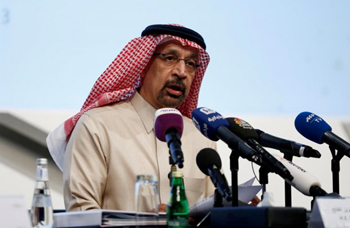
Ministers from the 14-nation Organization of the Petroleum Exporting Countries (OPEC) meet in Vienna on Monday to discuss output, before gathering a day later for OPEC+, a group of 24 oil-producing countries that includes Russia.

Russian President Vladimir Putin and OPEC cartel kingpin Saudi Arabia agreed Saturday on the sidelines of the G20 in Osaka to extend their deal which aims to keep oil output low owing to abundant world supplies.

"We will extend this deal, Russia and Saudi Arabia. For how long? We will think about that. For six or nine months. It is possible that it could be up to nine months," Putin said.

OPEC and its oil-producer allies decided in December to trim daily crude output by 1.2 million barrels.

The reduction contributed to oil prices soaring by almost one-third in the first quarter of 2019, boosting precious revenues for OPEC and non-OPEC members alike.

The cartel meanwhile remains on red alert over escalating US-Iran tensions that have fuelled recent strong oil-price gains -- but it and other producers are unlikely to end output cutbacks just yet.

Saudi Arabia's influential energy minister Khalid al-Falih, arriving in Vienna early on Sunday, declared that he wanted the cutbacks which began in January to be extended by nine more months.

"We have to talk about it with the other ministers. My preference will be nine (months)", he told reporters. That would extend the deal to March 2020.

United Arab Emirates energy minister Suhail al-Mazrouei, upon arrival in the Austrian capital, voiced his support to an extension.

"We look forward to a positive meeting, my view is that an extension is needed given the current conditions of the market," he told reporters.

Quizzed about the so-called "pre-deal" unveiled in Osaka, Mazrouei replied: "Each country's voice counts and each country can veto a decision."

OPEC's meeting comes against a background of ample global crude supplies, according to both the cartel and International Energy Agency.

The Paris-based IEA watchdog has cut its forecast for 2019 oil demand-growth for a second straight month and has trimmed also its second-quarter forecast.

Saudi Arabia argues that oil supplies are sufficient, pointing to rising stockpiles despite significant output reduction in sanctions-hit Iran and Venezuela, both members of OPEC.

Falih admitted on Sunday that demand "is softening a little bit" but stressed that he expected demand and supply to strike a balance.

"It is still healthy. So it is likely that the market will balance in due course in six to nine months. So we are happy," he said.

Global oil prices began a sharp ascent in mid-May after the sabotage of several tankers off the Emirati coast.

They jumped further after Washington blamed Tehran for a second spate of such incidents close to the strategic Strait of Hormuz shipping lane in mid-June.

Oil prices rose even more after Iran shot down a US spy drone and President Donald Trump axed retaliatory strikes against Tehran at the last minute.

Worries over the demand backdrop persist -- particularly from the US-China trade war despite a truce agreed over the weekend.

"Geopolitical risk means the supply outlook is tightening, offsetting the moderate weakening in oil demand growth thus far this year," said oil specialist Ann-Louise Hittle at consultancy Wood Mackenzie.

"There is a downside risk for oil demand through the rest of the year if the ongoing trade war intensifies," she added.

Comments

Add new comment

  • Coastaldigest.com reserves the right to delete or block any comments.
  • Coastaldigset.com is not responsible for its readers’ comments.
  • Comments that are abusive, incendiary or irrelevant are strictly prohibited.
  • Please use a genuine email ID and provide your name to avoid reject.
News Network
December 5,2025

indigoCEO.jpg

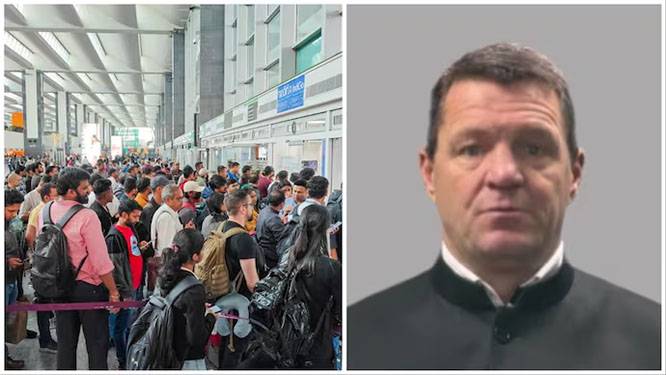
New Delhi, Dec 5: IndiGo CEO Pieter Elbers issued a public apology this evening after more than a thousand flights were cancelled today, making it the "most severely impacted day" in terms of cancellations. The biggest airline of the country cancelled "more than half" of its daily number of flights on Friday, said Elbers. He also said that even though the crisis will persist on Saturday, the airline anticipates fewer than 1,000 flight cancellations.

"Full normalisation is expected between December 10 and 15, though IndiGo cautions that recovery will take time due to the scale of operations," the IndiGo CEO said. 

IndiGo operates around 2,300 domestic and international flights daily.

Pieter Elbers, while apologising for the major inconvenience due to delays and cancellations, said the situation is a result of various causes.

The crisis at IndiGo stems from new regulations that boost pilots' weekly rest requirements by 12 hours to 48 and allow only two night-time landings per week, down from six. IndiGo has attributed the mass cancellations to "misjudgment and planning gaps".

Elbers also listed three lines of action that the airline will adopt to address the issue.

"Firstly, customer communication and addressing your needs, for this, messages have been sent on social media. And just now, a more detailed communication with information, refunds, cancellations and other customer support measures was sent," he said.

The airline has also stepped up its call centre capacity.

"Secondly, due to yesterday's situation, we had customers stranded mostly at the nation's largest airports. Our focus was for all of them to be able to travel today itself, which will be achieved. For this, we also ask customers whose flights are cancelled not to come to the airports as notifications are sent," the CEO said.

"Thirdly, cancellations were made for today to align our crew and planes to be where they need to start tomorrow morning afresh. Earlier measures of the last few days, regrettable, have proven not to be enough, but we have decided today to reboot all our systems and schedules, resulting in the highest numbers of cancellations so far, but imperative for progressive improvements starting from tomorrow," he added.

As airports witnessed chaotic scenes, the Directorate General of Civil Aviation (DGCA) stepped in to grant IndiGo a temporary exemption from stricter night duty rules for pilots. It also allowed substitution of leaves with a weekly rest period. 

Civil Aviation Minister Ram Mohan Naidu has said a high-level inquiry will be ordered and accountability will be fixed.

Comments

Add new comment

  • Coastaldigest.com reserves the right to delete or block any comments.
  • Coastaldigset.com is not responsible for its readers’ comments.
  • Comments that are abusive, incendiary or irrelevant are strictly prohibited.
  • Please use a genuine email ID and provide your name to avoid reject.
News Network
November 26,2025

students.jpg

Bengaluru, Nov 26: Karnataka is taking its first concrete steps towards lifting a three-decade-old ban on student elections in colleges and universities. Deputy Chief Minister D.K. Shivakumar announced Wednesday that the state government will form a small committee to study the reintroduction of campus polls, a practice halted in 1989 following incidents of violence.

Speaking at a 'Constitution Day' event organised by the Karnataka Congress, Mr. Shivakumar underscored the move's aim: nurturing new political leadership from the grassroots.

"Recently, (Leader of the Opposition in Lok Sabha) Rahul Gandhi wrote a letter to me and Chief Minister (Siddaramaiah) asking us to think about restarting student elections," Shivakumar stated. "I'm announcing today that we'll form a small committee and seek a report on this."

Student elections were banned in Karnataka in 1989, largely due to concerns over violence and the infiltration of political party affiliates into campus life. The ban effectively extinguished vibrant student bodies and the pipeline of young leaders they often produced.

Mr. Shivakumar, who also serves as the Karnataka Congress president, said that former student leaders will be consulted to "study the pros and cons" of the re-introduction.

Acknowledging the history of the ban, he added, "There were many criminal activities taking place back then. We’ll see how we can conduct (student) elections by regulating such criminal activities."

The Deputy CM reminisced about his own journey, which began on campus. He recalled his political activism at Sri Jagadguru Renukacharya College leading to his first Assembly ticket in 1985 at the age of 23. "That's how student leadership was at the time. Such leadership has gone today. College elections have stopped," he lamented, adding that for many, college elections were "like a big movement" where leaders were forged.

The move, driven by the Congress high command's push to cultivate young talent, will face scrutiny from academics and university authorities who have, in the past, expressed concern that the return of polls could disrupt the peaceful academic environment and turn campuses into political battlegrounds.

Comments

Add new comment

  • Coastaldigest.com reserves the right to delete or block any comments.
  • Coastaldigset.com is not responsible for its readers’ comments.
  • Comments that are abusive, incendiary or irrelevant are strictly prohibited.
  • Please use a genuine email ID and provide your name to avoid reject.
News Network
December 6,2025

pilot.jpg

New Delhi: IndiGo, India’s largest airline, faced major operational turbulence this week after failing to prepare for new pilot-fatigue regulations issued by the Directorate General of Civil Aviation (DGCA). The stricter rules—designed to improve flight safety—took effect in phases through 2024, with the latest implementation on November 1. IndiGo has acknowledged that inadequate roster planning led to widespread cancellations and delays.

Below are the key DGCA rules that affected IndiGo’s operations:

1. Longer Mandatory Weekly Rest

Weekly rest for pilots has been increased from 36 hours to 48 hours.

The government says the extended break is essential to curb cumulative fatigue. This rule remains in force despite the current crisis.

2. Cap on Night Landings

Pilots can now perform only two night landings per week—a steep reduction from the earlier limit of six.

Night hours, defined as midnight to early morning, are considered the least alert period for pilots.

Given the disruptions, this rule has been temporarily relaxed for IndiGo until February 10.

3. Reduced Maximum Night Flight Duty

Flight duty that stretches into the night is now capped at 10 hours.

This measure has also been kept on hold for IndiGo until February 10 to stabilize operations.

4. Weekly Rest Cannot Be Replaced With Personal Leave

Airlines can no longer count a pilot’s personal leave as part of the mandatory 48-hour rest.

Pilots say this closes a loophole that previously reduced actual rest time.

Currently, all airlines are exempt from this rule to normalise travel.

5. Mandatory Fatigue Monitoring

Airlines must submit quarterly fatigue reports along with corrective actions to DGCA.

This system aims to create a transparent fatigue-tracking framework across the industry.

The DGCA has stressed that these rules were crafted to strengthen flight safety and align India with global fatigue-management standards. The temporary relaxations are expected to remain until February 2025, giving IndiGo time to stabilise its schedules and restore normal air travel.

Comments

Add new comment

  • Coastaldigest.com reserves the right to delete or block any comments.
  • Coastaldigset.com is not responsible for its readers’ comments.
  • Comments that are abusive, incendiary or irrelevant are strictly prohibited.
  • Please use a genuine email ID and provide your name to avoid reject.
