



Opposition demands Kejriwal's resignation after bribe allegation

May 7, 2017

New Delhi, May 7: Sacked Delhi water minister Kapil Mishra's allegation that chief minister Arvind Kejriwal took Rs 2 crore from health minister Satyendra Jain triggered calls for the Delhi chief minister's resignation.
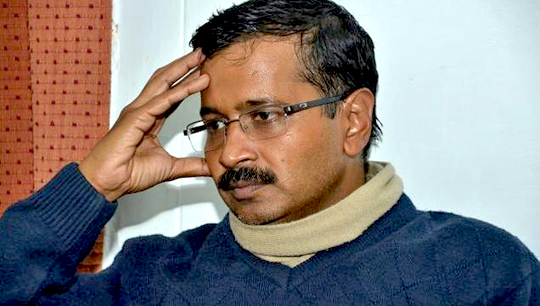
Kejriwal5

"Kejriwal has no moral right to hold the post of chief minister. He must resign immediately," Delhi BJP president Manoj Tiwari said while hailing Mishra's courage.

"I have said a number of times that Kejriwal is directly involved in corruption. Mishra's allegations prove that point."

Delhi Congress President Ajay Maken said Mishra's claims were not mere allegations but testimony of an eyewitness warranting criminal proceedings against Kejriwal.

"The Centre, the Anti-Corruption Bureau and the CBI should immediately take action and register an FIR against Kejriwal," he told the media.

Earlier, Kapil Mishra in an address to the media had said, "A day before yesterday, I saw Jain giving Rs 2 crore in cash to Kejriwal. Kejriwal said these things happen in politics. After having seen Jain hand over such a big amount to him, I had to come out. I have handed over the details to Lt Governor Anil Baijal," Mishra said. "I am also ready to make a statement before the CBI or Anti Corruption Bureau if required," the former water minister added.

Mishra said he had informed Lt Governor Anil Baijal about the issue and will provide details to the investigating agencies as well.

Mishra also accused Jain of facilitating a land deal worth Rs 50 crore for a relative of Arvind Kejriwal. "Jain himself told me about the deal," Mishra said, adding he was sure Jain would soon be put behind the bars.

Mishra's charge was refuted by senior AAP leader Manish Sisodia, who called the allegations "unsubstantiated" and not worth commenting upon.

"The kind of allegations against Kejriwal are unsubstantiated. No one will believe them. There is no substance in this allegation," the Delhi's deputy chief minister said.

Mishra's allegation have plunged the AAP into further crisis, soon after its defeat in the municipal polls. Mishra is known to be close to AAP leader Kumar Vishwas, with whom Kejriwal has forged an uneasy truce after he made critical comments of the AAP.

Mishra said many issues had been raised against the Aam Aadmi Party (AAP) in the past, including irregularities in funding during the Punjab elections, "but we always thought Kejriwalji did not have knowledge about them.

"We had faith in him and always thought he would make things right. But I cannot stay silent after what I witnessed."

Mishra asked Kejriwal to clarify where the money came from and to apologise to people "if he committed a mistake".

The AAP leader insisted that he would not quit the party. "I will neither quit the party nor anyone can ask me to go."

Comments

Add new comment

  • Coastaldigest.com reserves the right to delete or block any comments.
  • Coastaldigset.com is not responsible for its readers’ comments.
  • Comments that are abusive, incendiary or irrelevant are strictly prohibited.
  • Please use a genuine email ID and provide your name to avoid reject.
News Network
December 13,2025

New Delhi: School-going children are picking up drug and smoking habits and engaging in consumption of alcohol, with the average age of introduction to such harmful substances found to be around 13 years, suggesting a need for earlier interventions as early as primary school, a multi-city survey by AIIMS-Delhi said.

The findings also showed substance use increased in higher grades, with grade XI/XII students two times more likely to report use of substances when compared with grade VIII students. This emphasised the importance of continued prevention and intervention through middle and high school.

The study led by Dr Anju Dhawan of AIIMS's National Drug Dependence Treatment Centre, published in the National Medical Journal of India this month, looks at adolescent substance use across diverse regions.

The survey included 5,920 students from classes 8, 9, 11 and 12 in urban government, private and rural schools across 10 cities -- Bengaluru, Chandigarh, Delhi, Dibrugarh, Hyderabad, Imphal, Jammu, Lucknow, Mumbai, and Ranchi. The data were collected between May 2018 and June 2019.

The average age of initiation for any substance was 12.9 (2.8) years. It was lowest for inhalants (11.3 years) followed by heroin (12.3 years) and opioid pharmaceuticals (without prescription; 12.5 years).

Overall, 15.1 per cent of participants reported lifetime use, 10.3 per cent reported past year use, and 7.2 per cent reported use in the past month of any substance, the study found.

The most common substances used in the past year, after tobacco (4 per cent) and alcohol (3.8 per cent), were opioids (2.8 per cent), followed by cannabis (2 per cent) and inhalants (1.9 per cent). Use of non-prescribed pharmaceutical opioids was most common among opioid users (90.2 per cent).

On being asked, 'Do you think this substance is easily available for a person of your age' separately for each substance category, nearly half the students (46.3 per cent) endorsed that tobacco products and more than one-third of the students (36.5 per cent) agreed that a person of their age can easily procure alcohol products.

Similarly, for Bhang (21.9 per cent), ganja/charas (16.1 per cent), inhalants (15.2 per cent), sedatives (13.7 per cent), opium and heroin (10 per cent each), the students endorsed that these can be easily procured.

About 95 per cent of the children, irrespective of their grade, agreed with the statement that 'drug use is harmful'.

The rates of substance use (any) among boys were significantly higher than those of girls for substance use (ever), use in the past year and use in the past 30 days. Compared to grade VIII students, grade IX students were more likely, and grade XI/XII students were twice as likely to have used any substance (ever).

The likelihood of past-year use of any substance was also higher for grade IX students and for grade XI/XII students as compared to grade VIII students.

About 40 per cent of students mentioned that they had a family member who used tobacco or alcohol each. The use of cannabis (any product) and opioid (any product) by a family member was reported by 8.2 per cent and 3.9 per cent of students, respectively, while the use of other substances, such as inhalants/sedatives by family was 2-3 per cent, the study found.

A relatively smaller percentage of students reported use of tobacco or alcohol among peers as compared to among family members, while a higher percentage reported inhalants, sedatives, cannabis or opioid use among peers.

Children using substances (past year) compared to non-users reported significantly higher any substance use by their family members and peers.

There were 25.7 per cent students who replied 'yes' to the question 'conflicts/fights often occur in your family'. Most students also replied affirmatively to 'family members are aware of how their time is being spent' and 'damily members are aware of with whom they spend their time'.

Comments

Add new comment

  • Coastaldigest.com reserves the right to delete or block any comments.
  • Coastaldigset.com is not responsible for its readers’ comments.
  • Comments that are abusive, incendiary or irrelevant are strictly prohibited.
  • Please use a genuine email ID and provide your name to avoid reject.